Tokyo Private Tours
Navigate Tokyo’s complexity with a strategic 3-day skeleton built around clear daily roles, sensible transit, pivot choices, and crowd timing.
December 1, 2025
11 mins read
Three days in Tokyo is enough to feel the city’s “layers” — but only if you plan around how Tokyo actually behaves: distance disguised as density, stations that are neighborhoods, and crowd patterns that punish the wrong timing.
This page gives you a 3-day itinerary you can run as a self-guided plan or use as the backbone for a private guided itinerary. It’s built to fit “all” traveler types by being modular: each day has a stable core and a few constrained pivots, so you can adapt without breaking the whole plan.
Constraint 1: Tokyo is not one city center
Tokyo has multiple cores (Shinjuku, Shibuya, Tokyo Station/Marunouchi, Ginza, Ueno, Ikebukuro…), and moving between them costs more time than most first-timers expect. A 20–30 minute train ride often becomes 45–60 minutes door-to-door once you include:
walking inside large stations
platform depth (notably on some subway lines)
wrong-exit penalties (you can lose 10–15 minutes just choosing the wrong side of a station)
crowd friction at peaks
Planning rule: build each day around one primary zone and one secondary zone. More than that, and your itinerary becomes transit.
Constraint 2: Your “energy curve” is the hidden schedule
Most travelers hit one of these patterns:
Day 1: jet lag + adrenaline → you can do more in the morning than you think, less after 3–4pm than you want.
Day 2: best stamina day → do the highest-friction, highest-crowd districts here.
Day 3: decision day → either go deep into one interest, or choose something physically gentle.
Planning rule: don’t make Day 1 your “biggest” day. Make it your orientation day.
Constraint 3: Tokyo is increasingly reservation-shaped
Tokyo still rewards spontaneity — but certain experiences are now advance-purchase by design. If you want any of these, they should be decided early:
a timed-entry digital art museum experience (Toyosu/Odaiba area)
a studio museum with strict time slots (Mitaka area)
specialty tastings, high-demand counters, or small venues
Planning rule: lock one timed-entry “anchor” in advance (if you want one). Everything else should stay flexible.
Where you sleep doesn’t just change your commute — it changes how Tokyo feels. Here’s the practical trade-off view.
Option A: Shinjuku / West Tokyo core (high convenience, high complexity)
Best for: travelers who want nightlife access, lots of train lines, late dinners, and the feeling of being in the middle of everything.
Watch-outs:
Shinjuku Station is enormous. If you’re tired, it can feel like a puzzle, not a commute.
Late-night crowds and transfers can add friction.
Option B: Tokyo Station / Marunouchi / Ginza (clean logistics, more “polished”)
Best for: travelers who prioritize efficient transfers, easy airport/train access, and a calmer evening atmosphere.
Watch-outs:
You may travel farther for “neighborhood texture.”
Some evenings can feel quiet if you’re looking for street energy.
Option C: Asakusa / Ueno side (historic texture, easy East Tokyo days)
Best for: travelers who want early mornings, temples, parks, museums, and a more old-Tokyo rhythm.
Watch-outs:
West Tokyo (Shibuya/Shinjuku) becomes a longer daily jump.
Some late-night options thin out depending on your exact streets.
Planning shortcut:
If you want Shibuya + Shinjuku at night, stay West.
If you want early mornings + parks + temples, stay East.
If you want the easiest overall “transfer math,” stay near Tokyo Station.
A private guide doesn’t magically create more hours. What it can change is how much of your day is spent on:
exit choice and navigation errors
line selection and transfer timing
communicating at small venues
pacing (especially across mixed-age groups)
In a 3-day plan, a guide tends to make the biggest difference in two situations:
Day 1 orientation: learning how Tokyo works (station logic, common etiquette, “what’s normal here”), so Days 2–3 run smoother.
High-friction districts: where crowds, vertical stations, or complex multi-stop sequencing can quietly eat the day.
If you’re comparing formats or trying to decide what level of “managed” you want, the site hub for Tokyo private tours is the one place this itinerary links to.
Day 1 = East Tokyo orientation (temple + everyday Tokyo + a gentle evening)
Day 2 = West Tokyo contrast day (shrine + youth culture + the modern core)
Day 3 = Choose-your-depth day (art/design OR food markets OR neighborhoods)
Each day below is written as:
Core (do this if you do nothing else)
Pivots (choose one branch based on your people and weather)
Fail-safes (what to do if crowds or rain break your plan)
Why Day 1 belongs in the east
East Tokyo is forgiving on Day 1: it’s walkable, visually legible, and you can get “Tokyo meaning” without requiring perfect transit confidence.
Morning core: Asakusa without fighting the whole city
Goal: see a major temple area while your energy is highest, and understand the difference between “tourist Tokyo” and “working Tokyo.”
Arrive early if you can. As the morning advances, the area becomes a camera-first crowd flow.
Walk the approach slowly, then step sideways into the smaller streets. The point is to feel how quickly the atmosphere shifts.
Tokyo-specific pacing tip: Asakusa rewards short, intentional loops. If you try to “do it all,” you’ll just re-enter the same crowd stream repeatedly.
Midday core: Ueno Park zone (choose museum or people-watching)
Goal: insert a calm, contained zone that gives you shade, benches, and optional indoor time.
You have two realistic Day‑1 modes:
Museum mode: if it’s hot, cold, or rainy, you’re buying back energy.
Park + street mode: if the weather is good, you’re keeping momentum without adding transit.
If you’re traveling with kids or older family members, this is also the best place on Day 1 to schedule a low-stakes break without feeling like you’re “wasting Tokyo.”
Afternoon pivots (choose one)
Pivot A: Yanaka / old-neighborhood texture (gentle, human-scale)
Choose this if you want a quieter version of Tokyo that still feels distinctly local. This is a good pivot for:
mixed-age groups
travelers who hate crowds
travelers who want “lived-in Tokyo” without requiring niche planning
Pivot B: Akihabara edge (focused interest, not a whole afternoon by default)
Choose this if someone in your group truly wants it. The mistake is assuming Akihabara is an all-afternoon “must.” For many people, it’s best as:
a targeted 60–90 minute loop
followed by a change of scene
Evening core: choose calm water or structured lights
Day 1 evenings are where jet lag shows up. Pick an evening that matches your real stamina.
Option 1: River-side decompression
If you’ve walked a lot, an evening with water views is a simple way to feel “Tokyo at night” without committing to crowd density.
Option 2: A contained night district (short, intentional)
If you want neon and street energy, go, but keep it bounded:
one station area
one dinner plan
one short after-dinner walk
Fail-safe if the day runs long: end Day 1 early on purpose. Day 2 will be better if you protect sleep.
Why Day 2 belongs in the west
West Tokyo is where crowd timing matters most. On your best stamina day, you can absorb the complexity and still enjoy it.
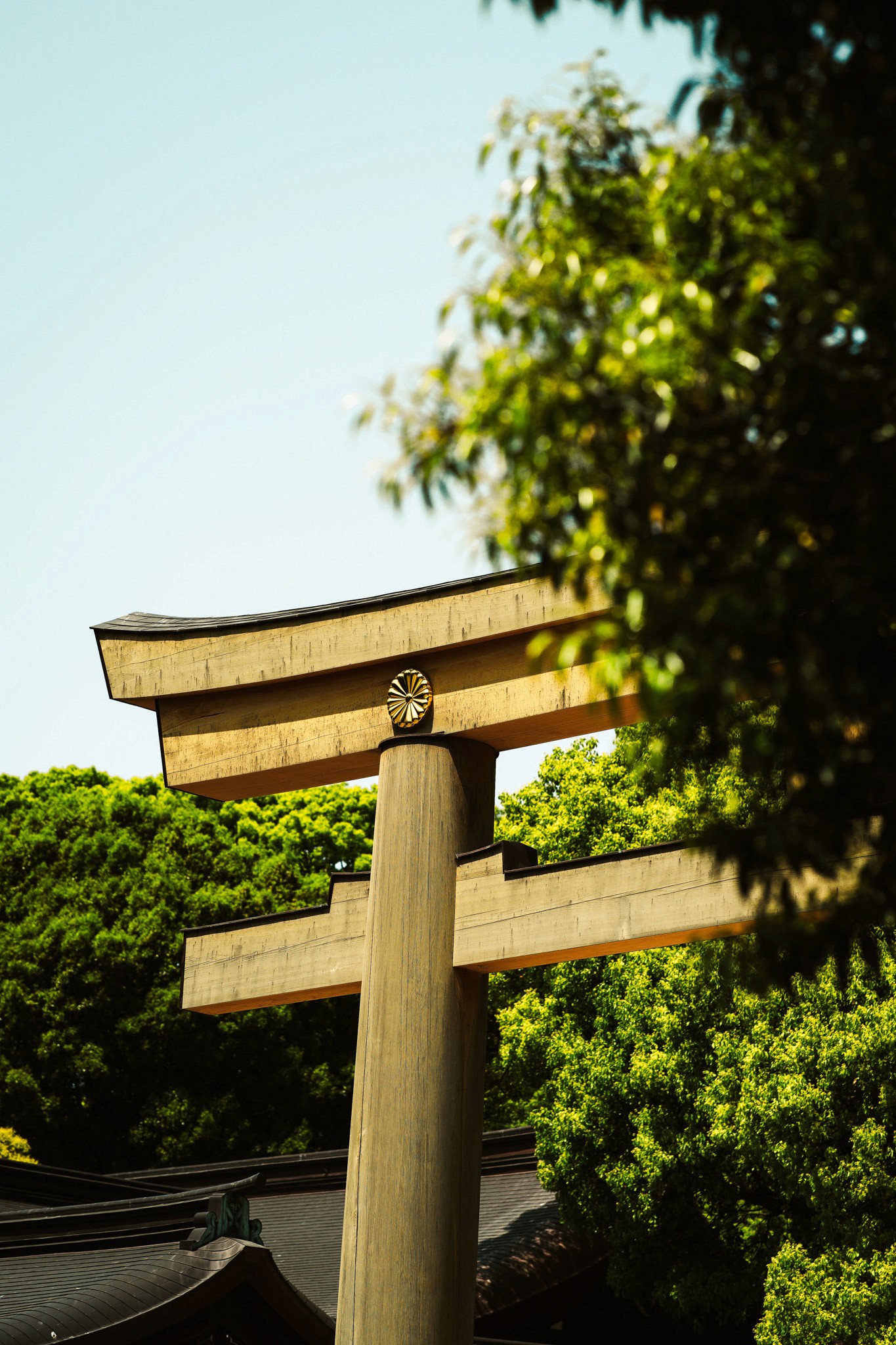
Morning core: Meiji Jingu (quiet first, then city)
Goal: start with a large, calm green space so the rest of the day’s intensity feels like contrast, not chaos.
This is also where many visitors understand a key Tokyo truth: the city can switch from silent to hyper-dense within one station stop.
Midday core: Harajuku vs Omotesando (choose the mood, not the “must-see”)
This is one of the easiest places to waste time if you don’t decide what you’re here for.
Choose Harajuku-side streets if your group wants playful street energy.
Choose Omotesando-side avenues if your group wants design, architecture, and a slower pace.
Trying to do both deeply often produces a lot of walking with diminishing returns.
Afternoon core: Shibuya done as a sequence, not a wandering session
Shibuya isn’t one attraction. It’s a dense set of micro-areas stacked around a station.
A practical way to experience it without burning out:
One landmark moment (the classic intersection feeling)
One viewpoint or elevated perspective (to understand the scale)
One quieter side-street stretch (to reset your senses)
Then leave.
Evening pivot: Shinjuku night (only if you still have energy)
Shinjuku at night can be thrilling or exhausting depending on how you enter it.
If you want nightlife atmosphere, do it with a clear boundary.
If you want a calm dinner and a walk, choose a less intense sub-area and treat it as a soft landing.
Tokyo-specific navigation warning: many night plans fail because people underestimate how long it takes to move through Shinjuku Station at peak hours.
Shopping in Tokyo isn’t one activity; it’s a different tempo. The main decision is whether shopping is the day’s purpose or the day’s reward.
If shopping is a purpose, schedule a defined block (usually Day 2 afternoon), and accept you’ll do fewer sights.
If shopping is a reward, attach it to the end of a day when you’re already in a major district.
Tokyo-specific reality: stations like Shinjuku and Shibuya make shopping easy to “accidentally” stretch for hours. If your group has different tastes, define a regroup point and time before you split up.
You don’t need restaurant perfection to have an excellent Tokyo trip. You need predictability.
Lunch: keep it near where you already are. Lunch is your pacing lever.
Dinner: decide whether dinner is a calm sit-down reset or part of a night district plan.
Tokyo-specific reality: some restaurants don’t do quick turnarounds; others do. Without local context, travelers often pick a place with a long wait when what they actually needed was a fast reset.
If your group has one “must,” identify whether it’s a reservation-shaped activity.
Experiences that often require advance planning
Ghibli Museum (Mitaka): admission is by advance reservation; you can’t buy tickets at the museum.
Popular digital art venues (Toyosu area): timed-entry tickets are common; ideal slots disappear.
Experiences that usually don’t need advance planning
temples and shrines
parks and neighborhood walking
many department-store food basements (depachika)
Practical planning rule for a 3-day trip: choose one reservation-shaped anchor. Let everything else stay adaptable so you don’t spend your whole trip racing a schedule.
Sample sequences (useful if you want something more concrete)
These are example flows, not recommendations. The goal is to show what fits together without forcing you into a checklist.
Day 1 example flow (East Tokyo)
Morning: Asakusa core → short side-street loop
Midday: Ueno Park zone (museum or park pace)
Afternoon: Yanaka-style neighborhood texture or a focused interest stop
Evening: river-side decompression or one contained night district
If your Day 1 starts late (arrival day), compress it by keeping only Asakusa + one evening walk. You’ll lose less than you think, and you’ll gain sleep.
Day 3 bay arc example flow
Early: Toyosu area at breakfast pace
Midday: one timed-entry contemporary anchor
Afternoon: waterfront walk or a second indoor stop depending on weather
The mistake here is trying to “also squeeze in” central Tokyo. Bay Tokyo is a different day.
Day 3 art/design arc example flow
Morning: one museum district
Midday: a long lunch reset
Afternoon: one neighborhood with design/architecture texture, or a garden if your brain is full
The mistake here is stacking too many institutions. Choose one and actually look.
Day 3 neighborhood arc example flow
Morning: quiet streets and small shops while the city is gentle
Midday: food-and-wandering block
Afternoon: a second nearby neighborhood if energy is good; otherwise, end early
The mistake here is panicking that you’re missing “the famous Tokyo.” This arc is where many people finally feel the city rather than chase it.
Crowd management in Tokyo is less about avoiding crowds entirely and more about placing crowds where they belong.
Put your most iconic, most-photographed area early in the day.
Put your “wander and shop” time midday.
Put your “night lights” time only when you have the energy to enjoy it.
A Tokyo-specific example: Asakusa at 8–9am is a different place than Asakusa at 1–3pm. Shibuya at 11am feels manageable; Shibuya at late afternoon can feel like a moving wall.
You don’t need to memorize the system, but you do need a few operational habits.
Habit 1: Anchor on stations, not neighborhoods
In Tokyo, the station name is the real unit of planning. “Shinjuku” can mean multiple sub-areas that aren’t a short walk from each other.
Habit 2: Budget time for exits
A wrong exit is not a small mistake in Tokyo. It can flip your entire walking plan.
Habit 3: Protect your knees and energy
If you have mobility concerns (or you’re traveling with kids, grandparents, or anyone with low tolerance for stairs):
choose routes with fewer transfers
accept that taxis can be the right tool sometimes
plan breaks near your station, not “somewhere later”
Tokyo is a vertical city. Some subway routes add a lot of up/down even when the ride is short.
Tokyo weather can be humid, rainy, or sharply seasonal. The mistake is trying to force an outdoor plan when you should change the container.
If Day 1 rain hits: keep East Tokyo, switch into museums/covered streets.
If Day 2 rain hits: keep West Tokyo, shift toward indoor complexes and calmer avenues.
If Day 3 rain hits: choose the contemporary bay arc or the art/design arc.
The goal is not to “save the attractions.” The goal is to preserve the day’s purpose: orientation, contrast, or depth.
A realistic 3-day pacing template (so you don’t burn out)
Use this as a rhythm guide rather than a strict schedule:
08:30–11:30: one major area (best focus)
11:30–14:00: lunch + a slow wandering block
14:00–17:00: one secondary area (or an indoor anchor)
After 17:00: keep it short and intentional
If you’re traveling with “all” demographics in mind (families, seniors, first-timers, repeat visitors), this rhythm is the most universally sustainable.
Common mistakes to avoid (the ones that quietly ruin Day 2)
Over-clustering famous places across the whole city (you’ll spend the trip on trains).
Treating every station change as “just one stop” (it’s rarely one stop in practice).
Trying to do Shibuya, Harajuku, Shinjuku, and Ikebukuro in one day (possible, but usually not enjoyable).
Not planning a reset (Tokyo intensity is fun until it stops being fun).
Is this itinerary only for first-time visitors?
No. The structure is first-timer friendly, but the Day 3 “choose-your-depth” arc is where repeat visitors usually get the most value — because you stop sampling and start committing.
Can I swap days?
Yes, but keep the intent:
keep an orientation day early
keep your highest-friction day when you’re freshest
keep your depth day last
What if I only want food-focused Tokyo?
Use the same skeleton, but treat food as the “pivot” each day rather than trying to make every meal a destination. The fastest way to waste time is chasing far-apart meals across the city.
What if we have a mixed group (kids + adults + older travelers)?
Make Day 1 and Day 3 physically gentle. Put your biggest crowds on Day 2, but keep it bounded. The goal is not equal intensity each day; it’s equal enjoyment.
What if mobility is a concern?
Plan around elevators, reduce transfers, and accept that taxis are sometimes the right tool. A perfect rail itinerary that requires repeated stairs is not a “good plan” for everyone.