
Asakusa Private Tour
A private Asakusa tour for travelers who suspect there's more to the neighborhood than Nakamise Street. Your guide navigates the invisible layers—backstreet craftsmen, shitamachi drinking culture, and 1,400 years of continuous religious practice behind the tourist corridor.
Why Choose This Experience
The Interesting Asakusa Is Structurally Invisible
Sensoji Temple has welcomed visitors since 628 AD. Today, 30 million arrive annually and most experience the same 250-meter corridor: Kaminarimon Gate, Nakamise Street, main hall, out. Thirty minutes, done. But a different Asakusa exists steps away—a paper shop founded in 1856, a knife maker from 1873, izakayas where the beef tendon stew hasn't stopped simmering since 1951. These places aren't hidden. They're structurally invisible: no signs point to them, no English is spoken, and engaging with what makes them remarkable requires someone who can read the layers.
Beyond the Corridor
Most visitors see 250 meters of Nakamise. Your guide takes you into the backstreets, craft shops, and drinking alleys that 30 million annual visitors walk right past
Language Access
Century-old knife makers, traditional paper shops, backstreet izakayas—places that welcome visitors but require Japanese to engage meaningfully
Temple Layers Decoded
Everything you photograph is postwar construction. The religious practice is continuous since 628 AD. Your guide reads the layers most visitors can't distinguish
Timing Precision
Temple before the crowds, Nakamise as shops open, backstreets at mid-morning, Hoppy Street stew pots by noon—your guide hits each layer at the hour it comes alive
Asakusa Private Tour Highlights

What Our Guests Say
"Our first day in Tokyo and what a perfect way to get started! He helped us understand the subway system, took us through markets, and kept us laughing."
"Fish market and Senso-ji were very interesting. Satoshi highlighted lots of interesting facts. Showed us where to get free samples and good photos."
"It gave us a great orientation to Tokyo. He helped us figure out the transportation system, which made the rest of our trip so much better!"
"He made adjustments to the schedule as needed, stayed overtime to see the Skytree, and accommodated picky eaters through his expertise of local food."
"My family wanted anime stuff and everything else jam packed into the day. Satoshi did not disappoint. My family is still raving about this tour days later!"
"I'd been to Tokyo many times before and still had never seen or heard of most everything he included in our tour. We liked it so much, we immediately booked a second day!"

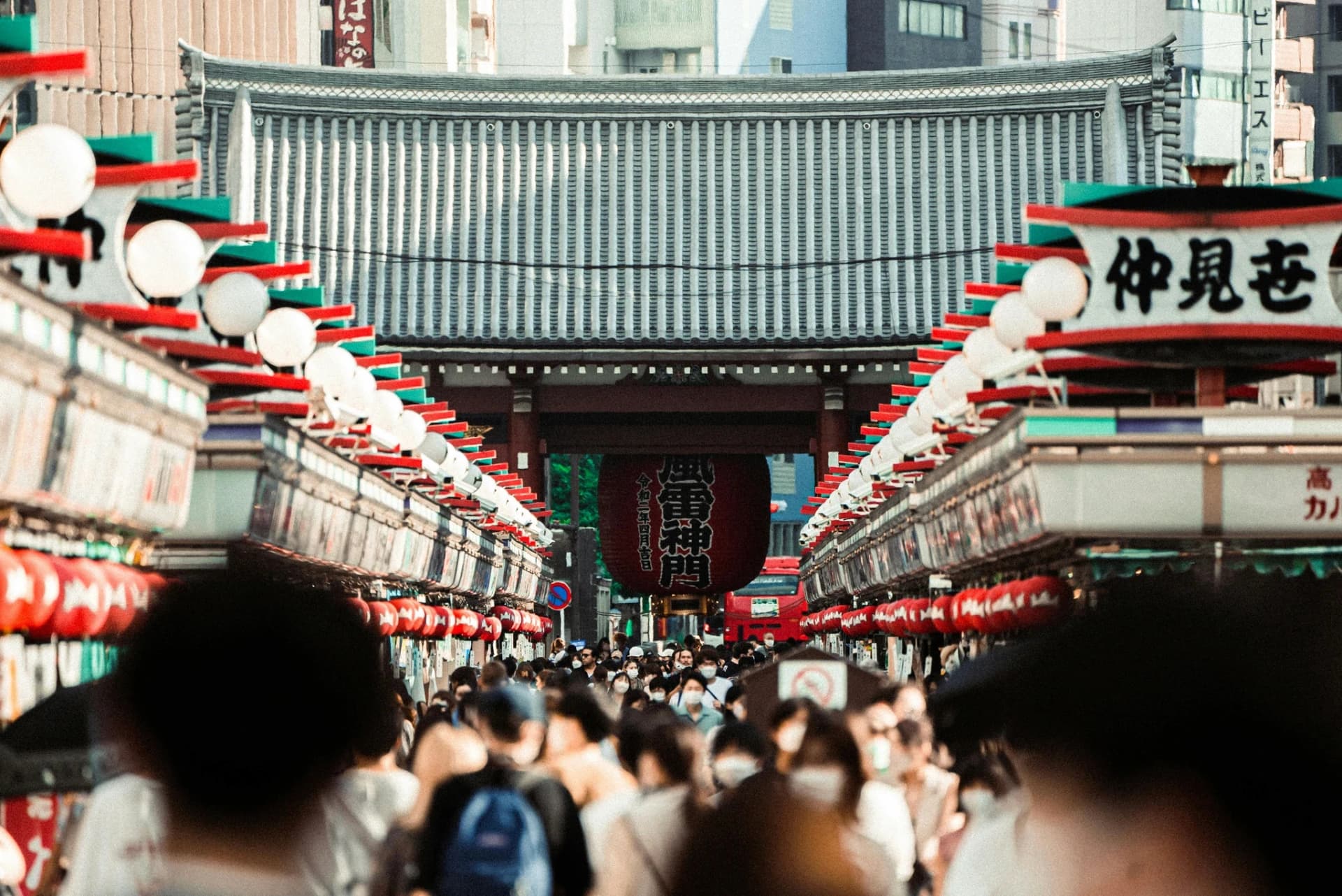
SENSOJI TEMPLE
HOPPY STREET
NAKAMISE
Your Journey
Sensoji Temple — The Magic Hour
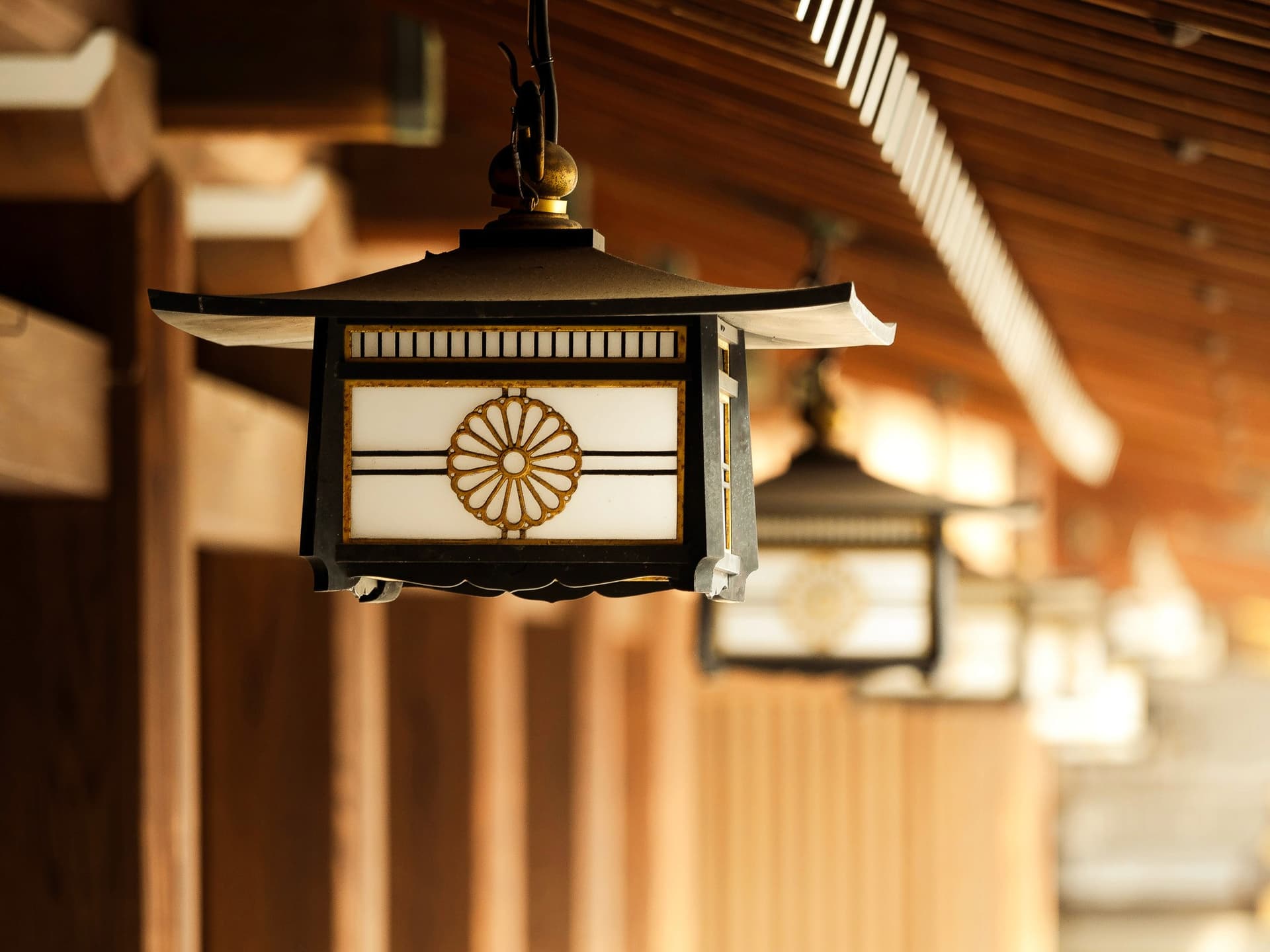
Meet at Asakusa Station and walk through Kaminarimon Gate before the tour buses arrive. This is Sensoji's magic hour—the temple complex nearly empty, incense smoke drifting across quiet grounds. Down Nakamise-dori, shops are still shuttered but the painted shutters and Edo-period architecture are visible in a way 30 million annual visitors never see. At the main hall, learn purification ritual, prayer protocol, fortune drawing, incense offering. The five-story pagoda towers over temple grounds that feel like they belong to you alone.
- The hidden Buddha: a golden Kannon locked in the inner sanctum since 645 AD, never publicly displayed
- Nakamise's painted shutters: visible only before shops open at 10am, a morning-only reward
- Temple fortune drawing (omikuji): how to interpret results and what to do with 'bad' fortunes
Nakamise & Side Streets — Shops Coming Alive
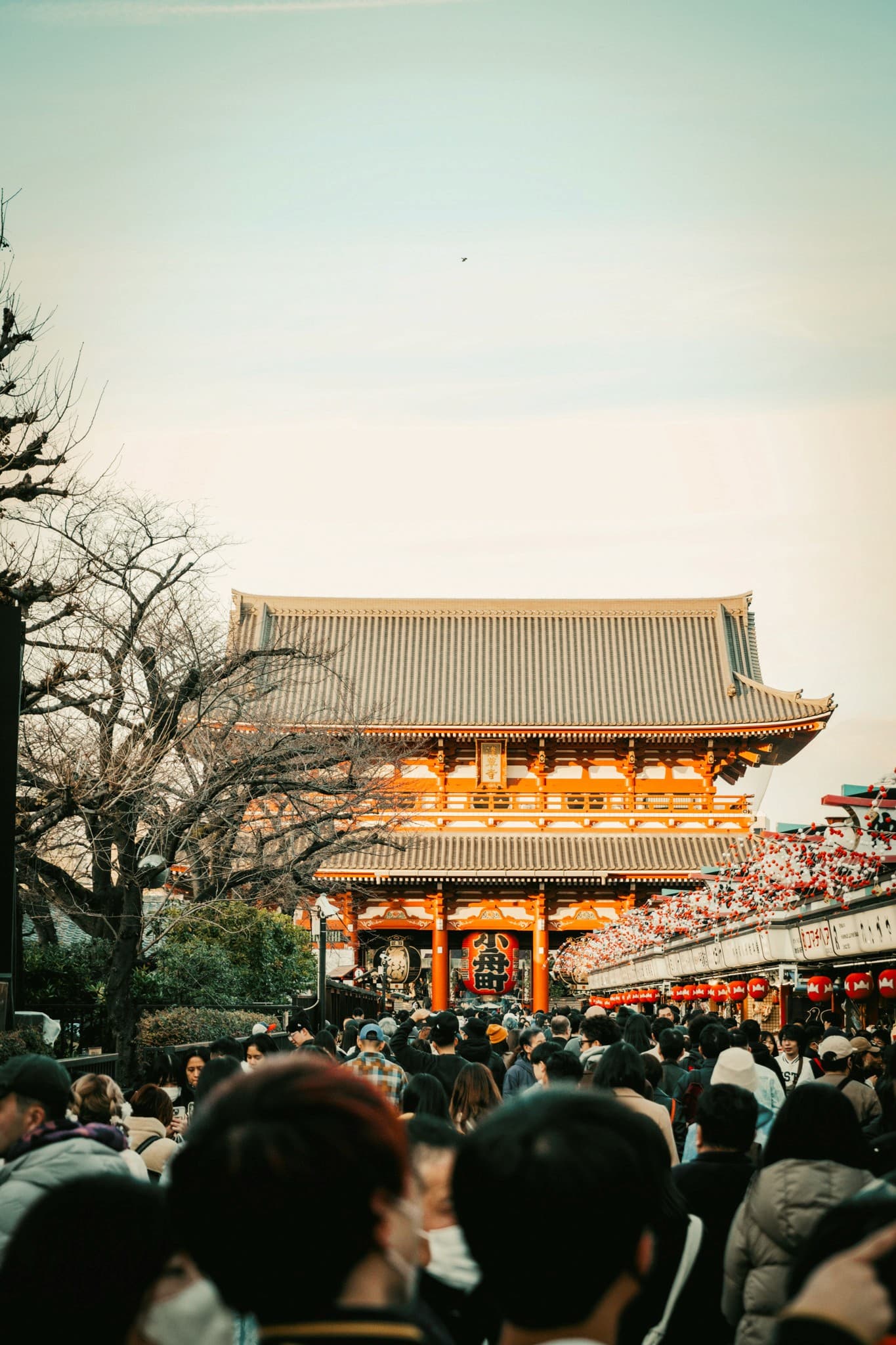
Nakamise's shops are opening up now. Your guide navigates the traditional crafts worth stopping for—senbe (rice crackers grilled to order), ningyo-yaki (sweet cakes stamped into shapes), handcrafted fans, and tenugui towels. Then step off Nakamise into the side streets most visitors never find. These parallel lanes hold the shops where locals actually buy: traditional hair accessories, incense, festival supplies. Your guide translates at each stop and explains what you're looking at.
- Senbe shops: rice crackers grilled fresh over charcoal, brushed with soy sauce—the original street food
- Ningyo-yaki: sweet bean paste in temple-shaped molds, best eaten warm from the griddle
- Side street craft shops: no tourist signage, no English—this is navigation-dependent access
Sumida River & Backstreet Asakusa
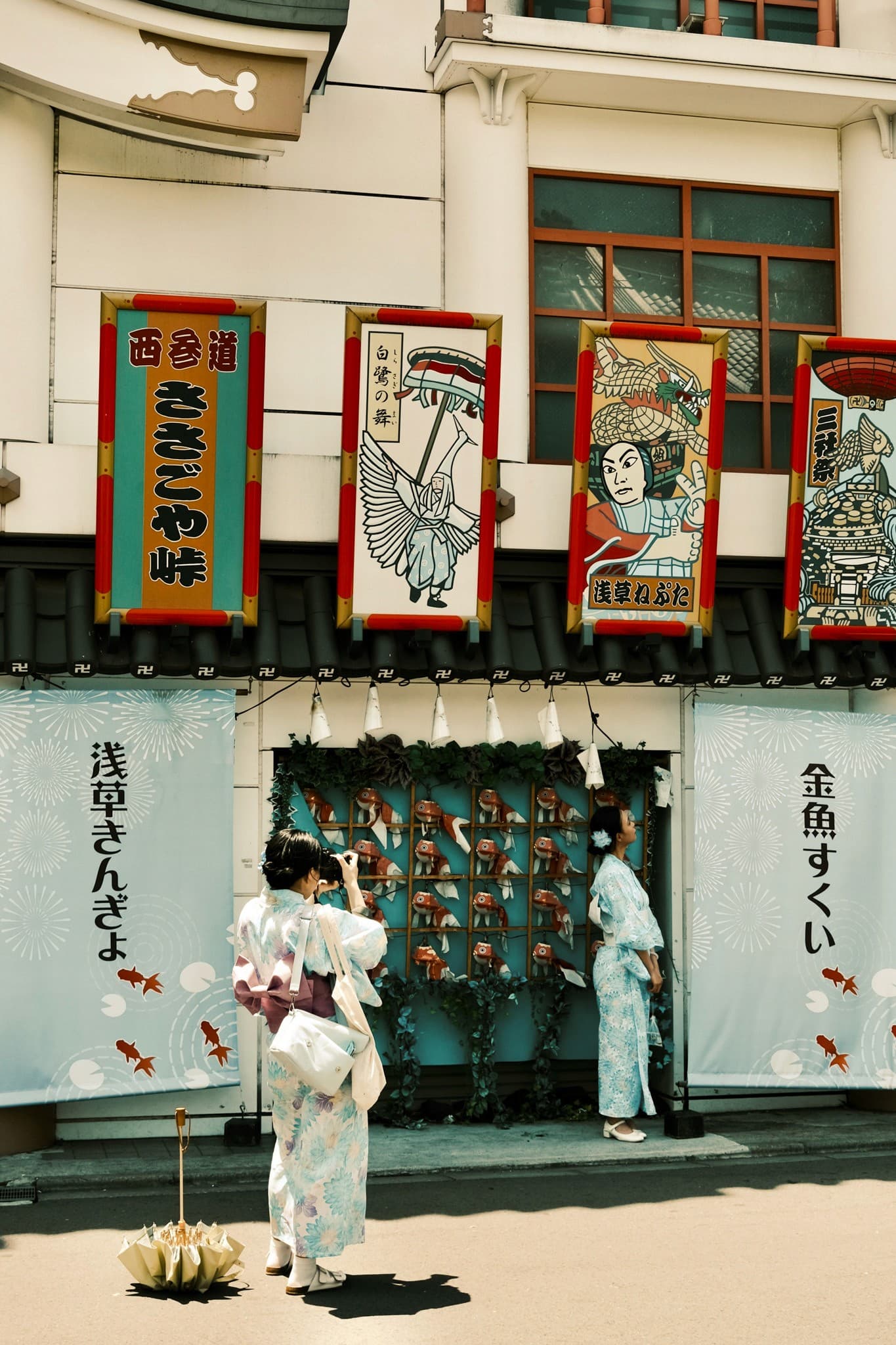
Walk to the Sumida River waterfront for Tokyo Skytree framed across the water—the old/new Tokyo contrast in a single view. Then into backstreet Asakusa: Ura-Asakusa's traditional shops, artisan workshops, and residential lanes where the shitamachi (downtown) way of life survives. Stop at Kurodaya (paper, 1856) and Honke Kaneso (knives, 1873). Your guide explains the shitamachi values, aesthetics, and community structures that persist in these narrow lanes away from the temple crowds.
- Sumida River Walk: Tokyo Skytree and Asahi Beer Hall's golden flame visible across the water
- Kurodaya: 100+ cherry blossom washi patterns, woodblock prints, calligraphy materials since 1856
- Honke Kaneso: steel knives from the Meiji transition when sword makers pivoted to kitchen blades
Hoppy-dori — Stew Pots & Old Asakusa
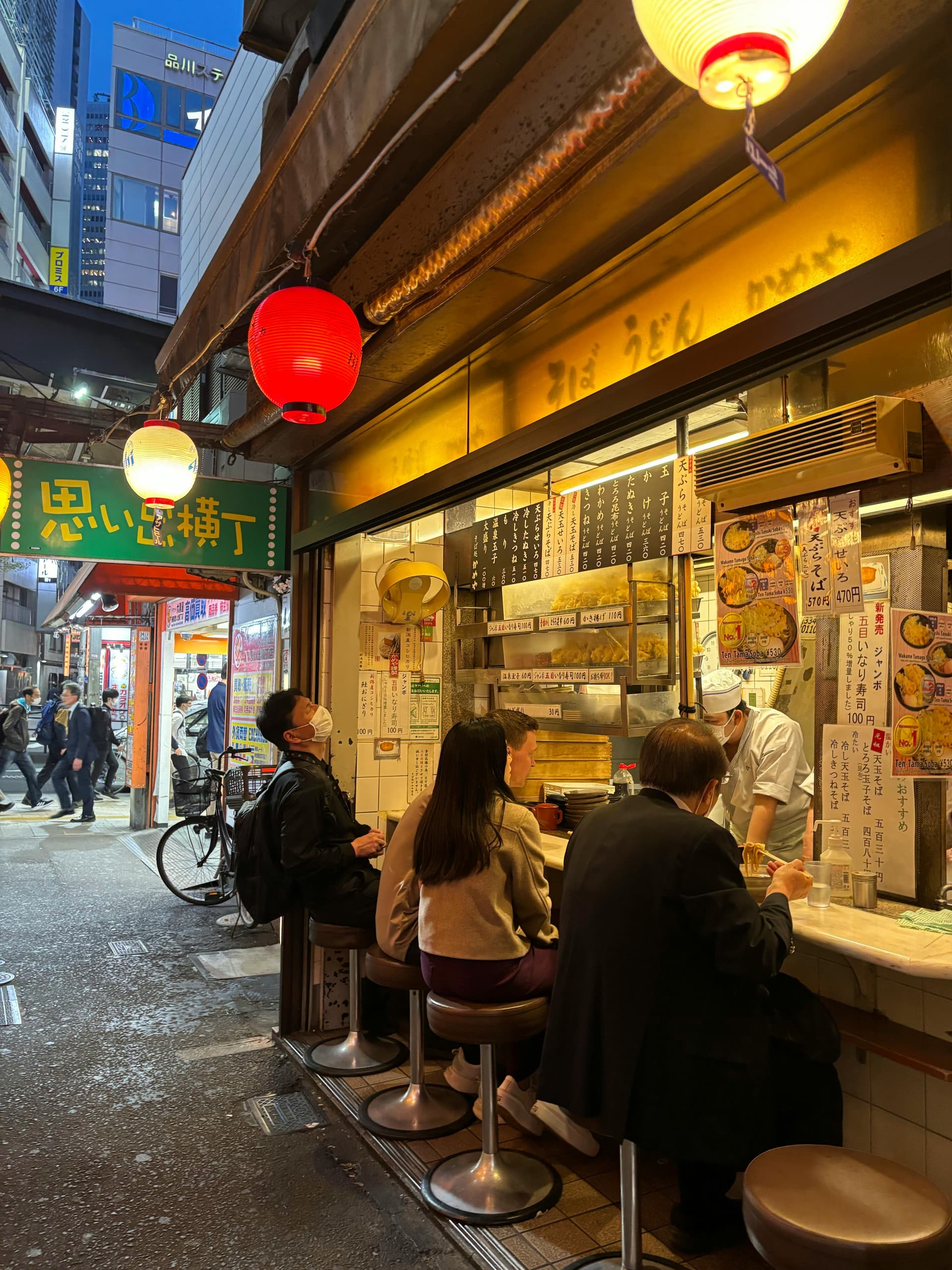
Finish at Hoppy-dori, 80 meters of backstreet izakayas already open and serving. Outdoor seating, red paper lanterns, cash only. The yakitori is on the grill and monjayaki stalls are firing up for the lunch crowd. Your guide orders at Shochan (same stew pot since 1951)—beef tendon stew ¥550, Hoppy set ¥600. Walk through the old entertainment district, where your guide reads the layers between Asakusa's past as Tokyo's pleasure quarter and the working-class drinking culture that replaced it.
- Shochan: ten counter seats, six outdoor. ¥1,450 for stew and two drinks. David Bowie once visited
- Hoppy: postwar beer substitute (0.8% alcohol) mixed with shochu—the drink that defined an era
- Tour ends at noon—stay for lunch or walk 15 minutes to Tokyo Skytree via Sumida River Walk
This is merely a suggestion. Your itinerary is fully bespoke.
Your Private Experience Includes
URA-ASAKUSA
LIVING CRAFT
TEMPLE GROUNDS