
Yanaka Private Tour
A private Yanaka tour for travelers who want more than "nostalgic old Tokyo vibes." Other Yanaka tours run as small groups or center on food. This one is about history: why around 70 temples cluster here, what the Shitamachi/Yamanote class divide means, and why this neighborhood was largely spared when so much of Tokyo burned twice.
Why Choose This Experience
For Travelers Who Want Yanaka Explained
Tokyo was destroyed twice in the 20th century, by the 1923 earthquake and the 1945 firebombing. Yanaka came through both largely intact. Many Yanaka tours focus on a single theme such as earthquake survival. We cover both disasters, plus the class geography that explains why Yanaka made it. The Edo-period mud wall at Kannonji Temple is one of Tokyo's few surviving earthen walls. The bronze Buddha at Tennoji dates to 1690. The cemetery holds the man on your ¥10,000 bill and the last shogun, whose family ruled for 265 years. Around 70 temples sit here because of Tokugawa-era urban planning. None of this is signposted in English. The streets are well signed and the shopping street is only 170 meters long, so getting around is easy. Understanding it is the part that needs a guide.
Someone to Read the Layers
Finding your way around Yanaka is easy, and the streets are well signed. Knowing what you're looking at is harder. Your guide reads what you can't see without Japanese and some history.
Original Architecture
Asakusa's big sights are postwar reconstructions. Yanaka's temples, cemetery and backstreets survived, and much of what you see is original.
Cemetery Translation
About 7,000 plots, including the man on your ¥10,000 bill and the last shogun of Japan. The inscriptions are in Japanese, and your guide reads them and tells you who these people were.
Shitamachi Identity
Yanaka's old streets are a record of social class. Your guide explains the Yamanote/Shitamachi divide, which still shapes Tokyo today.
Yanaka Private Tour Highlights


What Our Guests Say
"Our first day in Tokyo and what a perfect way to get started! He helped us understand the subway system, took us through markets, and kept us laughing."
"Fish market and Senso-ji were very interesting. Satoshi highlighted lots of interesting facts. Showed us where to get free samples and good photos."
"It gave us a great orientation to Tokyo. He helped us figure out the transportation system, which made the rest of our trip so much better!"
"He made adjustments to the schedule as needed, stayed overtime to see the Skytree, and accommodated picky eaters through his expertise of local food."
"My family wanted anime stuff and everything else jam packed into the day. Satoshi did not disappoint. My family is still raving about this tour days later!"
"I'd been to Tokyo many times before and still had never seen or heard of most everything he included in our tour. We liked it so much, we immediately booked a second day!"
TEMPLE STREETS
YANAKA CEMETERY
YANAKA GINZA
Your Journey
Yanaka Cemetery: Shoguns, Cherry Trees & Morning Light
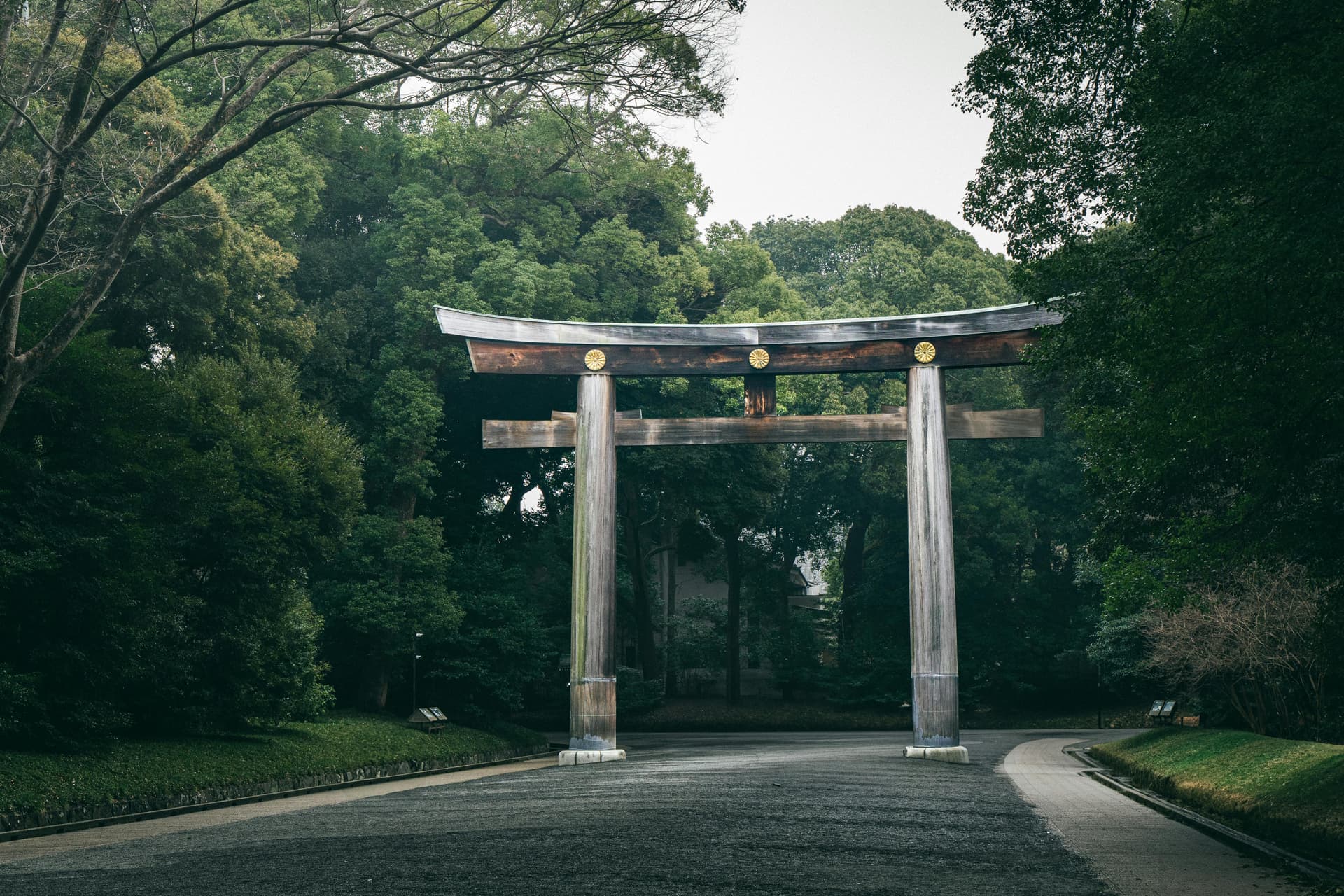
Meet at Nippori Station and walk into Yanaka Cemetery, one of Tokyo's oldest, where shoguns, artists and the man on your ¥10,000 bill are buried. In the morning the cherry-lined main path is quiet, with soft light across about 7,000 plots. Your guide finds Shibusawa Eiichi, the face on your money, and Tokugawa Yoshinobu, the last shogun, under a surprisingly modest Shinto-style mound. Then on to the temples: Tennoji (founded 1274, bronze Buddha from 1690), Kannonji (one of Tokyo's few surviving Edo-period mud walls), and a few of the 70 or so others packed into this small area.
- Kannonji Temple: a 37.6-meter Edo-period mud and tile wall, and a local 47 ronin story
- Shibusawa Eiichi: 'father of Japanese capitalism,' face on the ¥10,000 bill since 2024
- Tokugawa Yoshinobu: last shogun, buried in a Shinto-style mound, unlike earlier shoguns
Shitamachi Backstreets: Pre-War Tokyo That Survived
Walk the residential lanes that came through both the 1923 earthquake and the 1945 firebombing. Few old Tokyo neighborhoods were spared by both. Your guide points out what's original and what's postwar, and explains why Yanaka survived when most of the city burned. You'll pass narrow wooden houses, cat sculptures on fences and walls (Yanaka is known for its cats), and artisan workshops run from the same buildings for generations.
- Why Yanaka survived: the usual reasons given are firebreaks, temple grounds as buffers and distance from industrial targets
- Shitamachi architecture: narrow frontages (often explained by taxes on street width), deep plots for workshops, shared walls for community
- Cat town: sculptures, strays and themed shops, a neighborhood identity built around its cats
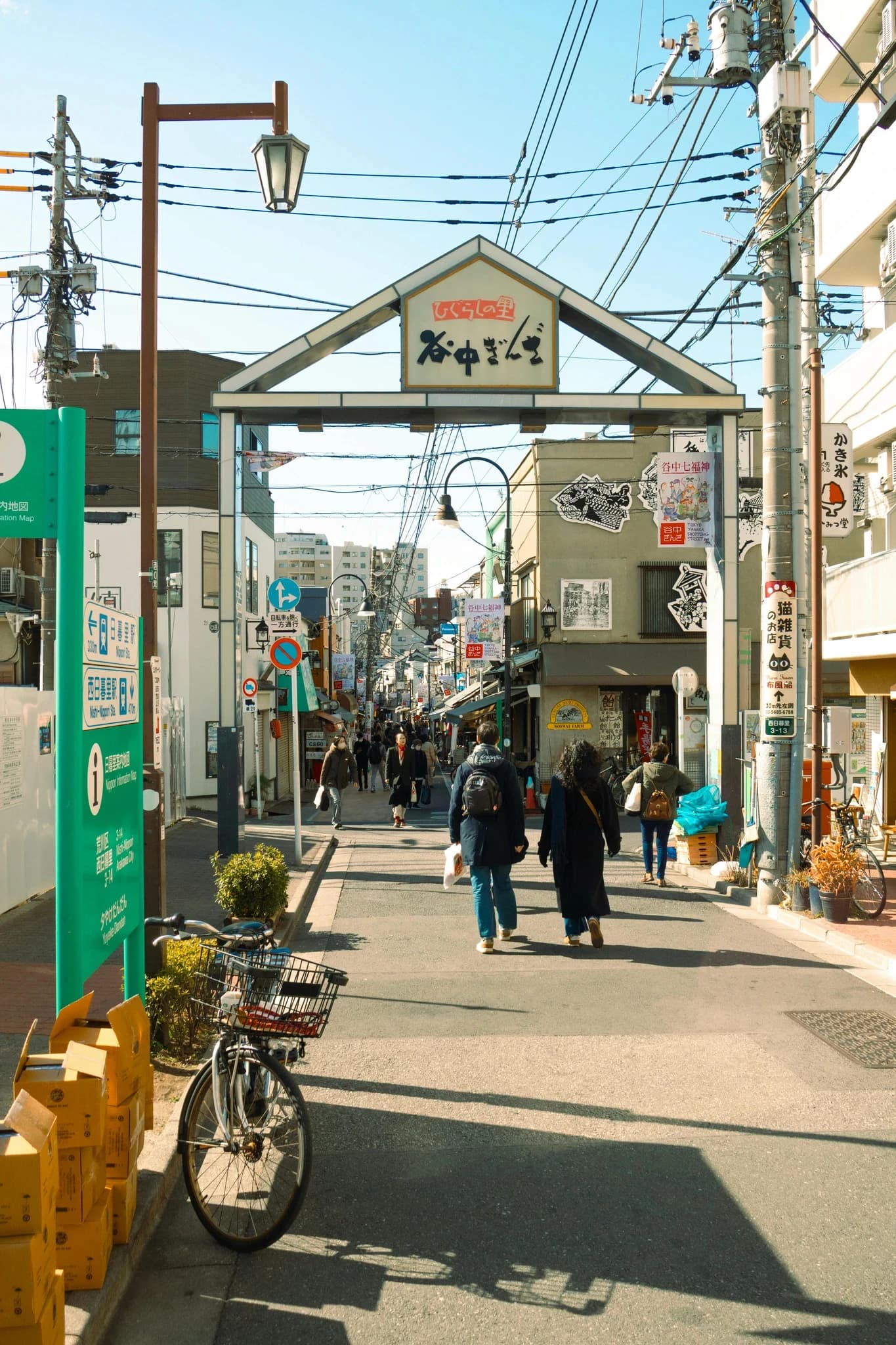
Yanaka Ginza: The Sunset Staircase & Traditional Snacks
Go down the Yuyake Dandan stairs, the 'sunset staircase' named for its golden-hour views, into Yanaka Ginza, the 170-meter shotengai at the center of neighborhood life. By late morning the street is busy. Try menchi-katsu (fried meat cutlets) and yakisenbei (grilled rice crackers), look through the local craft shops, and pick up cat-shaped sweets. The street only took shape around 1945, so it's the youngest thing in a neighborhood of centuries-old temples.
- Yuyake Dandan: the sunset staircase, named for golden-hour light and a Yanaka landmark at any time of day
- Echigoya Saketen: an old sake shop that can recommend local craft sake
- Niku no Suzuki: neighborhood butcher, famous for menchi-katsu you eat on the spot
Nezu & Sendagi: Ancient Shrine & Local Lunch
Walk south into the quieter residential streets of Nezu and Sendagi. Nezu Shrine is one of Tokyo's oldest, with a tunnel of vermillion torii gates and grounds known for the spring azalea festival. Lunch is at a neighborhood restaurant that locals use. The tour wraps up by 1:00 PM. Ueno is a short walk away, and Sendagi and Nezu stations connect you to the rest of Tokyo.
- Nezu Shrine: one of Tokyo's oldest shrines, famous for thousands of azalea bushes (festival in April-May) and its vermillion torii tunnel
- Sendagi streets: residential and quiet, and they feel like a different city from Shinjuku, about 25 minutes away
- Tour ends here. Walk to Ueno for museums and Ameyoko, or take the Chiyoda line from Sendagi or Nezu
This is merely a suggestion. Your itinerary is fully bespoke.
Your Private Experience Includes
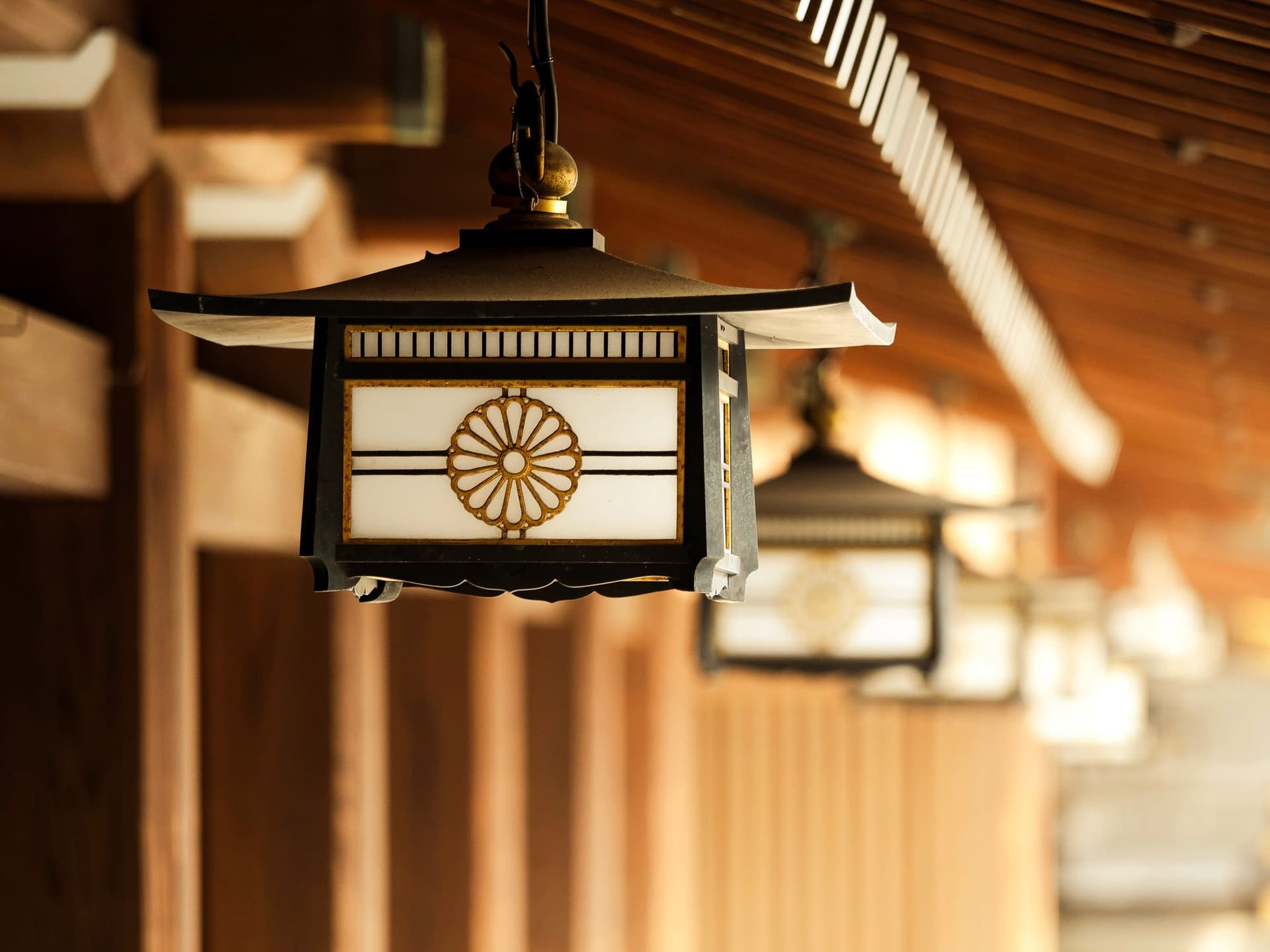
EDO-PERIOD TEMPLES
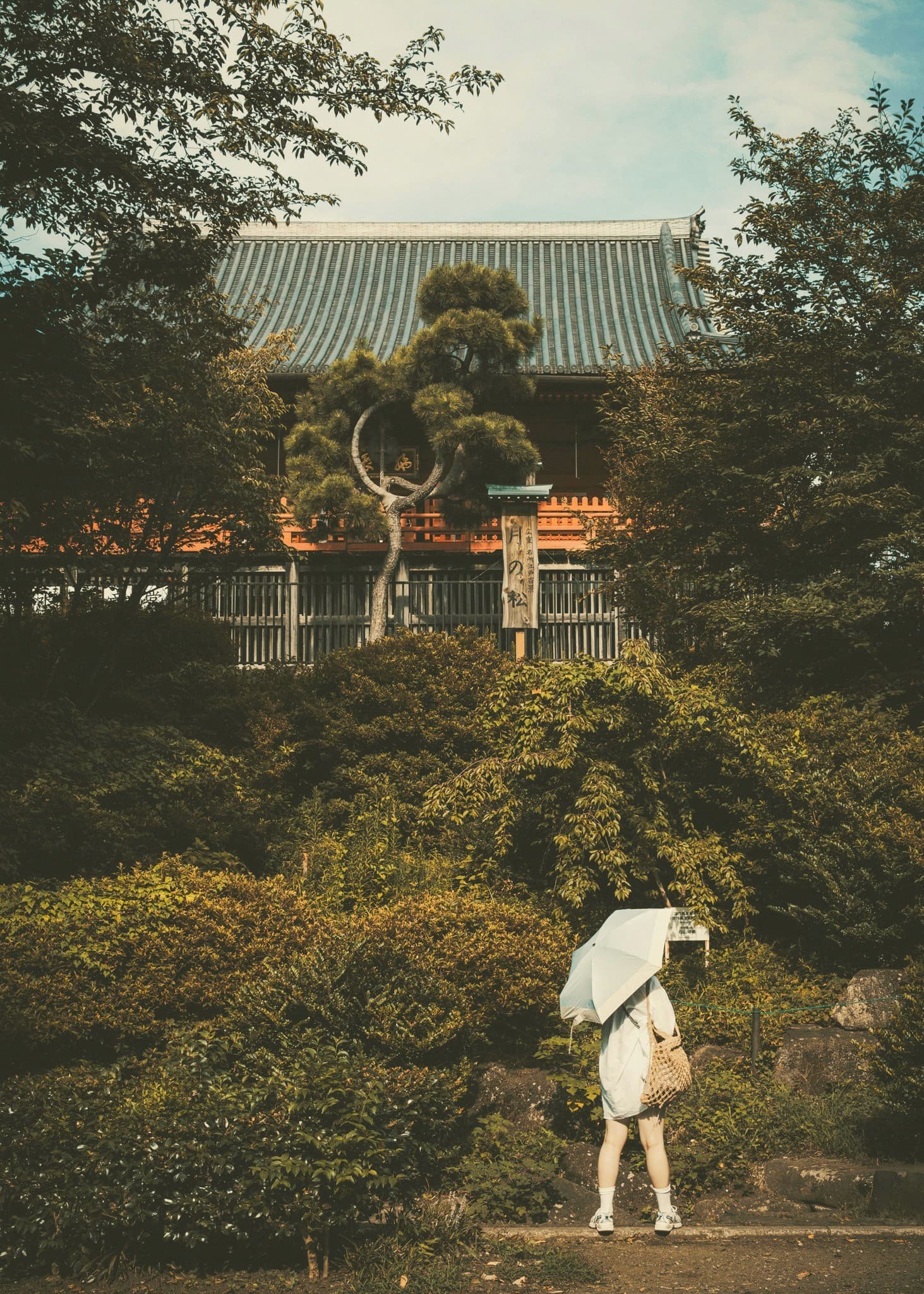
SHITAMACHI STREETS
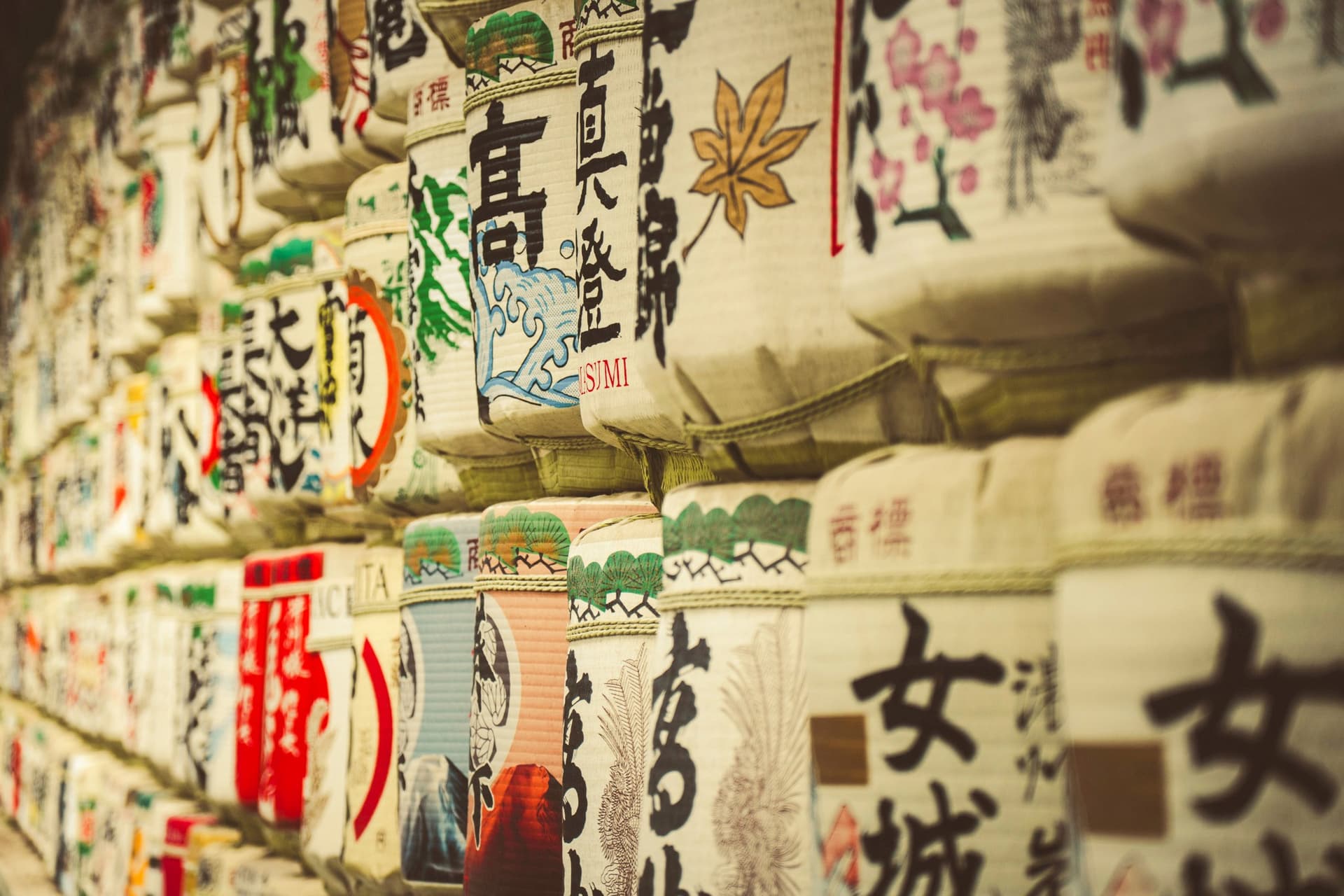
NEIGHBORHOOD SHRINES