Choosing a Tour
Cruise schedules promise 8 or 10 hours in port. After clearance, transit, and return buffer, you're working with half that. This page helps you decide what to do with the time you actually have.
September 1, 2025
8 mins read
Your ship's schedule says 8am to 6pm. Ten hours in Tokyo. But after port clearance, transit time, and the buffer you need to not miss your ship, you're working with five or six hours of actual touring time.
That changes everything about how you should plan.
Most cruise port guides lead with a list of attractions. This one starts with the math—because what you're actually working with determines everything else.
The gap between scheduled port time and usable touring time catches most cruise passengers off guard. Your ship docks early morning, but that's when the clock starts—not when you start exploring.
Where Your Hours Actually Go
Here's where your port hours disappear:
Port clearance: 30-60 minutes after docking before passengers can disembark
Transit to central Tokyo: 20-60 minutes depending on your terminal
Return buffer: 60-90 minutes before all-aboard (30 minutes before departure is non-negotiable)
Transit back to terminal: 20-60 minutes
Add it up: 3-4.5 hours of overhead on any port day.
Scheduled Port Time | Actual Touring Time |
|---|---|
8 hours | 4-5 hours |
10 hours | 5.5-7 hours |
12 hours | 7.5-9 hours |
What 5-6 Hours Looks Like
Five to six hours isn't a failure. It's enough time to explore one area of Tokyo well—to walk through a neighborhood, stop for lunch, visit a temple or shrine, and actually absorb where you are instead of rushing between checkpoints.
The problem isn't limited time. The problem is planning for ten hours when you have six.
Where your ship docks determines how much of your day goes to transit. Generic "Tokyo shore excursion" advice rarely accounts for this.
Tokyo International Cruise Terminal (Odaiba)
If you're docking at the Tokyo International Cruise Terminal in Odaiba, you're already inside Tokyo's city limits. This works in your favor.
Transit times from Odaiba:
Tokyo Station: 20-30 minutes
Asakusa: approximately 1 hour by train, 25 minutes by car
Shibuya: 33-36 minutes by train
A free shuttle runs between Tokyo Teleport Station and the cruise terminal when ships are in port. From there, the Yurikamome line connects to Shimbashi, where you can transfer to other lines.
Yokohama Ports (Osanbashi, Shinko, Daikoku)
Most cruise ships calling at "Tokyo" actually dock in Yokohama—about 30 kilometers south of central Tokyo. This adds significant transit time.
From Yokohama Osanbashi Pier:
15-minute walk to Nihon-Odori Station
40-50 minutes by train to central Tokyo (Shibuya, Shinjuku)
Free shuttle to Sakuragicho Station runs on cruise ship days
If you're docked in Yokohama and want to visit central Tokyo, budget 45-60 minutes each way. That's 90-120 minutes of your day in transit alone.
Alternative: Yokohama itself has plenty to see—Chinatown, the waterfront, Sankeien Garden. Staying in Yokohama saves transit time and still delivers a full day.
You have three options. Each serves different priorities. The right choice depends on what matters most to you.
Ship Excursion: When Peace of Mind Is the Priority
Ship-sponsored shore excursions come with a guarantee that matters: if the tour runs late, the ship will wait. If the ship absolutely cannot wait, the cruise line arranges and pays for your transportation to the next port.
This guarantee has real value. If you're anxious about logistics, unfamiliar with Japan, or simply want someone else handling every detail, ship excursions eliminate the stress of watching the clock.
The trade-offs:
Higher cost ($150-300 per person for a full-day Tokyo excursion)
Fixed itinerary with a large group (30-60 people on a bus is standard)
Limited flexibility to linger or adjust
Ship excursions make sense for first-time visitors to Japan who prioritize certainty, travelers who don't want to navigate unfamiliar transit systems, and anyone who would spend the day worried about getting back in time.
DIY: When You Have Confidence and Flexibility
Exploring independently costs the least and offers the most freedom. Tokyo's train system is reliable, signs are in English, and smartphone navigation works well.
DIY works if:
You've been to Tokyo before or traveled independently in Japan
You're comfortable navigating foreign transit systems
You enjoy solo exploration and spontaneous discoveries
You're on a tight budget
The trade-offs:
No guarantee the ship will wait if you're late
Transit time spent figuring out routes instead of exploring
Decision fatigue in an unfamiliar city
Risk of over-ambitious planning without local knowledge
A Tokyo Metro 24-hour pass costs about ¥700 (roughly $5). Transportation is not the expensive part. Time and confidence are.
Private Guide: When You Want the Day Designed for You
A private guide falls between ship excursion and DIY. You get personalized attention and local knowledge without the rigid structure of a group tour.
What a private guide provides:
Itinerary designed around your interests and pace
Real-time flexibility to adjust based on energy, weather, or discoveries
Efficient navigation (no time lost finding train platforms or exits)
Someone who knows when to push and when to slow down
If you're wondering what to expect physically or how guides handle weather changes, we cover both in detail.
The trade-offs:
No "ship will wait" guarantee (good guides build buffer time into every cruise port itinerary)
Requires trusting an operator you haven't met
Cost varies significantly by group size
Private guides make sense for travelers who want personalization, groups of 2-8 who can split the cost, and anyone who values efficient use of limited time.
"Private tours are expensive" is a common assumption. It's also incomplete. The math changes dramatically based on how many people you're traveling with.
Per-Person vs. Per-Group Pricing
Ship excursions charge per person. Private tours charge per group.
Option | 2 People | 4 People | 6 People | 8 People |
|---|---|---|---|---|
Ship excursion ($175/pp) | $350 | $700 | $1,050 | $1,400 |
Private guide (8-hour) | $550 | $708 | $870 | $1,016 |
Per-person private | $275 | $177 | $145 | $127 |
When Private Tours Cost Less
For solo travelers or couples, ship excursions or DIY make more financial sense. If you're unsure whether paying for a private guide is worth it, we've written a full breakdown of what you're actually paying for.
For groups of 4 or more, a private guide costs less per person than a ship excursion—with personalized attention instead of sharing a bus with 50 strangers.
The breakeven point: 3-4 people. Beyond that, private tours are the more economical choice. For a full pricing breakdown by group size and tour length, see our pricing guide.
The instinct is to see as much as possible. But trying to cover too much ground turns a port day into a blur of rushing between locations.
One Area, Done Well
Five to six hours is enough time to explore one area of Tokyo deeply:
East Tokyo option: Asakusa and Ueno
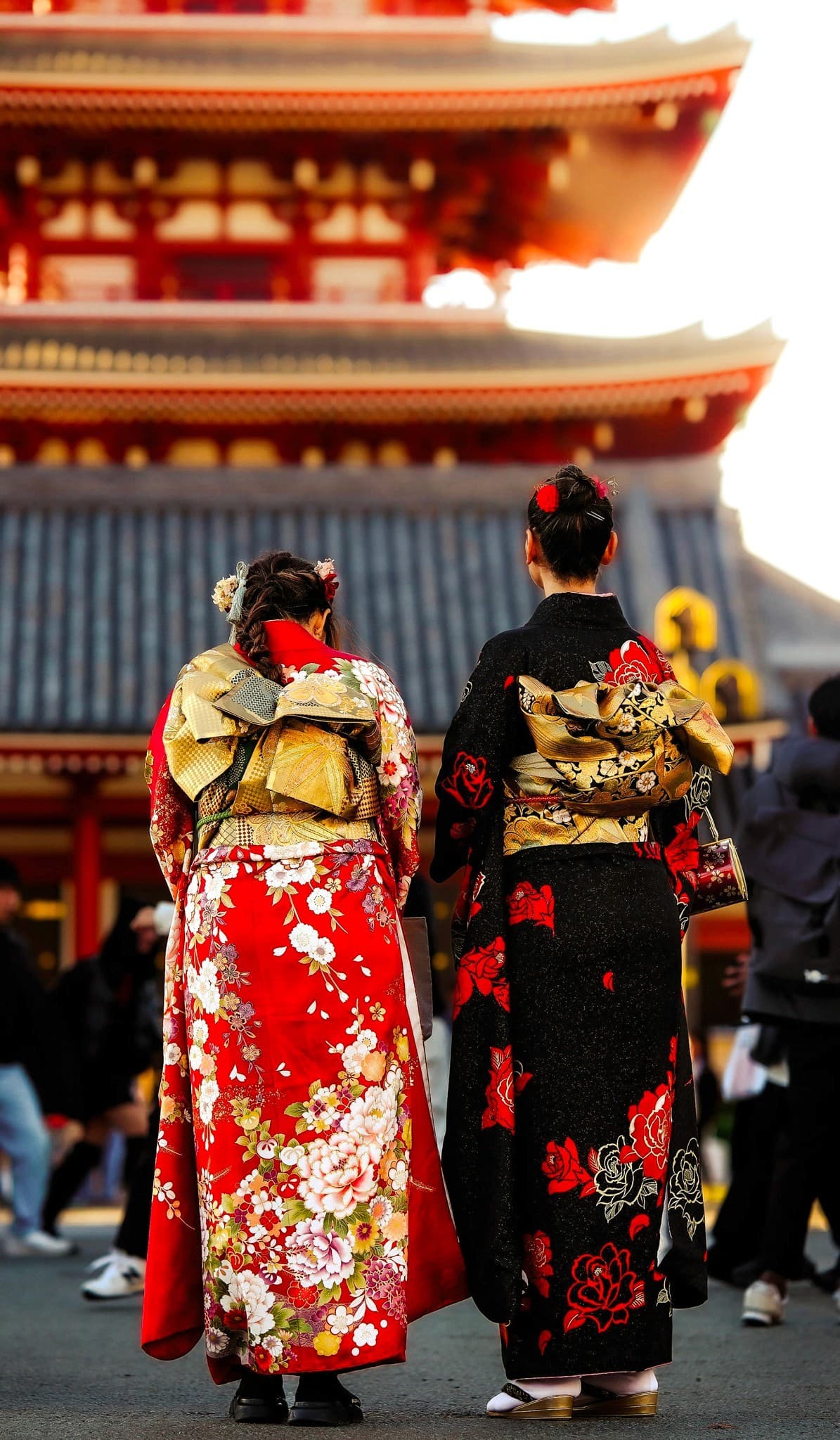
Senso-ji Temple and Nakamise shopping street
Walk along the Sumida River
Ueno Park, Ameyoko market
Combined time: 5-6 hours at comfortable pace
Distance between: 2.8 km (25-minute walk or 5-minute train)
West Tokyo option: Shibuya, Harajuku, and Meiji Shrine
Shibuya Crossing and surrounding streets
Takeshita Street and Harajuku neighborhoods
Meiji Shrine and forested grounds
Combined time: 4-5 hours at comfortable pace
Both options leave time for lunch, unexpected discoveries, and the return journey. Neither requires racing through checkpoints.
The Mt. Fuji Question
Many cruise passengers ask about visiting Mt. Fuji during their port day. Here's the honest answer: Mt. Fuji is approximately 100 km (62 miles) from Tokyo. A bus from central Tokyo takes 2-2.5 hours each way. A full Mt. Fuji day trip runs 10-12 hours.
If your ship departs at 5pm and you need to be back by 4:30pm, Mt. Fuji isn't a Tokyo add-on. It's a choice that replaces your entire Tokyo experience.
There's nothing wrong with choosing Mt. Fuji. But know what you're trading: you'll spend 5+ hours in transit and have no time for Tokyo itself. If Mt. Fuji is your priority, plan for that. If you want to experience Tokyo, Mt. Fuji needs to wait for another trip.
The right choice depends on who you are and what you're optimizing for.
If You Value Certainty Over Everything
Book a ship excursion. The guaranteed return is worth the premium if you'd spend the day worried about getting back in time. First-time visitors to Japan, travelers uncomfortable with unfamiliar transit, and anyone with high anxiety about logistics will find peace of mind in the ship's guarantee.
If You've Done This Before
DIY makes sense. If you've navigated Tokyo before, traveled independently in Japan, or enjoy figuring things out yourself, you don't need hand-holding. Get a Metro day pass, download offline maps, and wander.
If You Want Someone to Design the Day
A private guide fits. You get local knowledge and efficient navigation without the rigidity of a group tour. Works well for travelers who want personalization, groups splitting the cost, and anyone who values maximizing limited time over minimizing cost.
The right choice depends on who you are and what you're optimizing for.
If You Value Certainty Over Everything
Book a ship excursion. The guaranteed return is worth the premium if you'd spend the day worried about getting back in time. First-time visitors to Japan, travelers uncomfortable with unfamiliar transit, and anyone with high anxiety about logistics will find peace of mind in the ship's guarantee.
If You've Done This Before
DIY makes sense. If you've navigated Tokyo before, traveled independently in Japan, or enjoy figuring things out yourself, you don't need hand-holding. Get a Metro day pass, download offline maps, and wander.
If You Want Someone to Design the Day
A private guide fits. You get local knowledge and efficient navigation without the rigidity of a group tour. Works well for travelers who want personalization, groups splitting the cost, and anyone who values maximizing limited time over minimizing cost.
Not all private tour operators understand cruise constraints. When evaluating options, ask:
Do they build return buffers into cruise itineraries?
Can they customize to your interests?
Will you know your guide before the tour, or is assignment day-of?
What happens if something goes wrong?
For a complete list, see our questions to ask before booking.
Good cruise port guides build 60-90 minute return buffers into every itinerary. Missing your ship isn't an option—they plan accordingly.
How We Approach Cruise Port Days
We design cruise port tours around the time you actually have, not the time your schedule promises.
Our approach:
Confirm your ship's all-aboard time and work backward
Build 60-90 minute buffer before you need to be at the terminal
Focus on one area of Tokyo rather than rushing across the city
Meet you at your hotel or a convenient location near the port
Adjust in real time based on your energy and interests
Pricing for an 8-hour full-day tour: $550 for 2 people, $708 for 4 people, $1,016 for 8 people. Shorter 6-hour options available for tighter port schedules. Our Tokyo Essentials experience works well for cruise passengers wanting a structured introduction to the city.
We recommend booking 2-4 weeks in advance, especially during cherry blossom season (late March through early April) or autumn foliage (November). However, our systems support instant confirmation and can be booked up to 24 hours before the tour starts.
Private guides don't have the ship's "we'll wait for you" guarantee. What we offer instead: an itinerary designed to get you back early—without sacrificing the quality of your day.
Where Hinomaru One Fits
Your port day math is our starting point. We confirm all-aboard time, build the buffer, and design backward from there. No rushed multi-neighborhood checklist—one area of Tokyo, explored properly, with time to spare before you need to be back at the terminal.
At Hinomaru One, we design culturally rich, stress-free private Tokyo tours for first-time and seasoned travelers. Unrushed. Insightful. Always customized.