
Food & Drink

Private Food Tours in Tokyo: When Guided Navigation Makes Sense

Private Food Tours in Tokyo: When Guided Navigation Makes Sense

You're not choosing between "food tour yes or no"—you're choosing navigation strategies for different constraints. Understand what food tours actually deliver and when DIY makes more sense.

December 20, 2025

6 mins read

share this article

/

Private Food Tours in Tokyo: When Guided Navigation Makes Sense

/

Private Food Tours in Tokyo: When Guided Navigation Makes Sense

/

Private Food Tours in Tokyo: When Guided Navigation Makes Sense

Tokyo food tours aren't about finding restaurants—they're about navigating constraints safely, accessing venues impossible alone, or front-loading orientation.

Tokyo food tours aren't about finding restaurants—they're about navigating constraints safely, accessing venues impossible alone, or front-loading orientation.

Tokyo food tours aren't about finding restaurants—they're about navigating constraints safely, accessing venues impossible alone, or front-loading orientation.

Food tours in Tokyo solve three problems: dietary safety when restrictions create real risk, insider access to venues with structural barriers, and cultural orientation that makes the rest of your trip more confident. If none of those apply, you probably don't need one. This page helps you figure out which category you're in.

What You're Actually Deciding

What You're Actually Deciding

What You're Actually Deciding

What You're Actually Deciding

You're not choosing between "food tour yes or no." You're choosing between navigation strategies for different constraints.

For specifics on particular experiences—ramen tours, izakaya crawls, standing bar culture, market visits—we have dedicated guides.

The Three Problems Food Tours Actually Solve

Dietary safety mediation. If you have celiac disease, severe allergies, vegan requirements, or halal/kosher needs, Tokyo's dining culture creates friction. Fish stock (dashi) appears in dishes that look vegetarian. Cross-contamination communication requires negotiation beyond translation apps—this is where language barriers become a safety issue, not just an inconvenience. A guide who speaks Japanese and understands kitchen processes mediates real-time with chefs. This isn't convenience—it's risk reduction.

Insider access. Some experiences require connections or licenses:

  • Toyosu wholesale market observation deck uses a lottery system months in advance

  • Sake breweries require 3-7 days advance reservation, many offer tours only in Japanese

  • Japanese whisky distilleries (Yamazaki, Hakushu) use 2-month lottery systems

  • Standing bars and counter-only spots have unwritten ordering protocols

Guides unlock access through existing relationships or handle the logistics you can't.

Cultural orientation. Early-trip food tours teach you how Tokyo dining actually works—how to read menus structured by cooking method, how standing bars differ from izakayas, which neighborhoods specialize in what. You learn patterns, not just restaurants. This knowledge compounds across the rest of your trip, which is why day 1-2 tours deliver more value than day 5-6 tours.

"Food Tour" Means Six Different Things in Tokyo

"Food Tour" Means Six Different Things in Tokyo

"Food Tour" Means Six Different Things in Tokyo

"Food Tour" Means Six Different Things in Tokyo

The phrase "food tour" describes fundamentally different experiences. Before you book, understand which format matches your constraints—dietary needs, access requirements, or learning goals. Duration matters too: see full-day vs half-day tours for how timing affects what's possible.

Tour Format

Duration

What You Do

Best For

Typical Cost

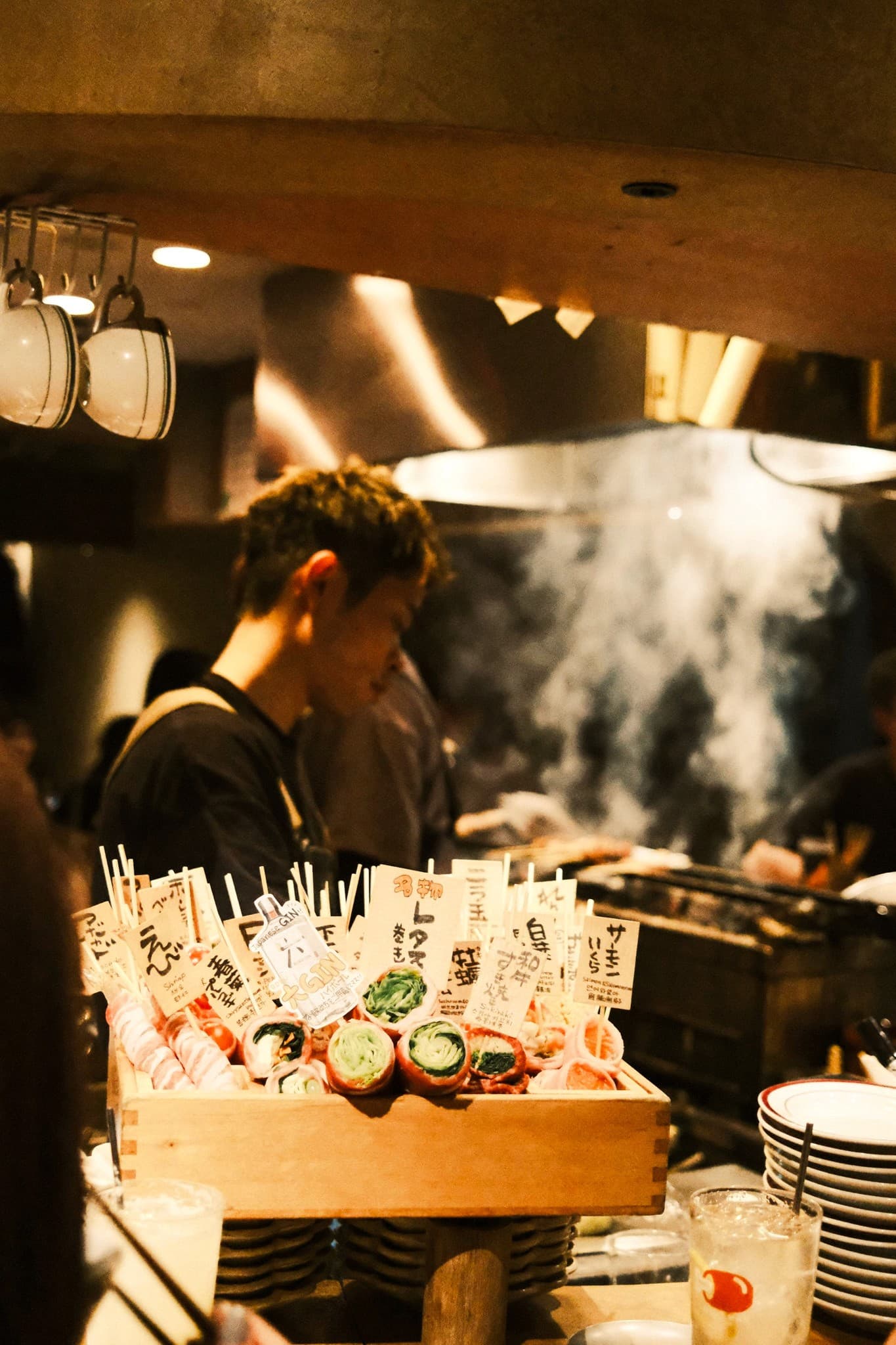
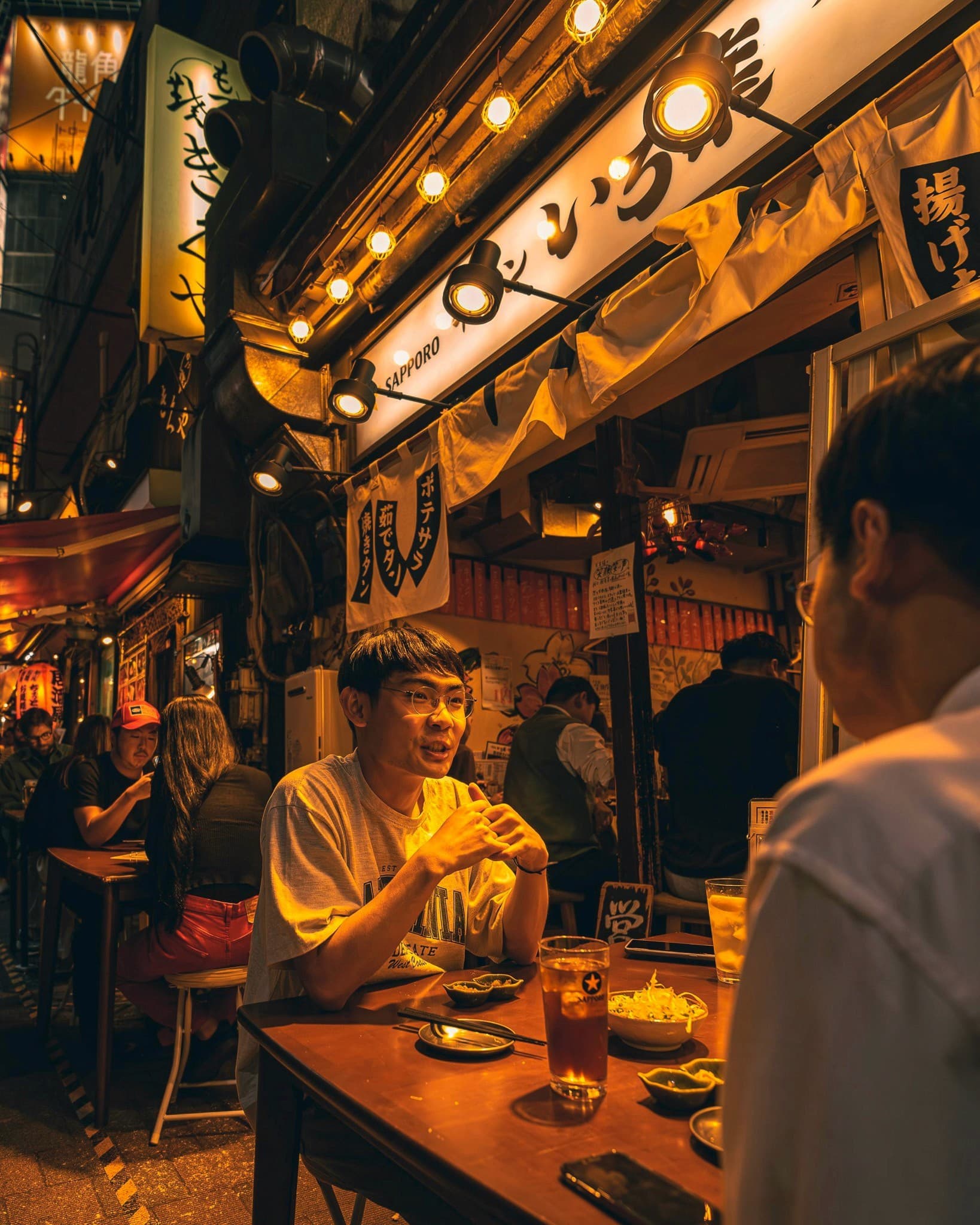
Walking Bar Hop (Yakitori, Izakaya, Standing Bars)

3-4 hours evening

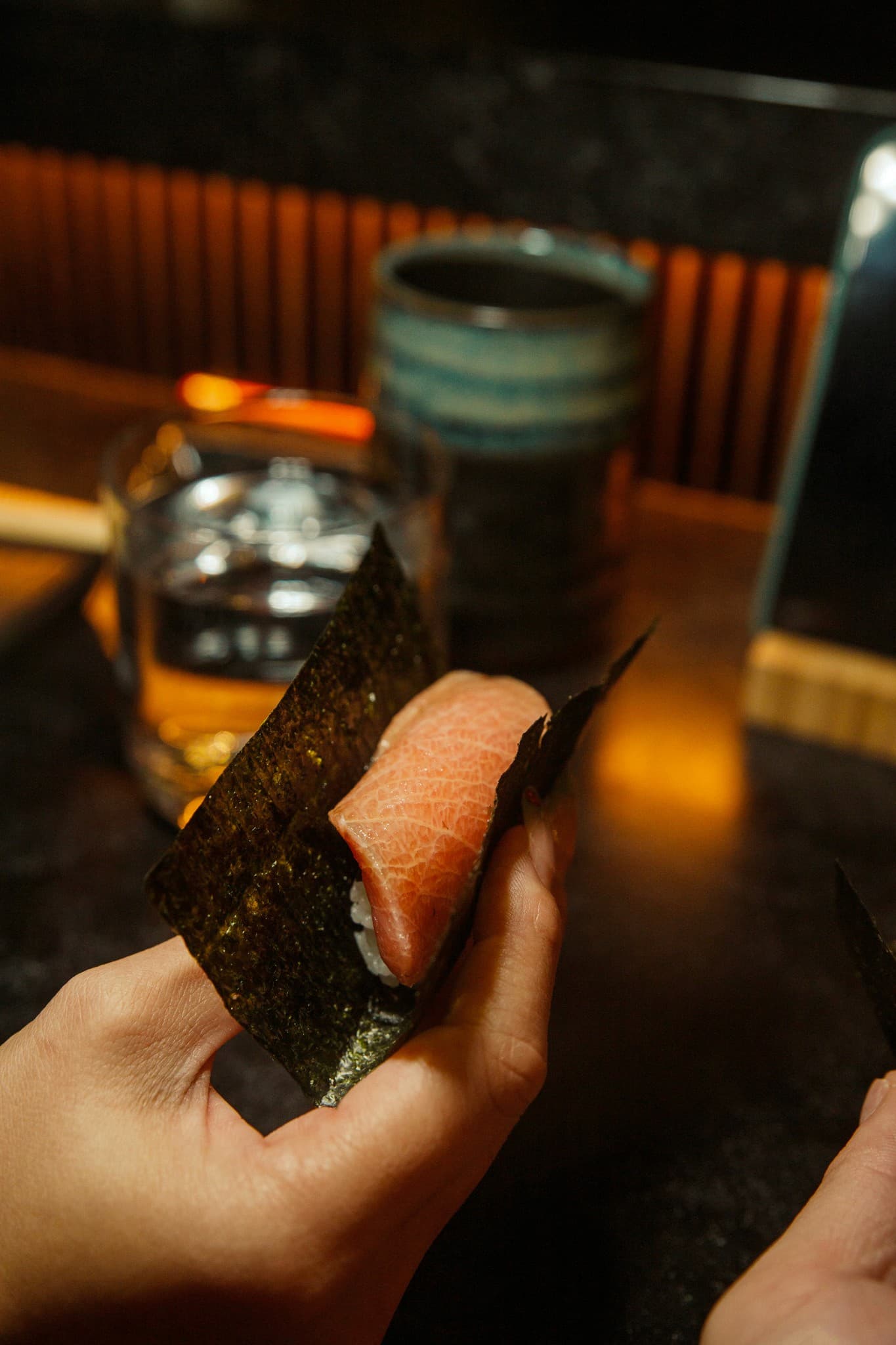
Taste small portions at 3-5 venues—yakitori, sake flights, standing sushi, craft beer. Food spending ¥5,000-8,000/person ($35-55)

Cultural sampling without full meals; learning venue types and ordering vocabulary

Varies by operator

Wholesale Market Access (Toyosu, Tsukiji)

2-3 hours early morning (5:30-6:30 AM auction or 8-11 AM market)

Observe tuna auction (lottery required), tour Tsukiji Outer Market stalls

Seeing commercial fish distribution, shopping knife/kitchenware vendors

Varies by operator

Beverage Education (Sake, Whisky, Beer)

45-60 min (brewery) or 2-3 hours (bar hopping)

Focused tastings with explanation at breweries or specialist bars

Prioritizing drink education; learning flavor profiles and ordering

$50-150/person

Restaurant Facilitation

4-6 hours for 2-3 venues

Full meals at Japanese-only restaurants with guide mediating ordering/dietary questions

Dietary restrictions needing negotiation; sit-down experiences without language stress

Varies by operator

Neighborhood Deep-Dive

4-8 hours

Food as cultural lens—markets, street vendors, bakeries, specialty shops (not just restaurants)

Treating food as cultural entry point; educational over pure tasting

Varies by operator

Specialty Access

Varies

Reservation-only restaurants, omakase counters, member-introduction venues

Premium dining budget; exclusive venues over neighborhood exploration

$300-800+/person

Standing bars and izakayas have their own protocols—see our standing bar guide and izakaya overview. Market tours differ between Toyosu (lottery-based auction access, early morning) and Tsukiji (walk-in, retail-focused).

Dietary Restrictions: When DIY Becomes Risky

Dietary Restrictions: When DIY Becomes Risky

Dietary Restrictions: When DIY Becomes Risky

Dietary Restrictions: When DIY Becomes Risky

Tokyo's dining culture creates different friction levels for different restrictions. The distinction that matters: tedious versus genuinely risky.

Restriction

DIY Difficulty

Guide Value

Key Challenge

Vegetarian

Tedious but manageable

Moderate

Dashi (fish stock) hidden in most traditional dishes

Vegan

High friction

High

Cultural concept gap; dashi in almost everything; cross-contamination not tracked

Celiac/Gluten-Free

Complex

Very High

Cross-contamination communication requires kitchen conversation beyond translation

Severe Allergies

Medical risk

Critical

Need human judgment for ingredient verification and cross-contact assessment

Halal

Limited options

Moderate to High

298 restaurants in Tokyo; certification standards vary; advance planning essential

Kosher

Extremely limited

Moderate to High

Only 1 sit-down kosher restaurant (David's Deli in Minato City); most travelers bring packaged food

Simple restrictions (vegetarian) are manageable with apps and persistence. Complex restrictions (celiac, severe allergies) require real-time kitchen negotiation in Japanese—explaining cross-contamination mechanics, verifying preparation methods, assessing whether staff understand severity. That's where guides provide safety value, not just convenience. For planning around specific dietary needs, see our customization guide.

Access: Where Guides Unlock What You Can't

Access: Where Guides Unlock What You Can't

Access: Where Guides Unlock What You Can't

Access: Where Guides Unlock What You Can't

Some experiences have structural barriers beyond language:

Experience

Barrier

Guide Value

Toyosu tuna auction

Lottery registration months ahead

High—handles logistics

Sake breweries

3-7 day reservation in Japanese

Moderate—convenience

Whisky distilleries (Yamazaki, Hakushu)

2-month lottery system

High—handles logistics

Standing bars

Unwritten ordering/payment protocols (cash only, X-sign for bill, return own dishes, ~1 hour expected stay)

Moderate—navigation help

Tsukiji, sake bars, izakayas

Walk-in accessible

Low—you can figure it out

Private vs Public Food Tours

Private vs Public Food Tours

Private vs Public Food Tours

Private vs Public Food Tours

Dimension

Public Tours

Private Tours

Pricing

$100-200/person

$150-400+ total; per-person drops with larger groups

Customization

Fixed route, standard stops

Adapts to dietary needs, interests, pacing

Venue access

Tourist-friendly, group-sized

Japanese-only spots, counter seats, smaller establishments

Best for

Budget-conscious, no dietary restrictions, enjoy group energy

Dietary restrictions, specific interests, prefer private experience

Public tours optimize for reliability and scale. Private tours optimize for personalization and access. For a deeper comparison, see are private tours in Tokyo worth it.

Evaluating Providers: What to Watch For

Evaluating Providers: What to Watch For

Evaluating Providers: What to Watch For

Evaluating Providers: What to Watch For

Quality varies widely. A few signals that matter:

Signal

What It Tells You

Asks about dietary restrictions 3-7 days ahead

They're doing advance restaurant research

Names specific venues

They have actual relationships, not generic routes

Explains backup plan if restaurant can't accommodate

They've handled restrictions before

"We can accommodate any dietary restriction"

Red flag—halal/kosher have real system limits

"Hidden gems tourists never find"

Red flag—most good spots aren't hidden, just Japanese-only

Guarantees exclusive access without explaining logistics

Red flag—some venues book months ahead

On pricing: Private tours run $150-400+ per person depending on group size, duration, and venue tier. Worth paying premium for dietary restriction expertise. Not worth premium for "secret access" marketing. See our pricing breakdown and planning guide for the full vetting process.

When You're Better Off Going Alone

When You're Better Off Going Alone

When You're Better Off Going Alone

When You're Better Off Going Alone

Tours solve constraint problems. No constraints, no tour needed. Consider skipping the tour if:

  • No dietary restrictions — you can eat anywhere without safety concerns

  • Staying 7+ days — time to absorb inefficiency and learn through trial-and-error

  • Budget is priority — $150-400 per person buys 3-8 restaurant meals independently

  • You value spontaneity — eating when hungry, extending time at places you love, following random recommendations

Some travelers want efficiency. Others want the friction of figuring it out. Our guide to exploring Tokyo without a private tour covers when going solo makes sense.

Where Hinomaru One Fits

Where Hinomaru One Fits

Where Hinomaru One Fits

Where Hinomaru One Fits

Our food tours handle dietary restrictions through advance planning and real-time kitchen negotiation. We ask about your needs when you book, research compatible venues beforehand, and communicate restrictions in Japanese on tour day. Celiac, vegan, halal—we've built routes around all of them.

Two tours focus on Tokyo's food and drink culture: Kushiyaki Confidential (6 hours through Shibuya, Ebisu, and Nakameguro's yakitori joints, standing sushi, and sake bars) and Standing Room Only (4 hours exploring Suginami Ward's retro izakayas and standing bars).

At Hinomaru One, we design culturally rich, stress-free private Tokyo tours for first-time and seasoned travelers. Unrushed. Insightful. Always customized.

share this article

share this article

share this article

Newsletter

Unlock the secrets of Japan with Hinomaru One delivered straight to your inbox.

Hinomaru One Logo

PRIVACY

TERMS

Newsletter

Unlock the secrets of Japan with Hinomaru One delivered straight to your inbox.

Hinomaru One Logo

PRIVACY

TERMS

Newsletter

Unlock the secrets of Japan with Hinomaru One delivered straight to your inbox.

Hinomaru One Logo

PRIVACY

TERMS

Newsletter

Unlock the secrets of Japan with Hinomaru One delivered straight to your inbox.

Hinomaru One Logo

PRIVACY

TERMS