Most guides say "worth a visit" without telling you which version. Here's how to choose between the official tour, the East Gardens, or skipping it entirely.
July 12, 2025
10 mins read
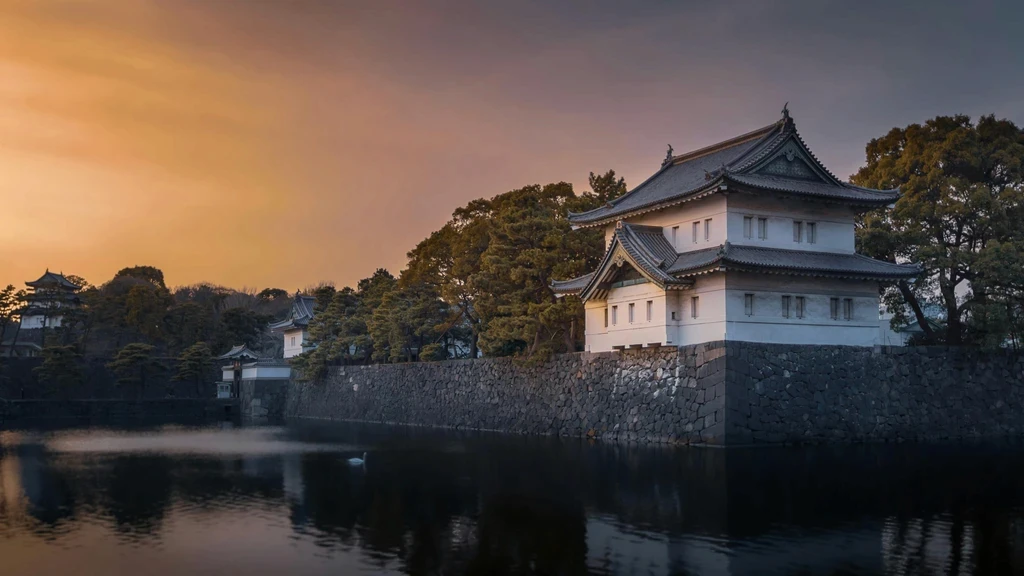

"The Imperial Palace" appears on every Tokyo itinerary. What doesn't: the fact that it's actually three different experiences — each with different access rules, time commitments, and satisfaction rates. Most visitors pick one without realizing the others exist.
Three Experiences, One Name
When people say "I visited the Imperial Palace," they could mean three completely different things. The first decision: which one are you choosing?
The Official Tour (Imperial Household Agency)
A free, 75-minute guided walk through inner palace grounds. Run by the Imperial Household Agency, not private operators. Groups often exceed 200 people. Advance booking required. Fixed schedule: 10:00 AM or 1:30 PM, Tuesday through Saturday.
The East Gardens (Free, Public)
The former site of Edo Castle's innermost defenses. Free admission, no booking required. Typical visit: 45-90 minutes. You set your own pace.
The Outer Grounds (Always Open)
The 5km perimeter path around the palace moats. Accessible 24 hours, no booking, no gates. Popular with joggers. This is where you get the classic Nijubashi Bridge photo — but you're looking at the palace from outside, not walking through it.
Access Type | Booking | Time Required | Cost | What You See |
|---|---|---|---|---|
Official Tour | Required, month+ ahead | 75 min fixed | Free | Inner grounds, Chowaden Hall, Niju Bridge up close |
East Gardens | None | 45-90 min flexible | Free | Edo Castle ruins, stone walls, guardhouses, gardens |
Outer Grounds | None | 15 min to 2 hours | Free | Moats, Nijubashi photo spot, perimeter views |
What You Will — and Won't — See
This Is Not Versailles
Travelers expecting a palace museum leave disappointed. No throne rooms, no art collections, no imperial chambers. The current palace buildings were constructed in the 1960s after the originals were destroyed in 1945 firebombing. You see grounds, not interiors.
What survives — and what makes this place historically significant — are the stone walls. Built in phases between 1607 and 1638, these massive foundations were the base of Edo Castle, the seat of Tokugawa shogunate power for 265 years. The main keep burned in the Great Meireki Fire of 1657 and was never rebuilt. Senior advisor Hoshina Masayuki argued it would be an unnecessary vanity project when the city needed reconstruction.
What the Stone Walls Mean (With Context)
Without explanation, you're looking at old stones. With context, you're standing where Japan's political history was made. This castle controlled the country. The moats you see defined where different classes of samurai lived. The neighborhoods surrounding it — Marunouchi, Nihonbashi, Ginza — grew from the merchant quarters and samurai estates that served the castle. The geography of modern Tokyo traces back to these walls.
Who the Official Tour Is For (And Who It Isn't)
What the Official Tour Actually Is
You register online through the Imperial Household Agency website. On tour day, you arrive at Kikyo-mon Gate and join a group of 200 or more people. You're divided by language (English audio guides are available). A staff member leads the group through inner grounds areas that are otherwise restricted.
You'll see Chowaden Hall, the Imperial Household Agency building, Fushimi Keep, and the iconic Niju Bridge from a vantage point unavailable to regular visitors. The tour covers 2.2km on gravel paths with no option to leave early or linger. Tripods are not allowed, and the group keeps moving.
Who Should Consider It
The official tour makes sense if you:
Want to say you've been inside the palace grounds in the exclusive sense
Care about completeness more than flexibility
Have a flexible schedule that can accommodate fixed 10:00 AM or 1:30 PM start times
Don't mind group formats and guided walking
Are specifically interested in the formal presentation of palace history
Worth doing once if exclusive access matters to you. Photographers appreciate the Niju Bridge vantage point.
Who Should Skip It
The official tour is not a good fit if you:
Are traveling with children (75 minutes of guided walking in potentially hot weather, with no option to pause or leave)
Use a wheelchair or have mobility limitations (the 2.2km route is entirely on gravel with no alternative accessible path — this tour cannot accommodate wheelchairs)
Want flexibility in your schedule (tour times are fixed and lock your morning or early afternoon)
Expect to see inside palace buildings (you won't — this is still grounds, not interiors)
Prefer to explore at your own pace
Travelers who arrive expecting something like Versailles or Kyoto's imperial properties feel underwhelmed. The phrase "herded like sheep" appears in reviews from visitors who didn't realize what the format would be.
The East Gardens Alternative
What You Get (Free, Flexible, Contextual)
The East Gardens occupy the former innermost circle of Edo Castle. You can walk the stone foundations of the main keep, explore reconstructed guardhouses, and trace the defensive layout that made this castle impregnable for centuries.
No booking. No fixed schedule. Enter when you want, leave when you want. If you're with children, they can run ahead and explore the stone foundations. If you need to rest, benches are available. If you want to spend two hours examining the defensive architecture, you can.
This is also where private guides operate. Because the East Gardens are public, guides can provide context about what you're seeing — how the corner stones (called "100 Man Stones" because they required 100 men to move) were shipped by boat from the Izu Peninsula, 100 kilometers south. At peak construction, 3,000 boats per day made the journey. Many sank — stones still lie on the seabed today. This kind of insight is what makes a private guide worth it.
What You Give Up (No "Inner Grounds" Access)
You won't see the areas covered by the official tour. You can't say you've been inside the palace grounds in the exclusive sense. If completeness matters to you — if checking "Imperial Palace" off a list requires the official tour experience — the East Gardens won't satisfy that.
Who This Works For
The East Gardens are a better choice if you:
Want historical context more than exclusive access
Are traveling with children or anyone who needs flexible pacing
Use a wheelchair or have mobility considerations (approximately 90% of the gardens are wheelchair accessible, with wheelchairs available for rent at all three gates; main paths are paved, though the Tenshudai keep foundation is steep and Shiomizaka/Bairinzaka slopes are not accessible). For detailed planning, see our accessibility guide for Tokyo tours.
Want to integrate the visit into a broader Tokyo day rather than building around a fixed tour time
Prefer to explore at your own pace with or without a guide
For many travelers, the East Gardens with context from a knowledgeable guide delivers more understanding than the official tour's exclusive access. Guides transform what would otherwise be "just walls" into anchors for understanding Tokyo. Our Timeless Tokyo tour includes the East Gardens as part of a full-day historical journey.
When the Palace Fits — and When It Doesn't
60-90 Minutes, Not Half a Day
The Palace — whichever version you choose — is a 60-90 minute experience, not a half-day destination. The question isn't whether to visit. It's what you do before and after. If you'd rather have a guide handle the integration, Tokyo Essentials builds the Palace into a curated half-day.
What Pairs Well (Marunouchi, Nihonbashi, Tokyo Station)
The Palace sits between Tokyo Station and the Marunouchi business district. This geography creates natural pairings:
Palace morning → Marunouchi lunch → Ginza afternoon
Walk from the East Gardens to Marunouchi in 5 minutes. Morning visits work best — here's why timing matters. This sophisticated business district — sometimes called Tokyo's "New York Block" — offers everything from Tokyo Ramen Street under the station to Michelin-starred dining in high-rise towers. Premium options without Ginza prices. After lunch, Ginza is a 15-minute walk southwest.
Palace morning → Nihonbashi → Tsukiji Outer Market
Walk 10 minutes east to Nihonbashi, the historic merchant district that served as the commercial heart of Edo. Continue to Tsukiji's outer market for lunch. This route follows the logic of old Tokyo: castle → merchant quarter → fish market.
Palace as part of historical spine
The Palace fits naturally into a longer exploration of Tokyo's historical layers. Kanda Myojin Shrine (8th century) → Yushima Seido Confucian academy → lunch in Marunouchi → Imperial Palace East Gardens → Yanaka's preserved streets → Asakusa's shitamachi backstreets. This is how the full historical arc of Tokyo connects.
When to Skip It Entirely
Three days in Tokyo and you want Shibuya, Shinjuku, and Harajuku? The Palace may not be worth the trip. It's quiet, historical, and rewards patience — not the sensory overload that draws many first-time visitors. Be honest about what you actually want from Tokyo.
Logistics by Access Type
Official Tour: How to Book, When to Arrive
Booking: Register through the Imperial Household Agency website (sankan.kunaicho.go.jp). Applications open at 5:00 AM on the first day of the month preceding your visit. During cherry blossom season and holidays, tours fill weeks or months in advance.
Walk-up option: Same-day tickets are sometimes available at Kikyo-mon Gate. Numbered tickets are distributed one hour before tour time. This is unreliable — don't count on it.
When to arrive: Plan to be at Kikyo-mon Gate 20-30 minutes before your tour time.
What to bring: Passport (required for registration verification). Comfortable walking shoes. Water in summer.
East Gardens: Hours, Gates, Closures
Season | Opening | Closing |
|---|---|---|
Mar 1 - Apr 14 | 9:00 AM | 5:00 PM |
Apr 15 - Aug 31 | 9:00 AM | 6:00 PM |
Sep 1 - Oct 31 | 9:00 AM | 5:00 PM |
Nov 1 - Feb 28 | 9:00 AM | 4:30 PM |
Closed: Mondays, Fridays, December 28 - January 3. If Monday is a national holiday, closed Tuesday instead.
Gates: Ote-mon (main entrance, closest to Tokyo Station), Hirakawa-mon, Kitahanebashi-mon. Entry closes 30 minutes before closing time.
Seasonal notes: Cherry blossoms peak early April (expect crowds). Plum blossoms in February. Autumn foliage in November. Summer (July-August) is brutally hot with minimal shade — consider early morning or skip entirely.
Getting There
From Tokyo Station: 5-10 minutes walk from Marunouchi Central exit to Ote-mon Gate.
From Otemachi Station: Direct subway access via multiple lines (Chiyoda, Tozai, Marunouchi, Hanzomon, Mita). Both stations have elevator access.
Where Hinomaru One Fits
If you choose the East Gardens path, we provide the context that makes it meaningful. Our guides explain how the castle controlled Japan, why the keep was never rebuilt, and how these stone walls shaped modern Tokyo's geography. The East Gardens fit naturally into a full-day historical exploration.
At Hinomaru One, we design culturally rich, stress-free private Tokyo tours for first-time and seasoned travelers. Unrushed. Insightful. Always customized.