Experience Tokyo from above—plan a helicopter flight with clear tradeoffs, smart timing, and seamless logistics.
Experience Tokyo from above—plan a helicopter flight with clear tradeoffs, smart timing, and seamless logistics.
A helicopter tour over Tokyo is often presented as a spontaneous highlight, but the reality involves navigating remote heliports, strict weather contingencies, and logistical friction that marketing materials omit. Understanding these practical constraints is the first step in deciding if this activity fits your trip.
The immediate difficulties are often logistical. Most heliports, like the main Tokyo Heliport in Shin-Kiba, are not located in central tourist districts and require separate, sometimes complex, travel arrangements. This is where plans often break down for visitors accustomed to the convenience of the JR Yamanote Line. Then there is the issue of language; operator websites and pre-flight communications may have limited or imprecise English, creating uncertainty around critical details like cancellation policies.
Weather is the other major variable. Flights are frequently grounded for rain, wind, or low cloud cover, a common occurrence in Tokyo. This can dismantle a tightly paced itinerary, making a backup plan essential. More detail on how weather can affect plans is available in our guide on what happens if it rains on your Tokyo tour.
Understanding the Realities of a Helicopter Tour in Tokyo
What most people don’t realize is that the advertised flight time—say, 15 minutes—represents only the period in the air. The total time commitment is closer to two hours when factoring in travel to the heliport, mandatory safety briefings, weight checks, and potential delays. Visitors expecting a quick sightseeing stop often misjudge this.
Another common misunderstanding is that all aerial views are the same. A helicopter provides a dynamic but restrictive vantage point; you see what is on your side of the aircraft. This is a significant tradeoff compared to a stationary observation deck like Shibuya Sky, where you have an unobstructed 360-degree panorama and can linger over specific views.
Misconceptions Versus Reality
A few misconceptions consistently create friction for visitors.
-
Misconception 1: "Booking is like buying a ticket for an attraction." This happens because visitors mentally group it with activities like the Tokyo Skytree. The Reality: Booking is a logistics-heavy process requiring precise passenger weight declarations, understanding complex weather clauses, and arranging transport to an out-of-the-way industrial area. Families with young children often struggle most with the rigid, multi-step process.
-
Misconception 2: "A longer flight means more time over central Tokyo." Visitors assume more flight time equals a deeper tour of areas like Shinjuku or Shibuya. The Reality: Longer routes, such as a 25-minute flight, often use the extra time to travel further afield toward Yokohama or the Chiba coastline, not for additional circling over the city center.
-
Misconception 3: "Price reflects the quality or safety of the experience." This stems from a consumer mindset where higher cost often implies a premium product. The Reality: Price is determined by flight duration and time of day (night is more expensive), not safety standards, which are uniformly high and mandated by the Japan Civil Aviation Bureau (JCAB). All operators must adhere to the same core regulations.
-
Misconception 4: "I can take great photos easily from the helicopter." The allure of aerial photography is strong. The Reality: Window glare, vibration, and the speed of the aircraft make high-quality photography extremely difficult. A stationary observation deck provides a far more controlled environment for those prioritizing clear shots of specific landmarks.
For context on industry norms, reviewing information on general helicopter flying experiences can help frame expectations regarding briefings and protocols. A Tokyo helicopter tour is best viewed as a regulated aviation activity, not a casual sightseeing jaunt.
Key Decisions and Tradeoffs When Planning Your Flight
Choosing a Tokyo helicopter tour is an exercise in managing tradeoffs, not in finding a single "best" option. The primary decision is between a daytime or nighttime flight, each offering a fundamentally different perspective on the city.
Daytime Flights: What You See and What You Miss
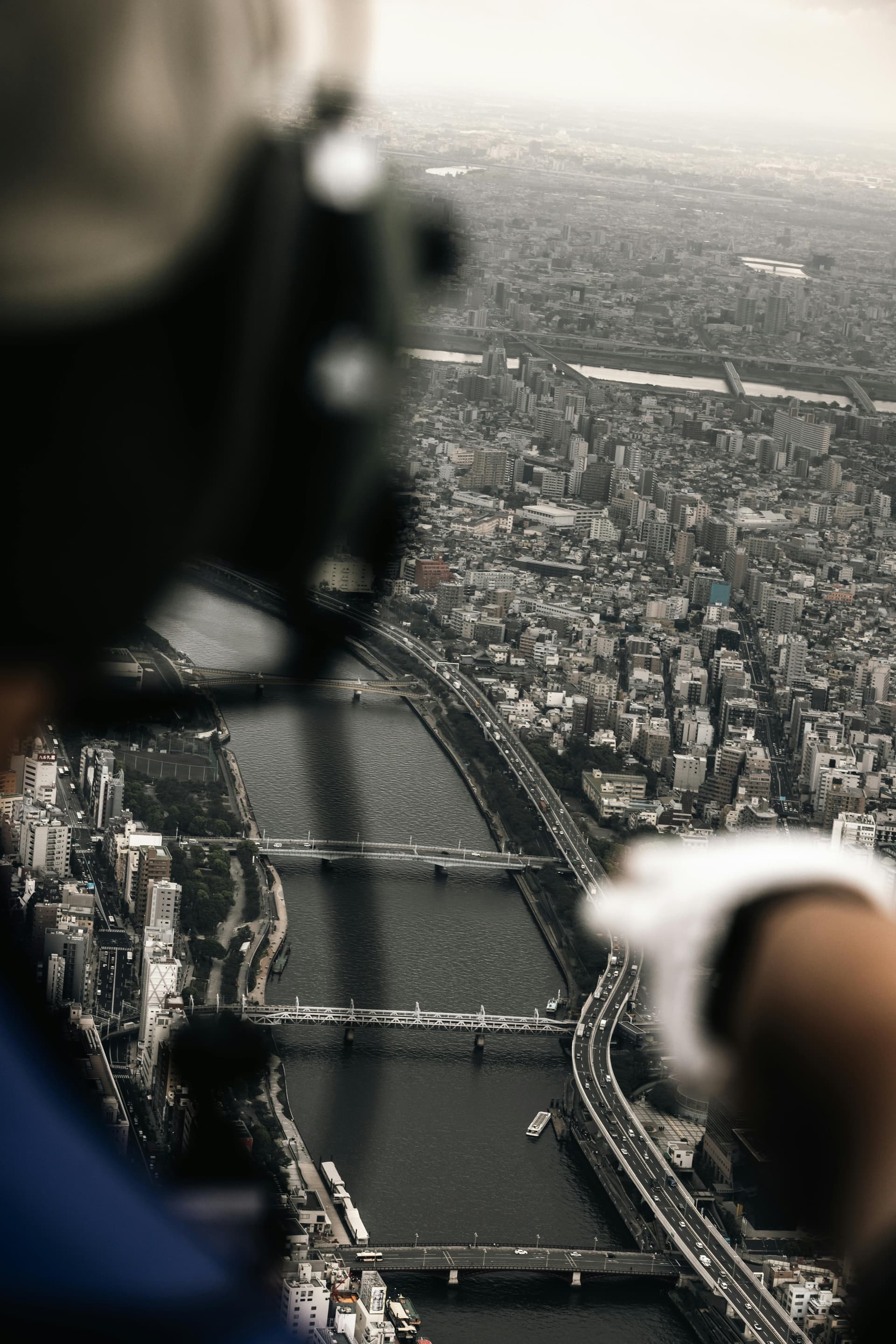
A daytime tour provides geographical clarity. It allows you to identify landmarks like the Imperial Palace grounds or the Rainbow Bridge and understand their spatial relationships. On clear days, typically in autumn or winter, a distant view of Mt. Fuji is possible.
The main tradeoff is Tokyo's atmospheric haze, which is prevalent during warmer, humid months. This can soften views and reduce the crisp, long-distance visibility shown in promotional images. The city is visible, but the panorama may lack sharpness.
Nighttime Flights: The Dramatic but Abstract View
Night flights deliver the cinematic view of Tokyo as a sprawling grid of lights. The illuminated Tokyo Tower and the bright hubs of Shinjuku and Shibuya create a visually impressive spectacle.
The compromise is the loss of geographic context. Individual buildings merge into a pattern of light, making it difficult to orient yourself or identify anything beyond the most prominent illuminated structures. Night flights are also typically more expensive due to higher demand. The role of timing is a key factor in planning any activity, a topic covered in our guide on the best time of day for Tokyo private tours.
This table outlines the core tradeoffs.
Daytime vs. Nighttime Helicopter Tour Comparison
| Aspect | Daytime Tour | Nighttime Tour |
|---|---|---|
| Primary Appeal | Geographical context, landmark identification | Cinematic, glowing cityscape |
| Best For | Understanding the city's layout | Dramatic, sweeping photo opportunities |
| Key Views | Imperial Palace, parks, bridges, Mt. Fuji (clear days) | Tokyo Tower, Skytree, Shibuya Crossing's lights |
| Main Drawback | Potential for atmospheric haze reducing clarity | Loss of detail, harder to identify smaller landmarks |
| Typical Cost | Generally more affordable | Often higher due to peak demand |
The decision rests on whether you value a clear map of the city or an abstract, artistic impression made of light.
This decision process highlights that spontaneous booking is rarely feasible due to weather, availability, and the required logistical preparations.
Flight Duration and Heliport Location
Your departure point also shapes the experience. A flight from Urayasu Heliport in Chiba provides an approach over Tokyo Bay, while one from Tokyo Heliport in Shin-Kiba offers a more direct route over the eastern wards. This choice affects the first and last few minutes of the flight and must be balanced with the travel time required to reach the heliport itself.
Navigating Safety Regulations and Operator Standards
Concerns about safety are understandable when considering a helicopter flight over a densely populated city. In Japan, this is managed through stringent regulation by the Japan Civil Aviation Bureau (JCAB). The JCAB dictates maintenance schedules, pilot hours, and pre-flight safety protocols, leaving no room for operational variance. Reputable operators use twin-engine helicopters for flights over urban centers, a critical industry standard.
Addressing Common Safety Misconceptions
A prevalent misconception is that a lower-priced tour implies compromised safety. This is incorrect. Tour pricing is based on flight duration and time of day, not safety measures. Safety standards are uniform and mandated by the JCAB for all certified operators.
The core safety standards for a 15-minute daytime flight are identical to those for a 30-minute sunset tour. The price difference reflects demand and operational time, not a tiered approach to safety.
Another point of confusion arises from third-party booking websites. While legitimate, these resellers add a layer of communication between the visitor and the actual flight operator, which can complicate matters if rescheduling is required. Identifying the direct operator and their JCAB certification provides clarity. This is analogous to understanding the distinction between licensed vs unlicensed tour guides on the ground.
The Reality of Aviation Safety in Japan
Safety statistics for commercial scenic flights in Japan are robust. According to public data, the scenic and personnel transport category has maintained an excellent safety record. Every past incident in Japan's broader civil aviation history has resulted in stricter JCAB enforcement, reinforcing high operational standards.
The experience is managed with the discipline of commercial aviation, where procedural compliance and risk mitigation are the priorities.
The Booking Process and What to Expect on Flight Day
Booking a helicopter tour in Tokyo requires precision, particularly when using online systems where English translations may lack nuance on critical terms. While our guide to Japanese booking platforms details platform-specific quirks, one requirement is universal.
The most common point of failure is the strict passenger weight declaration. This is not an estimate; it is a non-negotiable safety requirement for aircraft balance. An inaccurate declaration can lead to an on-the-spot cancellation, often without a refund. For a visitor planning a special occasion, this detail can turn a planned highlight into a significant disappointment.
Common Misunderstandings on Flight Day
Several assumptions can lead to friction on the day of the flight.
-
Misconception 1: "I can pick my seat." This is a natural expectation for a premium activity. The Reality: Seating is assigned by the pilot based solely on weight distribution to balance the aircraft. Passenger preference is not a factor.
-
Misconception 2: "Arriving right on time is fine." Visitors often apply the norms of more flexible tourist attractions. The Reality: Arrival is required 30 to 45 minutes before departure for mandatory safety briefings and check-in. This is strictly enforced; late arrival will result in a missed flight.
Pre-Flight Procedures and Logistics
Upon arrival at the heliport, the process is highly structured. It includes check-in, a potential final weight check, a safety briefing, and storing all personal belongings in lockers. Only a camera or smartphone is typically permitted on board.
This rigid structure can be challenging for certain travelers.
-
Visitors with Mobility Constraints: Boarding the helicopter requires climbing several steps into the cabin. It is essential to discuss any mobility issues with the operator during booking to confirm accessibility. For those with significant mobility constraints or a need for tightly controlled pacing, understanding how private guiding works in Tokyo can provide context on alternative ways to manage a day's logistics.
-
Families with Young Children: The entire sequence—travel to a remote location, a formal waiting period, and strict rules—can be demanding for children. The pre-flight process often feels longer and more arduous than the flight itself.
A smooth experience depends on anticipating these operational realities. A Tokyo helicopter tour requires careful planning that acknowledges the logistics of a regulated aviation activity.
Not Sure a Helicopter Tour is for You? Other Ways to See Tokyo From Above
A helicopter tour is a significant time and budget commitment, and it is not the only option for an aerial view of Tokyo. For many visitors, an observation deck is a more practical alternative.
Venues such as the Tokyo Skytree or Shibuya Sky offer panoramic views from stable platforms. They are accessible in most weather conditions that would ground a helicopter, allow visitors to stay as long as they wish, and are integrated into Tokyo's public transport system, eliminating the need for travel to a remote heliport.
Misconceptions About Aerial Views
There is a common assumption that a helicopter provides a superior 360-degree view. In reality, the perspective is limited to one side of the aircraft, framed by the window.
By contrast, an observation deck offers an unobstructed panorama. A visitor can walk the full perimeter, dedicating time to specific views as they choose. This freedom to direct one's own gaze is a significant tradeoff against the novelty of a flight.
Photography is another area where expectations often diverge from reality. Capturing sharp images from a moving helicopter is challenging due to motion and window glare. A stationary deck offers a controlled environment better suited for photography. This is a recurring theme in our guide on Tokyo photography private tours, which examines the conditions needed for quality city shots.
Who Finds Alternatives a Better Fit?
For some travelers, the logistical friction of a helicopter tour outweighs its appeal.
-
Travellers with Tight Itineraries: The high probability of a weather cancellation creates uncertainty that can disrupt a packed schedule. The two-to-three-hour total time commitment is also substantial for a short trip.
-
Visitors with Mobility Concerns: The physical requirements of boarding a helicopter can be difficult. The simple elevator access of an observation deck is a significant advantage for seniors or those with limited mobility.
-
Families with Young Children: The structured and restrictive nature of the pre-flight process can be challenging for young children. The freedom of an observation deck is often a better fit for a family's needs.
A Practical Checklist for Your Helicopter Tour
If you decide a helicopter tour is appropriate for your trip, the objective is risk management, not the pursuit of a perfect experience. The goal is to anticipate common points of failure to ensure the day proceeds as smoothly as possible.
Pre-Flight Logistics and Planning
First, confirm the operator's precise weather cancellation policy. Understand exactly how rescheduling and refunds are handled, as this is a primary source of visitor frustration. Have a viable backup plan for the day, such as a visit to an indoor venue like the Nezu Museum or a covered shopping arcade like Nakano Broadway.
Next, verify the heliport's location and calculate the travel time realistically. Underestimating the journey to an area like Shin-Kiba is a common error. Use a transit app to plan the route, and add a significant time buffer for potential delays. Reliable navigation is key, making dedicated eSIM plans for Japan a practical consideration.
On-the-Day Preparation
Read all pre-flight instructions from the operator carefully.
-
Weight Limits: Confirm individual and total group weight limits and provide accurate figures.
-
Prohibited Items: Be aware of what cannot be brought on board, which typically includes all bags, tripods, and loose items like scarves.
-
Arrival Times: Note the mandatory check-in time, usually 30-45 minutes before departure. It is non-negotiable.
Treat the pre-flight process with the same seriousness as checking in for a commercial flight. Punctuality and adherence to rules are operational necessities.
Finally, dress appropriately. Simple, comfortable clothing is best. Dark-colored clothing is recommended to reduce reflections on the windows for photography. This level of preparation helps manage expectations for what is a highly regulated and structured activity.
A Few Practical Questions Answered
Booking a helicopter flight over Tokyo is straightforward, but a few key questions come up time and again. Here are the clear, simple answers to help you plan without any unwelcome surprises.
What Happens if Bad Weather Cancels My Tour?
This is the most common concern. If the operator cancels a flight for safety reasons (rain, wind, or low cloud cover), they will typically offer two options: reschedule for another available time or receive a full refund. It is critical to confirm the operator’s specific policy before booking.
Be aware that rescheduling during peak seasons, such as late March for cherry blossoms, can be difficult due to limited availability. A backup plan for the day is always advisable.
How Far Ahead Should I Book?
Booking two to four weeks in advance is a reasonable guideline for securing a preferred time, especially for sunset or weekend flights. Night flights are in high demand and book up quickly.
For visits during peak seasons like cherry blossoms or autumn foliage, booking more than a month in advance is recommended. Relying on last-minute availability is likely to result in disappointment.
Are There Strict Weight and Age Rules?
Yes, and they are non-negotiable. All operators enforce strict weight limits for both individual passengers and the total aircraft load. This is a critical safety measure for balancing the helicopter. You will be required to provide accurate weights upon booking and may be weighed again at the heliport. Significant discrepancies can result in being denied boarding, often without a refund.
Most tours do not have an upper age limit, but passengers must be able to board with minimal assistance. Policies for children vary, so always confirm the minimum age requirement with the operator before booking.
Can I Ask the Pilot to Fly Over a Specific Landmark?
No, custom flight paths are not possible on standard tours. Helicopter routes over Tokyo are predetermined and filed with Japan's air traffic control. The airspace is highly congested, and for safety, pilots must adhere strictly to their approved flight plan. You can choose from tours covering different general areas, but you cannot request deviations to fly over a specific point of interest. The system is