When and where to see cherry blossoms in Japan — peak bloom timing by region, the best and most overlooked viewing spots, and how hanami actually works.
Cherry blossom festival season in Japan runs roughly late March through mid-April, but timing shifts by region and year.
2026 Cherry Blossom Dates — Confirmed by JMA
Tokyo bloomed on March 19. Full bloom is forecast for March 25. If you're reading this and heading to Japan, here's exactly where the season stands right now.
| City | 2026 Bloom (confirmed) | Full Bloom (forecast) | vs Average | Peak Viewing Window |
|---|---|---|---|---|
| Nagoya | March 17 ✅ | ~March 25 | 5 days early | Late March – early April |
| Hiroshima | March 19 ✅ | ~March 28 | Early | Late March – early April |
| Tokyo | March 19 ✅ | ~March 25–28 | 5 days early | Late March – early April |
| Kyoto | March 23 ✅ | ~April 1–4 | 3 days early | Early April |
| Osaka | March 26 ✅ | ~April 1–4 | 1 day early | Early April |
| Sendai | March 31 ✅ | ~April 6–8 | 8 days early | Mid-April |
| Sapporo | ~May 1 (forecast) | ~May 6 | — | Early May |
Bloom dates marked ✅ are JMA-confirmed observations. Full bloom dates are forecasts from the Japan Weather Association and Weathermap as of March 20, 2026. Full bloom dates will be updated as JMA confirms them.
What this means if you're arriving this week: Tokyo is blooming now. Full bloom hits around March 25. You have a roughly 7-day window of peak viewing before petals start falling (weather permitting). Kyoto and Osaka are about a week behind — if you're doing both cities, Tokyo first, then Kyoto/Osaka gives you two shots at peak bloom.
If you're arriving in April: Tokyo's peak will be fading, but late-blooming varieties at Shinjuku Gyoen extend the season by 1-2 weeks. Kyoto and Osaka hit full bloom around April 4. Tohoku (Sendai) peaks mid-April. Hokkaido peaks early May.
Understanding Cherry Blossom Season Timing
The dates above are observed and forecast. But every year is different. Here's how the system works for future planning.
How Forecasts Work:
Initial forecasts appear in late January to early February. These early predictions can shift by ±5-7 days. Accuracy improves with weekly updates throughout March. Final forecasts issued 2-3 weeks before bloom are typically accurate within ±3 days, but even these can shift ±2-3 days based on last-minute weather.
Peak Bloom Duration:
Full bloom (mankai) lasts 5-7 days under ideal conditions. The entire viewing period from early bloom to petal fall spans 10-14 days. Weather matters: rain and wind shorten the window, while calm, mild conditions extend it.
Where to Check Forecasts:
| Source | URL | Notes |
|---|---|---|
| Japan Meteorological Agency | data.jma.go.jp/sakura/ | Official observed dates |
| Japan Meteorological Corporation | sakura.weathermap.jp | Primary forecasting service |
| Weather News Inc. | weathernews.jp/sakura/ | Alternative forecast model |
| Japan Weather Association | tenki.jp/sakura/ | Additional forecast source |
Different forecasting models can produce predictions that vary by 1-3 days. Check multiple sources and watch for consensus
The Booking Timing Dilemma
Hotels near major Tokyo viewing spots—Ueno, Meguro, Chidorigafuchi—book up 3-6 months before peak bloom. Popular properties near these areas can sell out 4-6 months in advance. Peak weekends book fastest.
This creates a trade-off with no perfect answer:
| Strategy | Advantages | Disadvantages | Best For |
|---|---|---|---|
| Book Early | Better hotel selection and pricing; can secure locations near viewing spots | Must commit before forecasts exist; accept timing risk (±5-7 days) | Fixed vacation windows, family travel, value seekers |
| Wait for Forecasts | Better timing certainty; can adjust based on actual forecasts | Limited hotel availability and premium pricing; requires flexible schedule | Flexible schedules, solo travelers, budget flexibility |
Most Visitors' Reality:
Fixed vacation windows or family travel usually require early booking with accepted timing risk. The alternative: arrive a few days before projected peak and stay through it, creating a 7-10 day window. This increases your chances of catching peak bloom but needs more time off.
Flexible Booking Options:
Some hotels offer free cancellation up to a certain date. Flight change policies vary significantly—check before booking. Booking timing and flexibility options become crucial when planning around an unpredictable natural phenomenon. Travel insurance rarely covers "we missed the bloom," but can cover illness or other trip disruptions.
The Shoulder Strategy:
Book for late March regardless of forecasts. If you arrive a few days early, you'll see early bloom and emerging flowers. If you arrive during peak, you're positioned perfectly. If you arrive late, you'll see late bloom and petal fall, which many find equally beautiful. This approach prioritizes experiencing the season over hitting the exact 2-3 day peak.
For first-time visitors during cherry blossom season, coordinating timing, transport, and multiple viewing spots can compound into significant planning stress—especially when you have limited days and want to experience hanami properly.
Where Regional Differences Actually Matter
Cherry blossoms progress south to north across Japan over 8-10 weeks. This geographical spread creates strategic planning options.
The National Pattern:
| Region | Typical Bloom Period | Notes |
|---|---|---|
| Okinawa | January | Earliest in Japan, subtropical climate |
| Kyushu (southern) | Late March | Southern main islands |
| Tokyo/Kyoto/Osaka | Late March to early April | Central Japan cluster, most visited |
| Tohoku (northern Honshu) | Mid-April | Northern main island |
| Hokkaido | Late April to early May | Latest bloom, overlaps Golden Week |
The progression from Tokyo to Hokkaido spans 4-5 weeks. This gap is your timing insurance.
Tokyo/Kyoto Overlap:
Tokyo and Kyoto bloom within 1-3 days of each other. Peak periods often overlap by 3-5 days, making dual-city itineraries feasible for cherry blossom viewing. Some years show larger gaps (3-4 days) if weather patterns favor one region, but timing is generally synchronized.
Multi-Region Strategy:
If you're building a longer Japan itinerary, regional timing differences provide backup options:
-
Start in Kyoto/Osaka if forecasts show earlier bloom there
-
Move north to Tokyo a few days later
-
If you miss peak in central Japan, continue to Tohoku or Hokkaido (4-5 weeks later)
Hokkaido as Late-Season Option:
Hokkaido blooms significantly later—typically late April (around April 25-30) with peak in early May (May 1-7). This overlaps with Golden Week (April 29-May 5), making Hokkaido ideal if you have fixed Golden Week holidays but missed Tokyo/Kyoto bloom.
Hokkaido timing is more variable (±7 days) due to northern latitude and spring weather volatility.
Regional Timing for Strategic Planning:
| City/Region | Expected Bloom Timing |
|---|---|
| Hiroshima | Late March, typically 1-3 days before Tokyo |
| Nagoya | Similar to Tokyo, late March |
| Kanazawa | Early to mid-April |
| Sendai (Tohoku) | Mid-April |
| Sapporo (Hokkaido) | Late April to early May |
For broader Tokyo planning beyond cherry blossom season, timing flexibility opens up significantly more options.
Navigating Tokyo's Cherry Blossom Landscape
Each location has distinct characteristics that affect your planning. Beyond the famous spots, residential neighborhoods like Yanaka offer quieter viewing with local atmosphere. Accommodation location matters significantly during cherry blossom season, particularly proximity to major viewing areas.
| Location | Access | Character | Best Timing |
|---|---|---|---|
| Ueno Park | JR Yamanote Line to Ueno Station | Festival-like, maximum crowds, yatai food stalls, evening illuminations. Over 1,000 cherry trees create Tokyo's most famous hanami scene. | Weekday mornings (before 10am) or late evening after main crowds thin |
| Meguro River | Naka-Meguro Station (Hibiya Line) or Ikejiri-Ohashi Station | Narrow canal walk with 4km cherry tunnel, evening lanterns, trendy cafes. Width restrictions create bottlenecks during peak times. | Early morning walks before cafes open and crowds arrive |
| Chidorigafuchi | Kudanshita Station (Tozai/Hanzomon Lines) | Imperial Palace moat, rowboat rentals (1-2 hour waits peak weekends), evening illuminations. Tokyo's most photographed spot. | Weekday mornings for boat rentals; any time for moat walk if you're comfortable with crowds |
| Shinjuku Gyoen | Shinjuku-Gyoenmae Station (Marunouchi Line). Entry: ¥500 | Quiet, controlled entry, no alcohol allowed. Multiple cherry varieties bloom in succession, extending season by 1-2 weeks. | Any time—entry limits prevent overcrowding |
| Sumida River | Asakusa Station (multiple lines) | Long riverside walk, less crowded than Ueno, evening river cruises. Combines well with Asakusa temple district. | More breathing room than major parks |
| Yoyogi Park | Harajuku Station (JR Yamanote) or Meiji-Jingumae Station | Hanami party central with bring-your-own food/drinks, young crowds, social atmosphere. More participatory than observatory. | Weekends for full party atmosphere |
Strategic Considerations:
Famous = crowded. Ueno, Meguro, and Chidorigafuchi are Tokyo's "must-see" spots, but that designation means maximum density during peak bloom. If you want space to breathe, consider smaller neighborhood parks or arrive at major spots during off-peak hours.
Chidorigafuchi is the moat surrounding the Imperial Palace. If you're visiting for blossoms, the Imperial Palace East Gardens are a short walk away—free admission, no booking, and a quieter alternative to the crowded moat path.
Moving efficiently between viewing spots during peak season—managing station transfers, timing crowd patterns, and finding the best angles—often proves more complex than visitors anticipate.
Kyoto and Beyond: Where Tradition Meets Peak Season
Kyoto temple viewing adds cultural depth but also peak-season complexity.
| Location | Access/Entry | Character | Best Strategy |
|---|---|---|---|
| Philosopher's Path | Free, 2km walk from Ginkaku-ji to Nanzen-ji | Narrow canal lined with hundreds of cherry trees. Extremely crowded midday during peak bloom. | Start at Ginkaku-ji very early (8:30am temple opening) and walk south before midday crowds |
| Maruyama Park | Free entry, located in Gion district | Famous for massive weeping cherry tree centerpiece. Central area gets densely packed during peak bloom evenings. | Combines well with Yasaka Shrine and Gion exploration |
| Kiyomizu-dera | ¥500 entrance. Kiyomizu-Gojo Station, then uphill walk | Wooden terrace views over blossom-filled valley. Steep approach. Extremely crowded during peak bloom with long entry lines. | Worth it for the view, but expect to share with hundreds of others |
| Arashiyama | Train/bus access (fills up during peak season) | Famous bamboo groves plus cherry trees along Togetsukyo Bridge. Main bamboo path becomes uncomfortably packed. | Very early morning (before 8am) or consider skipping if you dislike crowds |
Kyoto-Specific Challenges:
| Challenge | Impact on Visitors |
|---|---|
| Narrow streets | Amplify crowd density and bottlenecks |
| Bus system during peak season | Becomes uncomfortably full, delays common |
| Temple entrance fees | Most major temples charge ¥300-600 (unlike Tokyo's free parks) |
| Popular spots without crowd control | Philosopher's Path and similar locations = shuffle-pace walking with masses |
Kyoto is worth it for the cultural context and temple settings, but manage your expectations. "Peaceful temple viewing" during peak cherry blossom season is largely a myth.
Other Cities Worth Considering:
| City | Key Features | Entry/Access | Crowd Level vs Kyoto |
|---|---|---|---|
| Osaka Castle Park | Massive grounds with space to spread out, easily accessible via subway | Free entry to park (castle interior charges admission) | More breathing room |
| Himeji Castle | Stunning white castle with cherry tree grounds | Day trip from Kyoto/Osaka (1-2 hours). Castle admission: ¥2,500 (non-residents; ¥1,000 for Himeji residents) | Less crowded |
| Hiroshima Peace Park | Cherry trees add beauty to meaningful historical site | Free entry, accessible via streetcar | Fewer tourists than Kyoto during peak |
What Hanami Actually Looks Like (And How to Join In)
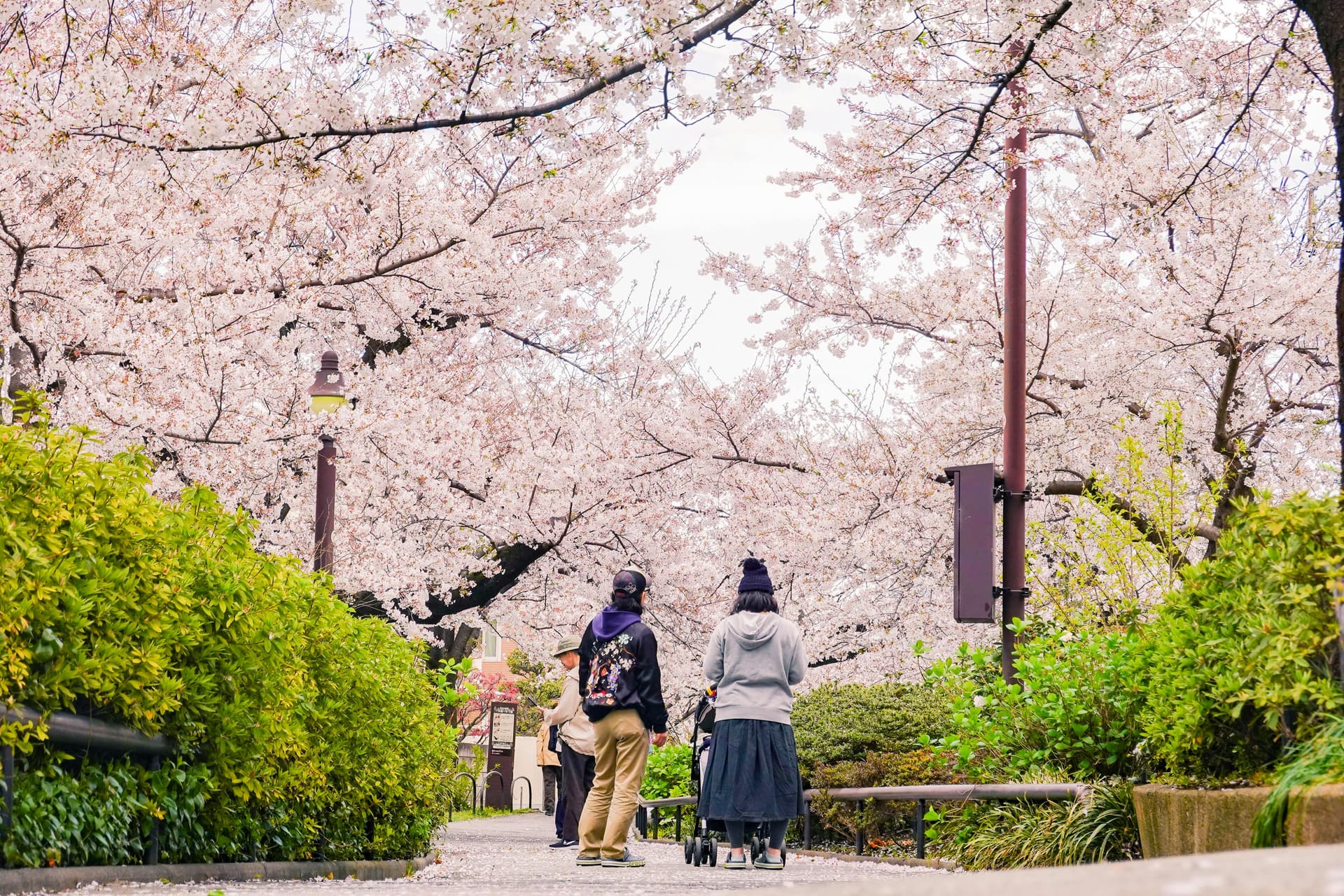
Hanami isn't passive observation—it's active gathering. Understanding the practice helps you decide how to participate.
The Standard Setup:
Groups claim spots early—sometimes 6am or earlier for popular locations. Someone spreads a blue tarp (blue tarps are hanami's unofficial symbol) to mark territory. The group returns later with food and drinks.
What People Bring:
-
Tarp or sheet (blue plastic tarps from home centers are standard)
-
Food: Bento boxes from department stores (beautiful but pricey), konbini prepared foods (7-Eleven, Lawson, FamilyMart all offer hanami-themed options), homemade dishes
-
Drinks: Beer, sake, soft drinks. Many groups bring coolers.
-
Trash bags (crucial—you pack out everything you bring in)
Where Alcohol Is/Isn't Allowed:
Most parks allow alcohol. Shinjuku Gyoen explicitly prohibits it—expect bag checks at entry. Some temples and shrines also prohibit alcohol on grounds.
The Social Dynamic:
Hanami groups are typically friends, coworkers, or family. Joining random groups is uncommon but not impossible—Japanese locals are sometimes curious about foreign visitors and may invite you to join if they see you alone. But don't expect it or feel excluded if it doesn't happen.
Solo Traveler Approach:
You don't need a group to experience hanami. Many people walk through parks alone, enjoying the atmosphere without participating in picnics. Riverside walks (Meguro, Sumida) and temple grounds work well for solo contemplation.
Consider bringing a small tarp and simple convenience store food if you want to participate solo. Pick a less crowded spot, sit for 30-60 minutes, and absorb the scene.
Evening Hanami (Yozakura):
After sunset, many parks illuminate the cherry trees. The atmosphere shifts—more romantic, quieter conversations, sometimes more alcohol. Popular spots like Ueno and Chidorigafuchi get extremely busy during evening illuminations but create memorable scenes.
The Practical Reality:
Hanami during peak bloom is crowded. If you're picturing serene contemplation under cherry trees, adjust expectations. The charm is communal—hundreds of groups gathered in celebration, recognizing the fleeting beauty together. It's festive, not meditative.
For travelers who want to understand hanami as cultural tradition rather than tourist spectacle, experiencing it with someone who can explain the layers of meaning changes the encounter entirely.
Cherry blossoms are part of spring's appeal, but they last about two weeks. Spring runs ten—the full season delivers 14 hours of daylight, comfortable walking weather, and Tokyo at its most alive, with or without peak bloom.
When the Forecast Shifts: Backup Planning
Even final forecasts can shift by 2-3 days. If you arrive early or late, you have options.
You Arrived Too Early (Before Bloom):
Early March to mid-March brings plum blossoms (ume), which have a similar delicate aesthetic. Major plum viewing spots: Kitano Tenmangu (Kyoto), Kairakuen (Ibaraki).
Southern regions may bloom earlier. If Tokyo forecasts show late bloom, consider starting in Kyushu or western Honshu.
Early cherry varieties (some bloom 1-2 weeks before standard Somei Yoshino) exist in parks like Shinjuku Gyoen.
Winter illuminations may still be active in early March.
You Arrived Too Late (After Peak):
Late-blooming cherry varieties extend the season by 1-2 weeks in some parks.
Northern regions still in season: Tohoku (mid-April) or Hokkaido (late April/early May).
Parks remain beautiful even after peak bloom. Petal fall (hanafubuki) creates its own aesthetic—petals covering paths and floating on water.
The Bigger Picture:
Obsessing over perfect timing can undermine your trip. Cherry blossom season is about recognizing impermanence—the Buddhist concept of mono no aware. The flowers are beautiful precisely because they don't last.
If you see early bloom, emerging flowers, or late bloom with petals falling, you're still experiencing the season's essence. Japan remains remarkable outside the 3-4 day "perfect peak" window.
Ume (Plum Blossoms) as Alternative:
If your schedule only allows February to early March, consider planning around plum blossoms instead of cherry blossoms. Ume bloom late February through mid-March, 3-4 weeks before sakura. The aesthetic is similar—delicate pink and white blossoms—and the crowds are significantly smaller.
Crowd Realities and Respect
Peak cherry blossom season brings some of the highest tourism density Japan experiences. Understanding this helps you plan strategically.
Peak Weekend Reality:
Ueno Park on a Saturday afternoon during peak bloom is shoulder-to-shoulder. Meguro River evenings become slow shuffles. Chidorigafuchi boat rental waits hit 2+ hours. Philosopher's Path in Kyoto moves at crowd pace.
This isn't exaggeration—major viewing spots during peak weekends are genuinely packed.
Tactical Timing for Smaller Crowds:
| Time Period | Crowd Level |
|---|---|
| Weekday mornings (before 10am) | Significantly fewer people |
| Very early weekend mornings (6-7am) | Locals claiming spots but not yet crowded |
| Late evening (after 9pm) | Many spots stay open and crowds thin considerably |
Transportation During Peak Season:
Trains get fuller, especially lines serving major viewing spots (Yamanote Line to Ueno, Hibiya Line to Naka-Meguro). Station platforms are busier. Travel times can increase due to crowding. Understanding Tokyo's transit system becomes especially important during peak season congestion. Factor in extra time for transport.
Etiquette Essentials:
Japan has minimal public trash bins. You carry out everything you bring in. Bring a dedicated trash bag for your hanami supplies.
Don't climb trees or shake branches for photos. Don't pick blossoms. Respect blue tarp boundaries—they mark claimed space.
Keep noise reasonable. Hanami is social but not raucous in most spots.
The Controlled-Entry Alternative:
Shinjuku Gyoen's ¥500 entrance fee creates breathing room. The entry limit prevents overwhelming crowds even during peak bloom. If you want guaranteed space and calm atmosphere, paid gardens provide this.
Permission to Skip the Famous Spots:
Ueno, Meguro, and Philosopher's Path are famous for good reason, but you're not failing at cherry blossom season if you skip them. Smaller neighborhood parks throughout Tokyo and Kyoto offer viewing without the density. Residential areas with cherry-lined streets provide beauty without crowds.
If you hate crowds, strategic timing (early morning, weekdays) matters more than location choice.
This guide is published by Hinomaru One, a Tokyo-based private tour operator.