The question isn't "should I visit the Imperial Palace?" It's "which of the three experiences is right for my trip?"
The Tokyo Imperial Palace is worth visiting, but there are three ways in (the official tour, the East Gardens, and the outer grounds walk), and the one you pick decides whether you leave happy or disappointed. Most visitors choose one without knowing the other two exist.
The official inner grounds tour needs registration 30 days ahead and fills within hours of release. The East Gardens are free, need no registration, and open six days a week. Then there's the outer path, 5 kilometers of gravel along the moats that most visitors never hear about.
Three Experiences, One Name
When someone says "I visited the Imperial Palace," they could mean any of the three. So the first thing to settle is which one you want.
The Official Tour (Imperial Household Agency)
This is a free, 75-minute guided walk through the inner palace grounds, run by the Imperial Household Agency rather than any private operator. Groups often go past 200 people. You have to book ahead, and the schedule is fixed: 10:00 AM or 1:30 PM, Tuesday through Saturday.
The East Gardens (Free, Public)
The gardens sit on what used to be Edo Castle's innermost defenses. Entry is free and you don't book. Most visits take 45-90 minutes, at whatever pace you like.
The Outer Grounds (Always Open)
A 5km path runs around the palace moats. It's open 24 hours, with no booking and no gates, and joggers love it. You get the classic Nijubashi Bridge photo here, though you're looking at the palace from outside rather than walking through it.
| Access Type | Booking | Time Required | Cost | What You See |
|---|---|---|---|---|
| Official Tour | Required, month+ ahead | 75 min fixed | Free | Inner grounds, Chowaden Hall, Niju Bridge up close |
| East Gardens | None | 45-90 min flexible | Free | Edo Castle ruins, stone walls, guardhouses, gardens |
| Outer Grounds | None | 15 min to 2 hours | Free | Moats, Nijubashi photo spot, perimeter views |
What You Will — and Won't — See
This Is Not Versailles
People expecting a palace museum go home disappointed. There are no throne rooms, art collections, or imperial chambers to walk through. The current palace buildings went up in the 1960s, after the originals were destroyed in the 1945 firebombing, and you only see the grounds.
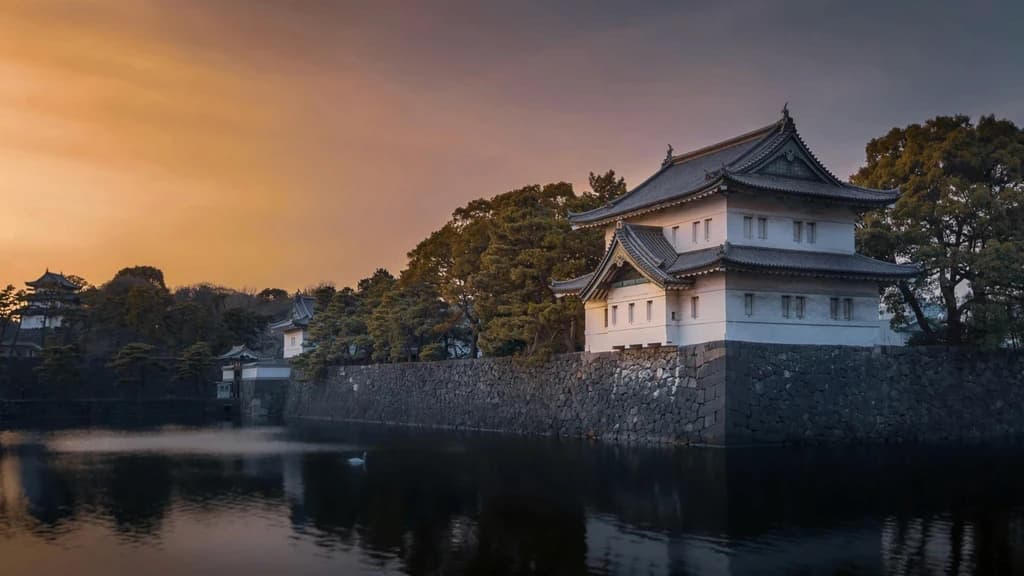
What did survive is the stone walls, and they're the reason the place matters historically. They were built in phases between 1607 and 1638 as the foundations of Edo Castle, where the Tokugawa shogunate ruled for 265 years. The main keep burned in the Great Meireki Fire of 1657 and was never rebuilt, because senior advisor Hoshina Masayuki argued that a new keep would be a vanity project while the city still needed rebuilding.
What the Stone Walls Mean (With Context)
With a bit of history, these stones put you where Japan was governed. This castle controlled the country, and the moats marked where the different classes of samurai lived. Marunouchi, Nihonbashi, and Ginza grew out of the merchant quarters and samurai estates that supplied the castle, so the street plan of modern Tokyo still traces back to these walls.
Who the Official Tour Is For (And Who It Isn't)
What the Official Tour Actually Is
You register online on the Imperial Household Agency website. On the day, you show up at Kikyo-mon Gate and join a group of 200 or more. Groups are split by language, and English audio guides are available. A staff member then walks everyone through parts of the inner grounds that are normally closed.
You'll see Chowaden Hall, the Imperial Household Agency building, Fushimi Keep, and the Niju Bridge from an angle regular visitors don't get. The route covers 2.2km on gravel paths, and you can't leave early or hang back. Tripods aren't allowed, and the group doesn't stop for long.
Who Should Consider It
The official tour makes sense if you:
-
Want to say you've been inside the palace grounds, the restricted part
-
Care more about seeing everything than about flexibility
-
Can plan around a fixed 10:00 AM or 1:30 PM start
-
Don't mind walking in a large guided group
-
Are interested in the formal, official telling of palace history
If that restricted access matters to you, it's worth doing once. Photographers like the Niju Bridge angle.
Who Should Skip It
The official tour is a poor fit if you:
-
Are traveling with children (75 minutes of guided walking, possibly in heat, with no chance to stop or leave)
-
Use a wheelchair or have limited mobility (the 2.2km route is all gravel and has no accessible alternative, so the tour cannot accommodate wheelchairs)
-
Want a flexible schedule (the fixed times take up your morning or early afternoon)
-
Expect to go inside palace buildings (you won't; it's still grounds only)
-
Like to explore at your own pace
Visitors who come expecting something like Versailles or Kyoto's imperial properties tend to feel let down. Reviews from people who didn't understand the format use the phrase "herded like sheep."
The East Gardens Alternative
What You Get (Free, Flexible, Contextual)
The East Gardens cover what was once the innermost ring of Edo Castle. You can walk on the stone foundations of the main keep, look around the reconstructed guardhouses, and follow the defensive layout that kept the castle safe for centuries.
You don't book, and nothing runs on a schedule. Come and go when you like. Kids can run ahead and climb around the foundations, there are benches when you need a rest, and if you want two hours with the defensive architecture, nobody will move you along.
Private guides can work here too, because the gardens are public. That means someone can tell you what you're looking at. The big corner stones, for example, are called "100 Man Stones" because moving one took 100 men, and they came by boat from the Izu Peninsula, 100 kilometers south. At the height of construction 3,000 boats a day made the trip. Many sank, and some of the stones are still on the seabed. That sort of story is what makes a private guide worth it.
What You Give Up (No "Inner Grounds" Access)
You won't see the areas on the official tour, so you can't claim the restricted inner grounds. If ticking off "Imperial Palace" means doing the official tour for you, the East Gardens won't scratch that itch.
Who This Works For
The East Gardens are the better choice if you:
-
Care more about the history than about restricted access
-
Are traveling with children or anyone who needs to set their own pace
-
Use a wheelchair or have mobility needs (approximately 90% of the gardens are wheelchair accessible, and you can rent wheelchairs at all three gates. The main paths are paved, but the Tenshudai keep foundation is steep and the Shiomizaka and Bairinzaka slopes aren't accessible). For more detail, see our accessibility guide for Tokyo tours.
-
Want to fit the visit into a wider Tokyo day instead of planning around a fixed tour time
-
Like to explore at your own pace, guided or not
For a lot of travelers, the East Gardens with a guide who knows the history teach more than the official tour does. Once someone explains them, the walls start to account for the street plan of the city around them. Our Timeless Tokyo tour includes the East Gardens in a full day of history.
When the Palace Fits — and When It Doesn't
60-90 Minutes, Not Half a Day
Whichever version you pick, the Palace takes 60-90 minutes. It won't fill half a day, so the real planning is about what you do before and after. If you'd like a guide to work that out, Tokyo Essentials puts the Palace into a planned half-day.
What Pairs Well (Marunouchi, Nihonbashi, Tokyo Station)
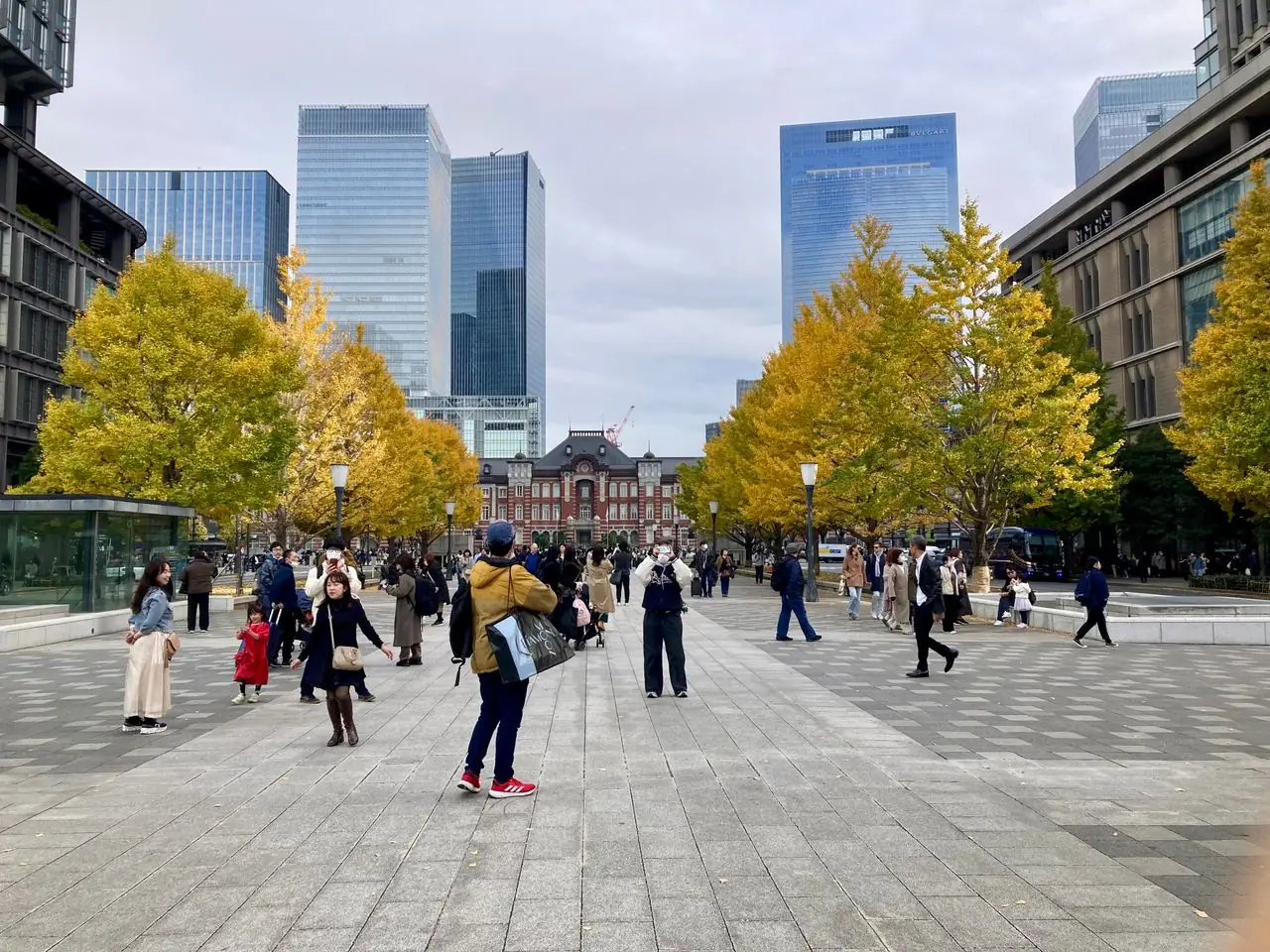
The Palace sits between Tokyo Station and the Marunouchi business district, which makes a few combinations easy:
Palace morning → Marunouchi lunch → Ginza afternoon
Marunouchi is a 5-minute walk from the East Gardens. Go in the morning if you can (here's why timing matters). The business district, sometimes nicknamed Tokyo's "New York Block," runs from Tokyo Ramen Street under the station to Michelin-starred restaurants up in the towers, and it's good food without Ginza prices. Ginza is a 15-minute walk southeast after lunch.
Palace morning → Nihonbashi → Tsukiji Outer Market
Walk 10 minutes east to Nihonbashi, the old merchant district that was Edo's commercial center, then carry on to Tsukiji's outer market for lunch. You're following the order old Tokyo was built in: castle, then merchants, then the fish market.
Palace as part of historical spine
The Palace also slots into a longer walk through Tokyo's history: Kanda Myojin Shrine (8th century), the Yushima Seido Confucian academy, lunch in Marunouchi, the Imperial Palace East Gardens, Yanaka's old streets, and finally the shitamachi backstreets of Asakusa. It runs roughly in the order the city grew.
When to Skip It Entirely
If you have three days in Tokyo and you're there for Shibuya, Shinjuku, and Harajuku, the Palace may not be worth the trip. It's quiet and historical and asks for some patience, which isn't what draws most first-time visitors.
Logistics by Access Type
Official Tour: How to Book, When to Arrive
Booking: Register through the Imperial Household Agency website. Applications open at 5:00 AM on the first day of the month before your visit. Around cherry blossom season and holidays, tours fill weeks or months ahead.
Walk-up option: Kikyo-mon Gate sometimes has same-day tickets. Numbered tickets go out one hour before the tour starts. It's unreliable, so don't plan on it.
When to arrive: Get to Kikyo-mon Gate 20-30 minutes before your tour time.
What to bring: Your passport (they check it against your registration), comfortable walking shoes, and water in summer.
East Gardens: Hours, Gates, Closures
| Season | Opening | Closing |
|---|---|---|
| Mar 1 - Apr 14 | 9:00 AM | 5:00 PM |
| Apr 15 - Aug 31 | 9:00 AM | 6:00 PM |
| Sep 1 - Oct 31 | 9:00 AM | 5:00 PM |
| Nov 1 - Feb 28 | 9:00 AM | 4:30 PM |
Closed: Mondays, Fridays, and December 28 to January 3. When Monday is a national holiday, they close Tuesday instead.
Gates: Ote-mon (the main entrance, closest to Tokyo Station), Hirakawa-mon, and Kitahanebashi-mon. Entry stops 30 minutes before closing.
Seasonal notes: Cherry blossoms peak in early April, and so do the crowds. Plum blossoms come in February and autumn leaves in November. Summer (July-August) is brutally hot with very little shade, so go early in the morning or leave it out.
Getting There
From Tokyo Station: 5-10 minutes on foot from the Marunouchi Central exit to Ote-mon Gate.
From Otemachi Station: Several subway lines stop right here (Chiyoda, Tozai, Marunouchi, Hanzomon, Mita). Both stations have elevators.
Frequently Asked Questions
Can you visit the Tokyo Imperial Palace without a tour?
Yes. The Imperial Palace East Gardens are free, need no booking, and open six days a week. The outer grounds walk (5km around the moats) is open 24 hours with no registration. The only part you have to register for in advance is the official inner grounds tour run by the Imperial Household Agency.
Is the Imperial Palace East Gardens worth visiting?
Yes, especially if someone explains the history. The gardens cover the old innermost ring of Edo Castle, with the original stone foundations of the main keep, reconstructed guardhouses, and defensive moats. Entry is free, you don't book, and approximately 90% of it is wheelchair accessible. Allow 45–90 minutes.
How long do you need for the Imperial Palace East Gardens?
Give yourself 45–90 minutes on your own. With a private guide explaining Edo Castle and its defenses, plan on 60–90 minutes in the gardens before moving on to Marunouchi or Nihonbashi nearby.
Do I need a guide for the Tokyo Imperial Palace?
You don't need one, but the history changes the visit a lot. Without it, you're looking at old stones. A good guide can tell you how the castle ran Japan for 265 years, why the main keep wasn't rebuilt after the 1657 fire, and how the neighborhoods around it grew out of the merchant quarters and samurai estates that supplied the castle.
Is the official Imperial Palace inner grounds tour worth it?
That depends on what you want. The official tour gets you into restricted parts of the inner grounds and gives you a close view of Niju Bridge that regular visitors don't get, which is worth it if that access matters to you. It's also 75 minutes with 200+ people on a fixed schedule, and you can't linger or leave early. With a good guide, the East Gardens give you just as much history and far more flexibility.