Aiba Tamotsu wanted to be a pilot. According to his Japanese Wikipedia biography, his eyesight was too poor, so he wrote about aeroplanes for aviation magazines instead. In 1916 he was 21. A reporter with a pilot's passion and no way to fly, he met a young aircraft builder named Tamai Seitaro, who wanted to train pilots.
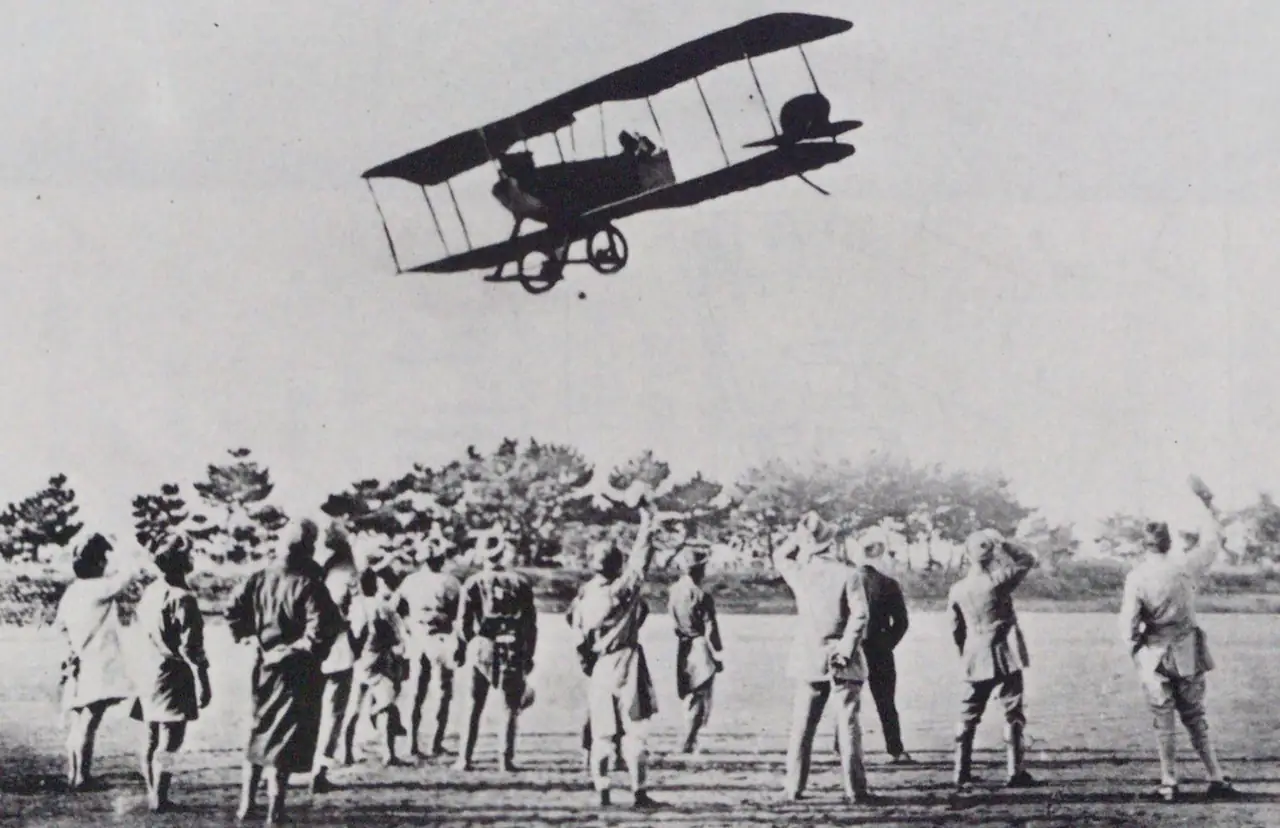
They picked a tidal flat on the Tama River at Haneda, beside Anamori Inari shrine. At low tide it was flat enough to use as a runway. Japanese Wikipedia says Aiba paid for the school with 10,000 yen left by his parents, who had died when he was a child. On 5 October 1916, Tamai flew from the flat, and the Nippon Flying School was under way.
The school's bad year
On 20 May 1917, Tamai flew over Tokyo in a public flight. On the third flight, just before landing at Shibaura on Tokyo Bay, a wing broke about 50 metres up. Tamai, aged 24, and the newspaper photographer flying with him were killed. He had been the school's only instructor.
Four months later, on 1 October, a typhoon and high tide hit Tokyo Bay. Japanese Wikipedia says the school lost its plane and hangar to the water. Among its first students was a teenager named Tsuburaya Eiji, who later made the special effects for Godzilla. By his own account, the school closed and the money his parents had given him was gone.
The airfield outlasted the school
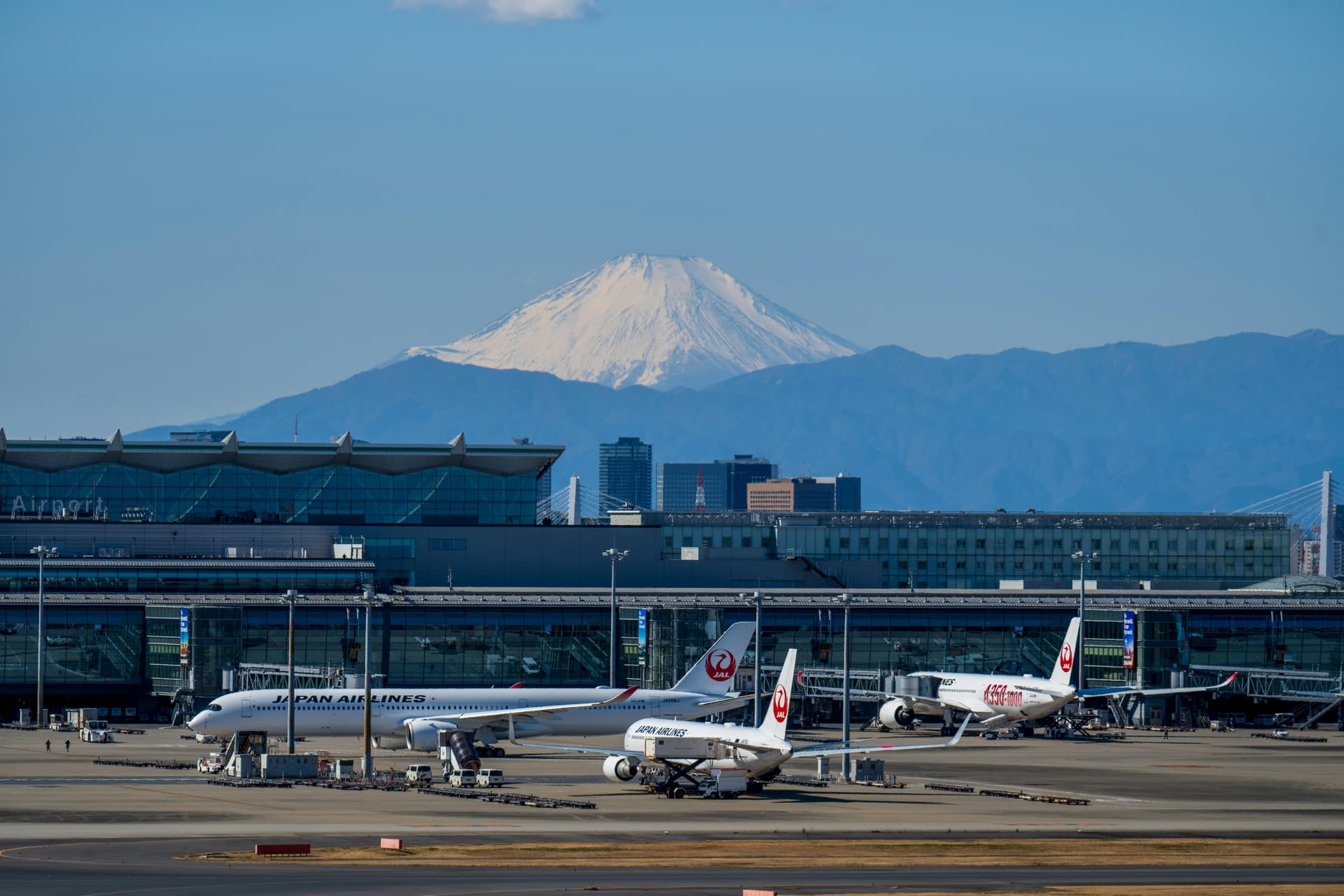
After the 1923 earthquake wrecked Japan's railways, planes looked useful. A civil airport was planned, and an NHK programme says the school's land was chosen. Tokyo Airfield opened on 25 August 1931, just north of the shrine. It is today's Haneda. Japanese Wikipedia adds that Aiba advised on the layout and gave up land of his own.
What he wrote in 1966
In September 1945, after Japan's surrender, occupation forces ordered about 3,000 people in Haneda's three towns, Anamori among them, to leave within 48 hours. The shrine's buildings went under the airport. Only its great torii gate stayed.
In 1966, Aiba wrote a chapter in a history of Japanese civil aviation. Japanese Wikipedia quotes it (we have not seen the book itself). He called the eviction an "unprecedented, unforeseen fate" and noted that it began with his airfield. His words: "To those who wept over it, recalling that it began with my founding an airfield half a century ago, I feel I must say I am sorry."
See it yourself
- Anamori-Inari station. The Keikyu Airport Line stops here, named for the shrine beside the school's old ground. We found no marker for the school itself.
- Anamori Inari shrine. Rebuilt after 1945 outside the airport fence, three minutes' walk from the station.
Hear it on the tour
Sources
- Aiba Tamotsu, Japanese Wikipedia
- Nippon Flying School, Japanese Wikipedia
- Tamai brothers, Japanese Wikipedia
- NHK "Chiko-chan ni Shikarareru", 24 Feb 2023, episode summary
- Nakajima Hisae, "Tamai Seitaro and Tsuburaya Eiji" (Yokkaichi)
- Anamori Inari Shrine, history
- Mainichi Shimbun, 10 Aug 2025
- Haneda Airport, English Wikipedia
Photo credits
- A biplane flying low over onlookers at the Nippon Flying School, 5 October 1916: Unknown photographer / Wikimedia Commons, CC BY-SA 4.0, resized