Ogikubo is a station town on the Chuo line, west of Shinjuku. Japanese Wikipedia describes Ogikubo ramen as a dark soy-sauce soup with a Japanese flavour from dried fish and bonito, with medium-thin noodles, and says many of its shops began as soba shops. Harukiya is one of its best-known names.
A stall, because ramen needed only pots
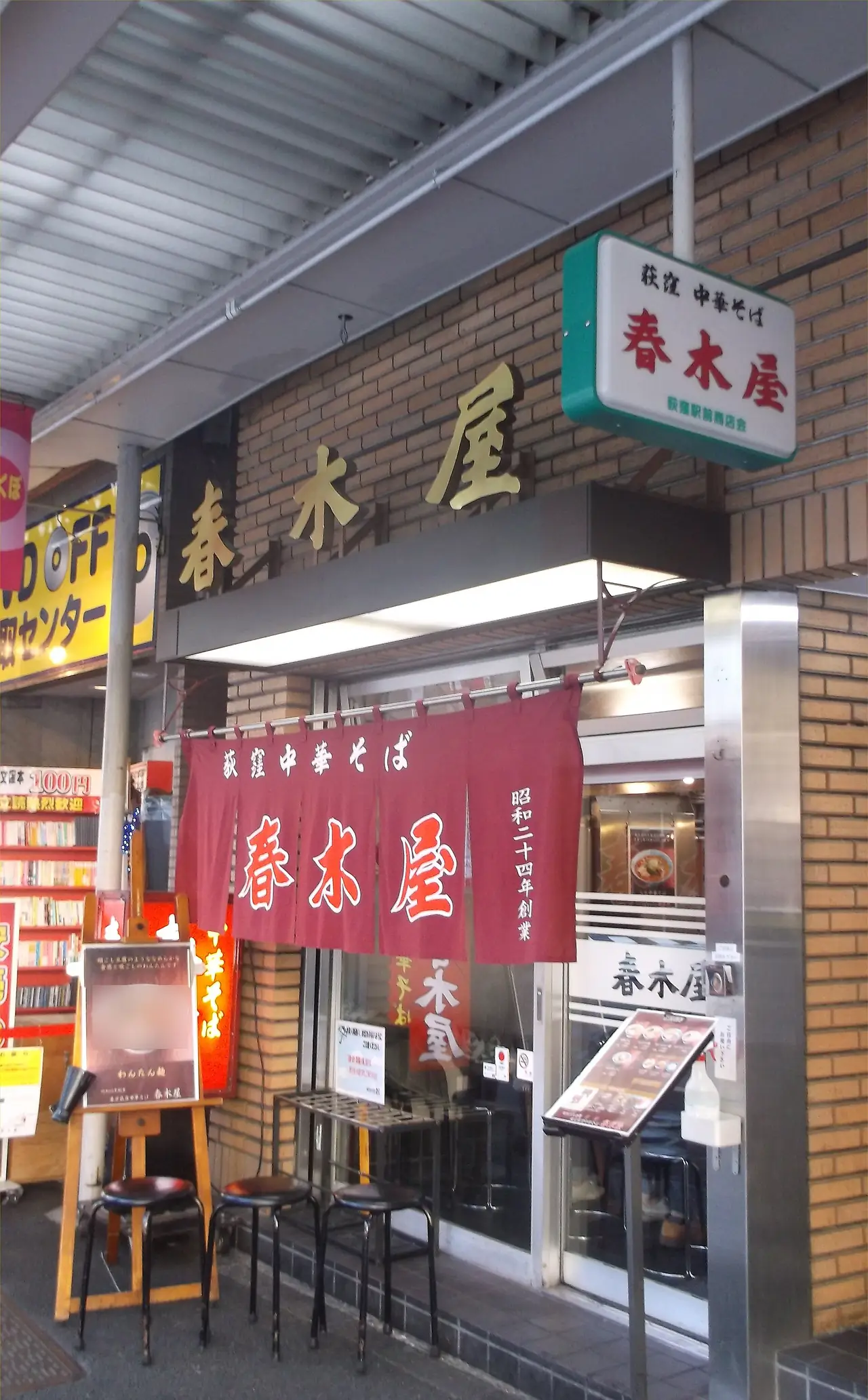
Harukiya says it began as a small street stall in 1949, and the red curtain on the shopfront reads "founded in Showa 24", which is 1949. The founder was Imamura Itsuo. The Shin-Yokohama Ramen Museum, which hosted a Harukiya branch for years, says he first wanted to open a soba shop. After the war, though, buckwheat flour was hard to get and a soba shop needed more equipment. Ramen needed pots and pans, so he put a stall on the site where the main shop stands today. In 1954, the museum says, he bought the land and built a shop.
The Harukiya theory
The museum records his rule. As food gets better, customers' tongues get better too. If you serve exactly the same soup for years, people will say it has gone downhill. So you keep the base of the taste and change the rest a little at a time, where customers cannot tell. Only then do they say, "It is always as good as ever." Ramen people call this the "Harukiya theory", the museum says.
The shop still describes its work this way. Its own page says it protects one "trunk" of the taste and adjusts everything else, from the wheat in the noodles to the dried-fish soup, even for the day's weather. The noodles are kneaded every morning, with the water adjusted for that day's weather and humidity, and their thickness changes with the season. Staff taste the soup together before opening.
The museum also says Imamura ate one bowl of ramen every morning before breakfast, until he retired in 1988.
Famous early
In the 1960s and 70s a film director and well-known gourmet, Yamamoto Kajiro, praised Harukiya in a gourmet book. The shop's history page and Japanese Wikipedia both mention it. Wikipedia says Ogikubo ramen was known in some circles well before the national ramen boom.
What is in the bowl
The soup uses niboshi (dried baby sardines) and katsuobushi (dried bonito flakes), simmered with vegetables and kelp, with a house-blended soy sauce base. The noodles are curly. The basic bowl is "chukasoba", literally "Chinese noodles", which is what the shop calls ramen.
See it yourself
- Where. Kamiogi 1-4-6, a 2-minute walk from the north exit of Ogikubo Station (JR Chuo line and Marunouchi subway line). 18 seats.
- What to order. Chukasoba at 950 yen, wonton noodles at 1,350 yen or chashu noodles at 1,450 yen, from the shop's menu page. From 17 November the shop adds its yearly winter miso chukasoba while supplies last. Its tsukemen is paused after 16 November.
- Hours. 11:00 to 21:20, last order 21:00. The shop page lists no regular closing day. It resumed Tuesday opening on 20 October.
- Paying and queues. The shop is cashless, with cards, IC cards and QR payments. Ask staff if you need to pay in cash. The shop and the museum both say people line up, so allow time.
Hear it on the tour
Photo credits
Kentin / Wikimedia Commons, CC BY-SA 4.0. Photos resized.