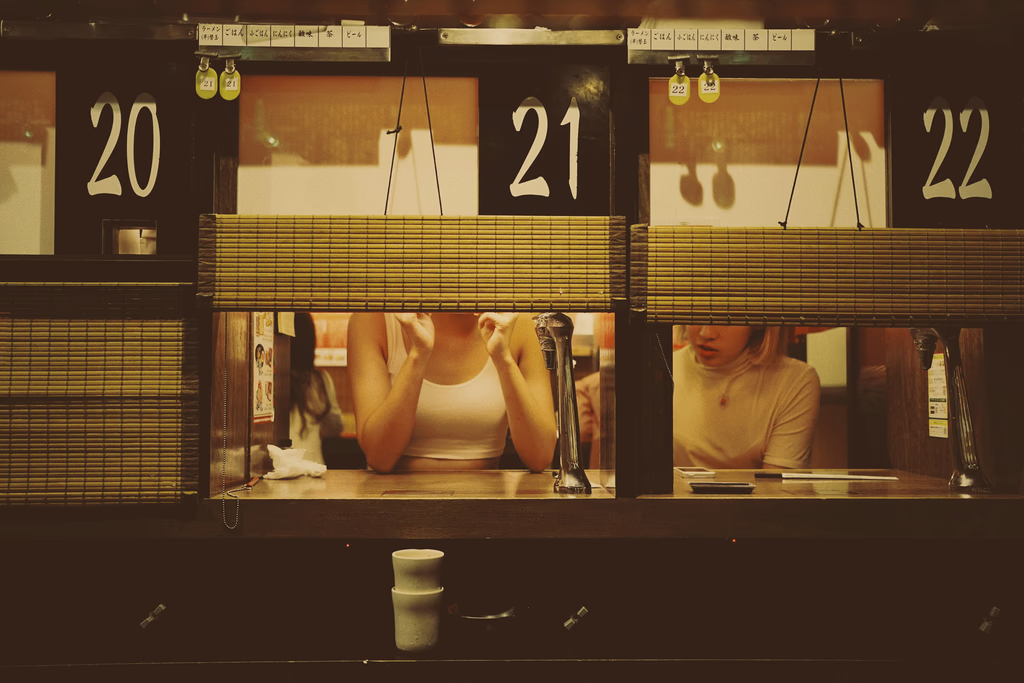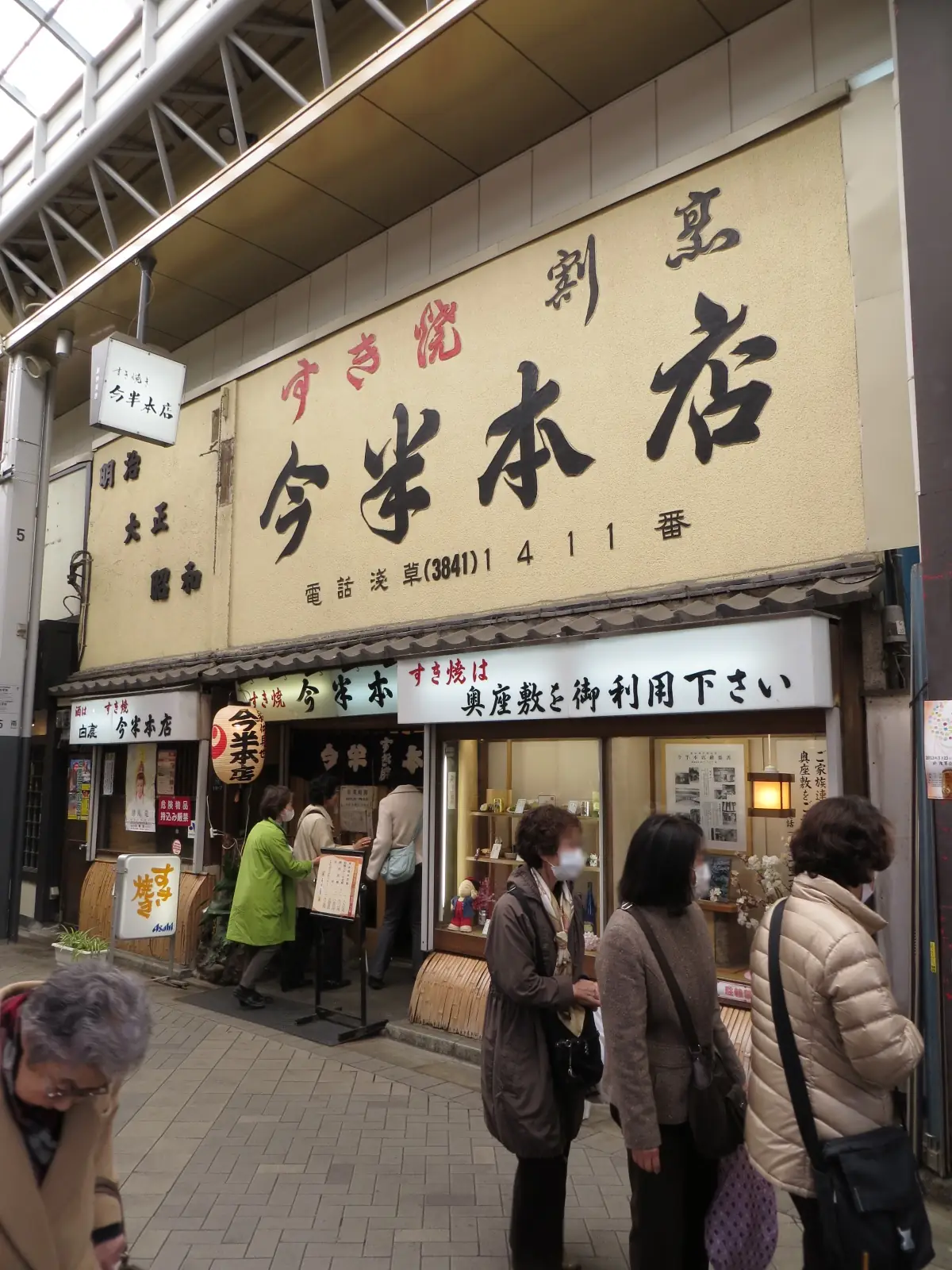
Sukiyaki is thin slices of beef simmered at the table in a shallow iron pot with a sweet soy broth, then dipped in raw egg. It feels ancient. As Tokyo restaurant food, it is younger than most people think.
When beef was the modern thing to eat
Beef was not everyday food in Japan before the 1860s. When the ports opened to foreigners, beef shops followed, first in Yokohama and then in Tokyo. A slaughterhouse supplying the foreign community stood in the Shiba and Shirokane area of the city. The shops that grew up around it served "gyunabe", beef cooked in a pot, usually simmered in miso.
In 1871 the writer Kanagaki Robun put the mood in one line in his comic book "Aguranabe": people of every kind, he wrote, and anyone who does not eat beef pot is not enlightened. The Japanese is "gyunabe kuwaneba hirakenu yatsu". Eating beef had become a way of belonging to the new age.
A shop with two versions of its start
Imahan Honten says it opened in 1895, the 28th year of Meiji. Its own history credits the founder, Aizawa Hantaro, a man from Okayama who had made money dealing in cattle and supplies, then moved to Tokyo that year and went into the restaurant business. His gravestone says so. The "han" in Imahan is the "han" of Hantaro, which the shop says is certain.
The other Imahan restaurants tell it differently. Asakusa Imahan and Ningyocho Imahan, now separate companies, both say the family began in 1895 as a beef pot shop in Honjo, east of the Sumida River. Asakusa Imahan names a man called Takaoka, also from Okayama, as the founder, and says Aizawa joined him to open the Asakusa shop in the early 1910s. Japanese Wikipedia follows the Honjo story. All of them give 1895. They differ on who stood at the stove and where.
A palace after the earthquake
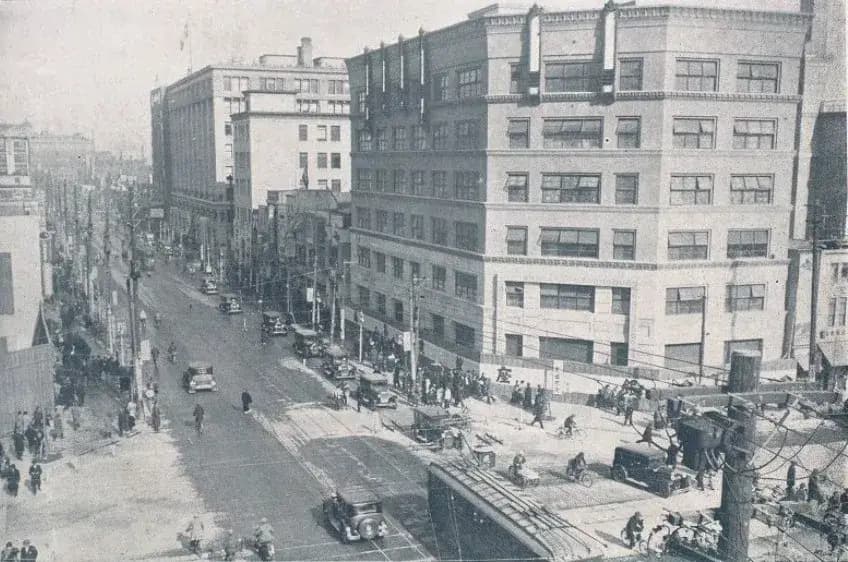
After the 1923 Kanto earthquake the shop rebuilt on a grand scale, and the building became known as "Imahan Goten", the Imahan palace. The shop says people used to read the economy by how busy it was. The novelist Nagai Kafu was among the customers who went there often. The palace was destroyed in the Tokyo air raid of 10 March 1945.
Aizawa's family reopened the company on the same site in 1951, and the shop says the present building, including the back tatami rooms, was finished around 1955. Those rooms are now registered as a national cultural property.
What "Ima" means
The shop is sure about "han" and lists three guesses for "Ima". "Imayo" means up to date, and beef was the latest food. Or the "Ima" is Imazato, the name of the government-approved slaughterhouse in Shirokane that supplied the meat. Or it comes from the many beef shops of the time with "Ima" in their names, one of which the founder trained in. Japanese Wikipedia gives the slaughterhouse theory too.
See it yourself
- Where. Shin-Nakamise street, Asakusa 1-19-7, about three minutes' walk from Asakusa Station. Look for the sign reading 今半本店. Two other Asakusa restaurants and one in Ningyocho share the Imahan name and are different companies.
- When. Open 11:30 to 20:30, last order 20:00, with a break from 15:00 to 17:00. Closed Tuesdays, with changes on some holidays and festival days.
- Getting a table. Seats in the main hall are first come, with no reservations, and the shop needs at least two people at one pot. Private tatami rooms are booked by phone and fill up for weeks.
- What it costs. The shop's menu lists sukiyaki at 5,000, 7,000 or 9,000 yen per person, depending on the beef. A rice, pickles and miso soup set is 850 yen and drinks are extra. Pay by cash or credit card. PayPay is not accepted.
Hear it on the tour
Sources
- Imahan Honten, official site
- Imahan Honten, history and successive owners
- Imahan Honten, menu
- Asakusa Imahan, company history
- Imahan Bekkan, about the restaurant
- Ningyocho Imahan, official site
- Soshu Beef Council, history of beef eating
- Japanese Wikipedia, Imahan
- Japanese Wikipedia, Gyunabe and sukiyaki
Photo credits
Ogiyoshisan / Wikimedia Commons, CC BY-SA 3.0. Photos resized.