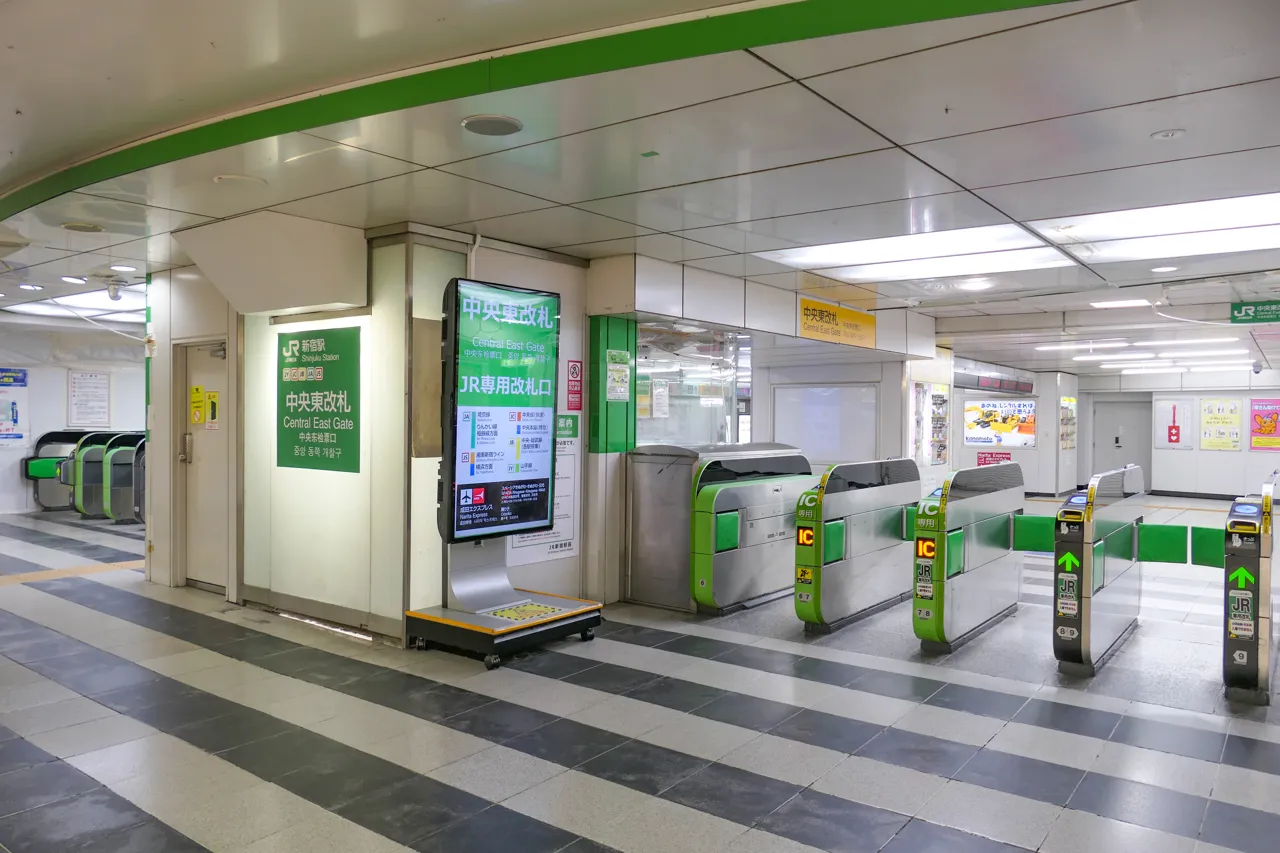
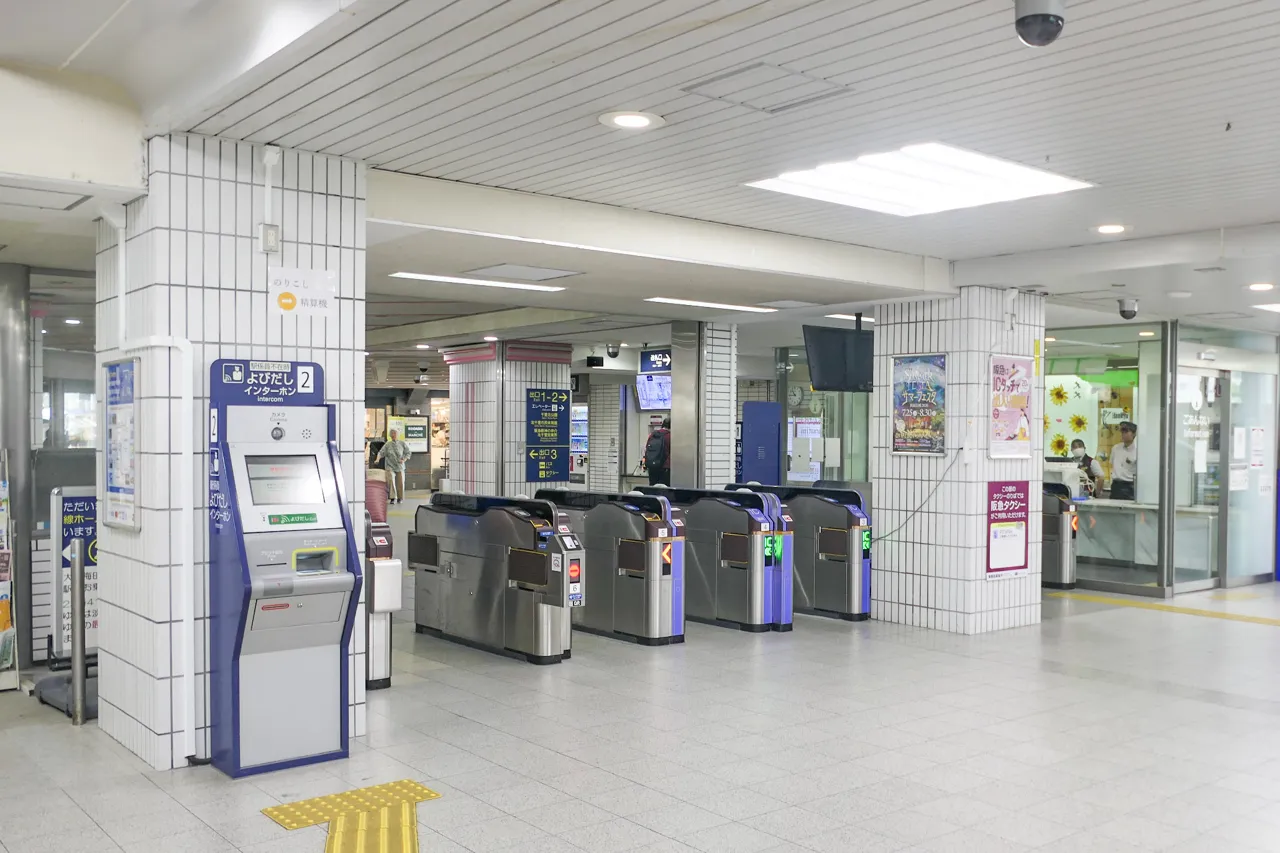
Tap your card at a Tokyo station and the little flaps stay open. They snap shut only when something is wrong: no balance, a missed tap. The gates built abroad at the time worked the other way round: locked until you proved you had paid.
They watched the ticket collector
In the early 1960s, commuter trains around Osaka were so packed that station staff checked passes by eye, one person after another, at 60 to 80 people a minute. A small electronics maker, Tateishi Electric (now called Omron), was asked to automate it.
Two of its engineers, Tanaka Toshio and Asada Takeo, stood in Osaka's Umeda station and watched the collectors. The engineers say they saw that almost everyone just holds up a valid pass without stopping, and the collector speaks up only for the odd wrong one. Tanaka calls it an unspoken trust between staff and passengers.
Those foreign gates were closed until a ticket opened them. Tanaka says the best his team's model of that kind could pass was 20 people a minute. So they flipped it. A gate that is normally open, and closes only on a bad ticket. Omron calls it "normal open", and says it rests on assuming people are honest.
The national railway said no
Their first partner was Kintetsu, a private railway, which wanted the gates at an interchange with the Japanese National Railways. The national railway would not accept the punched commuter passes, so Kintetsu dropped the plan. Tanaka remembers hearing the news and feeling crushed.
Then an Omron salesman tried Hankyu, a railway extending its line to a new town, Kita-Senri, built near the site of Expo 70 in Osaka. Hankyu said, in Tanaka's words, roughly: we can put it in, want to try?
On 1 March 1967, ten gates opened at Kita-Senri station. Commuters fed whole pass holders into the slot. Some pushed in banknotes and coins. Staff stood beside the gates all day to explain them, and the engineers sometimes slept at the station while they fixed the machines, until a new model arrived in 1971. It became the world's first fully automatic ticket gate system, and the IEEE, a global engineering body, later made it a Milestone. Tokyo's gates came later, after Tokyu put some in three stations in 1971 and JR East launched Suica in 2001.
See it yourself
- The flaps. At the first station on the tour, tap in and watch. The gate stays open, and it was designed so you never have to slow down.
- The tap. On the first-time visitors tour, your guide shows how to tap in and out, and what the gate does when a balance runs short.
Hear it on the tour
Photo credits
- Ticket gates at JR Shinjuku Station with the flaps open: MaedaAkihiko / Wikimedia Commons, CC BY-SA 4.0, resized