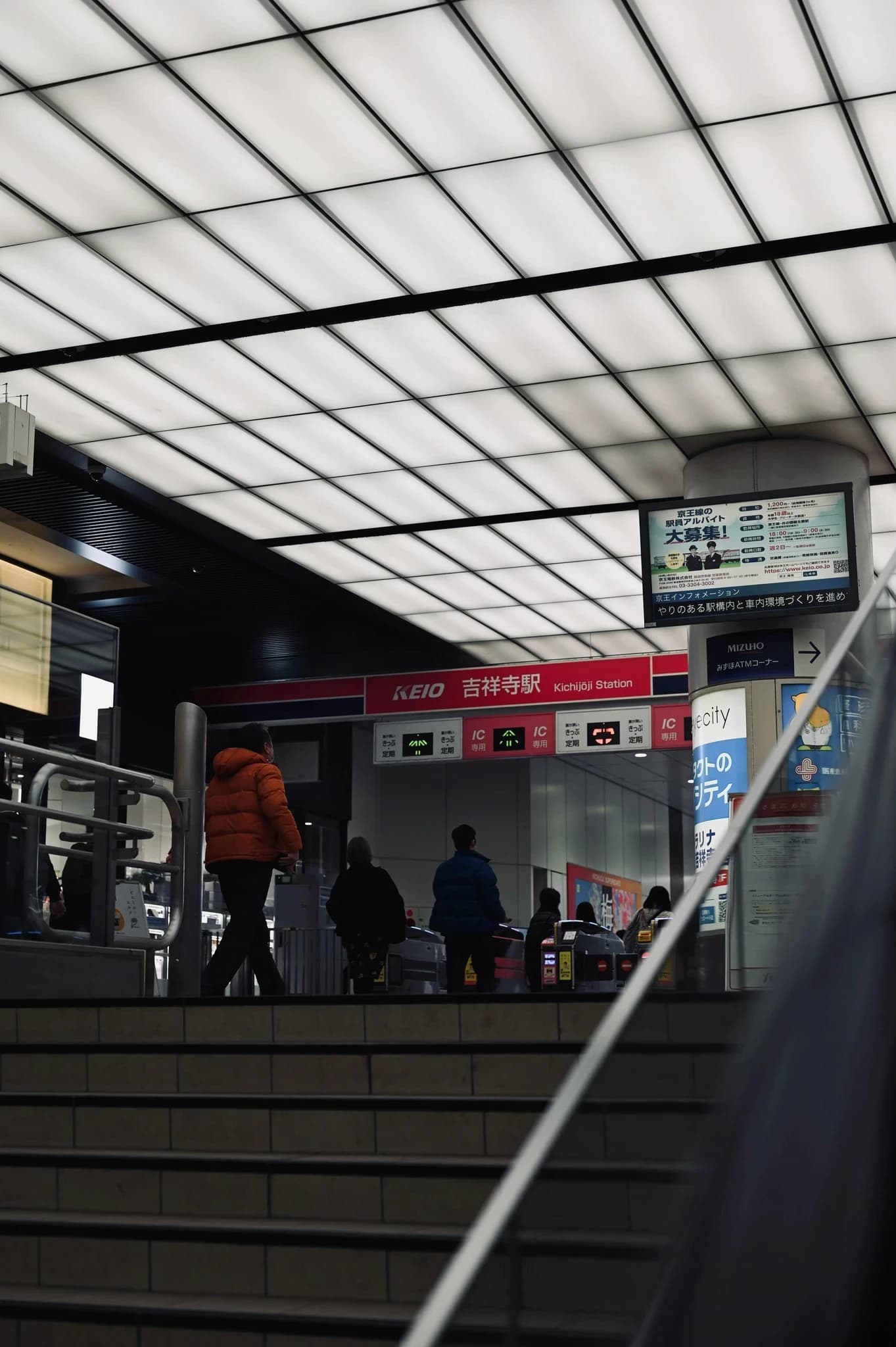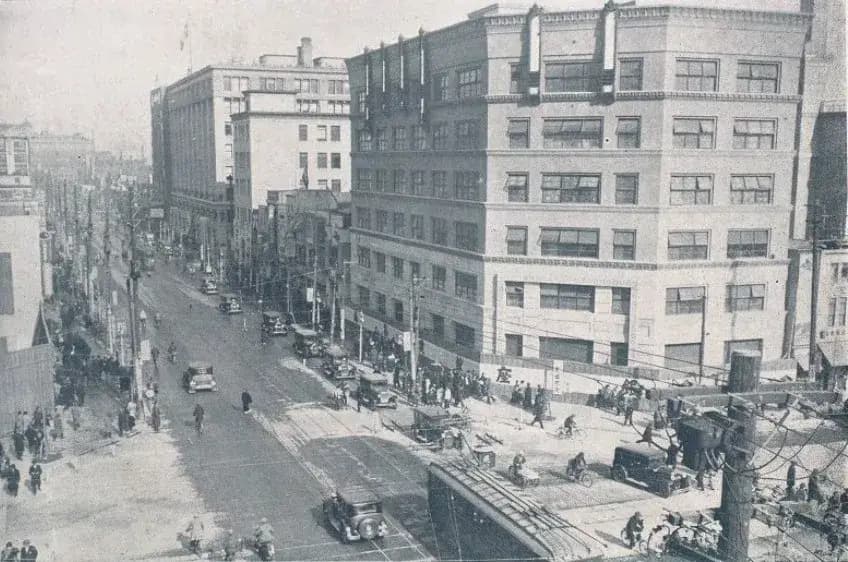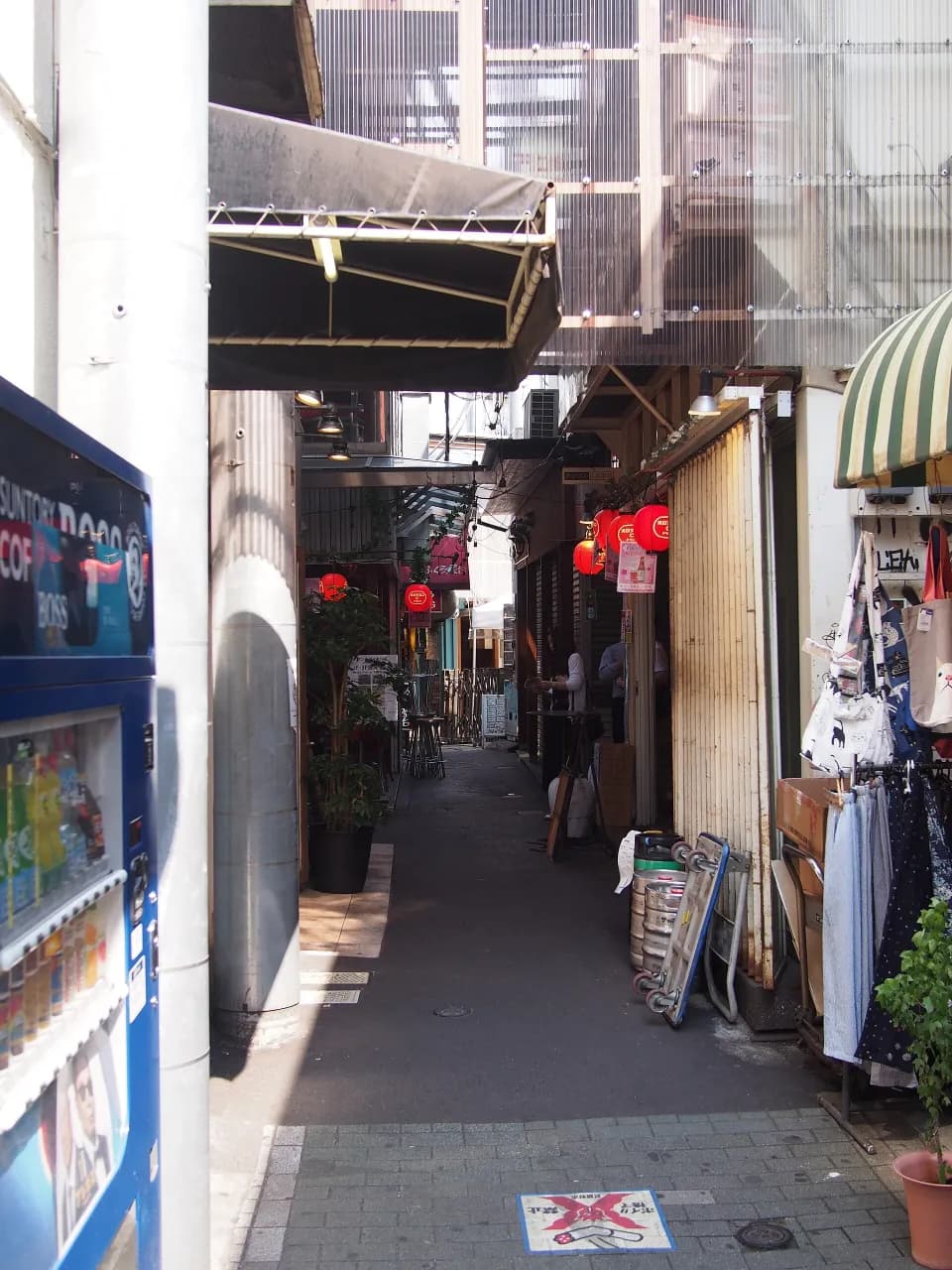
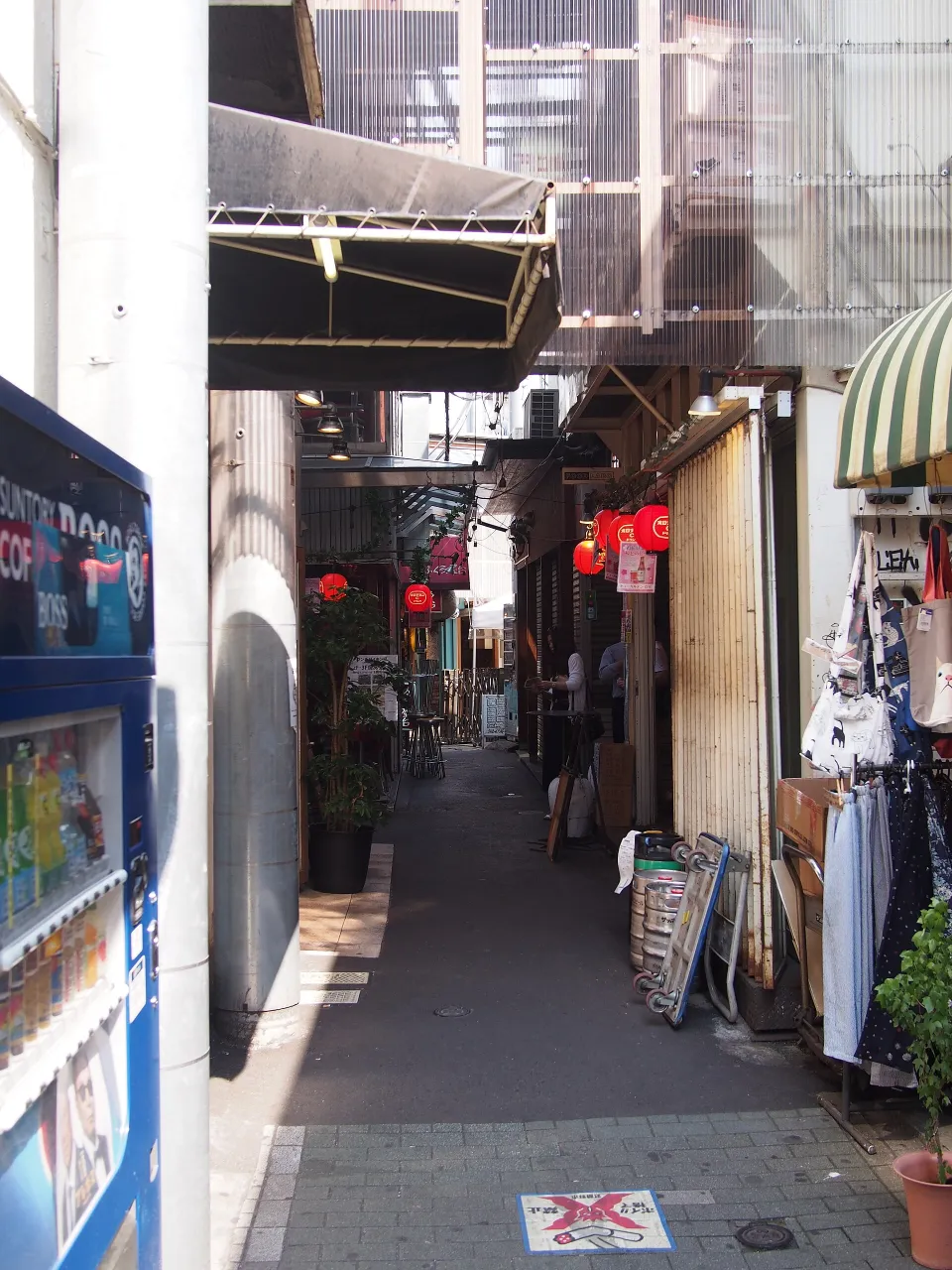
Harmonica Yokocho began as a black market in the years after the war, with about 100 tiny shops in a few lanes by Kichijoji Station (Japanese Wikipedia). By the late 1990s it had gone quiet. Tezuka Ichiro says that is why he thought he could do something there.
An alley with its shutters down
Tezuka was in the video business. In 1979 he opened a shop in Kichijoji selling video equipment. He says it was probably Japan's first specialist shop of its kind, and Kichijoji's local news site repeats the claim (Yomiuri; Kichijoji Keizai). Fans came from across the country and the shop made good money.
In the 1990s camcorders and video decks reached ordinary homes, and he had to shrink the business (Yomiuri). He rented a small stall in Harmonica Yokocho to sell videotapes. The alley around it was dark, with many shops closed (Kichijoji Keizai; Tezuka in an interview with a university lab).
A grill upstairs, for fun
The floor above his tape stall was empty. Tezuka loves yakitori, and with an architect, a designer and a silk-screen printer he started grilling on weekend nights, from about 7pm to midnight (J-WAVE). It was the one thing he could start tomorrow, he told PRESIDENT magazine: the gas was already there, and a friend had taught him a sauce.
It was called Harmonica Kitchen and opened in 1998 (Kichijoji Keizai; PRESIDENT). Some nights, he told J-WAVE, it took in about 2,000 yen, and the partners argued over who had picked the name. He says he never started it to make money.
The film he wanted the alley to look like
When the next-door fishmonger fell ill and asked him to take over, he took the shop. He wanted the alley to feel like the film Blade Runner, with backlight, smoke and wet ground. In his words to J-WAVE, "Only the yakitori succeeded; the rest went extinct." He has also said that perhaps 80 percent of his ventures failed (PRESIDENT Online).
The yakitori stayed. He asked the architect Kuma Kengo to design the yakitori shop Tecchan, and by his account Kuma arrived on a heavy-snow night in January and was still eating there at dawn (J-WAVE; Tezuka's university-lab interview). Yomiuri notes that he is often described as the man who revived the fading alley. He still grills in Harmonica Kitchen on Saturdays, at 78.
See it yourself
- Harmonica Yokocho. Our tour walks the alley in late morning. His yakitori counters are among the red lanterns, though not every shop here is his.
- The walls. Look for the Tecchan yakitori lantern and the Food Labo sign. Tezuka says the wall art inside Tecchan was ordered as "indecent pictures", and that diners ignored it.
Hear it on the tour
Sources
- Yomiuri Shimbun, 3 Apr 2026, interview with Tezuka Ichiro
- J-WAVE "The Hidden Story", 27 Dec 2019
- PRESIDENT Online, 19 Oct 2012, Tezuka and Miura Atsushi
- PRESIDENT Online via Bunshun, "80%くらいは失敗したかな"
- Kichijoji Keizai, 14 Jun 2018
- Interview with Tezuka Ichiro, Kobayashi lab
- ハーモニカ横丁, Japanese Wikipedia
Photo credits
- A quiet daytime lane in Harmonica Yokocho: nakashi (Flickr) / Wikimedia Commons, CC BY-SA 2.0, resized