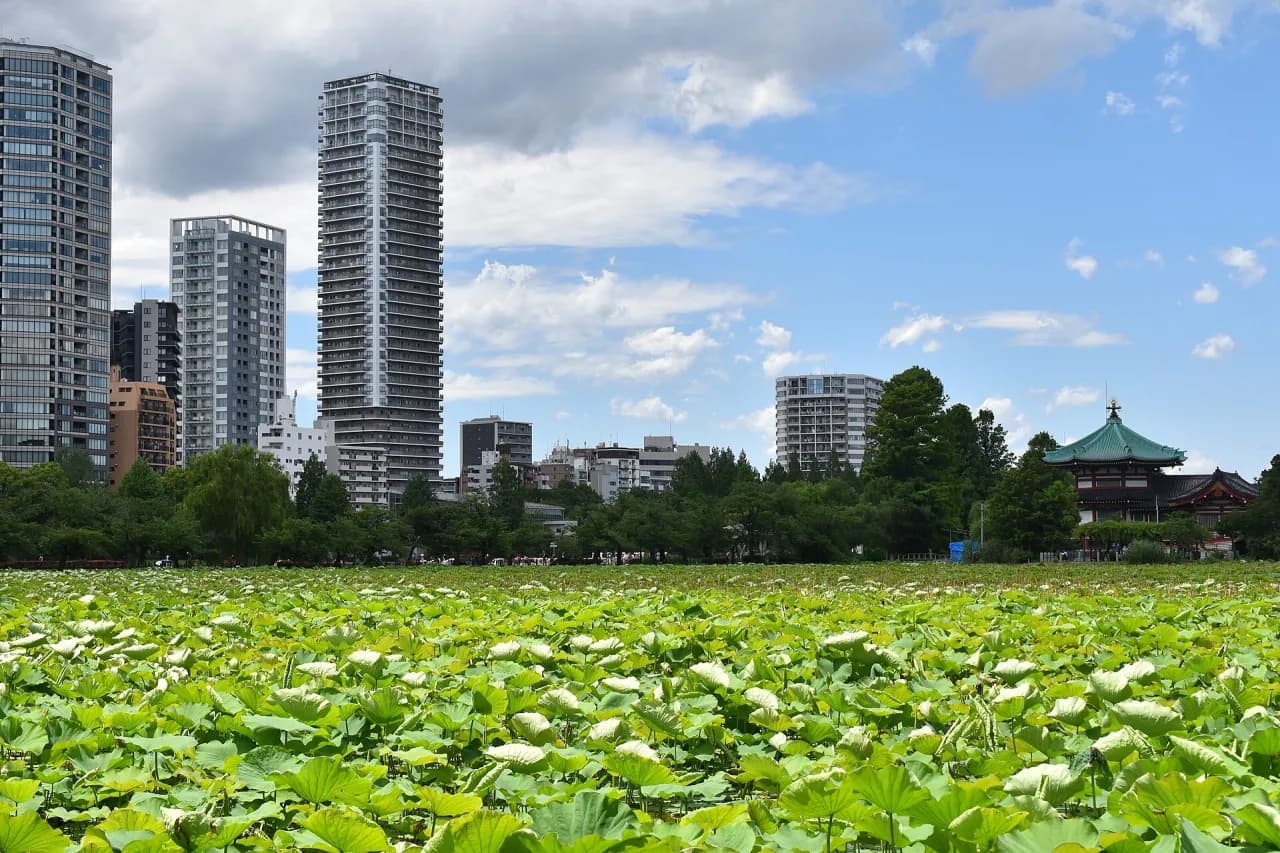
Shinobazu Pond, the wide lotus pond beside Ueno Station, was very nearly a baseball ground. In the summer of 1949 a committee asked Tokyo's assembly to let it fill in the south-west corner of the pond for an international stadium. Most of the assembly had already signed up.
A petition with 78 names
The pond had been drained after the war and farmed as rice paddies from 1946 to 1948. It was run down, and one plan after another had been floated for it. Then news came that the San Francisco Seals, an American professional team, would tour Japan, and baseball fever took hold. Tokyo wanted a ground big enough to host American major leaguers, and the pond was picked as the site.
On 27 July 1949 a stadium committee led by Nakajima Kumakichi petitioned the assembly for about 12,000 tsubo, roughly four hectares. According to Ueno Zoo's official history, 78 of the 120 assembly members signed as sponsors, and the petition went to the assembly's construction committee.
The people next door
The people who worked in the park were not politicians, and they had a different view. The staff of the Tokyo National Museum, the National Science Museum, the Metropolitan Art Museum, the art university and Ueno Zoo formed a group called the Ueno Park Culture Society.
On 4 August 1949 they stood a large papier-mache duck in the water, on the very patch that was to be filled. "Ueno Culture Society" was written across it, with the appeal not to take the water out of the pond. The zoo's history says it was made by Hayashi Jurō, then the zoo's planning chief, and Nishi Daiyū of the art university, and that it became the symbol of the campaign.
A long summer, and a winter
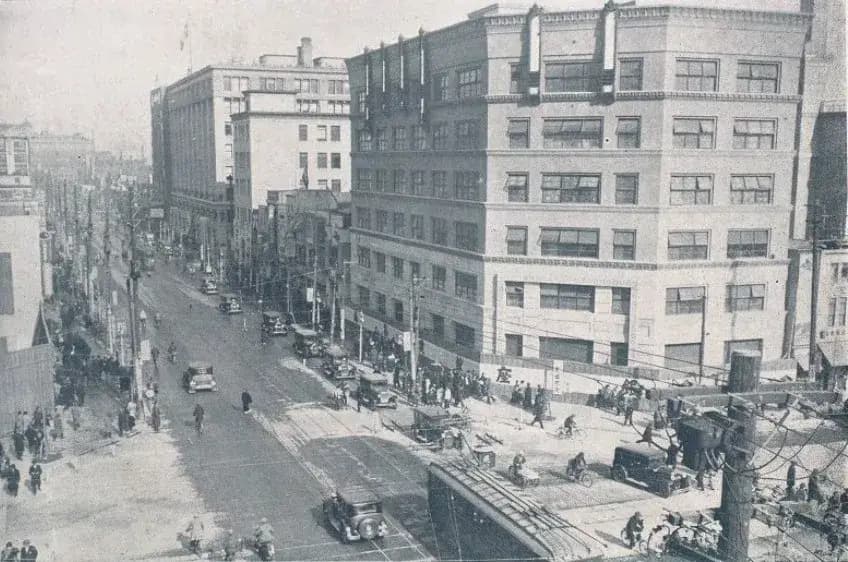
The campaign grew. On 8 August the National Museum's director hosted a meeting to hear what scholars thought. A coalition of 16 groups, chaired by the president of the University of Tokyo, formed on 20 August. NHK recorded a street debate beside the Matsuzakaya department store in Ueno. By the assembly session on 13 September, 35 of the 78 sponsors had asked to withdraw their names.
It still was not over. The Seals arrived in October and the stadium question came back. In January 1950 the assembly's construction committee proposed a smaller ballpark on land next to the zoo instead, and the zoo's own building work was ordered to stop for a time. On 29 March 1950 the proposal never reached a full vote and was dropped.
The zoo's history credits the whole campaign, not the duck alone. What it calls the duck is the symbol of the fight. English-language guides mention only that a baseball field was planned and dropped. A student at the Tokyo University of the Arts, Nomura Hodaka, rebuilt the duck full size for a degree show in Ueno, and a reviewer called it a forgotten piece of history.
See it yourself
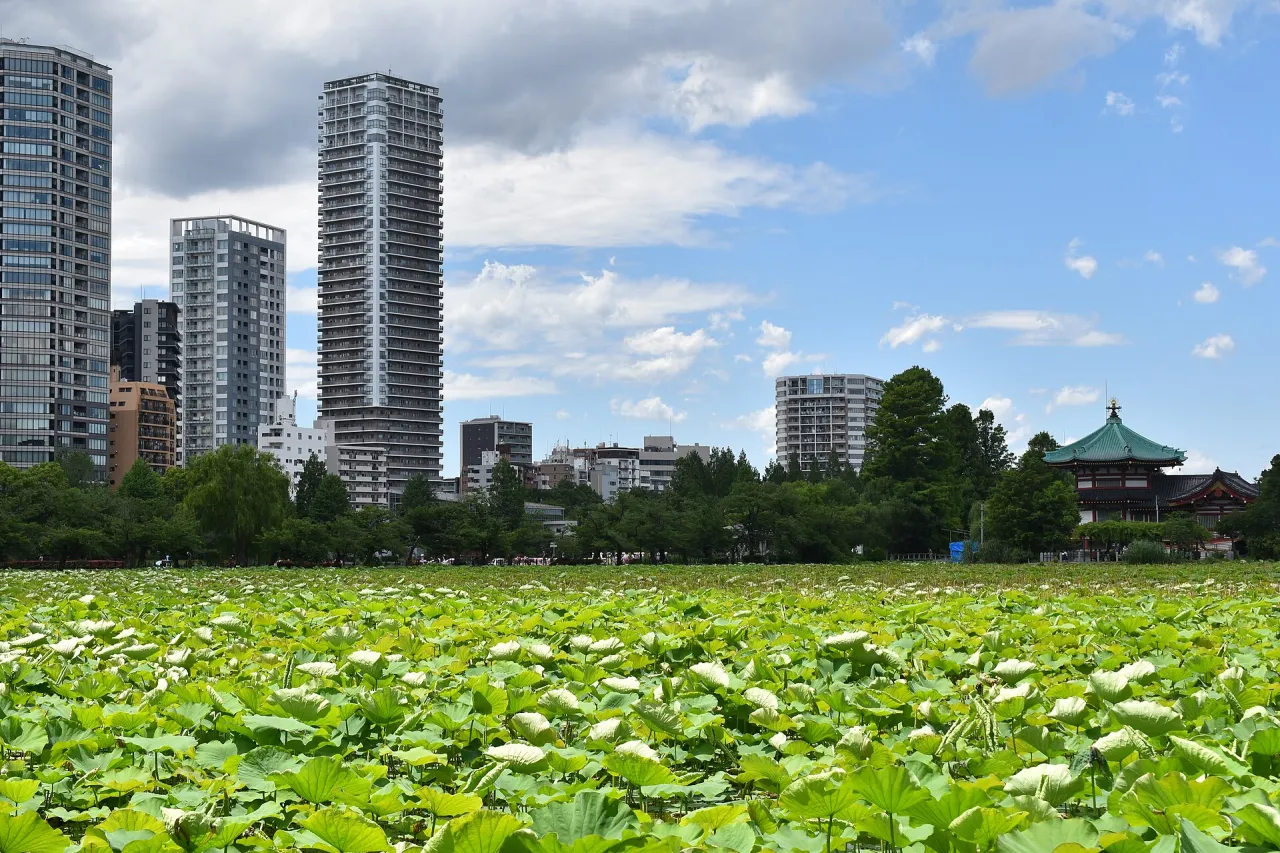
- The pond. The planned fill was the south-west corner, on the Ikenohata side. Stand at the edge and look across the lotus leaves to the Benten-do hall, and picture a stadium.
- The zoo next door. The staff who fought the plan worked in the buildings beside the pond, and the zoo's own history is where the duck is recorded.
Hear it on the tour
Photo credits
- Lotus leaves on Shinobazu Pond today: Fred Cherrygarden / Wikimedia Commons, CC BY-SA 4.0, resized