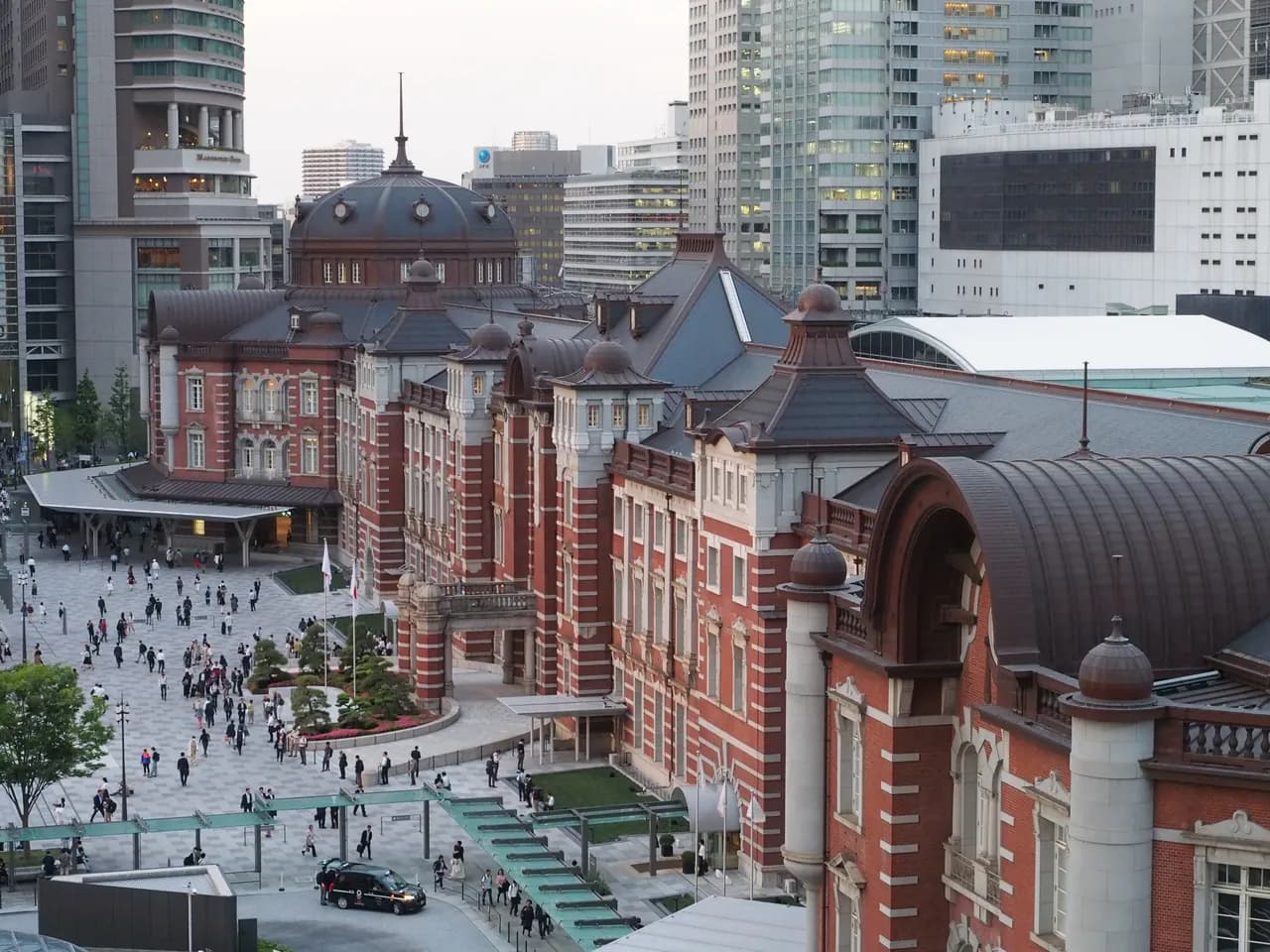
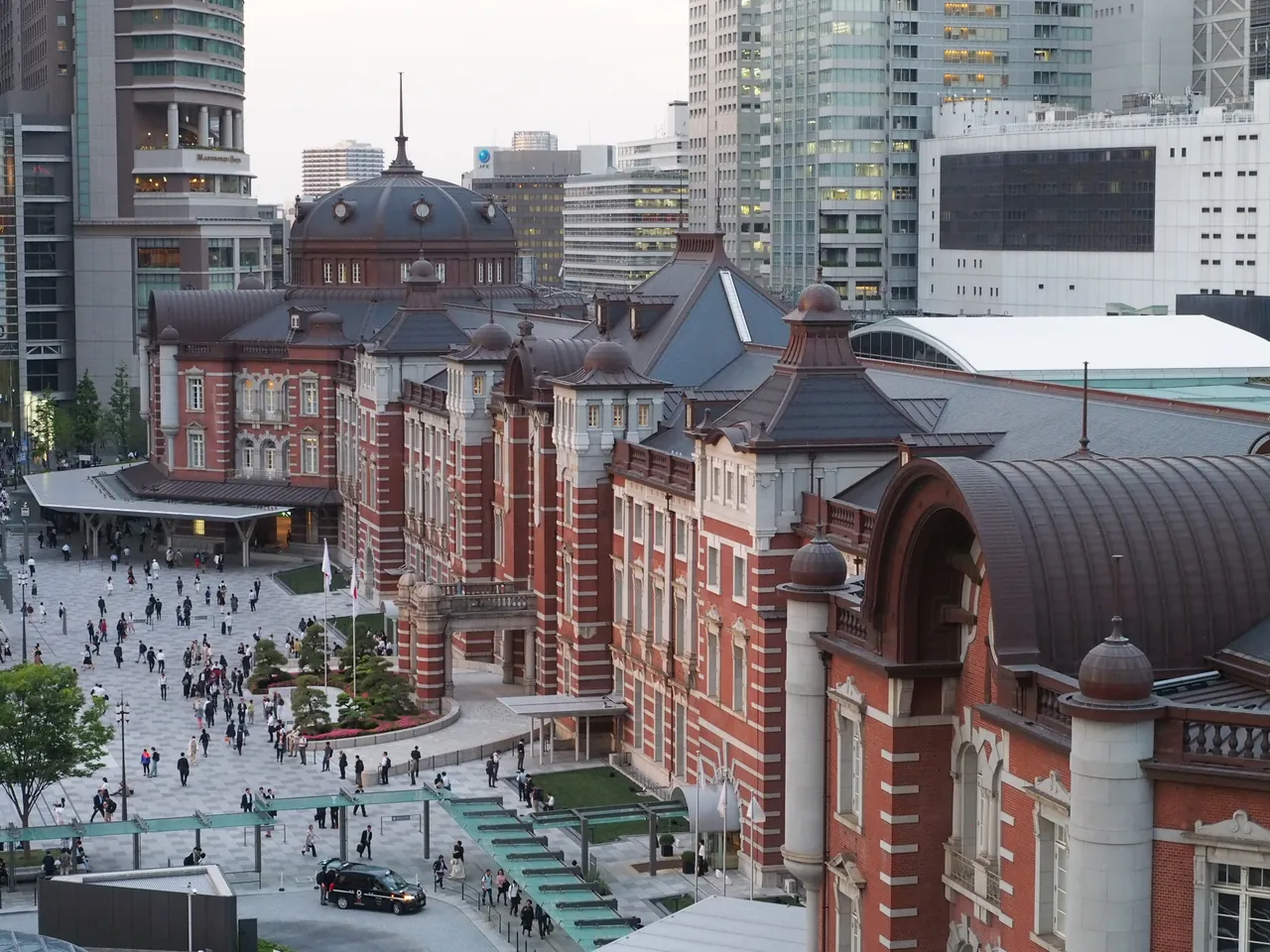
Look across from the KITTE garden at the red-brick Tokyo Station and you are looking at a restoration. The building lost its domes in an air raid in May 1945 and was patched with a plainer roof that lasted about sixty years. A rebuild to the 1914 shape began in 2007, and its roof needed grey-black stone slates, about 457,000 of them by one count.
Two years of washing old slate
The old slates came off the roof by the thousand. From May 2009, according to the Asahi newspaper, a firm called Kumagai Sangyo took about 200,000 of them to its base in Kitakami, a coastal town in Ishinomaki, in northeast Japan. The firm specialises in repairing heritage roofs, thatch and slate. Staff checked every slate for cracks and scrubbed about 130,000 of the good ones clean, then sent them back to Tokyo in batches. The last 65,000 were due in July 2011.
The warehouse that was not there
On 11 March 2011 the tsunami took the warehouse with all of them in it. The company's president, Kumagai Akio, told the writer Mori Mayumi in April that his house and office were washed away too. Asahi reported that he, his family and staff, about ten people in all, spent two weeks gathering slates from the wreckage, about 45,000 of them. "It's a building that stands for Japan," he said, as Asahi quoted him. By his account they put their own clearing-up second.
"Salt damage, so we ordered Spanish"
Kumagai reported the count to the main contractor. Asahi says the reply was that, because of possible salt damage, they had decided to order slate from Spain. Kumagai said that in his experience the salt would wash off. On 15 April a Tokyo citizens' group that campaigns for the station delivered a request to JR East, the railway company that owns it. The principle in restoring a heritage building, it said, is to respect the original material, which carries the building's genes.
The recovered slates were used. Asahi reported in September 2011 that the firm had gathered them up and delivered them, and Japan Web Magazine says about 40,000 passed inspection. They were a minority: most of the roof is other slate, including Spanish. We do not know which part of the roof they sit on, and sources disagree, so your guide will not point and promise.
See it yourself
- The roof from above. On the Marunouchi stop, the KITTE rooftop garden looks across at the station's roofs. Look for the dark slate on the roofs.
- The story. Your guide tells it on the Marunouchi stop, with the roof in view.
Hear it on the tour
Photo credits
- Tokyo Station's Marunouchi building and its roofs, seen from the KITTE garden: Kestrel / Wikimedia Commons, CC BY-SA 4.0, resized