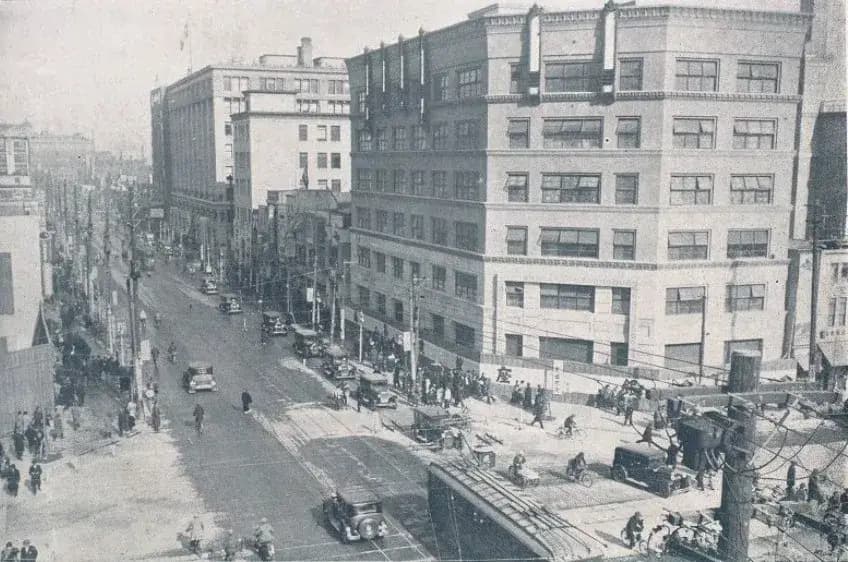
Look at the platform numbers at Ueno Station and one is missing. There is a 17 and a 19, but no 18. Platform 18 closed on 11 September 1999, and its number was never given to anything else.
For more than twenty years it was where a generation of Japanese teenagers stepped into their working lives.
The "golden eggs" of platform 18
By the 1950s Japan's factories and shops could not find enough workers. Employers went to country middle schools, and fifteen-year-olds, mostly from the north and the Tohoku region, boarded special night trains to Tokyo, away from their families for the first time. Many stepped off at Ueno, on platform 18, where their new bosses met them.
The first of these trains on record, on 5 April 1954, carried 622 of them from Aomori. The last of its kind arrived from Morioka in March 1975. The newcomers were nicknamed kin no tamago, "golden eggs": young, scarce and valuable. The phrase was a buzzword by 1964.
A song for them
In 1964 a bank clerk named Sekiguchi Yoshiaki, 23, wrote a lyric about the teenagers he had seen at Ueno and won a contest run by a farm-family magazine, Ie no Hikari. He had heard the winner would be recorded by a famous singer. Instead Toshiba Records gave it to Izawa Hachirō, a newcomer few had heard of.
Izawa had made the same trip. He came from Hirosaki in Aomori and had left for Tokyo alone after middle school, to become a singer. "Ah, Ueno Station" came out in May 1964, and it caught on with the very teenagers it described.
The line nobody wrote
As Izawa later told it, he was on a TV music show when he was told his father had died. In the instrumental break he spoke a few unplanned words to his father. They begin with "Tōchan", "Dad", and they are a son's promise to come home on his next day off. The line was added to later pressings of the record, and the song went on to sell about a million copies.
See it yourself
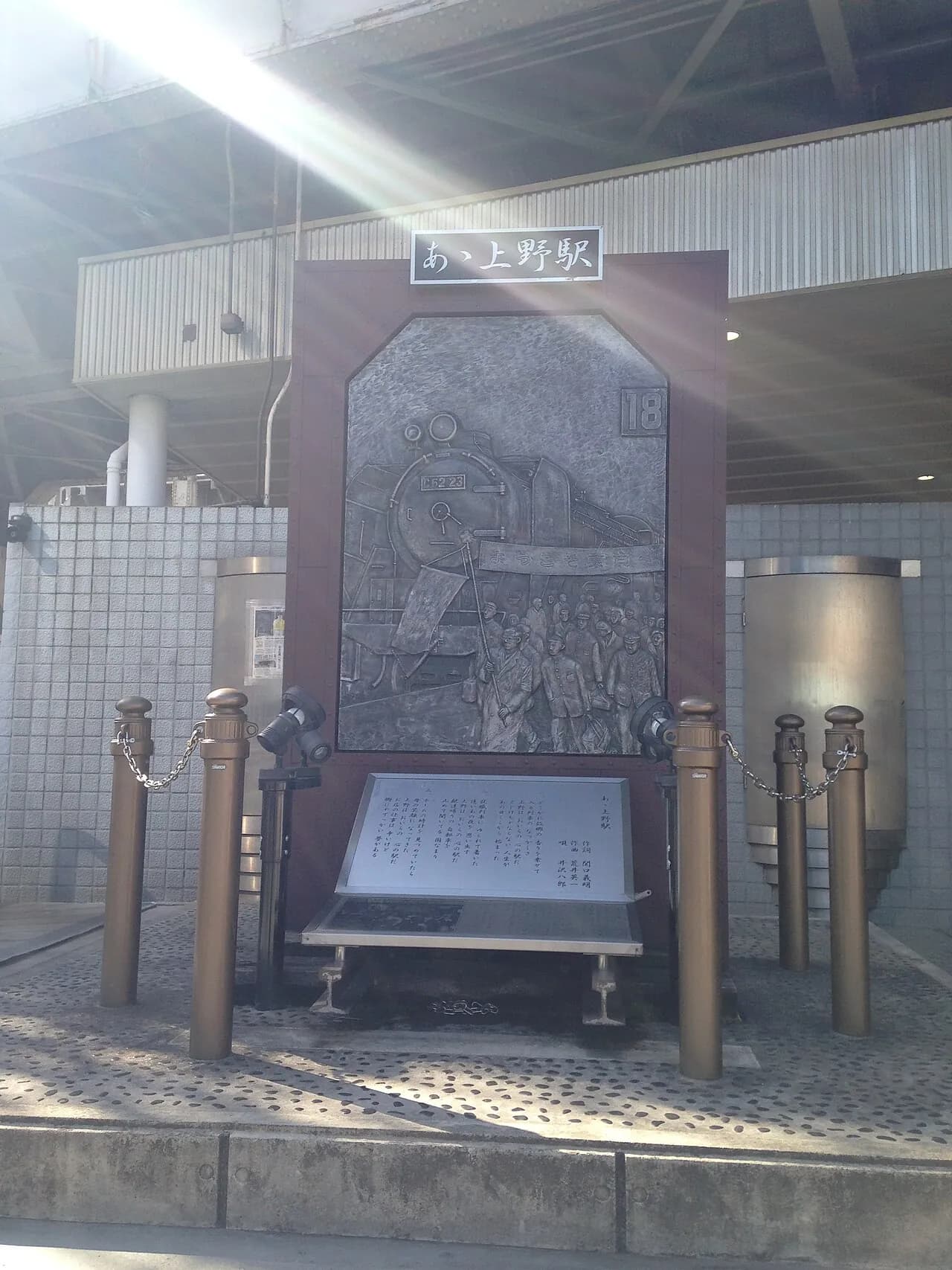
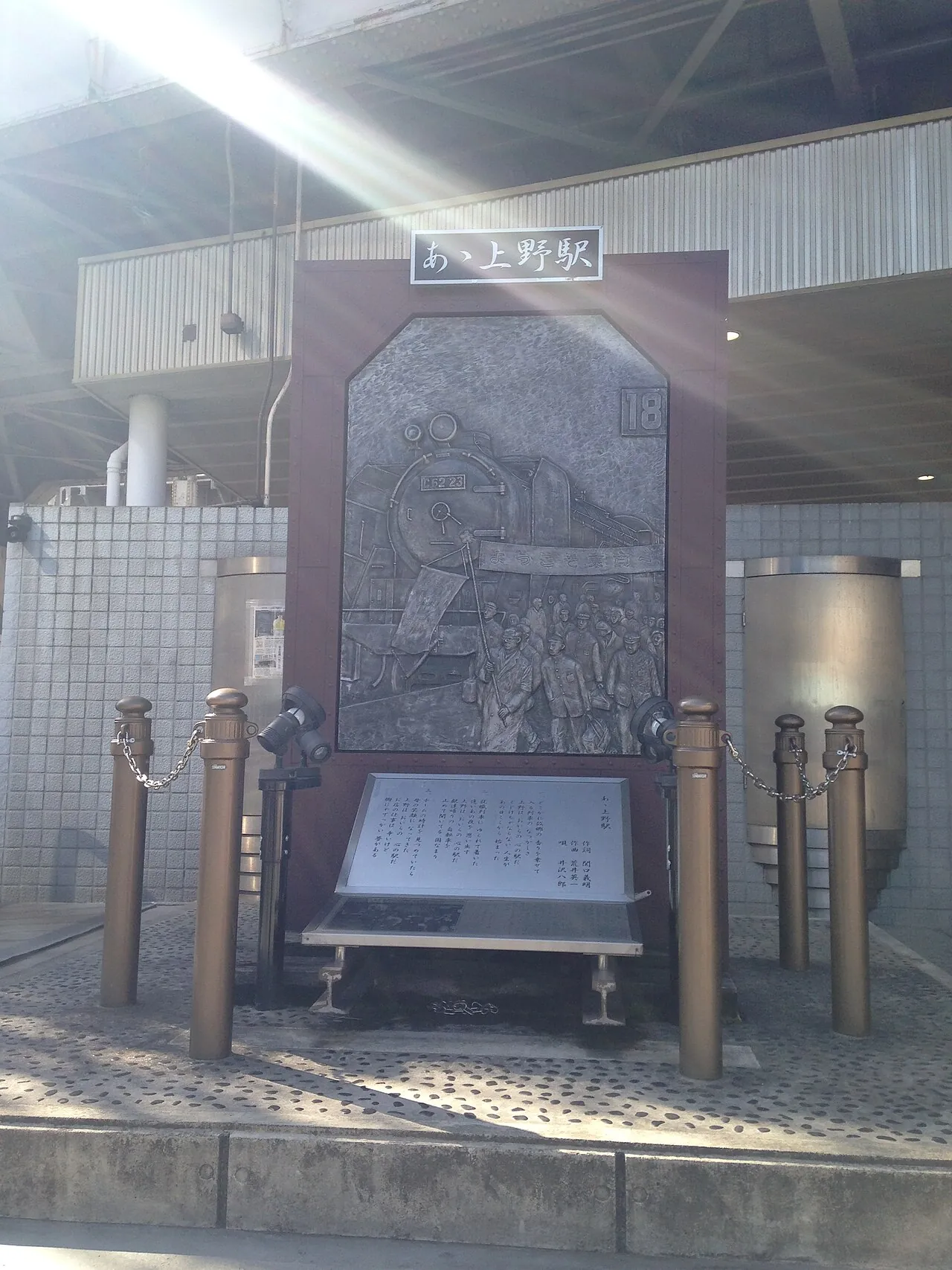
- The monument, on the old platform 18. In 2003 a volunteer group, including the former boxer Fighting Harada and business owners who had arrived as "golden eggs", put up a monument outside Ueno Station. It shows a steam locomotive marked 18 and students carrying their bags. On 7 September 2026 the city moved it, because of weathering and rubbish piling up around it, to the old platform 18 area opposite platform 17. It is now inside the ticket gates, so visitors need a platform ticket. It is the one place at Ueno where the number 18 still means something.
- The melody. The song has been the departure melody on platforms 16 and 17, for the ground-level Joban line trains, since November 2016, and it was still playing there in autumn 2026.
Hear it on the tour
Sources
- あゝ上野駅, Japanese Wikipedia
- 天地人, Tōō Nippō (WEB東奥), 20 December 2016
- 流行り歌に寄せて No.104, norari.net
- 「あゝ上野駅」歌碑の移設について, Taito City
- ゆかりの上野駅ホームへ移設, Sankei, 30 September 2026
- 「あゝ上野駅」あの18番線へ, Tokyo Shimbun, 9 September 2026
- <あのころ>上野駅の18番線が廃止, 47NEWS (Kyodo)
- 上野駅の18番線はどこに消えた?, Da Vinci Web
- 集団就職, Japanese Wikipedia
Photo credits
- The Ah Ueno Station monument in 2014, at its old spot outside the station, showing a locomotive marked 18 and students with bags: そらみみ / Wikimedia Commons, CC BY-SA 3.0, resized