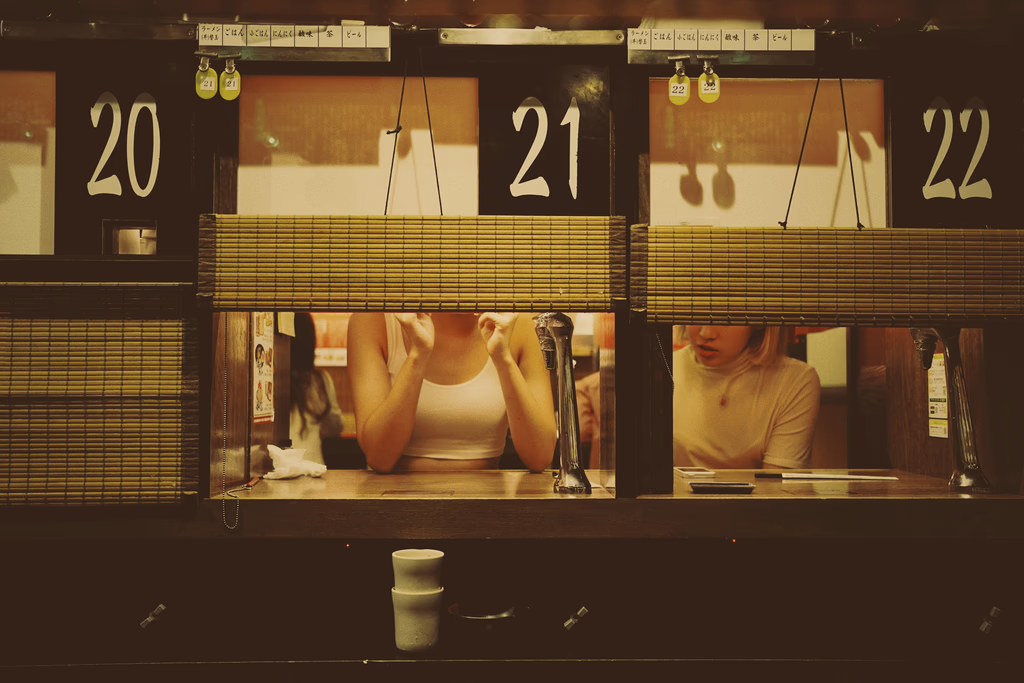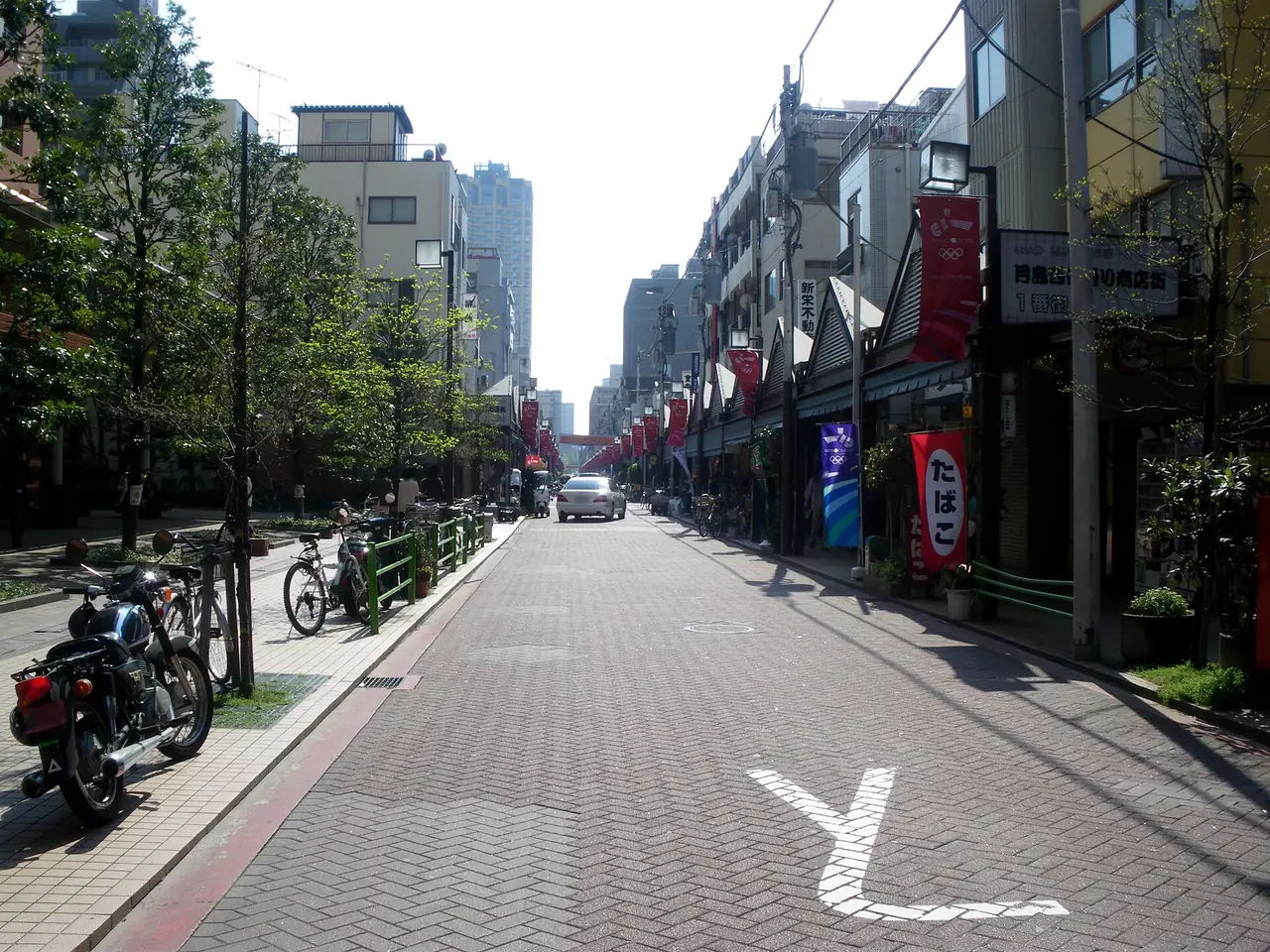
Monjayaki is a runny batter you cook on a hot plate in front of you, with cabbage and other toppings, and eat straight off the plate with a tiny spatula. On Tsukishima Monja Street, a short stretch of shops in Chuo ward, almost every restaurant serves it. Its ancestor was not a meal. It was a children's snack.
A sweet snack called mojiyaki
Japanese Wikipedia says records show that in Edo and Meiji era Tokyo there was a candy-shop snack called "mojiyaki", written with the character for letters. It quotes Shimizu Seifu's "Machi no Sugata": flour mixed with sugar syrup, poured by children from a small spoon onto a metal plate, as if writing letters. Mori Senzo's history of Meiji Tokyo also describes flour and syrup cooked on a copper plate. The travel site Trip Editor, which interviewed the Tsukishima monja association, adds that the batter could be flavoured with dark syrup or soy sauce, and that children wrote letters and drew pictures on the plate while it cooked.
Japanese Wikipedia says most downtown Tokyo candy shops kept a griddle for this until about the 1960s and early 1970s. It says the savoury dish took shape in the 1940s to 1950s, and that adding cabbage and building a ring of it to hold the liquid came in the 1950s. Trip Editor cites a book on okonomiyaki that says this ring style was not seen before the war.
Not necessarily born in Tsukishima
Many people assume Tsukishima is where monjayaki began. The sources are less sure. Japanese Wikipedia says the modern style is often said to have begun in Honjo, now Higashikomagata in Sumida ward, near Asakusa, then spread north. Tsukishima is the place that turned it into a destination.
An island of factory workers
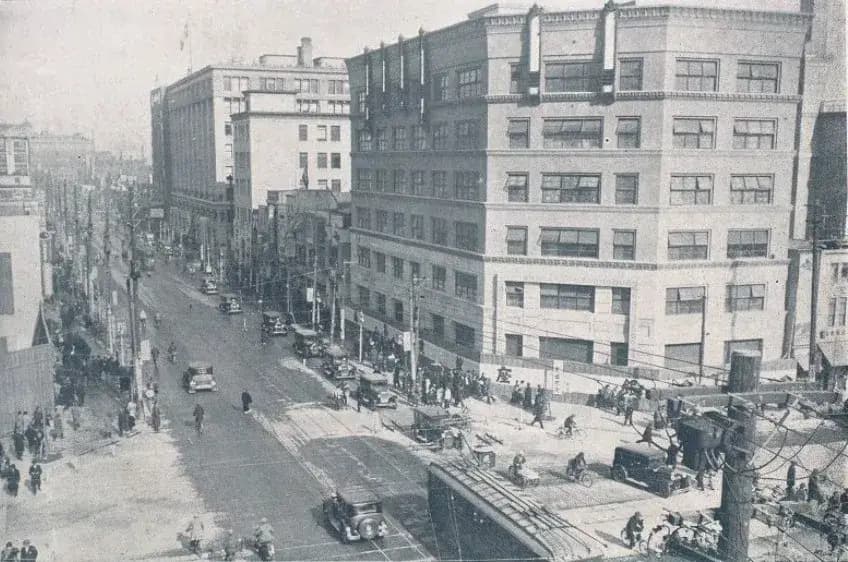
Trip Editor says Tsukishima was built from river mud and gravel in 1891. Factory workers moved in, tenements filled up, and children were everywhere. The shopping association's history, as Trip Editor reports it, says candy shops sold mojiyaki there. The promotion association told Trip Editor it did not know exactly how the children's snack became the grown up version.
The association points to Yoshimiya as the first shop to sell monja to adults on the street. The shop says it opened in 1954 and is the oldest monja shop on the street. Its third generation owner told Trip Editor that he does not know how the dish began. He guesses that the adult version spread from places like Asakusa and that his grandmother heard about it. So the shop does not claim to have invented it, only to have sold it first here.
Japanese Wikipedia puts the number of monja shops in Tsukishima at about 75.
See it yourself
- Yoshimiya. Tsukishima 3-15-10, about five minutes on foot from Tsukishima Station exit 7. Open 17:00 to 22:00 on weekdays and 16:00 on weekends and holidays; last order 21:30. Closed Tuesdays, plus one more irregular day.
- Booking. The shop takes reservations by phone, asks guests to avoid same day weekend bookings, and asks them to avoid the busy hours of 18:00 to 20:00. Go at opening. It accepts Visa, Mastercard, JCB, Amex and transit cards.
- What to order. The shop's menu lists a mentaiko, rice cake and cheese monja at 1,600 yen and a pork, kimchi and cheese monja at 1,530 yen. The shop says the average spend is 2,000 to 3,000 yen.
- The street. Tsukishima Monja Street runs from Tsukishima Station. The promotion association's site lists the member shops.
Hear it on the tour
Photo credits
User:Kentin / Wikimedia Commons, CC BY-SA 3.0. Photos resized.