The travelers who try to see everything describe their trips as 'a blur.' A good Tokyo itinerary is about what you choose not to do.
Tokyo itineraries by trip length share one lesson from every traveler who's come back: trying to see everything turns the trip into a blur. A good Tokyo itinerary is about what you choose not to do.
Ready-to-use Tokyo itineraries from 1 day to 2 weeks, with realistic pacing, logical neighborhood groupings, and the permission to skip what doesn't fit.
Your Itinerary Is Already Too Full
You've been planning for weeks. Spreadsheet with tabs for each day. Google Map with 47 pins. And a growing sense that you're still missing something important.
Here's what experienced travelers say after they return: the trips they describe as "a blur" are the ones where they tried to see everything. The ones they remember vividly? Those had breathing room.
The stages of Tokyo trip planning mirror the stages of grief. You start with "I want to do it all," move to "why can't I do it all?," and finally arrive at acceptance. The Japanese have a word for this: shoganai — it can't be helped.
This page won't tell you what to see. It will help you build a structure that doesn't collapse under its own weight.
The blur and the blur-avoiders
Travelers who book activities every hour describe their trips as exhausting — a checklist rather than an experience. The travelers who return happiest made peace with seeing less. They spent an afternoon in one neighborhood instead of racing between three.
What "Day 1: Asakusa and Ueno" actually assumes
Every Tokyo itinerary blog offers some version of the same template: Day 1 covers Asakusa and Ueno, Day 2 is Harajuku and Shibuya, Day 3 tackles Shinjuku, Day 4 adds a day trip.
This template isn't wrong. But it makes assumptions:
-
You have all-day energy
-
You want surface-level coverage of many places
-
You'll tolerate significant transit fatigue
-
Everyone in your group moves at the same pace
-
You have no interest in going deeper into any single area
If those assumptions fit you, the template works. If they don't, you need a different framework.
Two Neighborhoods. That's It.
The single most useful constraint for any Tokyo itinerary: two neighborhoods per day. Maybe three if they're adjacent. Never more.
This sounds restrictive until you try to cover Shibuya, Shinjuku, and Asakusa in one afternoon. Travelers who attempt this consistently describe it as overwhelming. By the third neighborhood, you're too tired to enjoy it.
Why three becomes chaos
Tokyo's neighborhoods look close on a map. They're not.
Asakusa to Shibuya is 33-37 minutes on the train. Door-to-door for a first-time visitor — including station navigation and exit confusion — that's 45-50 minutes each way. Do that round-trip and you've lost nearly two hours to transit alone.
The ceiling isn't about laziness. It's about having time to actually experience each place.
What counts as "one neighborhood"
Some areas that seem like separate neighborhoods are actually walkable corridors:
-
Shibuya-Harajuku-Omotesando: These connect on foot. Shibuya to Harajuku is 15-20 minutes walking via Cat Street, or 2-4 minutes on the Yamanote Line. Treat this as one extended zone.
-
Asakusa-Ueno: Connected by the Ginza Line in 6 minutes. Close enough to explore together in a day.
-
Shinjuku-Nakano: One stop on the Chuo Line, 4-7 minutes. Shinjuku's entertainment and shopping pairs well with Nakano Broadway's otaku culture and collectibles.
The pairs that work
Neighborhood pairings work when transit is under 10 minutes or walking is under 20. The natural pairs:
Eastern Tokyo corridor:
- Asakusa + Ueno (traditional temples, museums, markets)
Western Tokyo corridor:
-
Shibuya + Harajuku + Omotesando (youth culture, fashion, shrines)
-
Shinjuku + Nakano (entertainment, subculture, nightlife)
Cross-city combinations (doable but with transit cost):
- Asakusa morning → Shibuya/Harajuku afternoon (40-50 min transit)
Pick one pair per day. Fill the time with depth, not more locations. If you want help navigating a neighborhood's backstreets, a neighborhood-focused tour can surface what you'd otherwise walk past.
Timing Beats Coverage
When you visit matters more than what you visit. A poorly timed itinerary wastes hours. A well-timed one flows.
The attractions that close early (and why your afternoon plans might break)
Tokyo temples close by 5:00 PM. If you're planning a late-afternoon temple visit, check the hours first.
-
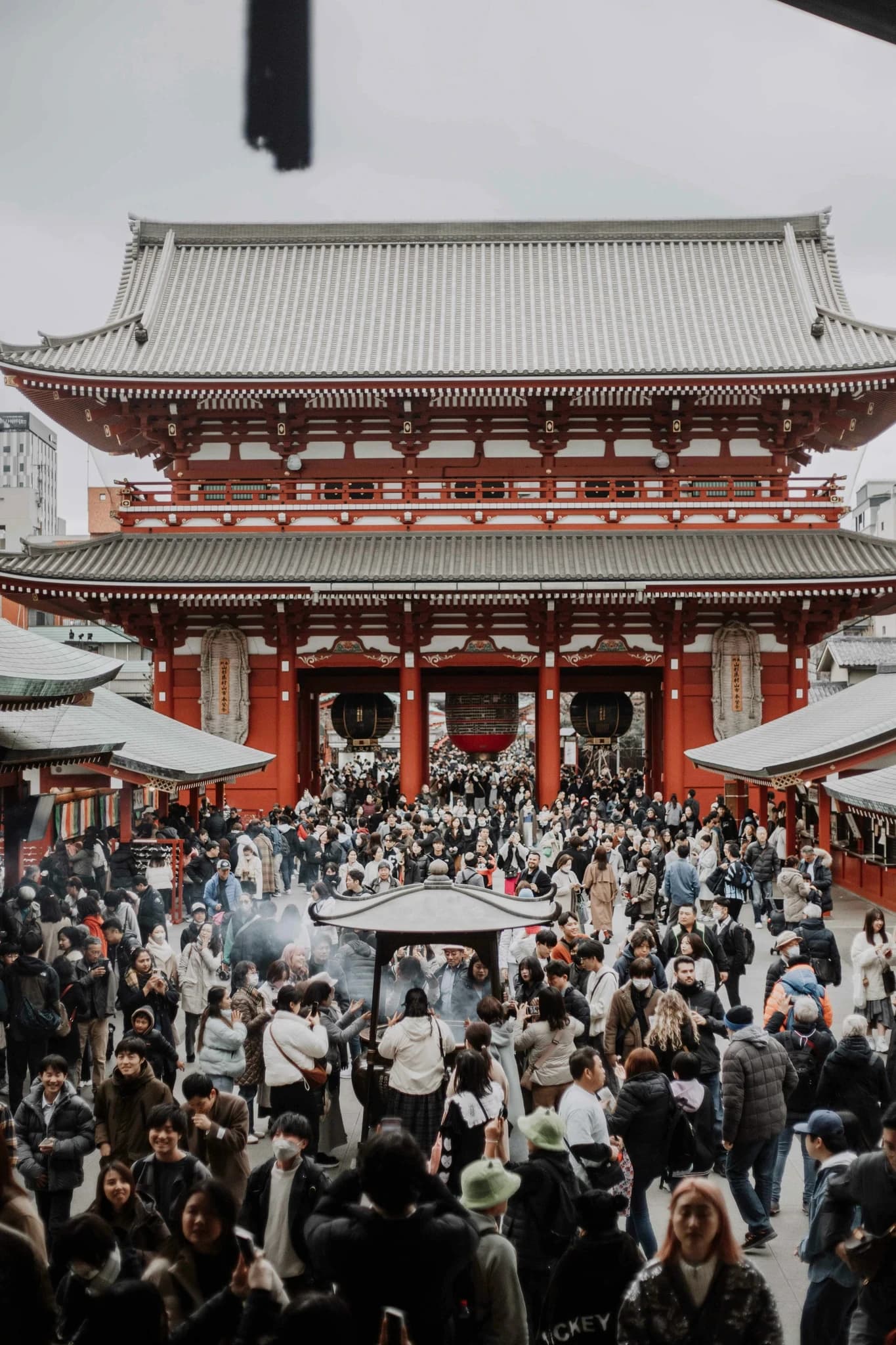
Sensoji Main Hall: Opens 6:00 AM (April-September) or 6:30 AM (October-March). Closes 5:00 PM. The grounds are open 24 hours, but the Main Hall isn't.
-
Meiji Shrine: Opens at sunrise, closes at sunset. In summer: 5:00 AM to 6:30 PM. In winter: 6:40 AM to 4:20 PM. A December afternoon visit means locked gates.
-
Tsukiji Outer Market: Vendors open 5:00-8:00 AM. Pack up by 1:00-2:00 PM. This is a morning destination only.
-
Museums: Close between 5:00-6:00 PM.
An itinerary that schedules Meiji Shrine at 5:00 PM in January will fail. The shrine closes at 4:20 PM.
Rush hour is real: 7:30-9:30 AM and 5-7:30 PM
Tokyo trains during rush hour can exceed 200% capacity. That means you're physically pressed against strangers with no room to move.
As a tourist, you have flexibility that commuters don't. Use it.
-
Travel after 10:00 AM when possible
-
Avoid trains between 5:00-7:30 PM if you can
-
If you must travel during rush hour, expect delays and discomfort
When to eat (not when you're hungry)
Tokyo's dining timing is predictable:
-
Lunch peak: 12:00-1:00 PM (office worker lunch break)
-
Dinner peak: 6:00-8:00 PM (after-work dining)
To avoid crowds:
-
Eat lunch before 11:30 AM or after 1:30 PM
-
Eat dinner before 6:00 PM or after 8:30 PM
An early lunch also creates a natural break point in your day, letting you rest during the hottest or most crowded midday hours. For more on how timing shapes a day, see our guide to the best time of day for Tokyo tours.
Day 1 Isn't for Highlights
The impulse is to start with your top priorities — Senso-ji, Shibuya Crossing, Meiji Shrine. Hit the highlights while you're fresh.
This backfires.
Day 1 is for orientation, not optimization. You're jet-lagged, the train system is unfamiliar, and you don't yet have a feel for how Tokyo moves. Jumping into major sites means experiencing them in a fog of fatigue and sensory overload. Many travelers look back on their first-day photos and barely remember taking them.
What orientation actually means
Use Day 1 to:
-
Figure out how to use your Suica/Pasmo card
-
Learn to navigate one station confidently
-
Walk one neighborhood at a slow pace
-
Get your body on Tokyo time
This isn't wasted time. It's the foundation that makes every following day better.
Hiring a guide for Day 1 serves this purpose well. You're not trying to cover the most ground — you're building confidence for independent exploration later. For examples of how guides structure first days, see our tour itinerary guide.
The flexibility window: afternoon of Day 2, morning of Day 3
Jet lag doesn't hit immediately. Day 1 feels fine because adrenaline carries you through. The crash comes later — the afternoon of Day 2 or morning of Day 3.
Build flexibility into these windows. Don't schedule your most demanding activities here. Leave room to sleep in, rest, or adjust.
One anchor, not a checklist
Plan one anchor experience per day. Build around it.
If your anchor is TeamLab Planets, book a time slot. Let the rest of the day breathe — nearby neighborhoods, a good lunch spot, unstructured wandering.
This approach is resilient. Tired? Cut the extras. Energized? Explore further. The day still has shape.
When to Leave Tokyo
Day trips aren't optional bonuses. They're full-day commitments that shape the days before and after them.
Day 3-4 is usually right (here's why)
Most first-time visitors do well spending their first 2-3 days in Tokyo, then taking a day trip around Day 3 or 4.
By then, you've acclimated to the city. You've conquered the train system. You're also experiencing mild Tokyo fatigue — the cumulative effect of crowds, noise, and stimulation.
A day trip provides a reset. Kamakura's temples, Hakone's nature, Nikko's mountain air — these feel like a different country. For help choosing which destination fits your trip, see our day trip guide.
What a day trip costs the adjacent days
Day trips start early and end late:
| Destination | Depart Tokyo | Return to Tokyo |
|---|---|---|
| Kamakura | 8-9 AM | 5-7 PM |
| Hakone | 8-8:30 AM | 6:30-8 PM |
| Nikko | 7:30-8 AM | 7-8 PM |
An 8 PM return means dinner near your hotel, not exploration. An early departure means the previous evening is for packing and resting. Plan accordingly.
JR Tokyo Wide Pass coverage:
If you're planning multiple day trips, the JR Tokyo Wide Pass (¥15,000 for 3 consecutive days) covers:
-
Nikko (fully covered, including the Nikko Express from Shinjuku)
-
Kamakura (fully covered via JR Yokosuka Line)
-
Kawaguchiko/Mt. Fuji area (fully covered)
-
Hakone (partially — JR covers to Odawara only; you'll need a separate Hakone Free Pass for transport within Hakone)
Copyable Tokyo Itineraries by Trip Length
Ready-to-use day-by-day schedules for different trip durations. Each itinerary follows the "two neighborhoods per day" rule and includes realistic timing.
3-Day Tokyo Itinerary (First-Time Visitors)
Day 1: Traditional Tokyo & Orientation
- Morning (9:00 AM - 12:00 PM): Asakusa - Senso-ji Temple, Nakamise-dori shopping street
- Lunch (12:00 - 1:30 PM): Asakusa local specialties (tempura, monjayaki)
- Afternoon (1:30 - 5:00 PM): Ueno Park & Museums (Tokyo National Museum or Ueno Zoo)
- Evening (5:30 PM+): Return to hotel early to combat jet lag
Day 2: Modern Tokyo & Youth Culture
- Morning (10:00 AM - 1:00 PM): Harajuku - Meiji Shrine, Takeshita Street (arrive early to avoid crowds)
- Lunch (1:00 - 2:30 PM): Omotesando cafes or Harajuku crepes
- Afternoon (2:30 - 6:00 PM): Shibuya - Scramble Crossing, Hachiko Statue, shopping
- Evening (6:30 PM+): Shibuya or Shinjuku dinner and nightlife
Day 3: Urban Exploration & Shopping
- Morning (10:00 AM - 1:00 PM): Shinjuku - Shinjuku Gyoen Garden, Metropolitan Government Building observatory
- Lunch (1:00 - 2:30 PM): Omoide Yokocho or Golden Gai for lunch
- Afternoon (2:30 - 6:00 PM): Ginza or Akihabara (depending on interests - luxury shopping vs anime culture)
- Evening: Last-minute shopping or revisit favorite neighborhood
5-Day Tokyo Itinerary (With Day Trip)
Days 1-3: Follow the 3-day itinerary above
Day 4: Day Trip to Kamakura
- Morning (8:00 AM): Depart Tokyo Station via JR Yokosuka Line
- Late Morning (9:30 AM): Kamakura Station, visit Tsurugaoka Hachimangu Shrine
- Lunch (12:00 PM): Kamakura local cuisine (shirasu bowls)
- Afternoon (1:30 PM): Great Buddha (Daibutsu) at Kotoku-in Temple
- Late Afternoon (3:30 PM): Hase-dera Temple with ocean views
- Evening (5:30 PM): Return to Tokyo, relaxed dinner near hotel
Day 5: Deeper Exploration
- Option A (Repeat Visitors): Explore neighborhoods missed earlier - Shimokitazawa (vintage shopping), Nakano Broadway (otaku culture), or Yanaka (old Tokyo)
- Option B (First-Timers): TeamLab Planets in morning, Odaiba in afternoon
- Option C (Food Focus): Tsukiji Outer Market morning, afternoon cooking class or sake tasting
7-Day Tokyo Itinerary (Comprehensive Experience)
Days 1-5: Follow the 5-day itinerary above
Day 6: Second Day Trip (Choose One)
- Hakone Option: Hakone Loop (Owakudani, Lake Ashi, Hakone Shrine)
- Nikko Option: Toshogu Shrine, Kegon Falls, Lake Chuzenji
- Mt. Fuji Option: Kawaguchiko area with Fuji views
Day 7: Personalization & Farewell
- Morning: Revisit favorite neighborhood or explore new area based on discovered interests
- Afternoon: Last-minute shopping, packing, relaxing
- Evening: Special farewell dinner at highly-rated restaurant
1-2 Day Itineraries
For 1-2 days, focus on these concentrated options:
1-Day Tokyo Highlights:
- Morning: Asakusa (Senso-ji)
- Afternoon: Shibuya/Harajuku
- Evening: Shinjuku observation deck or dinner
2-Day Tokyo Essentials:
- Day 1: Asakusa + Ueno (traditional Tokyo)
- Day 2: Shibuya + Harajuku (modern Tokyo)
How Many Days You Need
1-3 days: The essentials question
With 1-3 days, you cannot see "all of Tokyo." Don't try. Use the copyable itineraries above.
4-7 days: Depth without exhaustion
This is the sweet spot for first-time visitors. Follow the 5 or 7-day itineraries.
8-14 days: When Tokyo becomes routine
After 5-7 days in Tokyo, something shifts. The novelty fades. You've mastered the trains. The crowds no longer feel exotic — they just feel crowded.
This isn't a problem. It's a signal.
If you have 8-14 days for Japan, consider splitting time between Tokyo and another region. The common pattern is 5-6 days in Tokyo + 5-6 days in Kyoto/Osaka + 2-3 days for day trips or transit.
For repeat visitors, 8-14 days in Tokyo alone works — but the approach changes. Instead of covering new neighborhoods, you go deeper into favorites. You revisit the ramen shop you loved. You explore the residential streets behind the tourist areas.
Mixing Tokyo with other Japan destinations
If your total Japan trip is 10-14 days, the "Golden Route" works well:
Tokyo → Mt. Fuji area → Kyoto → Osaka → Nara
Mega-city → nature → traditional culture → modern culture → historic temples. Each destination feels distinct, preventing fatigue.
Luggage can be shipped between hotels (around ¥3,000 per suitcase) — no hauling bags on trains.
What to Skip (Permission Granted)
Every "must-see Tokyo" list is written for a generic traveler who doesn't exist. Your interests, energy, and companions are specific. The list isn't.
The skippable icons
If temples bore you, skip them. If anime means nothing to you, skip Akihabara. If crowds drain you, skip Takeshita Street on a Saturday.
Experienced Tokyo travelers skip:
-
Free observation decks (crowds outweigh the view)
-
Hyped photo spots at peak hours
-
Anything requiring a long queue
They spend that time walking, eating, and resting in neighborhoods without tour groups.
The itinerary with margin
The itinerary you'll enjoy has space to:
-
Sit in a park when you're tired
-
Take a wrong turn and find something unexpected
-
Eat without watching the clock
This isn't lazy — it's strategic. You're traveling to enjoy yourself, not to prove something.
Shoganai. You can't see everything. That's not failure — it's permission.
This guide is published by Hinomaru One, a Tokyo-based private tour operator.