Each day has a job: orientation, intensity, depth. Get the structure right and the destinations take care of themselves.
A 3 day Tokyo itinerary works best when each day has one job: orientation, then intensity, then depth. Get that structure right and the destinations mostly sort themselves out. Three days is enough to get a taste of Tokyo, though not to know it, so the aim here is days that build on each other instead of blurring together.
Plenty of people fall for the city in three days when the days are set up well. You won't find a list of attractions below. Each day gets a job, and once you know the job you can adapt when your energy shifts, the weather turns, or you find something unexpected worth following.
Why Most 3-Day Itineraries Fail Before Day 2
The Tab Problem
You open one blog post about Tokyo, then another, then a YouTube video about a hidden ramen shop. An hour later you have seventeen browser tabs open and no clearer idea of what your days should look like. Almost everyone planning Tokyo ends up here.
You have plenty of information. What most itineraries leave out is why the days are arranged the way they are. They list attractions and give you nothing to go on when you're exhausted at 2 PM on Day 1 and need to decide what to cut.
What Itineraries Miss
A list of destinations still leaves the planning to you. You feel that when your energy crashes without warning, when a museum turns out to be closed on Monday, or when you learn Shinjuku Station has 200+ exits after spending twenty minutes finding the wrong one.
Before getting into the daily structure, read the how Tokyo works guide. It explains why the city confuses first-timers to begin with: there's no single downtown, several hubs carry equal weight, and neighborhoods fall into clusters that belong together. With that picture in your head, this framework makes a lot more sense.
What helps is knowing what each day is for, so you can adjust when conditions change and still keep the shape of the trip.
The Job Each Day Needs to Do
Drop "Day 1: Modern Tokyo, Day 2: Traditional Tokyo." That split is about looks, and it ignores how your energy actually runs.
Each day in Tokyo has a job that fits your physical state and sets up the days after it. (The same logic scales down: see our 1-day and 2-day frameworks for shorter trips.)
Day 1: Orientation (Learn the System)
Day 1 should be a learning day, so don't make it your biggest.
Your body is still on home time, and you can count on an afternoon crash. Plan for it.
The job on Day 1 is building confidence: working out how the trains run, how a Tokyo neighborhood flows, and how long it really takes to get anywhere. What you pick up on Day 1 makes Days 2 and 3 run more smoothly.
For a quieter Day 1 near Tokyo Station, the Imperial Palace East Gardens are free, need no booking, and take a manageable 60-90 minutes while you're still adjusting to jet lag.
Keep Day 1 easy but interesting. One neighborhood, maybe two, and nothing that needs you sharp at 4 PM.
Day 2: Intensity (Handle Complexity on Peak Stamina)
By Day 2 your body has partly adjusted. You're not at 100%, but you're functional, and that's as much stamina as you'll have all trip.
Spend it on the hard parts: stations with nine train lines, neighborhoods that need careful sequencing, areas where a wrong exit costs you twenty minutes.
Your most complicated routing belongs on Day 2. You'll handle it better than on Day 1 or Day 3.
Day 3: Depth (Commit, Don't Sample)
The instinct on Day 3 is to squeeze in everything you missed. Travelers who pack four neighborhoods into Day 3 describe their last day as a blur.
Pick one arc on Day 3 and go deep. You'll leave Tokyo having done something, and that's what people remember from a last day.
| Day | Job | Why This Day |
|---|---|---|
| 1 | Orientation | Jet lag vulnerable; forgiving zones |
| 2 | Intensity | Peak stamina; high-friction zones |
| 3 | Depth | Commitment over coverage; memorable exit |
"Modern vs traditional" is the wrong question. A better one is how to balance temples, shopping, and food inside each day, because those activities need different mental states and timing, and they clash with each other.
Planning Foundations (Before You Slot Destinations)
Energy Curve: Jet Lag Is Not Optional
Jet lag follows a pattern. Western travelers wake early (3-4 AM), have workable energy through the morning and early afternoon, then collapse by 6-7 PM.
The pattern lasts 3-4 days. You can push through it, but you can't make it go away.
Leave the Day 1 afternoon flexible, and keep the Day 2 afternoon and Day 3 morning a little loose too. The travelers who end up stuck in their hotel for two days pushed too hard, too early.
Transit Friction: 20 Minutes Is Never 20 Minutes
Google Maps says Asakusa to Shibuya takes 33 minutes. That's the train only.
For a first-time visitor, door to door is 40-50 minutes. You have to get through Shibuya Station (9 train lines, 4 operators, 14 platforms across 8 levels) and find the right exit. Learning how to read Tokyo's exit maps before you arrive helps a lot. A wrong exit can leave you a kilometer from where you meant to be.
First-time visitors lose 2-3 hours per day to inefficient navigation, indecision, and fixing problems. Across 3-4 days that adds up to nearly a whole lost day. Our guide to what walking distances actually mean in Tokyo, including walking inside stations and seasonal adjustments, will help you set realistic expectations.
Budget honestly. Two neighborhoods a day at most keeps you sane.
Reservation-Shaped vs. Spontaneous
Some experiences anchor your schedule, and the rest bend around them.
| Experience | Booking Window | Key Constraint |
|---|---|---|
| teamLab Planets | Weeks ahead for peak times | Sunset/evening slots sell fastest |
| Ghibli Museum | 10th of month, 10 AM Japan time | Sells out within minutes |
| Toyosu Auction | Monthly lottery, 7-10 day window | 27-120 spots per day |
These bookings decide which day gets which neighborhoods.
Day 1: East Tokyo (Orientation Day)
Why East Tokyo First
East Tokyo is kinder to jet-lagged arrivals.
Asakusa and Ueno are linked by the Ginza Line or a pleasant 20-minute walk. The stations are simpler and the neighborhoods are walkable, so if you fade at 3 PM, you aren't stuck in a maze.
You learn how Tokyo works here, and getting it wrong doesn't cost much.
Core Route: Asakusa → Ueno Corridor
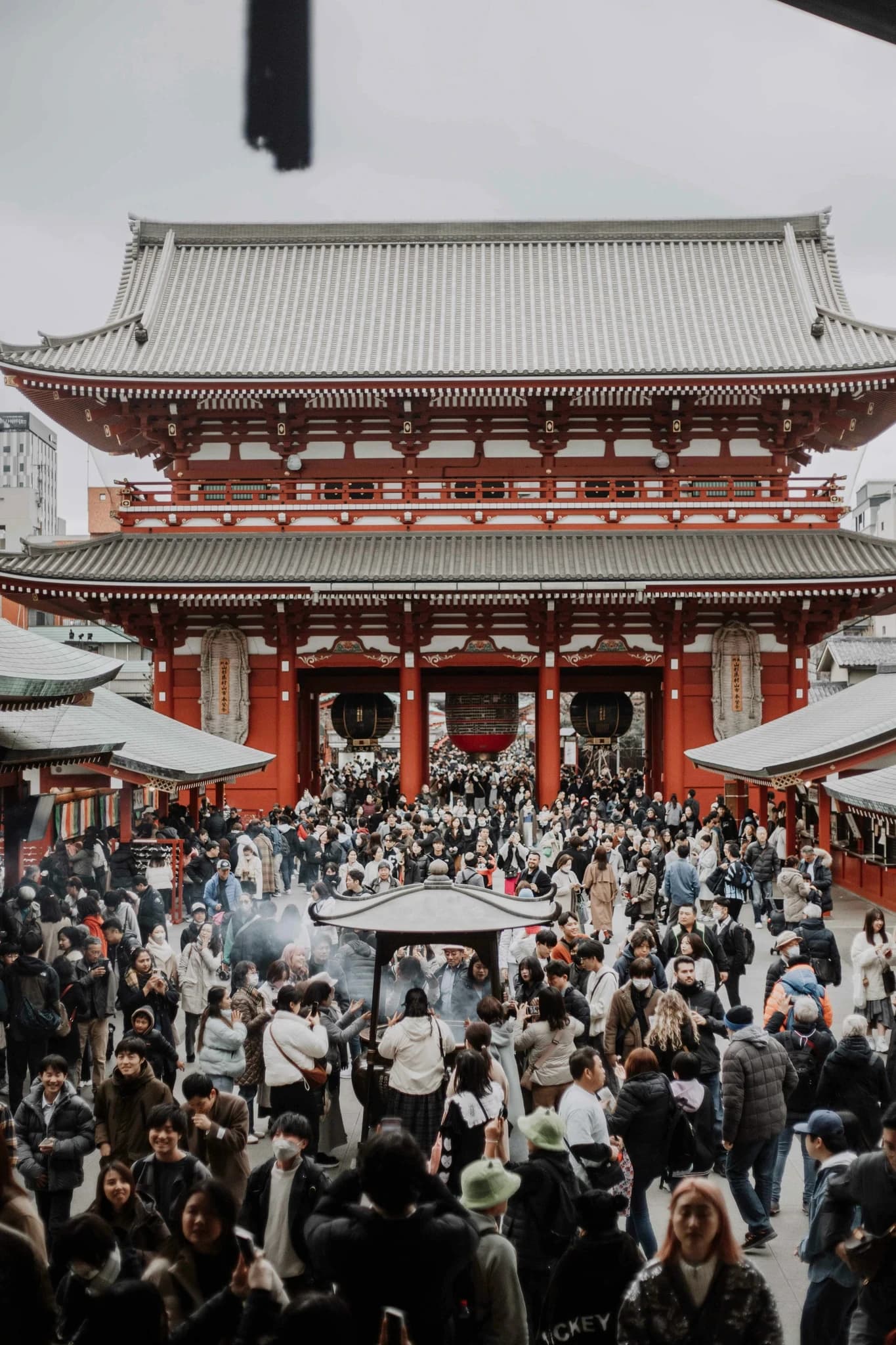
Start at Senso-ji. The grounds are open 24 hours, so if you arrive early you get the temple quiet, before the tourists. For breakfast before 9 AM, Café Tomorrow opens at 6:30 AM, a five-minute walk from Asakusa Station. It's a retro kissaten with a "Mix Morning Set" (toast, eggs, salad, soup) for ¥660.
| Venue | Opens | Closes | Notes |
|---|---|---|---|
| Senso-ji grounds | 24 hours | — | Quiet before 9 AM |
| Senso-ji main hall | 6:00 AM (Apr-Sep) / 6:30 AM (Oct-Mar) | 5:00 PM | — |
| Nakamise shops | 9-10 AM | 5-7 PM | Varies by shop |
| Tokyo National Museum | 9:30 AM | 5 PM (8 PM Fri/Sat) | Closed Mondays |
From Asakusa, walk or ride one Ginza Line stop to Ueno. The park has museums, or just green space to wander.
The two neighborhoods sit close enough to move between comfortably, and there's enough in them to fill a day without rushing.
Afternoon Flexibility (The 3 PM Decision)
Around 3 PM, check in with yourself. If your energy is holding, add something. If you're fading, head back.
That's what the orientation day is for: you learn your own pace on a forgiving day, and by Day 2 you know how you handle Tokyo.
If Energy Holds: Optional Extensions
If you're still sharp late in the afternoon, Akihabara is a 15-minute walk from Ueno. Go only if you genuinely have the energy, and not if you'd be powering through.
Day 1 is there to get you to Day 2 ready for the hard stuff. If this orientation sounds useful but you'd rather skip the trial and error, Tokyo Essentials was built for exactly this.
Day 2: West Tokyo (Intensity Day)
Why Day 2 Gets the Hardest Zones
Shibuya, Harajuku, and Shinjuku are high-friction places, with complex stations, ongoing construction, and exit numbering you have to pay close attention to.
These neighborhoods reward patience and energy, so schedule them when you have both.
Core Route: Shibuya → Harajuku → Shinjuku
Start in Shibuya. If you want an observation deck, you have two options:
| Option | Height | Cost | Notes |
|---|---|---|---|
| Shibuya Sky | 230m | ¥2,700 | Open-air; book sunset in advance |
| TMG Building | 202m | Free | Enclosed; Mt. Fuji views on clear days |
Most Shibuya shops open at 10 AM, so time your arrival for that. Our complete Shibuya places guide covers what's worth your time in the area: the Crossing, Center Gai, Shibuya Sky, and the sights tourists miss.
Walk north to Harajuku. Meiji Shrine opens at sunrise (around 5:00-6:40 AM depending on season) and closes at sunset. Early morning the grounds are close to empty, and crowds build by mid-morning. Weekends bring traditional weddings and more foot traffic.
For lunch, AFURI near Harajuku Station does yuzu-infused ramen and takes no reservations. At peak hours (1-2 PM) the wait runs about 30 minutes. If the line is too long, Kyushu Jangara on Omotesando specializes in rich tonkotsu. It doesn't take reservations either, but the line moves.
Carry on to Shinjuku in the afternoon. The station has 200+ exits and 35+ platforms, so allow extra time to find your way. Once you're out, the neighborhood has everything from department stores to the izakayas of Memory Lane.
Efficient Sequencing (Exit Strategy Matters)
Go south to north. Starting in Shibuya and moving toward Shinjuku means you're always heading toward a major transit hub. Tokyo Trifecta covers this exact corridor if you'd rather someone else handled the sequencing.
Run it the other way and you finish the day by fighting back through the complexity you already passed.
Evening Options (Energy Permitting)
Golden Gai and Omoide Yokocho come alive after dark. If you're still standing at 7 PM, go then.
For a first time in Golden Gai: Albatross has three floors and a rooftop, which is unusual for the area. The Open Book has no cover charge, English-speaking staff, and the best lemon sour in Golden Gai. Both welcome tourists, while many bars here are regulars-only.
If you're not standing at 7 PM, the day has already done its job.
Day 3: Depth Day (Pick One Arc)
Why Depth Beats Coverage
Wanting to cram in everything you missed is understandable. Fight it.
Day 3 visitors who hop between three or four neighborhoods describe their final day as a blur, again and again. The ones who commit to one arc leave with something they remember.
| Arc | Focus | Duration | Advance Booking |
|---|---|---|---|
| A: Waterfront | Toyosu + teamLab | Full day | teamLab required |
| B: Quiet Tokyo | Yanaka + Nezu | Full day | None |
| C: Interests | Akihabara + specialty | Flexible | None |
Option A: Toyosu + teamLab Planets (Waterfront Arc)
At Toyosu Market you get morning sushi and can watch the wholesale operation through viewing corridors. It feels more like infrastructure than atmosphere, but it's worth it if you want to see how Tokyo's food supply works. For a guided version with access that locals use, see Ordinary Tokyo.
teamLab Planets grew to 1.5 times its original size with the January 2025 addition, and a full visit takes roughly 3 hours. The expansion added three zones: Athletics Forest (physical: slides, trampolines, bouncing spheres), Catching and Collecting Forest (smartphone app, extinct animals), and Future Park (drawing, best for kids). Athletics Forest draws crowds and queues, while Catching Forest is quieter and often empty. Families with active kids should go to Athletics Forest first. Adults who want to be absorbed in it do better starting with Catching Forest.
Together they fill a day without rushing. Book teamLab weeks ahead for weekends. Late evening slots (7 PM+) are now quieter than mornings, since everyone read the same "book early" advice.
Option B: Yanaka + Nezu (Quiet Tokyo Arc)
Yanaka Ginza is a traditional shotengai shopping street with dozens of independent shops, with no chains and no tourist traps. Most shops open between 10-11 AM and close by 6-7 PM. Many close on Mondays, and cash is preferred.
Nezu Shrine and Yanaka Cemetery give you the walking. In the afternoon, the "Yuyake dandan" staircase has sunset views over the street.
This arc suits visitors who want Tokyo at a human pace. Timeless Tokyo covers similar neighborhoods with a guide who knows which shops are worth going into.
Option C: Akihabara + Specialty Shopping (Interests Arc)
If you have a specific interest, like anime, retro games, electronics, or figures, Day 3 is the day to follow it.
In Akihabara, one category done properly beats a lap of all of them.
Adapting the Structure (Weather, Energy, Companions)
Each case below keeps the three jobs and changes the rest. (For how the seasons affect it, see when to visit Tokyo.)
Rain Day Pivots
Rain changes where you go, and each day keeps its job.
| Day | Rain Pivot | Job Preserved |
|---|---|---|
| Day 1 | Ueno museums | Orientation (learning system, indoors) |
| Day 2 | Department basements, covered streets | Intensity (same corridor, covered) |
| Day 3 | teamLab / Akihabara | Depth (both largely indoor) |
When Exhaustion Hits Early
If Day 1 hits you harder than expected, don't try to make up for it by adding more to Day 2.
Cut destinations and keep the days. A packed Day 2 with three neighborhoods becomes a solid Day 2 with two. You still get the intensity day, at a lower volume.
Traveling with Kids or Seniors
The framework stays the same and the pacing changes.
Families need more buffer between destinations, and the two-neighborhood maximum might drop to one and a half. Orientation, intensity, and depth stay as they are, with more rest built into each.
Seniors do well on the Ginza Line corridor on Day 1 (fewer stairs than Shibuya) and with the Quiet Tokyo arc on Day 3.
Repeat Visitors: Different Jobs
If you've already done the orientation on an earlier trip, Day 1 gets a different job.
Repeat visitors can handle intensity from Day 1, since they don't need to learn the trains. Their three days become intensity, depth, depth, or they skip the tourist zones entirely and go for neighborhoods first-timers wouldn't try.
When a Guide Changes the Math
You can do all of this on your own. A guide helps most on the first two days.
Day 1 Orientation: The Payoff Compounds
A guide on Day 1 speeds up the learning. You skip the trial and error of working out how trains run, which exits matter, and how to read a neighborhood.
By Day 2 you're putting it to use.
Travelers who use a guide on their first day tend to explore on their own afterward with more confidence than they expected.
Day 2 Complexity: Efficiency Becomes Measurable
Day 2's high-friction zones are where a guide pays for itself in time.
A guide knows which Shinjuku exit saves fifteen minutes, which route avoids the construction, and when to change plans because of crowds. You can measure those savings, and over an 8-hour day they add up.
If complexity sounds draining, a guide takes it off your hands so you can pay attention to the place. If it sounds like part of the adventure, going on your own works fine.
Where Hinomaru One Fits
On Day 1 we shorten the learning curve, so you finish the day knowing the trains and your own pace. On Day 2 we handle the 200-exit stations and the tight sequencing, and you get to look around.
At Hinomaru One, we design unrushed, customized private Tokyo tours for first-time and seasoned travelers.