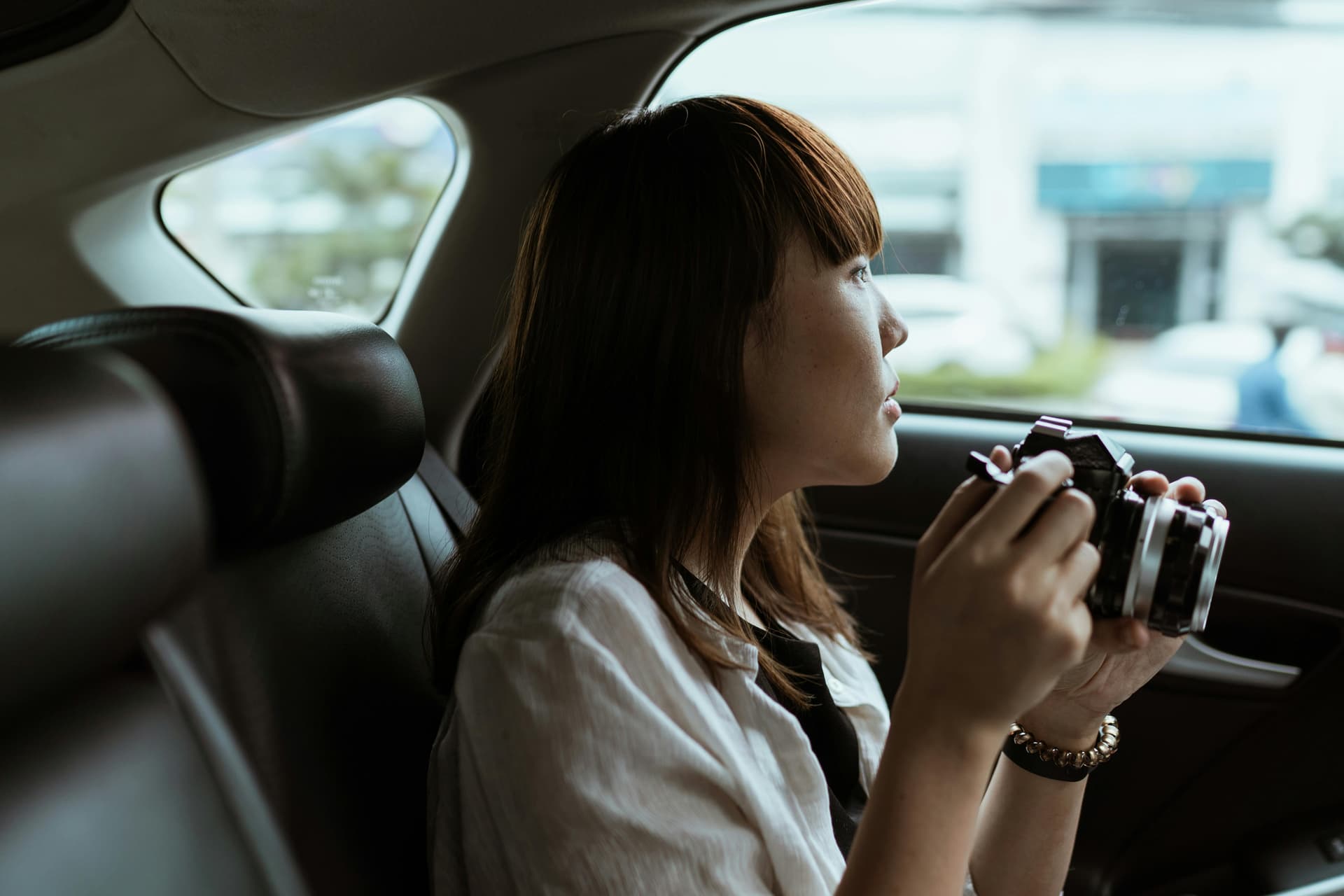
Solo travel flips the value proposition—you're not splitting the cost, you're buying the guide's undivided attention.
Which Tokyo private tour solo travelers should pick depends on one thing: which format gives you the most value when you're absorbing the full group price yourself.
The Real Question
You're traveling alone. That's not the problem. The problem is that private tours are priced per group, not per person. A couple pays $430 for a 6-hour tour and splits it. You pay $430 and absorb the whole thing. Four friends pay $430 and it's $107 each. You pay $430 and it's $430.
That changes what "worth it" means. When you're the only one paying, every hour of guide time needs to deliver. The wrong tour wastes money. The right one delivers something you genuinely could not get any other way.
This page helps you figure out which is which.
What Solo Actually Gets You
Before the comparison, understand what changes when you're alone with a guide.
100% of the guide's attention. No compromising with a partner who wants temples while you want street food. No waiting for the slow walker. No democracy about where to eat lunch. The guide adapts to you constantly -- your energy, your curiosity, your pace.
Total flexibility. You walk past a ceramics shop and want to spend 20 minutes inside. Done. You're tired after four hours and want to sit in a kissaten for a while. Done. No negotiating with anyone.
"Won't it be awkward one-on-one?" This is the question everyone asks and nobody needs to worry about. Your guides do this constantly. Within 15 minutes, the dynamic settles into something closer to exploring with a knowledgeable local friend than a formal tour. The conversation flows naturally because the guide reads your energy -- talkative, quiet, curious about architecture, couldn't care less about temples. They adjust.
The female solo traveler reality. The majority of solo travelers are women. Evening tours -- Kushiyaki Confidential, Standing Room Only -- include neighborhoods and venues you might hesitate to explore alone after dark. Not because Tokyo is unsafe (it's one of the safest cities in the world), but because navigating unfamiliar backstreet izakaya alleys in a country where you don't speak the language feels different at 9pm than at noon. A guide doesn't add safety. They add access and comfort.
Tour-by-Tour Solo Value
Not every tour delivers equal value for a solo traveler. Here's the honest breakdown.
| Tour | Duration | Price | Solo Value | Best For |
|---|---|---|---|---|
| Tokyo Essentials | 6 hrs | ~$430 | Excellent | First-day orientation, confidence-building |
| Tokyo Trifecta | 4 hrs | ~$314 | Very Good | Budget-conscious, testing the format |
| Infinite Tokyo | 8 hrs | ~$550 | Excellent | Travelers who know what they want |
| Kushiyaki Confidential | 6 hrs | ~$430 | Very Good | Solo foodies, evening access |
| Standing Room Only | 4 hrs | ~$314 | Good | Social solo travelers, bar culture |
| Ordinary Tokyo | 8 hrs | ~$550 | Very Good | Deep observers, conversational travelers |
| Timeless Tokyo | 8 hrs | ~$550 | Situational | History enthusiasts specifically |
| Tokyo Together | 6 hrs | ~$430 | Poor | Families -- skip this as a solo adult |
Tokyo Essentials -- The First-Day Investment
This is where most solo travelers should start. Six hours across four districts with a guide who orients you to Tokyo's geography, transit system, and rhythm. By the end, you understand how the city works. You know how to read a station map. You know which exit leads where. You know how to order in a restaurant with no English menu because you watched your guide do it three times.
The solo advantage: your guide calibrates the entire day to your interests and energy. No compromises. If you're a photographer, they slow down at the right moments. If you're a food person, they steer toward the better lunch spots. The orientation happens regardless, but the texture of the day is entirely yours.
For a solo traveler spending 3-5 days in Tokyo, this is the single highest-value investment. Everything after this day gets easier.
Tokyo Trifecta -- The Budget Test
Four hours. Meiji Shrine, Harajuku, Shinjuku. Three clustered neighborhoods along the Yamanote Line with minimal transit time between them.
At roughly $314, this is the lowest-cost entry point. It works as a format test -- if you've never done a private tour and aren't sure whether one-on-one guiding suits you, four hours answers that question without a full-day commitment. It also covers neighborhoods that are excellent for solo exploration afterward. Your guide shows you Harajuku's backstreets and Shinjuku's layout; you return on your own terms later.
The limitation: four hours means you're covering the west side of Tokyo only. If you want Asakusa, Tsukiji, or Akihabara, you'll need a separate day or a longer tour.
Infinite Tokyo -- Maximum Solo Value
Eight hours designed entirely around your interests. This is the tour where solo status becomes an outright advantage.
With a group of four, Infinite Tokyo involves negotiation. Someone wants architecture, someone wants food, someone wants shopping. The guide balances competing interests. Alone, there's nothing to balance. Want to spend the entire day on a private photography tour? Done. Jazz bars and vinyl shops? Done. Contemporary art galleries and brutalist architecture? Done.
The guide builds the route around a single person's curiosity. That's a fundamentally different experience than building it around a committee. If you know what you're interested in and you want depth rather than breadth, this is the tour.
Kushiyaki Confidential -- Solo Dining, Solved
Here's the thing about eating alone in Tokyo: it's culturally normal. Counter seating exists everywhere. Nobody looks at you sideways for dining solo. Japan is arguably the best country in the world for solo eating.
But access is a different problem. The best kushiyaki spots have no English menu, no English signage, and sometimes no obvious entrance. Your guide handles the Japanese, navigates the ordering, explains what you're eating, and takes you to places you'd walk past a hundred times without knowing they exist.
You eat the same amount of food regardless of group size. The per-skewer experience doesn't change because you're alone. And the late-afternoon-to-evening timing (starting around 3:45 PM) means you get the Shibuya-to-Ebisu-to-Nakameguro arc as the city transitions from day to night.
Standing Room Only -- The Social Solo Option
Evening izakaya crawl through Suginami Ward's retro standing bars. This tour works differently solo than the others.
Standing bars are inherently social. You're shoulder-to-shoulder with salarymen and local regulars. Your guide becomes a bridge -- introducing you, translating the small talk, helping you interact with people you'd never meet otherwise. For solo travelers who want connection (not just observation), this is the tour that delivers it.
The caveat: if you're introverted and the idea of chatting with strangers through a translator sounds exhausting rather than exciting, this might not be your tour. It's designed for engagement.
Ordinary Tokyo -- The Quiet Deep Dive
Eight hours exploring daily Japanese life. Residential neighborhoods. Morning routines. The rhythms that tourists never see because they're busy at Sensoji.
This tour works brilliantly solo because it's inherently conversational and observational. You're walking through a neighborhood watching a shopkeeper arrange flowers, a grandmother sweep her sidewalk, students biking to school. The guide provides context -- cultural, historical, anthropological. It's a long, thoughtful conversation punctuated by real moments.
Solo travelers who prefer depth over highlights, who want to understand a place rather than photograph it, will find this deeply satisfying.
Timeless Tokyo -- Know Yourself First
Eight hours focused on Tokyo's historical layers. Edo-period sites, Meiji-era transitions, postwar reconstruction, contemporary evolution.
This tour is excellent if you're genuinely passionate about history. It's a lot if you're not. Eight hours is a long time to spend with anyone discussing the Tokugawa shogunate. With a group, the social dynamics carry you through slower sections. Alone, it's just you and the content. If history is your thing, this delivers. If you're lukewarm, you'll feel the length.
Tokyo Together -- Skip This One
Designed for families with children. Scavenger hunts, kid-paced activities, multi-generational dynamics. As a solo adult, the format doesn't fit. Everything else on this list serves you better.
Our Recommendation by Solo Type
The anxious first-timer: Tokyo Essentials. It's an orientation disguised as a tour. You'll spend six hours learning how Tokyo works, and every subsequent day becomes easier. The confidence payoff extends well beyond the tour itself.
The budget-conscious: Tokyo Trifecta. At roughly $314 for four hours, it's the lowest commitment. You cover three neighborhoods, test the private tour format, and have the rest of your day free.
The "I know what I want" traveler: Infinite Tokyo. Eight hours built entirely around your interests with zero compromise. This is where solo status is a genuine advantage over groups.
The foodie: Kushiyaki Confidential. Solo dining is easy in Tokyo. Getting into the best spots without Japanese is not. Your guide solves the access problem.
The female solo traveler after dark: Kushiyaki Confidential or Standing Room Only. Evening neighborhoods and venues with a trusted local who handles everything in Japanese.
The deep observer: Ordinary Tokyo. If you'd rather understand daily life than tick off landmarks, this is your tour.
The Money Question
Let's be direct about this.
Is $430-550 a lot for one person for one day? Yes. There's no getting around that. You're paying a group rate as an individual.
But consider the alternative math.
A full-day group bus tour costs $80-120. You'll see Meiji Shrine from a parking lot, spend 20 minutes at each stop, eat at a tourist restaurant, and learn nothing about how to navigate Tokyo independently. You'll leave knowing exactly as much about the city as when you arrived.
A private guide for six hours costs roughly $72 per hour. That's less than a mediocre omakase dinner. It's less than a one-hour massage at a Tokyo hotel spa. And unlike either of those, it reshapes every remaining day of your trip.
What you're actually paying for: access to places with no English, a local who adjusts to your energy in real time, and skipping the 45-minute delays that come from figuring out which train, which exit, which restaurant. Over a full trip, those saved hours and reduced stress compound. For a broader look at whether private tours justify their cost, we cover the full value equation.
The Per-Hour Reality
- Trifecta (4 hours): ~$78/hour
- Essentials (6 hours): ~$72/hour
- Infinite Tokyo (8 hours): ~$69/hour
The longer the tour, the better the per-hour value. But total commitment is higher. If budget is the primary constraint, our pricing guide breaks down every option.
What to Skip
Tokyo Together. Family-focused design. Wrong pacing, wrong activities for a solo adult. Everything else on the menu serves you better.
Timeless Tokyo -- unless history is your specific passion. Eight hours of historical narrative is a commitment. With a travel companion, the social element carries you through. Alone, the content has to carry the entire day. If you light up at "Edo-period merchant class," book it. If you're lukewarm, choose Infinite Tokyo and weave in the historical stops that interest you.
Common Questions
Can I join someone else's booking to split costs?
Not currently. Tours are priced per group, not per person. You book the full rate. The tradeoff is that you get an entirely private experience with no strangers involved.
What if I want to change plans mid-tour?
That's the whole point. Tell your guide you want to skip the next stop and spend more time where you are. Or that you're tired and want coffee. Or that you just spotted something interesting down that alley. They adapt instantly. Solo travelers change plans more often than groups because there's no one to consult. Guides expect this.
I'm a woman traveling alone -- is Tokyo safe?
Tokyo is consistently ranked among the safest major cities in the world. Trains run late, streets are well-lit, and violent crime against tourists is extraordinarily rare. The guide doesn't add safety -- Tokyo already provides that. What the guide adds is access: navigating Japanese-only venues, reading the room in a standing bar, knowing which backstreet izakaya welcomes walk-ins. For evening tours specifically, the guide's presence means you experience neighborhoods you might otherwise skip out of unfamiliarity rather than danger.
Is it weird being one-on-one with a guide all day?
No. Think of it as exploring with a friend who happens to be fluent in Japanese and knows every back alley. The formality drops quickly. By the second stop, you're having a real conversation. By lunch, you've forgotten it's a "tour." Guides who work with solo travelers regularly say the one-on-one days are often their favorites -- the conversation goes deeper, the pace is more natural, and they can share things they'd skip with a group of six.
What if I'm introverted?
Good guides read energy. If you're quiet, they match that. They don't force conversation. They offer context when it's useful and stay quiet when you're absorbing a moment. You're not locked into eight hours of forced small talk. You're exploring with someone who adjusts to you.
Frequently Asked Questions
Which Tokyo private tour is best for solo travelers?
Tokyo Essentials ($430, 6 hours) is the best starting point for most solo travelers -- it orients you to Tokyo's geography, transit, and rhythm so every subsequent day gets easier. For travelers who know exactly what they want, Infinite Tokyo ($550, 8 hours) delivers maximum solo value because the guide builds the entire day around one person's interests with zero compromise. Tokyo Trifecta ($314, 4 hours) is the budget-friendly option to test the format.
Is it worth paying full group price for a private tour as a solo traveler?
Private tours are priced per group, not per person -- so you pay $430-550 for what a couple would split. But consider what you get: 100% of the guide's attention, total flexibility to change plans instantly, and access to Japanese-only venues you'd never find alone. At roughly $69-78 per hour, it costs less than a mediocre omakase dinner or a one-hour hotel spa massage, and it reshapes every remaining day of your trip.
Is Tokyo safe for solo female travelers?
Tokyo is consistently ranked among the safest major cities in the world. Trains run late, streets are well-lit, and violent crime against tourists is extraordinarily rare. A guide doesn't add safety -- Tokyo already provides that. What a guide adds is access and comfort: navigating Japanese-only venues, reading the room in a standing bar, and helping you experience neighborhoods you might skip out of unfamiliarity (not danger) after dark.
Is it awkward being one-on-one with a tour guide all day?
No. The formality drops within 15 minutes, and the dynamic settles into something closer to exploring with a knowledgeable local friend. Guides who work with solo travelers regularly say one-on-one days are often their favorites -- the conversation goes deeper, the pace is more natural, and they can share things they'd skip with a group. If you're introverted, good guides read your energy and match it without forcing conversation.
What Tokyo tour should I skip as a solo traveler?
Skip Tokyo Together -- it's designed for families with children (scavenger hunts, kid-paced activities, multi-generational dynamics). As a solo adult, the format doesn't fit. Also consider skipping Timeless Tokyo unless history is your specific passion, since eight hours of historical narrative alone requires the content to carry the entire day without social dynamics to help through slower sections.
Next Step
If you're ready to book, start with the two tours that deliver the strongest solo value:
First time in Tokyo? Tokyo Essentials -- the orientation that makes every other day better.
Know what you want? Infinite Tokyo -- eight hours built entirely around your interests.
Want the full solo breakdown? Our private tours for solo travelers page covers exactly what you get, what it costs, and why the investment compounds across every independent day after.
For help choosing between all available options, our private tours in Tokyo page covers the full range of experiences designed for different traveler types. And if you're still weighing whether a private tour makes sense at all for your situation, this breakdown helps you decide.
At Hinomaru One, we design culturally rich, stress-free private Tokyo tours for first-time and seasoned travelers. Unrushed. Insightful. Always customized.