Discover where to ski in Japan for world-class powder, cultural immersion, and a winter experience like no other.
Discover where to ski in Japan for world-class powder, cultural immersion, and a winter experience like no other.
Winter in Japan moves at its own pace — cedar branches heavy with snow, an onsen waiting at the end of the day. This is for skiers who care about the snow quality and the culture around it, not just the resort stats.
When Is the Ski Season in Japan?
| Period | Snow Conditions | Crowd Levels | Best For |
|---|---|---|---|
| Early December | Season opening, variable coverage | Low | Early birds, budget travelers |
| Late December – Early January | Building depth, holiday period | High (New Year) | Festive atmosphere, guaranteed snow |
| Mid-January – February | Peak powder, driest snow | Moderate (weekdays) – High (weekends) | Best conditions, serious skiers |
| March | Spring snow, longer days | Moderate | Families, milder weather |
| April – Early May | Soft snow, limited resort hours | Low | Late-season deals, high-altitude resorts only |
Peak conditions: Mid-January through February, when the snow is driest and mountains hum with quiet energy.
Best timing for crowds + powder: Weekdays between New Year and Lunar New Year offer abundant snowfall with minimal crowds.
If you're considering whether to visit Japan in winter or another season, our guide to the best time to visit Japan can help you weigh the options.
Hokkaido: Powder Paradise and International Flair
Hokkaido, Japan's northernmost island, offers an alpine winter experience unlike any other, where the snow arrives like poetry and the mountains exhale quiet wonder. Long celebrated by powder purists, this region is home to Japan's most reliable snowfall, a rich culinary heritage, and villages that hum with warmth even in the depths of winter. Each ski resort holds a distinct character, offering discerning travelers a spectrum of pace, terrain, and refinement.
Getting to Hokkaido from Tokyo
Most travelers begin with a 90-minute flight from Tokyo's Haneda or Narita Airport to New Chitose Airport near Sapporo. From there, resorts are readily accessible:
| Resort | From New Chitose Airport | Transport Mode | Transfer Time |
|---|---|---|---|
| Niseko | Western Hokkaido | Shuttle or private transfer | 2–3 hours |
| Kiroro | Western Hokkaido | Shuttle or private transfer | 2–2.5 hours |
| Rusutsu | Central Hokkaido | Shuttle or private transfer | 2–2.5 hours |
| Furano | Central Hokkaido | Train via Sapporo/Asahikawa or seasonal bus | 2.5–3 hours |
Advance bookings for winter are strongly recommended, particularly in peak season.
Niseko
There is a certain electricity in the air when you arrive in Niseko. Snow falls in feathery silence, yet the atmosphere buzzes with international energy. Long considered Japan's most celebrated ski destination, Niseko draws advanced skiers and cosmopolitan explorers in equal measure. Its vast terrain is crisscrossed with backcountry gates and powder-filled bowls, drawing seasoned riders from around the world.
Hirafu Village, the most active of Niseko's four resort bases, is alive with culinary diversity: from artful Japanese izakaya to sleek French brasseries. Accommodations range from stylish alpine chalets to five-star retreats, all framed by Mount Yōtei's regal silhouette. The après-ski culture is bold, playful, and social, yet the surrounding mountains always offer a moment's solitude just a lift ride away.
Furano
If Niseko is the extrovert, Furano is its quietly confident counterpart. Tucked in the heart of Hokkaido, this alpine town is blessed with gentle terrain, deeply dependable snowfall, and a pace that encourages slow mornings and longer dinners. It is particularly well-suited to families and first-time skiers, with wide, forgiving runs and a notably efficient ski school.
Beyond the slopes, Furano is a window into local life. Lavender fields sleep beneath the snow, while cozy restaurants serve up homestyle dishes like butadon (grilled pork rice bowls) and warming bowls of miso ramen. Accommodations are modest and welcoming, ranging from locally owned ryokan to clean, modern hotels. It's a place where the snow is plentiful, but never hurried.
Kiroro
Kiroro's charm lies in its consistency. Here, the powder arrives without fanfare but with unrelenting grace. Often bypassed by the Niseko-bound, this peaceful resort feels like a well-kept secret, its slopes uncrowded, its air fresh with pine, its rhythm deeply restorative.
The terrain is ideal for intermediate skiers and families who value ease of access and thoughtful service. Ski schools are polished and professional, while hotels at the base offer ski-in/ski-out convenience wrapped in warm, polished hospitality. Kiroro may not boast Niseko's nightlife, but it more than compensates with tranquility and snow that arrives, quite literally, like clockwork.
Rusutsu
Rusutsu stretches across three mountains, offering some of Hokkaido's most playful terrain: winding glades, natural half-pipes, and open bowls dusted with fresh powder. It is a resort built for fun—where families and advanced skiers alike find space to roam and return each day with goggle-shaped sun lines and stories to tell.
The resort village is thoughtfully designed, with ski-in/ski-out hotels and a selection of casual restaurants that make it easy to settle in. Off the slopes, guests can enjoy snow tubing, dog sledding, and the gentle hum of a carousel spinning against the twilight. Rusutsu is comfort without pretense, an alpine escape with room to breathe.
Resort Comparison Table: Hokkaido
| Resort | Ideal For | Lift & Meals (Daily) | Accommodation (Nightly) |
|---|---|---|---|
| Niseko | Advanced skiers, nightlife enthusiasts, luxury travelers | ¥10,000–¥15,000 | ¥40,000–¥100,000+ |
| Furano | Families, beginners, quiet atmosphere, moderate budgets | ¥7,000–¥12,000 | ¥15,000–¥40,000 |
| Kiroro | Intermediate skiers, families, powder lovers seeking quiet | ¥8,000–¥14,000 | ¥20,000–¥50,000 |
| Rusutsu | Mixed ability groups, powder enthusiasts, moderate nightlife | ¥8,000–¥14,000 | ¥20,000–¥45,000 |
Hakuba Valley: Accessible Diversity & Family-Friendly
Set against the towering backdrop of the Japanese Alps, Hakuba Valley offers a refined and varied ski experience with a strong sense of place. This region, which once welcomed the world during the 1998 Nagano Winter Olympics, continues to charm with its blend of traditional Japanese hospitality and world-class alpine infrastructure. Whether you seek deep powder, cultural connection, or family-friendly comfort, Hakuba's mosaic of resorts invites discovery.
Getting to Hakuba Valley from Tokyo
The journey begins aboard the Hokuriku Shinkansen. From Tokyo Station, the bullet train reaches Nagano in under 90 minutes, offering views of snow-covered villages and mountain ridges.
| Route | Total Time | Best For |
|---|---|---|
| Shinkansen to Nagano → Private transfer/taxi | ~2.5 hours | Speed, comfort, JR Pass holders |
| Shinkansen to Nagano → Ski shuttle | ~2.5 hours | Cost-conscious, scheduled departures |
| Direct highway bus from Shinjuku | ~4 hours | Budget travelers, no JR Pass |
The arrival is always the same: fresh snow and the crisp scent of cedar.
Happo-One
Happo-One is Hakuba's flagship — the 1998 Olympic venue with the biggest vertical and the widest views. Its slopes sweep elegantly across the mountain, offering something for every skier: winding beginner runs, open bowls for intermediates, and challenging drops for seasoned alpine veterans. At day's end, the village beckons with the glow of izakaya lanterns and the warmth of onsen, a perfect conclusion to a day of exertion and exhilaration.
Accommodations span from upscale hotels with slope-facing windows to cozy lodges set just off the main drag. It's a resort that balances adrenaline with elegance, making it a perennial favorite for those who want to ski hard and rest well.
Cortina
To the powder chaser, Cortina is legend. With its Hotel Green Plaza standing like a red-roofed castle at the base, Cortina offers some of the finest tree skiing in the region. The terrain is steep, the snow deep, and the crowds refreshingly sparse. There is a hush here—a reverent quiet broken only by the soft swoosh of skis through fresh snow.
Accommodations are few but well-situated, with most guests staying slope-side. The experience is intimate and focused. This is a place for those who rise early, seek solitude, and find joy in first tracks before the mountain stirs.
Tsugaike Kogen
For families and newcomers, Tsugaike Kogen offers gentle terrain and an open-hearted welcome. Its broad, well-groomed slopes are ideal for building confidence, and the resort's ski schools are among the best in the region. There is room to breathe here: space for beginners to learn without pressure, for children to play without crowding.
The resort village offers easygoing lodging, convenience, and proximity to lifts. Many accommodations include onsen, where the day's efforts melt away in mineral-rich steam beneath snow-draped eaves. Tsugaike is both a ski destination and a nurturing introduction to the alpine way of life.
Iwatake
Iwatake is a place of perspective. Perched across from the main spine of the Japanese Alps, it offers skiers panoramic views that stir the soul. The terrain is balanced, welcoming intermediate and family skiers who prefer gentle trails, scenic cruising, and sunny terrace cafés that invite lingering.
Here, time moves slowly. Accommodations are simple and restful, allowing nature's grandeur to take center stage. For those seeking serenity with their skiing—and views to rival any in the world—Iwatake offers quiet perfection.
Resort Comparison Table: Hakuba Valley
| Resort | Ideal For | Lift & Meals (Daily) | Accommodation (Nightly) |
|---|---|---|---|
| Happo-One | Mixed ability groups, families, convenient amenities | ¥8,000–¥12,000 | ¥12,000–¥35,000 |
| Cortina | Advanced skiers, powder hunters, quieter vibe | ¥8,000–¥12,000 | ¥15,000–¥30,000 |
| Tsugaike Kogen | Beginners, families, wide-open slopes | ¥7,000–¥10,000 | ¥10,000–¥25,000 |
| Iwatake | Families, intermediate skiers, scenic and relaxed | ¥7,000–¥10,000 | ¥10,000–¥25,000 |
Nozawa Onsen, Myoko & Madarao: Cultural Immersion & Hidden Gems
There is something enduringly soulful about Japan's less-traveled ski villages, places where steam curls from ancient rooftops, snow falls with gentle certainty, and every slope is tied to a centuries-old rhythm. In Nozawa Onsen, Myoko, and Madarao, winter is not a spectacle but a way of being. These are destinations for travelers who seek depth as much as powder, authenticity over fanfare.
Getting to Nozawa Onsen & Myoko from Tokyo
The Hokuriku Shinkansen glides north from Tokyo through snow-dusted rice fields and mountain tunnels.
| Destination | Shinkansen Station | Transfer | Total Time from Tokyo |
|---|---|---|---|
| Nozawa Onsen | Iiyama Station | 20-min shuttle/taxi | ~2 hours |
| Myoko Akakura | Joetsu-Myoko Station | 30-min shuttle/taxi | ~2.5 hours |
| Madarao | Iiyama Station | Shuttle to village | ~2 hours |
Nozawa Onsen
In Nozawa Onsen, skiing is just one facet of a deeply layered experience. The mountain itself rises gracefully above a traditional village laced with cobbled streets and steaming bathhouses. Slopes here are well-suited to intermediate skiers, though the terrain also rewards those who venture off-piste, with natural snowfields and gentle glades waiting beyond the groomed runs.
Yet it is the village that lingers in memory. At twilight, lanterns flicker beside narrow alleys, and the scent of freshly steamed oyaki dumplings drifts from noren-covered storefronts. The town's 13 free public onsen—geothermal bathhouses steeped in local custom—invite skiers to soothe muscles and steep themselves in quiet ritual. For those fortunate enough to visit in January, the Dosojin Fire Festival is a spectacular, cathartic event rooted in ancient belief and community spirit.
Accommodations are often traditional, with tatami mat floors and futons laid nightly by quiet hands. Hospitality is genuine, meals are seasonal and local, and the pace of life reflects the snowfall: unhurried, deliberate, and restorative.
Myoko Akakura
Tucked into the snowy folds of the Niigata-Nagano border, Myoko Akakura is a skier's sanctuary. The snow here falls thick and often, cloaking the forested slopes in soft silence. Myoko is especially beloved by advanced skiers and powder seekers, thanks to its ample off-piste terrain and relaxed approach to backcountry access.
The town retains a distinctly Japanese character, with cozy izakaya serving warming bowls of oden and local sake, and inns where sliding shoji doors reveal hot baths fed by volcanic springs. It is not a scene of spectacle but of intimacy—a place where a single perfect run or an evening walk in falling snow can feel like revelation.
Madarao
Madarao exists in the sweet spot between convenience and charm. Known for its tree skiing and natural powder bowls, it appeals to skiers of all levels, particularly those traveling in mixed-ability groups. The resort was intentionally developed with ungroomed terrain in mind, offering a back-to-nature feel without sacrificing comfort.
The village itself is modest, understated, and welcoming. Accommodations range from cheerful pensions to ski-in/ski-out lodges with rustic flair. Evenings here tend to end early—with a satisfying meal, a soak in the bath, and the sense that tomorrow's snow will be just as good.
Resort Comparison Table: Nozawa Onsen & Myoko
| Resort | Ideal For | Lift & Meals (Daily) | Accommodation (Nightly) |
|---|---|---|---|
| Nozawa Onsen | Cultural immersion, intermediate skiers, family-friendly | ¥7,000–¥12,000 | ¥12,000–¥30,000 |
| Myoko Akakura | Advanced skiers, powder enthusiasts, authentic charm | ¥7,000–¥12,000 | ¥10,000–¥25,000 |
| Madarao | Mixed abilities, powder seekers, less crowded | ¥7,000–¥11,000 | ¥9,000–¥20,000 |
Zao & Shiga Kogen: Serenity & Adventure
There are places in Japan where winter is not just a season: it is a canvas, painted with stillness, clarity, and deep breath. Zao and Shiga Kogen belong to that rare category of alpine sanctuaries where serenity and adventure intertwine. Here, travelers are invited not only to ski, but to pause—to take in the hush of frost-covered trees, the slow ascent of morning mist, and the ritual of sinking into a steaming onsen beneath the stars.
Getting to Zao & Shiga Kogen from Tokyo
To reach Zao Onsen:
-
Yamagata Shinkansen from Tokyo Station to Yamagata Station (just under three hours)
-
40-minute bus or taxi into the mountains
To reach Shiga Kogen:
-
Hokuriku Shinkansen to Nagano Station (approximately 90 minutes)
-
Shuttle or bus into the highlands (70 to 90 minutes)
Zao Onsen
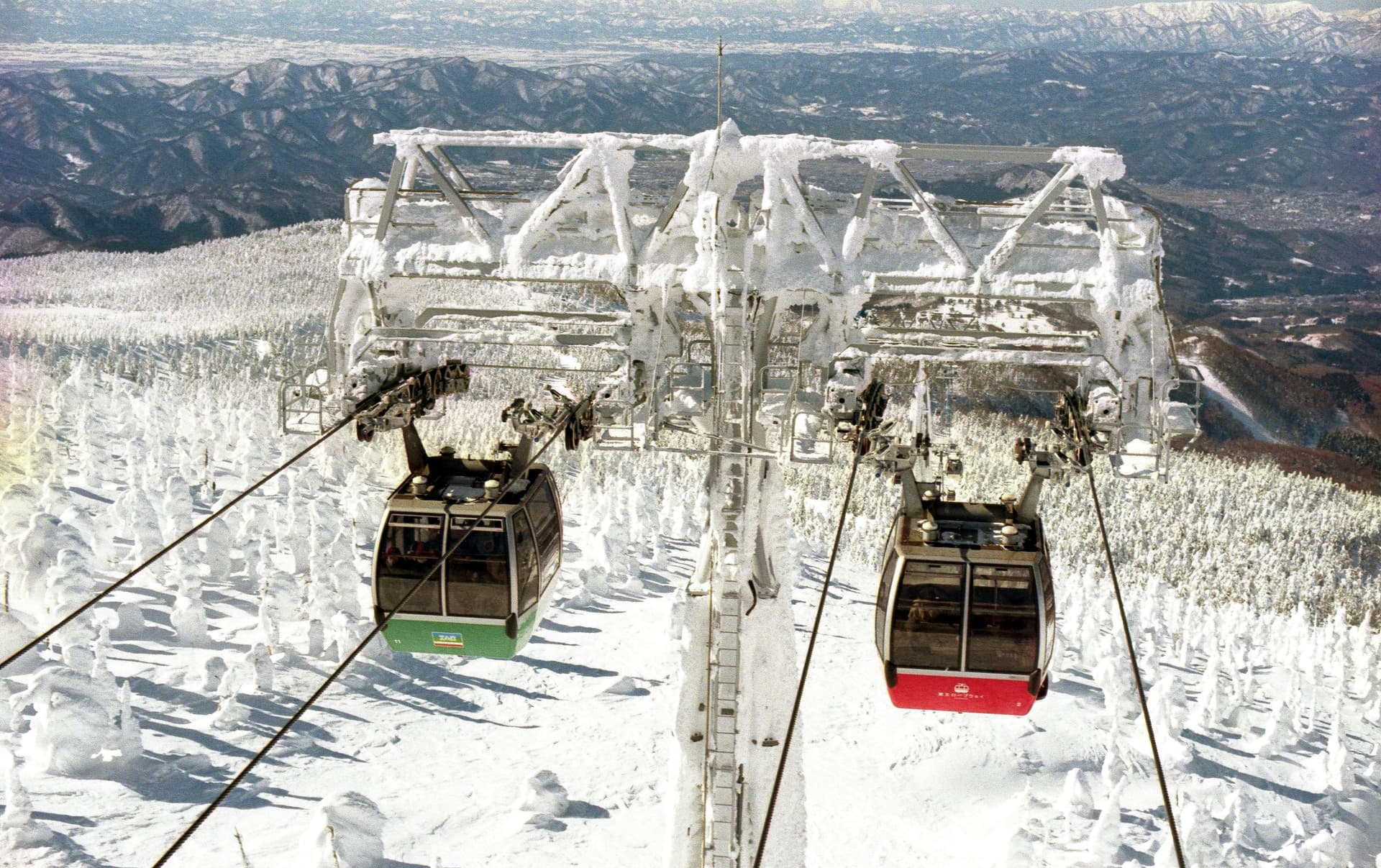
Tucked into the heart of Yamagata Prefecture, Zao Onsen evokes wonder in its purest form. Its most striking spectacle—the juhyo, or "snow monsters"—are trees encased in thick, windblown ice and snow, standing sentinel along the ridgeline like surreal sculptures born of winter myth. Under their watchful presence, skiers descend through intermediate-friendly terrain that is wide, well-groomed, and brushed in soft powder.
But Zao is far more than just a ski resort—it is a hot spring village with centuries of tradition, where the rhythm of daily life has long been tied to the healing properties of its mineral-rich waters. After a day on the slopes, bathhouses beckon with their warm embrace. Local inns—many of them family-run ryokan—serve regional specialties such as imoni (a hearty taro and beef stew) and pickled mountain vegetables, all in settings that blend simplicity with heartfelt hospitality.
The mood in Zao is meditative. Evenings are quiet, punctuated by the sound of footsteps on snow and the occasional laughter rising from a small izakaya tucked along a backstreet. It's a place for reflection, for slow conversations, for discovering beauty in the understated.
Shiga Kogen
Where Zao whispers, Shiga Kogen expands. Situated in Nagano Prefecture, this is Japan's largest interconnected ski area, an elevated world of linked resorts, sweeping runs, and panoramic vistas that seem to stretch beyond the horizon. The terrain here is a dream for seasoned skiers and snowboarders, with variety and scale that invite both challenge and flow.
Despite its breadth, Shiga Kogen remains uncrowded, a remarkable feat in a country where powder attracts global acclaim. This sense of space, both physical and emotional, allows for unhurried exploration. One can spend days gliding through forests, circling back to familiar lifts, and discovering hidden cafés perched on sunlit ridges.
Accommodations throughout the area cater to different tastes. Traditional ryokan provide tatami rooms, multi-course kaiseki dinners, and of course, soothing onsen baths. Meanwhile, more modern lodges offer ski-in/ski-out convenience and panoramic lounge windows through which the mountains keep silent vigil.
In Shiga Kogen, skiing is an immersion, not only into nature, but into a distinctly Japanese alpine experience. Days begin early, slopes open with morning hush, and evenings wind down in comfort and quietude.
Resort Comparison Table: Zao & Shiga Kogen
| Resort | Ideal For | Lift & Meals (Daily) | Accommodation (Nightly) |
|---|---|---|---|
| Zao Onsen | Intermediate skiers, nature enthusiasts | ¥7,000–¥12,000 | ¥10,000–¥25,000 |
| Shiga Kogen | Advanced skiers, tranquil escape seekers | ¥7,000–¥12,000 | ¥10,000–¥25,000 |
Japan Powder Snow (a.k.a. "Japow")
There's a kind of snow that speaks in whispers rather than crunches—a snow so light, it lifts like silk in the wind. In Japan, it's known reverently as Japow. This extraordinary powder results from Siberian air masses crossing the Sea of Japan, where they absorb moisture before releasing it over the mountain ranges in great, dry flurries. It is not merely snowfall—it is snowfall perfected.
Among the many mountain havens that receive this blessing, a few stand apart:
| Resorts | Region | Snow Characteristics | Best For |
|---|---|---|---|
| Niseko, Kiroro | Hokkaido | Near-guarantee of daily refresh, consistent storms | Powder reliability, international amenities |
| Myoko, Madarao | Nagano | Frequent featherlight snowfall, Sea of Japan proximity | Deep powder, authentic village character |
| Asahidake, Seki Onsen | Hokkaido / Nagano | Untouched lines, challenging terrain | Advanced skiers, backcountry access |