Jimbocho is where Tokyo's intellectual culture concentrates. Even if you don't read Japanese, the antiquarian prints and maps are internationally accessible.
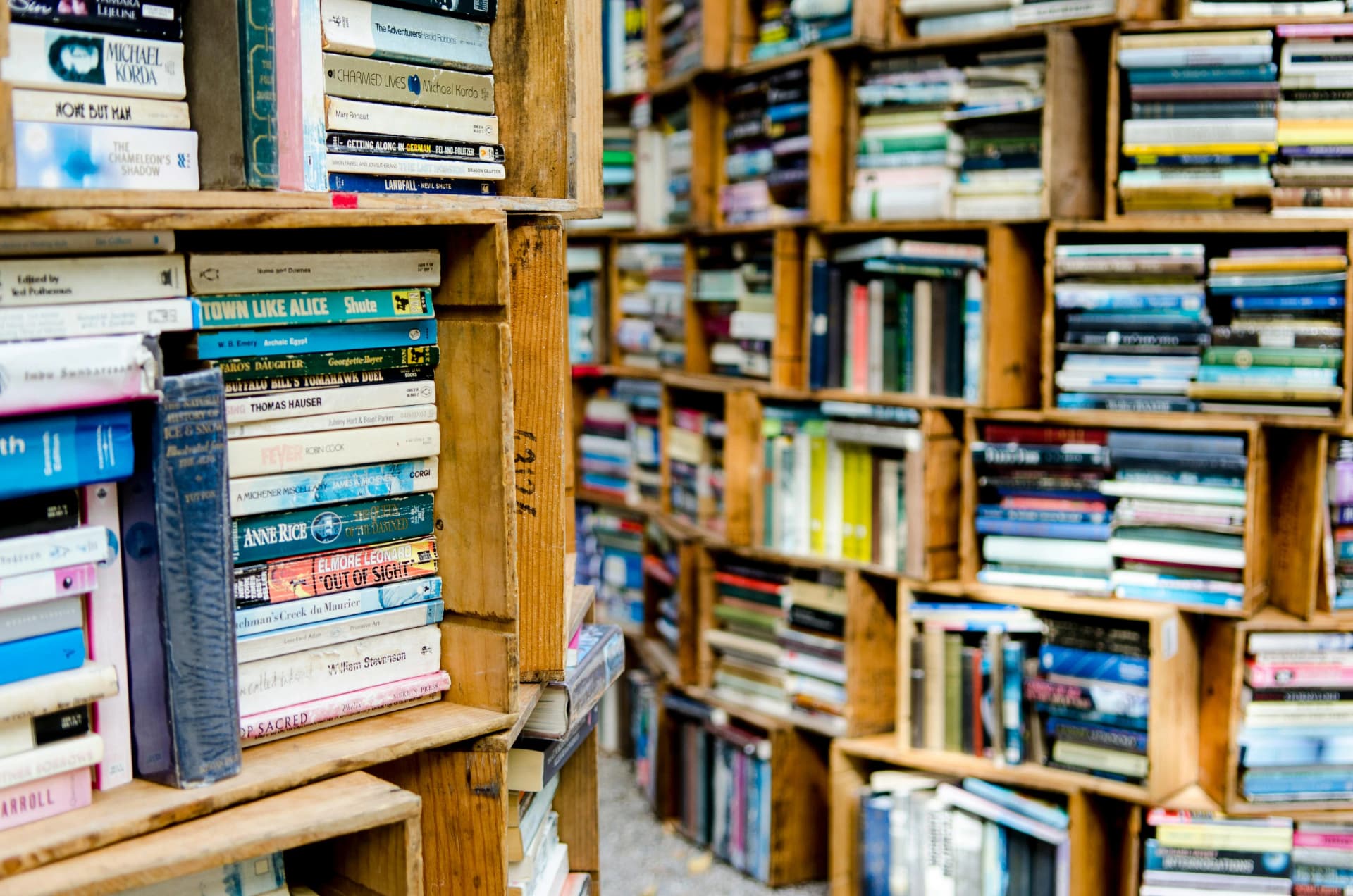
Jimbocho is a single neighbourhood in Chiyoda Ward that contains between 130 and 170 secondhand bookshops, depending on how you count. It accounts for roughly one-third of all secondhand books sold in Tokyo. The district developed after the 1913 fires displaced many booksellers from the Kanda area, and the concentration of universities nearby created a permanent customer base.
The bookshops cluster around the intersection of Yasukuni-dori and Hakusan-dori, spilling north and south along both streets. Most are small — narrow wooden buildings packed floor-to-ceiling with books, the owner at a desk somewhere in the middle. A few are large enough to have multiple floors.
Why So Many Bookshops in One Place
The concentration didn't happen by accident. In the 1880s, following the Meiji Restoration, the former samurai estates that had dominated this part of Edo were redistributed. Universities needed land, and they got it here. Meiji University, Nihon University, Senshu University, and Chuo University all established campuses within walking distance of what is now Jimbocho. Students generated an enormous demand for cheap textbooks, and booksellers followed the money.
The 1913 fires, which swept through the Kanda district and destroyed large parts of the book trade's original home, accelerated the consolidation. Displaced dealers regrouped in Jimbocho, where the student foot traffic already guaranteed steady sales. By the Taisho period, the cluster had become self-reinforcing: more shops drew more serious buyers, which drew more specialist dealers, which raised the collective expertise of the district. A century later, that expertise is still there. Shops that have operated for decades know their inventory with a depth that no algorithm can replicate.
What keeps the district alive today is not nostalgia but genuine scarcity. Out-of-print academic texts, pre-war illustrated periodicals, manga series that never got reprinted — these things don't appear on Amazon. The dealers in Jimbocho are the last stop before they disappear permanently.
Getting There
Jimbocho Station (Toei Shinjuku Line, Toei Mita Line, Tokyo Metro Hanzomon Line) — 1 minute walk from Exit A7
Hours
Most shops open around 10:00–11:00 and close around 18:00–19:00.
Sundays: Roughly half the shops close. The district is quieter on Sundays but not dead.
Holidays: Variable — the major sale events bring more shops open, not fewer.
What's Here
Secondhand books. The obvious category. Japanese literature, academic texts, manga collections, art books, architecture references, foreign-language books accumulated over decades, philosophy, science, politics. The range across all the shops is comprehensive to the point of overwhelming.
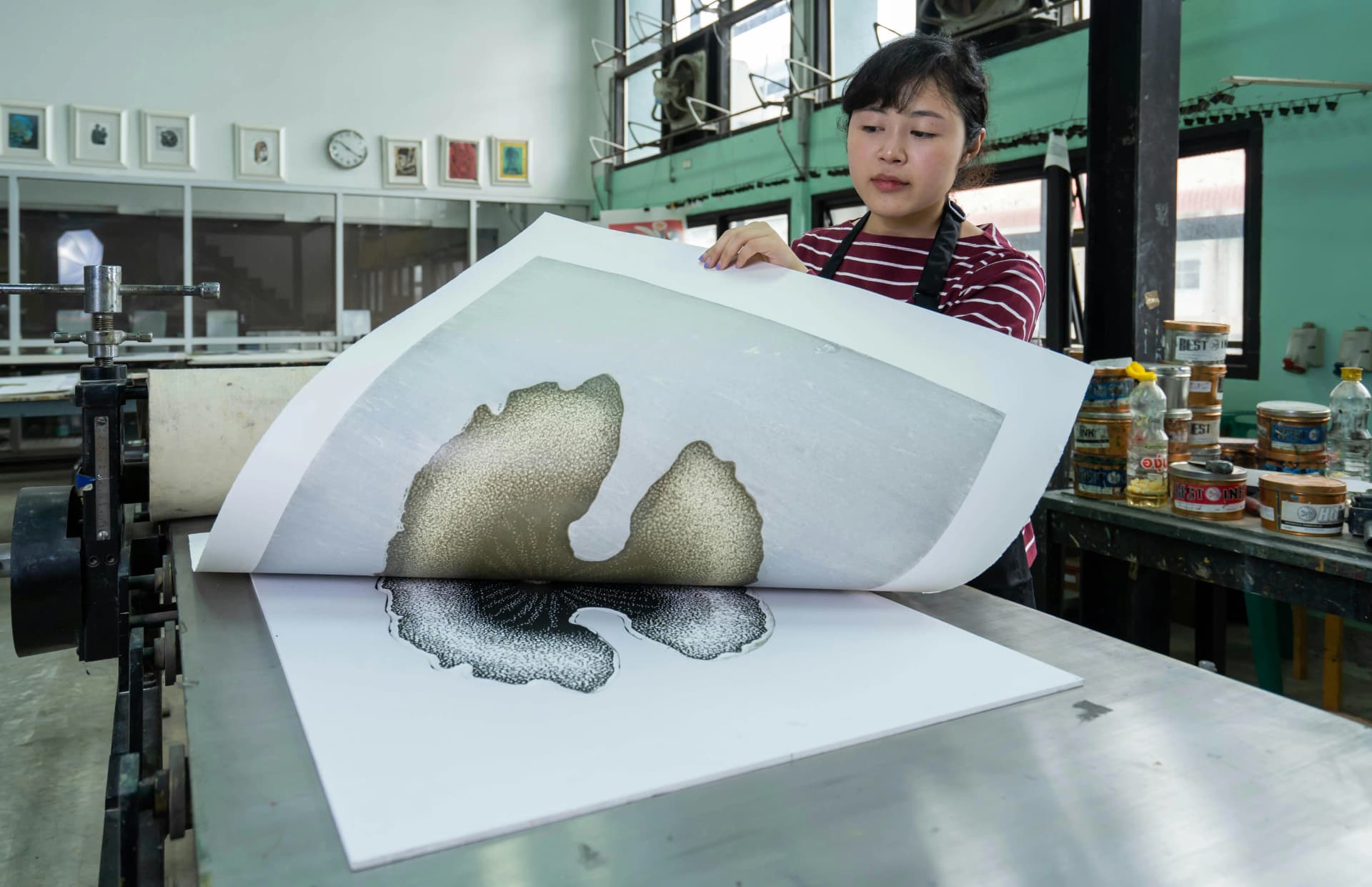
Antiquarian prints and maps. This is the category most accessible to non-Japanese-reading visitors. Several shops specialise in Edo-period woodblock prints, Meiji-era lithographs, antique maps of Japan and Asia, vintage photographs, and illustrated encyclopaedias. These require no Japanese literacy and are genuinely collectable. Prices range from ¥500 for a reproduction print to ¥100,000+ for authenticated rare pieces.
Vintage posters and ephemera. A subset of the antiquarian shops carries vintage film posters, pre-war advertising materials, old science diagrams, and photographic prints. These appear without much consistency — the shops that have them tend to rotate stock.
Manga. Several shops focus specifically on manga — both current and out-of-print collections. For collectors of specific series or editions, Jimbocho has depth that general bookshops don't.
Shops Worth Knowing
Kitazawa Shoten is the oldest and most internationally recognisable specialist in the district. Founded in 1902, it focuses on foreign-language books — English and American literature primarily, but also natural sciences, with a stock of around 12,000 volumes. If you're looking for Western texts that have drifted out of circulation, this is the most likely place to find them. The first floor now has a book café; the foreign-language stock is upstairs.
Sanseido (三省堂書店), a few minutes' walk along Yasukuni-dori, operates as a large new-books store rather than a secondhand dealer. Its strength is humanities and academic titles — philosophy, history, medicine — and it functions as an anchor for the district's more serious intellectual visitors. Worth knowing because it can fill gaps that the secondhand shops can't.
Beyond these two, the district sorts itself by genre in ways that regular visitors learn over time. History and Japanese studies shops concentrate near the southern end of the main drag. Art books and design references tend to appear in slightly narrower side streets. Shops dealing in pre-war and Meiji-era illustrated books cluster near Kitazawa Shoten. There's no official map of this geography, but an hour of walking makes it legible.
Curry Alley
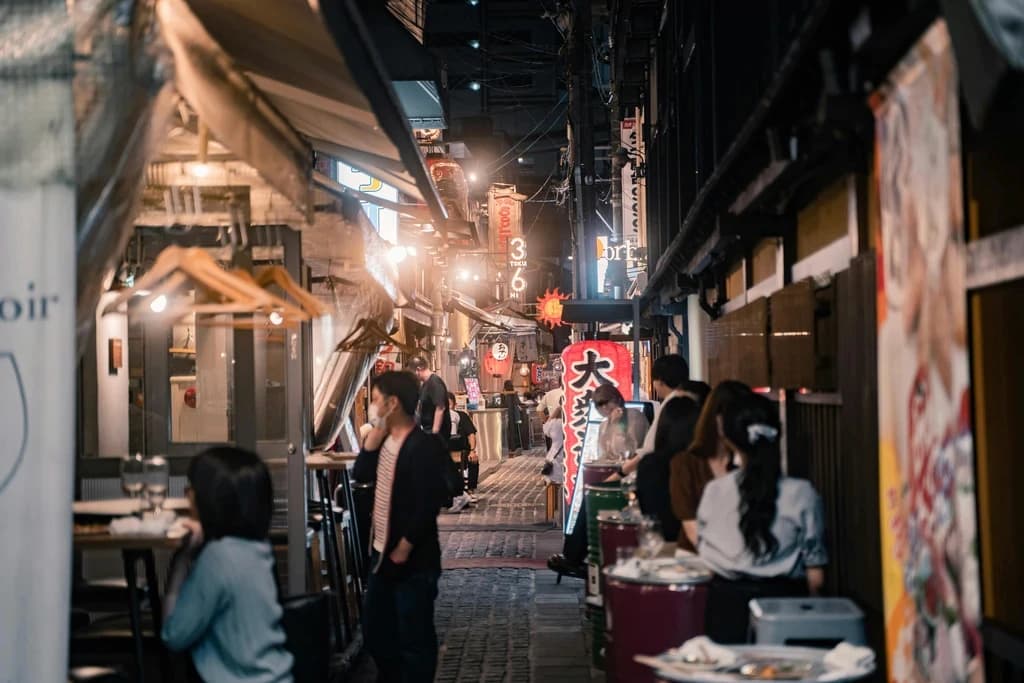
In the streets immediately behind the main book district, approximately 20 curry restaurants operate within a few hundred metres. This developed because curry — cheap, filling, fast — was what students on tight budgets ate, and Jimbocho has had a student population since its inception. The curry restaurants are not a tourist attraction in the conventional sense; they're a functional infrastructure that has been operating for decades and has developed its own character.
The reason curry specifically took hold, rather than ramen or soba, has a practical explanation that regulars recite without prompting: curry is eaten with a spoon, and a spoon requires only one hand. Students could read while they ate. In a neighbourhood where the line between eating and studying had always been blurry, this made curry the default meal. The nickname that stuck is Kare no Machi — Curry Town.
Bondy, established in 1973 and operating from a building just off Yasukuni-dori, is the restaurant that other curry restaurants in Jimbocho tend to acknowledge as a pioneer. It serves a European-style curry of the kind that was popularised in Japan through early twentieth-century Western contact — dense, slow-cooked sauce, served over rice with a selection of accompaniments. There are usually 20 or more variations on the menu. Lines form at lunch.
The curry here ranges from Japanese-style (mild, thick, served over rice) to Indian-influenced to Nepalese. The Indian and Nepalese restaurants arrived later, in the 1990s and 2000s, as the neighbourhood's intellectual character made it an appealing base for overseas students and researchers from South Asian universities. Lunch hours, especially on weekdays, are when the selection is fullest and when the restaurants are most animated.
The Kanda Book Festival
Jimbocho runs two outdoor book markets each year, and the autumn one is a legitimate civic event. The Kanda Furuhon Matsuri (神田古本まつり) runs for approximately eleven days in late October and early November — the 2025 edition runs October 24 to November 3, anchored around Culture Day on November 3. In 2024 it ran October 25 to November 4.
The format is an aozora furuhon-ichi — a blue-sky used book market. Dealers from across the district roll wagons out onto the southern pavement of Yasukuni-dori and set up additional stalls near the Iwanami venue and the Tokyo Antiquarian Book Hall. The permanent shops remain open, but the festival adds volume and brings dealers who don't maintain year-round storefronts. The street fills with browsers from early morning; regulars arrive at opening and work methodically from one end to the other.
Prices during the festival are not necessarily lower than usual, but the selection is wider and the atmosphere is unlike any other part of Tokyo. Writers, academics, retired professionals, students, and occasional foreign collectors converge on the same 400-metre pavement. If your visit overlaps with this period, the district is worth a half-day commitment rather than a quick pass-through.
A smaller spring event, the Jimbocho Sakuramichi Festival, runs for three to four days in late March or early April. The format is similar — wagons on the pavement, open-air browsing — but the scale is gentler and the cherry blossom timing adds a visual backdrop that the autumn festival lacks.
The Sports Street Nobody Talks About
The same street that anchors the book district doubles as one of Tokyo's most concentrated zones for ski and winter sports equipment. Between Jimbocho Station and Ogawamachi Station, along the same Yasukuni-dori that the bookshops line, more than sixty sports shops operate within a 400-metre stretch. This is the Kanda-Ogawamachi Sports Goods District, and it exists in parallel with the book trade in a way that confuses first-time visitors: the two industries developed along the same road for unrelated reasons, and neither has pushed the other out.
The sports shops deal primarily in new equipment — ski, snowboard, mountaineering, and outdoor gear. Major chains with large floor space include Victoria, ICI Sports, L-Breath, and Murasaki Sports. For visitors planning ski trips to Niseko, Hakuba, or Nozawa Onsen, this is the most practical place in Tokyo to rent or buy equipment before travelling north. Some shops have secondhand sections, particularly for ski gear, though the focus is overwhelmingly on new stock.
The combination of books and sports gear is genuinely odd but follows a logical neighbourhood logic: both require specialist knowledge to buy well, both reward return visits, and both industries are anchored by customers who take the subject seriously. The same pedestrian who spends an hour in the antiquarian print shops in the morning will not look out of place testing boots in the ski shops in the afternoon.
Day Pairing
Jimbocho + Ochanomizu: A 10-minute walk east takes you to Ochanomizu, the musical instrument district. Books in the morning, instruments in the afternoon. Both are quiet during weekday hours and best explored slowly.
Jimbocho + Akihabara: The combination of serious book culture and electronics/anime culture is geographically close (15 minutes by foot or one stop by Hanzomon Line) and appeals to collectors with overlapping interests. For deeper otaku culture, Nakano Broadway is the serious collector's alternative to Akihabara.
Infinite Tokyo for any custom day in the Chiyoda/Kanda area.
FAQ
Do I need to read Japanese to enjoy Jimbocho?
No. The antiquarian print and map shops are the most accessible category for non-Japanese speakers — Edo woodblock prints, Meiji lithographs, and vintage maps require no text comprehension and are internationally collectable. Kitazawa Shoten stocks around 12,000 foreign-language volumes in English and other languages. Manga is visually navigable. The purely text-heavy Japanese-language sections are the one area where non-readers will struggle, but they represent only part of what the district offers.
When is the best time to visit Jimbocho?
Weekday mornings are when the district is most active and fully stocked. Sundays are quieter — roughly half the shops close. The best single window is late October to early November during the Kanda Furuhon Matsuri, when the main street fills with open-air book stalls and the selection expands considerably. The spring Sakuramichi Festival in late March or early April is smaller but worth planning around if your dates align.
How long should I spend in Jimbocho?
Budget at least two to three hours for a meaningful visit. The district is dense — a quick pass through the main street misses the side streets where the specialty shops operate. Allow an additional hour if you plan to eat curry. On festival days, half a day is not excessive.
What's the connection between Jimbocho and curry?
The curry culture grew directly from the student population. Curry rice can be eaten with a spoon in one hand, leaving the other free to hold a book — a practical advantage that mattered to students who ate between study sessions. The density of universities in the surrounding area created a customer base that wanted cheap, fast, one-handed meals. The nickname Kare no Machi (Curry Town) has stuck for decades, and the restaurant concentration is now estimated at over 500 establishments in the wider Kanda area.
Is there anything in Jimbocho for people who aren't interested in books?
More than most people expect. The curry restaurants are worth visiting independent of the book trade. The ski and winter sports shops along Yasukuni-dori are among the best-stocked in Tokyo for anyone planning a mountain trip. The neighbourhood has a distinct atmosphere — a slightly faded intellectual seriousness — that makes it worth walking through even for visitors who aren't collectors or readers. It also pairs naturally with Ochanomizu (instruments) and Akihabara (electronics/anime) for a full day in this part of the city.