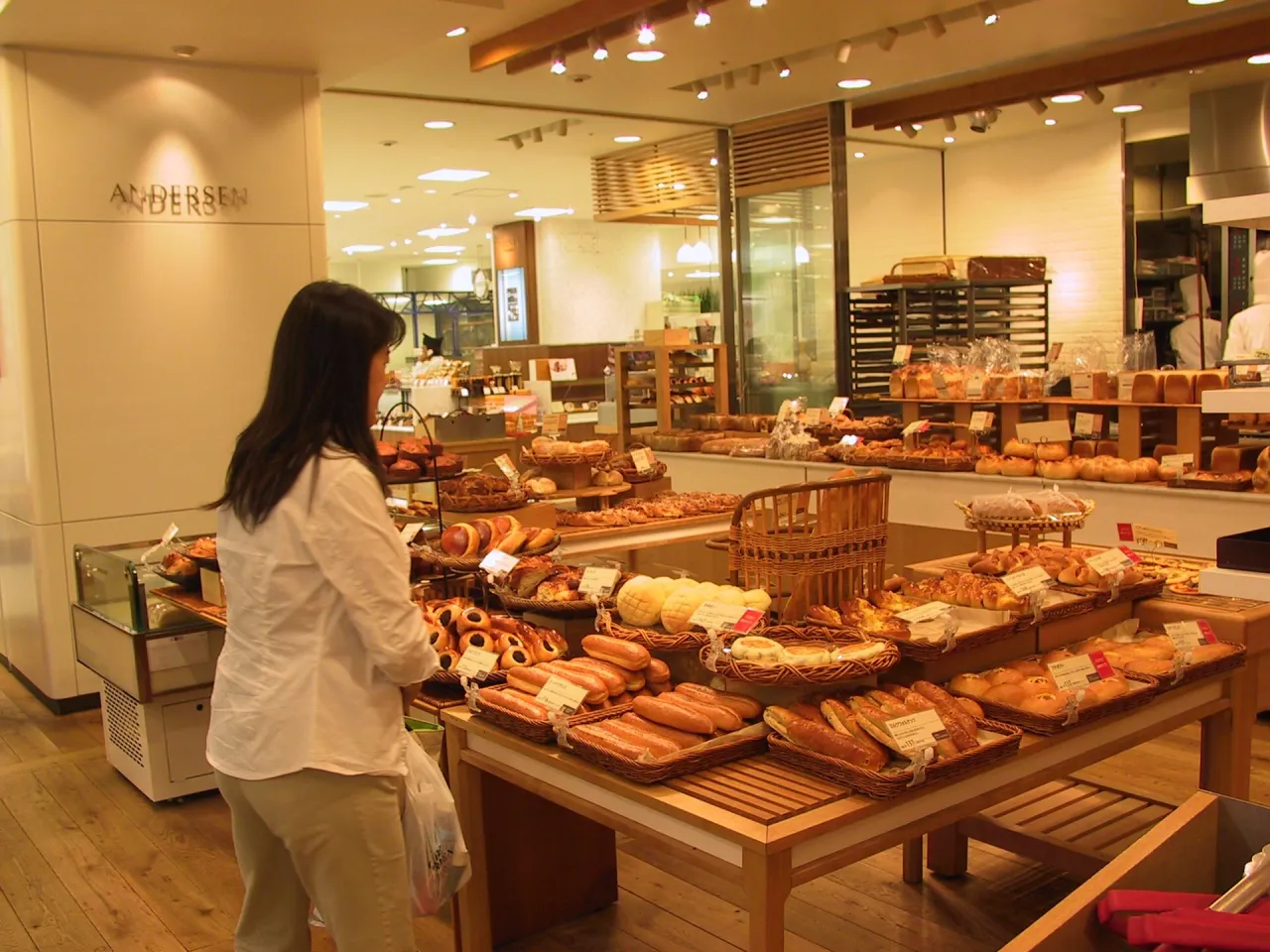
Walk into almost any bakery in Japan and you take a tray and a pair of tongs, pick what you like and carry it to the till. Nobody hands you anything over a counter. It did not always work that way, and the change started with a building that would not cooperate.
A bank that survived the bomb
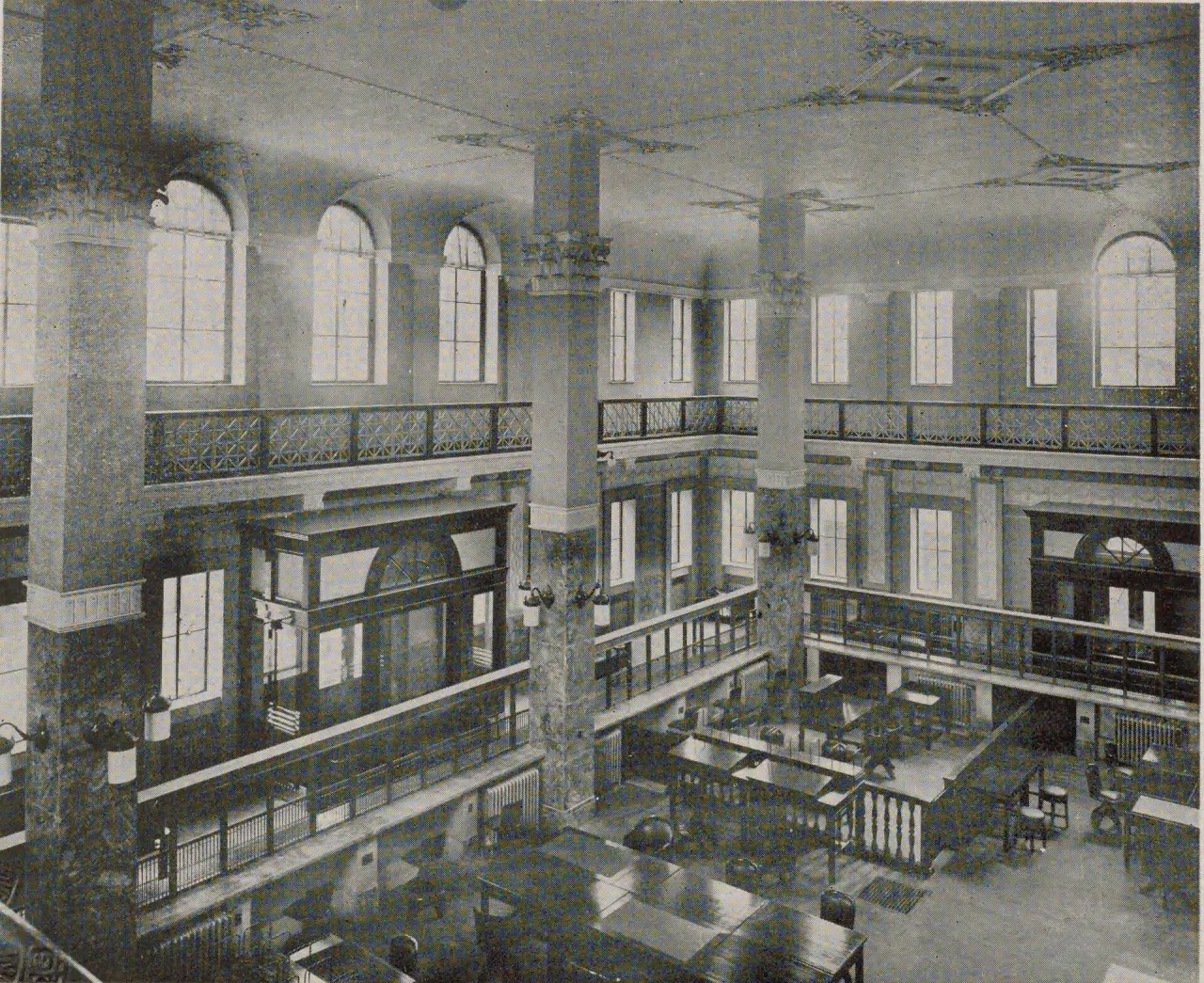
Takaki Shunsuke and his wife Akiko started a small bakery in Hiroshima in 1948, with two other staff (Andersen Group history). In 1967 they bought a stone bank building in the middle of the city. It was built in 1925 and stood 360 metres from where the atomic bomb exploded. Much of its roof and ceilings fell in, but the building did not collapse (Daily Shincho; The Mainichi).
Tenants kept leaving because the building was awkward to use. The Takakis saw an old building in Italy that had been turned into a lively shop, and decided to do the same in Hiroshima: a bread shop downstairs and a restaurant above.
The display case that would not fit
Akiko was in charge of fitting out the shop. She bought big display cases from Italy. A pillar inside the old building was in the way, and it could not be removed. Akiko herself told the Chugoku Shimbun, in an interview, that a large imported showcase was blocked by the thick pillars.
So the bread went on open wooden shelves. Customers took what they wanted on a tray and paid at the till. The Italian cases were used for the cake counter instead (Daily Shincho; NHK's "Chiko-chan ni Shikarareru", 2022).
Opening day
The shop opened in October 1967. Akiko later remembered that they had thought through the self-service idea but not how many trays they would need. They had made fifty, and those ran out almost at once. They were washing and wiping trays by hand, and she pulled in her sister-in-law to help (Chugoku Shimbun). The company says it was the first self-service bread shop in Japan, and the newspaper describes it the same way.
NHK's programme says some staff doubted anyone would buy bread this way. The method then spread to bakeries across the country. Shunsuke later made his 1972 patent for frozen bread dough public instead of keeping it to himself (Daily Shincho; Andersen Group).
See it yourself
- The bakery you lunch at. Your guide picks a bakery in Ura-Harajuku. Look at what is missing: no glass case between you and the bread.
- The tongs. Tray and tongs are the whole system. The pillar is why they exist.
Hear it on the tour
Sources
- Daily Shincho, excerpt of Anzai Takumi, "Hiroshima wa sugoi", 24 Jun 2016
- Chugoku Shimbun, "Ikite: Takaki Akiko" no. 9, 8 Apr 2011
- Chugoku Shimbun Hiroshima Peace Media, interview with Takaki Akiko (English)
- NHK "Chiko-chan ni Shikarareru", 30 Sep 2022, programme summary
- Andersen Group, company history
- Hiroshima Andersen, history (English)
- The Mainichi, 18 Jun 2020
Photo credits
- A shopper choosing bread from open baskets on tables in a Japanese bakery, with a pair of tongs at the edge: Mom the Barbarian from Issaquah (Flickr) / Wikimedia Commons, CC BY 2.0, resized