Understand Tokyo’s true cost by seeing how prices, value and perception intersect for travelers.
Is Tokyo expensive? The honest answer is: it depends on three structural choices you make before you arrive, not on the city itself.
Tokyo can feel expensive or surprisingly manageable depending on where your money is forced to go. The difference isn't Tokyo itself—it's how your accommodation, transportation, and friction tolerance interact. The same city supports both an everyday Tokyo running on trains and set meals, and a global capital Tokyo priced like any world city once you stack hotels, nightlife, and peak demand.
The Three Cost Levers That Determine Everything
Most of Tokyo's cost variance comes from three decisions you make before you arrive. These aren't spending categories—they're structural choices that determine whether Tokyo feels expensive or manageable.
| Lever | What It Controls | Tokyo-Specific Reality | Why It Matters |
|---|---|---|---|
| Accommodation Strategy | Where you sleep, room size expectations | Rates surge with seasonality/events; smaller rooms are normal; station proximity is premium | If you want control without making days feel cheap, start here before food or transit |
| Transportation Pattern | Rail-first vs. taxi-first behavior | Most subway rides 180-330 yen; "cheap but disconnected" hotels create hidden taxi costs | A poorly connected hotel can quietly make the entire trip more expensive |
| Friction Budget | Whether you pay money or effort to remove complexity | Choice every hour: convenience vs. optimization | Some travelers optimize by spending effort, others by hiring local expertise |
Accommodation: Where Tokyo Trips Blow Up
Why Prices Spike
Tokyo hotels are unusually sensitive to:
-
Seasonal travel peaks (spring and autumn)
-
Weekends vs. weekdays
-
Big events (concerts, conventions, sports)
Because demand stacks into the same calendar windows, good-value rooms disappear fast. You end up choosing between paying more, shrinking room quality, shifting location outward, or changing dates. For more on when to visit Tokyo to avoid peak pricing.
Neighborhood Is a Cost Decision AND a Time Decision
Two stays with the same nightly rate can feel totally different depending on transit access.
| Location Type | Examples | Advantages | Watch Out For |
|---|---|---|---|
| Close-in hubs (big interchange stations) | Shinjuku, Shibuya, Tokyo Station | Fewer transfers, fewer long walks, easier returns midday | Premium pricing during peak seasons |
| Edge neighborhoods (well-connected) | Nakano, Shimokitazawa, Kichijoji | Good value if still on fast lines with easy transfers | Verify actual station access, not map distance |
| "Looks close on a map" traps | Any area with rivers/rail yards between you and station | Appears nearby | Tokyo distances deceptive; can feel far on foot |
Station proximity matters more than ward names. A 10-minute walk to the platform twice daily is a real cost: time, energy, and sometimes taxis when it rains. For a deeper look at choosing the right Tokyo neighborhood.
Room Size Expectations
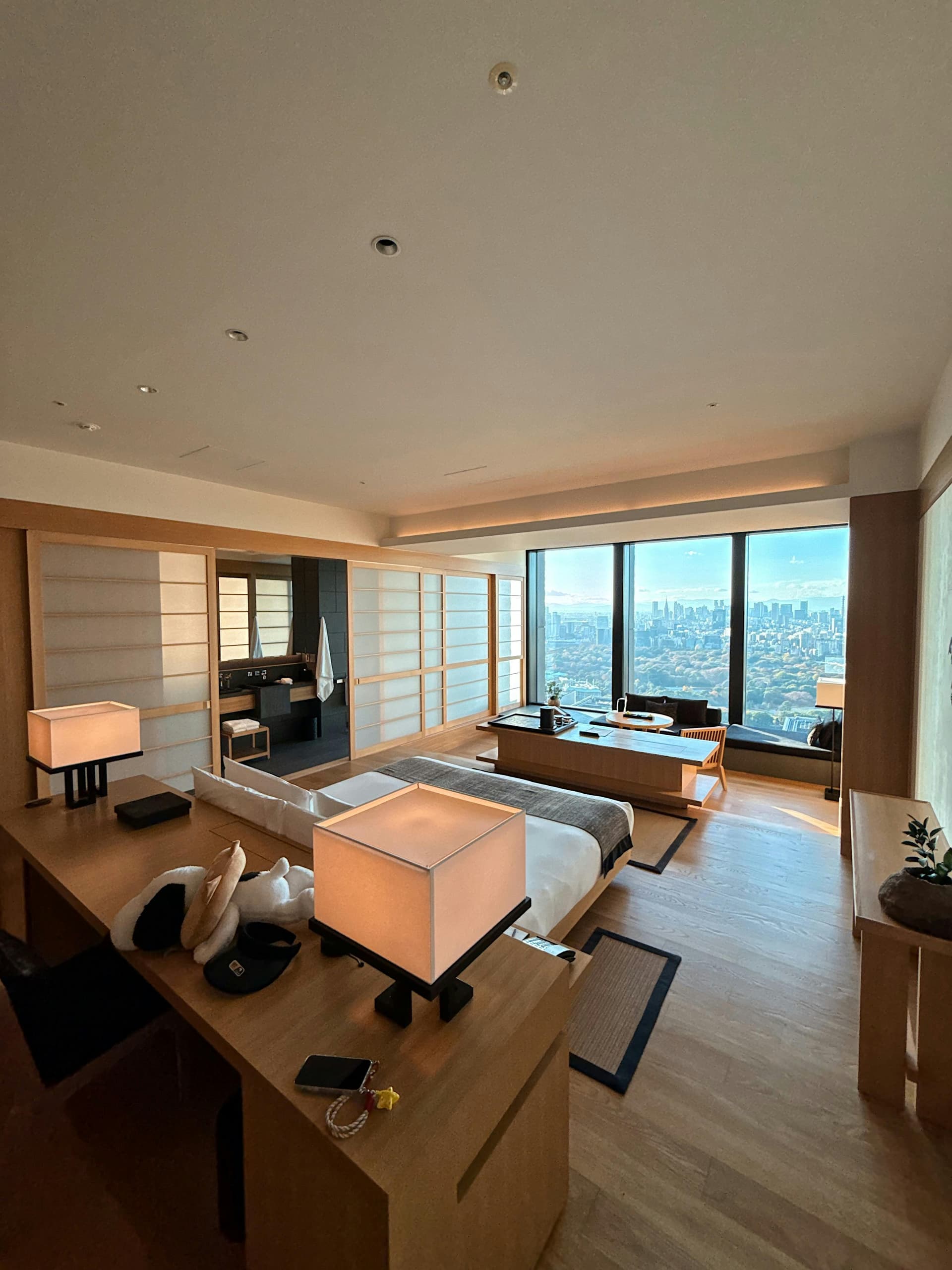
If you're traveling as a couple, family, or with luggage-heavy itineraries, you may pay more just to avoid daily stress. In Tokyo, "comfortable with luggage open" is often a premium category.
Are you optimizing for sleep only, or room-as-base (work, naps, breaks)? The second profile pays more.
Transportation: The Rail-First Discount
What Local Rail Actually Costs
Tokyo Metro tickets are distance-based and sold in five denominations: 180, 210, 260, 300, and 330 yen. Most day-to-day moves inside the city aren't individually expensive—but repeated convenience choices add up.
Passes: When They Help and When They Don't
Tokyo sells time-based subway tickets for unlimited rides on Tokyo Metro + Toei Subway:
| Pass Type | Duration | Price | Best For |
|---|---|---|---|
| Tokyo Subway Ticket | 24 hours | 800 yen | Single high-activity day |
| Tokyo Subway Ticket | 48 hours | 1,200 yen | Two sightseeing days |
| Tokyo Subway Ticket | 72 hours | 1,500 yen | Three-day intensive visit |
| Common One-day Ticket | 1 calendar day | 900 yen | Same-day convenience |
How to decide without overthinking:
-
Geographically compact day (one or two areas): pay-as-you-go is fine
-
"Pinball day" (many neighborhoods, lots of stops): time-based ticket simplifies decisions and reduces marginal cost anxiety
-
Large groups or kids/seniors: lowering friction often matters more than squeezing out savings
The Japan Rail Pass: Relevant for Day Trips, Not Tokyo Itself
For Tokyo-only travel, nationwide rail passes aren't the main lever. They matter when you add long-distance travel (multiple Shinkansen segments) or multi-city routes.
Current pricing for the Japan Rail Pass:
-
7-day Ordinary class: 50,000 yen
-
7-day Green class: 70,000 yen
If your trip is primarily within Tokyo, your transit budget is usually manageable. Your "expensive rail" risk shows up when you bolt on multiple long-distance day trips without a plan. For a complete breakdown of Tokyo's transit system.
Food: Wide Range, Predictable Floor
Tokyo has one of the widest spreads between everyday food and high-end dining you'll find anywhere.
The Floor: Everyday Meals Are Built Into the City
A Tokyo day can be fueled by:
-
Convenience store staples
-
Casual noodle shops
-
Neighborhood set meals
-
Department store food halls (which can be expensive or surprisingly practical depending on what you choose)
You don't have to chase luxury to feel satisfied. Tokyo's baseline competence is high.
The Ceiling: Premium Dining
Tokyo gets expensive fast when you pursue:
-
Reservation-only counters
-
Tasting menus
-
Rare ingredients or seasonal status items
-
Alcohol-forward evenings
Are you traveling to eat great food, or to collect hard-to-get dining experiences? The first can be moderate. The second is where Tokyo becomes expensive.
Lunch vs. Dinner Pricing
Many places are approachable at lunch and significantly pricier at dinner. If you care about budget but don't want to compromise on quality, shifting one "big meal" to lunch is a common Tokyo strategy.
Other Cost Categories
These matter less than the three levers, but they add up.
Attractions: Many neighborhood experiences are low-cost (temples, shrines, parks, street photography, people-watching districts). Costs rise when you stack ticketed museums, observation decks, special exhibitions, theme parks, and frequent paid indoor activities.
Rainy days can become expensive days if you repeatedly solve weather with paid indoor options.
Shopping: Small costs compound:
-
Vending machines
-
Beauty and skincare browsing
-
Stationery and lifestyle goods
-
Capsule toys, arcades, photo booths
-
"Just one more" convenience store stop
None are bad. But they're the classic reason someone feels they "didn't do anything expensive" and still overspent.
Nightlife: Late-night spending depends heavily on venue type and how late you stay out.
Common cost accelerators:
-
Cover charges or minimums
-
Repeated taxi rides (especially after trains stop)
-
Alcohol in high-rent districts
-
"Second place, third place" nights
Late-night transit constraints create a real trade-off: either plan your last train, choose nightlife near your lodging, or accept that taxis become the price of staying out.
The "Tokyo is Expensive" Feeling: What's Actually Happening
Tokyo isn't uniformly expensive. Your trip gets expensive when you repeatedly hit one of these patterns:
| Mismatch | What's Happening | Tokyo Example | Real Cost Driver |
|---|---|---|---|
| Checklist-city approach | Rigid "must-hit" sequencing adds friction | Forcing Meiji Shrine → Tsukiji → Akihabara in sequence | Constantly solving routing problems with money (taxis, last-minute fixes) |
| Geographic spread | Cross-city movement compounds | Shibuya → Asakusa → Odaiba → Shinjuku in one day | Transport-heavy day even though individual rides are modest |
| Cheap but disconnected lodging | Apparent savings create hidden costs | Ikebukuro hotel with 10-minute station walk | Transfers, long walks, "we're too tired" taxis |
| Seasonality blindness | Booking windows misunderstood | Spring/autumn when middle tier sells out | Left choosing between budget compromises or premium pricing |
How to Budget Tokyo Without Obsessing
Instead of asking "How much does Tokyo cost per day?", ask three questions:
1. What Kind of Base Do I Need?
| Base Type | Priorities | Room Expectations | Transit Tolerance | Cost Impact |
|---|---|---|---|---|
| Sleep-only base | Don't care about room size, out all day | Minimal | Fine optimizing transit | Lowest |
| Comfort base | Want room to decompress | Need space to keep trip smooth | Pay for location convenience | Moderate to high |
| Family base | Predictable routines, fewer transfers, proximity | Worth paying for coordination | Logistics handling varies by group size | Often highest |
Your base choice determines whether Tokyo feels expensive more than almost anything else.
2. How Many High-Choice Days vs. Low-Choice Days?
High-choice days (many neighborhoods, lots of decisions) benefit from simplifying tactics like compact geography or time-based subway tickets.
Low-choice days (one district, slow pace) naturally spend less and feel less stressful.
A Tokyo trip becomes expensive when every day is a high-choice day.
3. What Are My Two Intentional Splurges?
Tokyo is easier to budget when you choose your splurges rather than letting them happen accidentally:
-
A special meal
-
A concert or event
-
A premium shopping category
-
A day trip that requires paid transport
-
A hotel upgrade for rest
When you name them, everything else can be "normal Tokyo."
Three Day Profiles to Sanity-Check Your Plan
These aren't rules—just ways to identify what kind of days you're building. For more on structuring Tokyo days based on trip length.
| Profile | Transit Cost | Food Pattern | Overspend Risk | What It Feels Like |
|---|---|---|---|---|
| Compact Neighborhood Day (one area + nearby add-on, lots of walking) | Low to moderate (handful of subway rides) | Flexible (convenience store to sit-down) | Low, unless shopping is main activity | Tokyo feels surprisingly affordable |
| Cross-City "Greatest Hits" Day (multiple districts, transfers, time pressure) | Moderate, higher if solving fatigue with taxis | "Whatever's nearby now" (skews pricier) | Medium to high via friction spending | Tokyo feels expensive even without luxury |
| Day Trip Day (rail-based excursion, return at night) | Dominant cost that day | Often includes specialty meal/snack pattern | Depends on stacked attractions | Worth it, but changes your average |
Clustering Strategy: Reduce Cross-City Friction
To keep Tokyo from feeling expensive, cluster your days by geography. For more on understanding Tokyo neighborhoods and their characteristics:
| Cluster | Key Areas | Character | Why Cluster Here |
|---|---|---|---|
| East side | Asakusa, Ueno, Ryogoku, Yanaka, Sumida | Older neighborhoods, markets, museums, river walks | Traditional Tokyo, walkable districts |
| West side | Shinjuku, Harajuku, Shibuya, Shimokitazawa | Major hubs, shopping corridors, nightlife density | Modern energy, youth culture |
| Central | Ginza, Marunouchi, Roppongi, Imperial Palace area | Business districts, galleries, flagship shopping, big parks | Upscale, refined, spacious |
| Bay side | Odaiba, Toyosu, teamLab | Large-scale venues, malls, views, event spaces | Contemporary attractions, waterfront |
The point isn't to see it all. The point is to reduce cross-city friction so you spend money where you mean to.
If You Want Tokyo to Feel Less Expensive, Optimize for These Outcomes
Not "spend less," but:
-
Shorter returns to your base (so you don't buy convenience)
-
Fewer transfers (so you don't lose time and patience)
-
More compact days (so you walk more and taxi less)
-
Named splurges (so the rest of your spending stays normal)
-
Weather plans (so rain doesn't force expensive pivots)
If you do those, Tokyo often stops feeling expensive—even if you still choose a few premium moments. These are the outcomes local expertise naturally delivers.
For comprehensive guidance on planning your first Tokyo trip.
This guide is published by Hinomaru One, a Tokyo-based private tour operator.