Most Yanaka content tells you it survived WWII. This page helps you decide whether the things that survived require explanation — and whether that explanation matters to you.
August 3, 2025
9 mins read

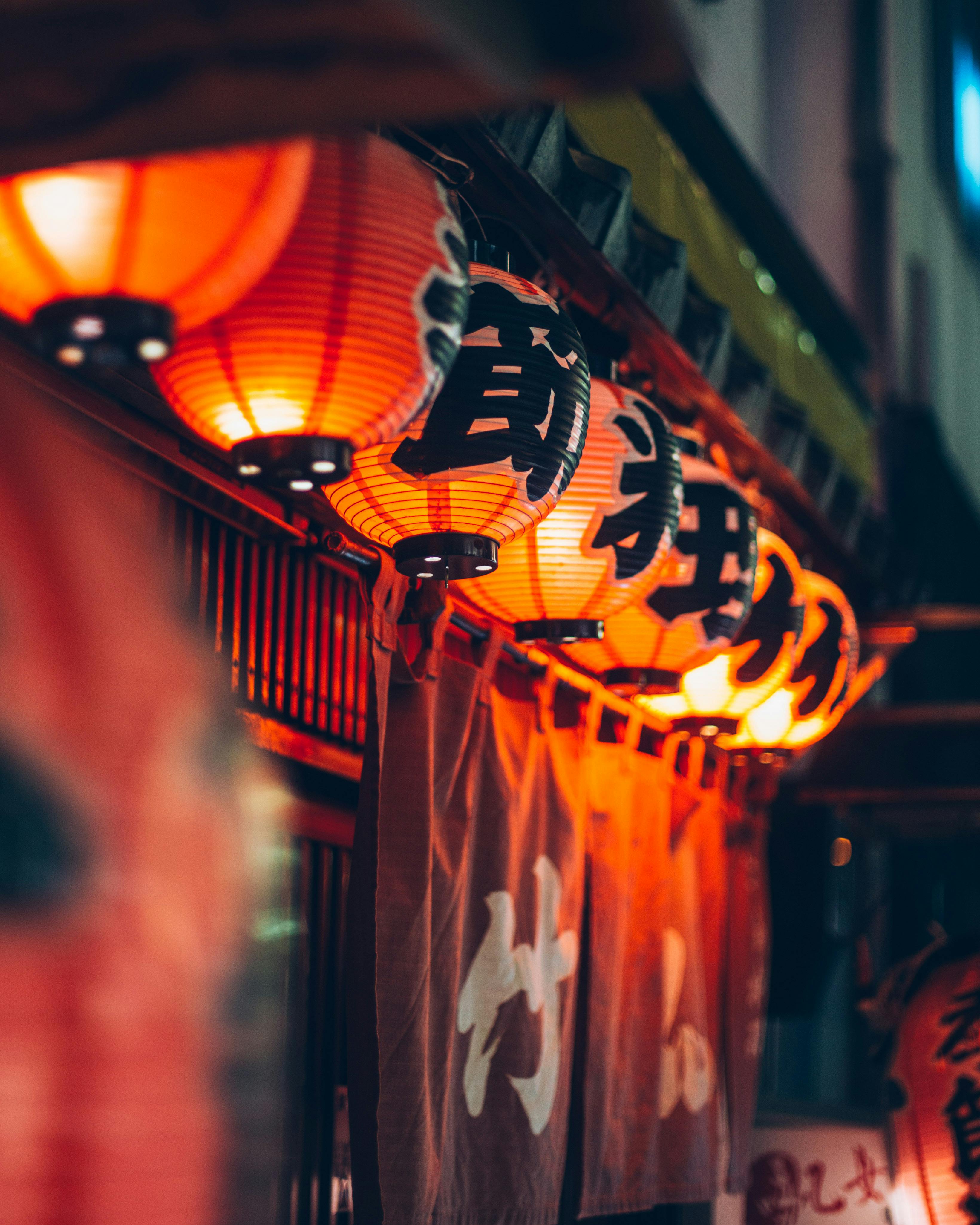
Visitors photograph Kannonji Temple's wall without knowing they're looking at the last surviving Edo-period mud wall in Tokyo. They walk through Yanaka Cemetery without realizing the man on their ¥10,000 bill is buried there. They pass 76 temples without understanding why one was the plotting location for Japan's most famous samurai revenge.
Yanaka is easy to visit. The streets are well-signed. The main shopping street is 170 meters long. You can walk through the entire neighborhood in 45 minutes.
Understanding what you're walking through takes longer.
What You'll Walk Past Without Knowing
The Wall and the Samurai Plot
On a residential street near Kannonji Temple, a distinctive wall of alternating mud and tiles runs for 37.6 meters. Visitors stop to photograph it. Most don't know what they're looking at.
This tsuji-bei wall is the last surviving Edo-period mud and tile wall in Tokyo. It's over 200 years old, designated a cultural property in 1992. One TripAdvisor reviewer captured the typical experience: "Only after we photographed it, and returned home, did we do research on what we saw."
The temple behind the wall has its own story. Kannonji was the plotting location for Japan's most famous samurai revenge — the 47 ronin who avenged their lord's death in 1703. Two of the ronin were brothers of the temple's head priest, Bunryō. The temple provided cover for their meetings before the attack. A memorial tower on the grounds commemorates their story.
Most visitors know about Sengakuji Temple in Minato, where the 47 ronin are buried. Few know Kannonji is where they planned the killing.
The Graves That Are on Your Money
Yanaka Cemetery holds approximately 7,000 graves across 10.25 hectares. A signboard near the entrance lists 70 of the most famous people buried here. Most visitors don't find it.
Shibusawa Eiichi, the "father of Japanese capitalism," is buried here. Since 2024, his face has been on the ¥10,000 bill — the note you'll use most often during your trip. Ichiyo Higuchi, a Meiji-period writer, is also here. She's on the ¥5,000 note.
In a walled enclosure visible only through double-barred gates lies Tokugawa Yoshinobu, the 15th and last shogun. His grave is surprisingly humble — a simple mounded structure about a meter wide, resembling a miniature imperial tomb. He chose a Shinto-style burial, unusual for a family that ruled under Buddhist traditions for 265 years.
Without Japanese literacy and historical context, these are just names on stone. A guide bridges the language gap that makes these inscriptions inaccessible.
The Temple That Ran Tokyo's Lottery
Tennoji Temple dates to 1274 — the oldest in the area. From the street, it looks like any other temple: wooden buildings, a bronze Buddha statue, stone lanterns.
But Tennoji was the only temple in Edo authorized to run public lotteries, from 1728 to 1842. It originally belonged to the Nichiren Buddhist sect, then was forcibly converted to Tendai Buddhism in 1698. The bronze Buddha wasn't part of the original temple — it was added in 1690, making it one of the few pre-modern religious statues surviving in Tokyo.
Each layer reveals something about Japanese religious and political history. Without explanation, it's a temple with a nice Buddha statue.
Two Types of Tokyo Neighborhoods
Visual Neighborhoods | Contextual Neighborhoods | |
|---|---|---|
Examples | Shibuya, Harajuku, Akihabara | Yanaka, temple backstreets |
What matters | What you see | What it means |
Photos capture | The experience | The surface |
Guide adds | Enhancement | Access |
Visual Neighborhoods: What You See Is What Matters
Shibuya's crossing speaks for itself. The scramble intersection, the giant screens, the crowds — you understand it by watching it. Harajuku's fashion makes sense visually. Akihabara's anime shops announce themselves.
These neighborhoods reward cameras. The experience is the spectacle. Context helps, but the core appeal is visible.
Contextual Neighborhoods: The Meaning Is Invisible
Yanaka belongs to a different category. The narrow streets look charming. The temples look old. The shopping street looks quaint. But what you're seeing — what it means that these buildings survived, why temples cluster here, what the grave markers signify — none of that is visible.
Tokyo has been divided since the Edo period into two cultural zones: Yamanote (the elevated west, home to samurai and aristocracy) and Shitamachi (the low-lying east, home to merchants and artisans). Yanaka is Shitamachi. The narrow streets, the temple density, the cemetery, the shopping street — all reflect this class history.
Shitamachi isn't just "old streets." It's a social identity embedded in architecture. Without explanation, you're walking through evidence you can't read.
If you judge Yanaka by its photos, it loses to Shibuya. If you understand what you're looking at, it becomes one of Tokyo's most historically dense neighborhoods. For a broader look at which Tokyo neighborhoods reward guided exploration, the considerations differ by neighborhood type.
Yanaka vs Asakusa: Different Survival Stories
Visitors often compare Yanaka and Asakusa. Both are called "old Tokyo." Both attract tourists seeking traditional atmosphere. But their stories are different.
Asakusa | Yanaka | |
|---|---|---|
WWII | Destroyed 1945 | Survived |
Architecture | Rebuilt 1950s-70s | Original |
Designed for | Tourists | Residents |
Rewards | Photography | Interpretation |
Asakusa: Reconstructed and Tourist-Facing
Sensoji Temple was destroyed on March 10, 1945, during the firebombing of Tokyo. The main hall you see today was rebuilt between 1951 and 1958. Kaminarimon Gate was reconstructed in 1960. The five-story pagoda went up in 1973.
Asakusa's "traditional" architecture is reconstruction. The buildings are designed for tourists. This isn't criticism — Sensoji is Tokyo's oldest temple site, founded in 645 AD. The religious significance is real. But what you photograph is postwar.
Yanaka: Survived Intact, Contextually Dense
Yanaka's temples didn't burn. The cemetery wasn't bombed. The backstreets are original. Tennoji's bronze Buddha dates to 1690 — over 330 years old, not a reproduction.
Yanaka's density is contextual, not visual. The temples aren't arranged for tourist photography. The cemetery isn't organized for easy navigation. The stories are layered, not signposted.
Asakusa is more photogenic. Yanaka is more historically intact. Different goals, not better or worse. If photogenic highlights matter more than historical density, Asakusa rewards a different kind of exploration.
Yanaka Ginza Is Not the Point
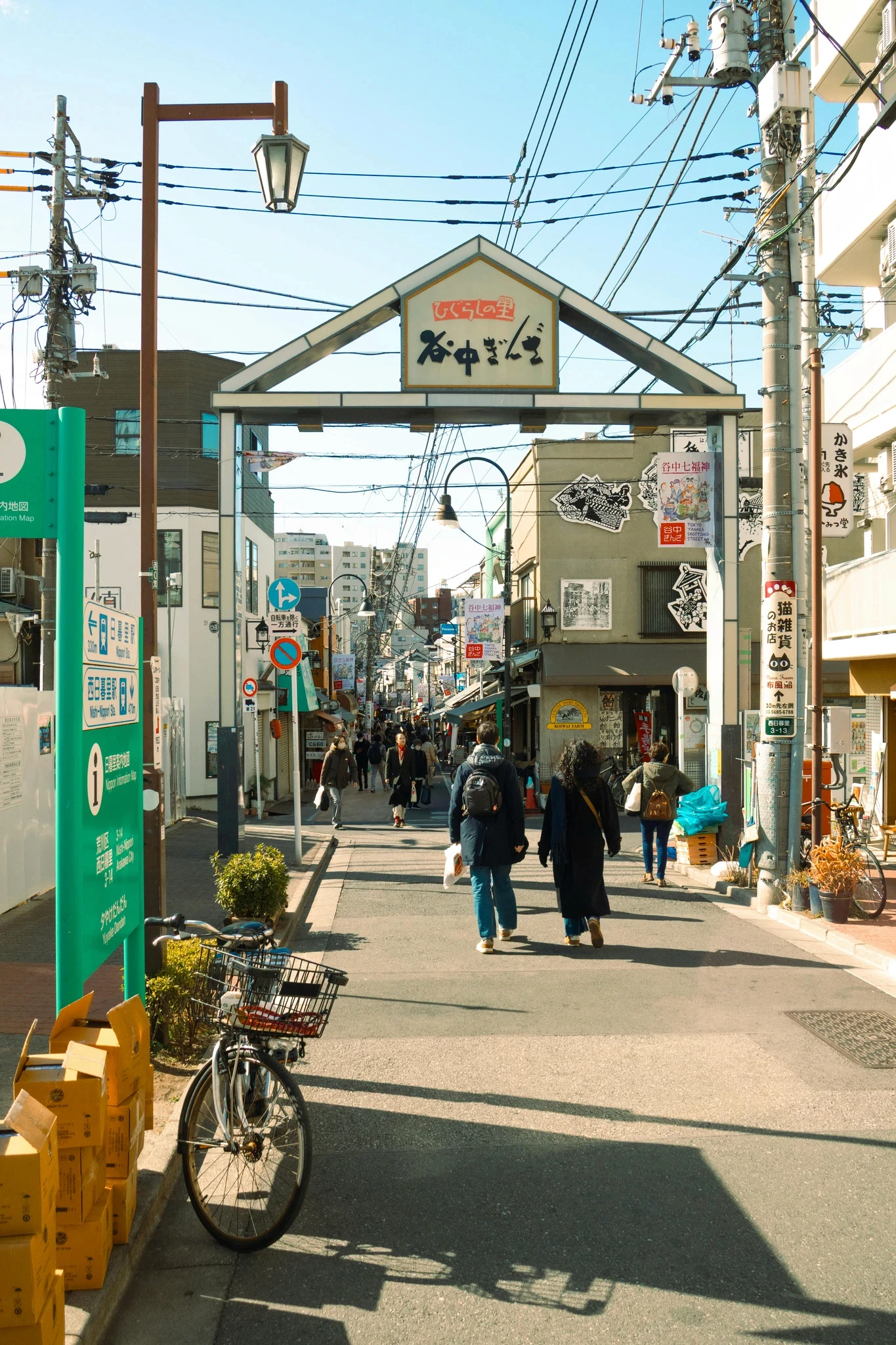
Yanaka Ginza is the neighborhood's most famous attraction. The 170-meter shopping street appears in guidebooks and travel blogs. It has an Instagram-friendly sunset staircase called Yuyake Dandan.
What the Shopping Street Shows
The street is charming. Around 60-70 small shops sell snacks, crafts, and souvenirs. Some have real history: Echigoya Saketen has been selling liquor since 1904. Niku no Suzuki has been a butcher for over 90 years.
You can buy menchi katsu, cat-shaped sweets, handmade rice crackers. You can photograph the sunset from the stairs. You don't need a guide for any of this.
What It Doesn't Show
The shopping street emerged around 1945, after the war. It's Showa-era Tokyo, not Edo-period Tokyo. The "cat town" branding — cat-tail donuts, cat statues, cat souvenirs — is recent marketing from the 2000s, overlaid on 400 years of temple-town history.
Yanaka Ginza is accessible and pleasant. It's not where Yanaka's historical depth lives.
If the shopping street is your main interest, you probably don't need a guide. The temples behind the street, the cemetery above it, the class history encoded in the neighborhood's layout — those require explanation.
When Yanaka Does — and Doesn't — Need a Guide
You don't need a guide to find your way around Yanaka. The streets are well-signed. The main shopping street is a straight 170-meter walk. Google Maps works fine.
What you need is translation — not linguistic (though that helps), but contextual. The significance of what you're passing is encoded in architecture, placement, and history that aren't labeled.
Skip the Guide If...
You just want atmosphere. Yanaka's narrow streets and old buildings create a pleasant mood. If you want a quiet walk through Tokyo's past without needing to understand what you're seeing, you can do that alone. Many Yanaka tours focus on the shopping street and call it "old Tokyo charm" — atmosphere without explanation. If that's enough, you don't need a guide at all.
You're returning to Tokyo. Repeat visitors have different goals than first-timers. If you've already experienced Tokyo's main attractions and want a low-key afternoon exploring backstreets, Yanaka works well solo. You've already developed context for Tokyo.
Time matters more than understanding. A guided exploration takes 3-4 hours to do properly. If you have two hours between other activities, a quick walk through Yanaka Ginza and the cemetery might fit better. You'll miss the interpretation. You'll still have an enjoyable stroll.
Consider a Guide If...
You want to understand what survived. Tokyo was destroyed twice in the 20th century — first by the 1923 earthquake, then by the 1945 firebombing. Yanaka survived both. If you want to understand why it survived, what specifically is original, and what that survival means for Japanese urban history, a guide provides the framework.
You can't read Japanese. Cemetery inscriptions, temple plaques, historical markers — most are Japanese only. English signage covers the basics but not the depth. A guide reads what you can't.
You've been confused by historical neighborhoods before. Some visitors walk through historical areas and feel they're missing something. The buildings are old, but the significance isn't clear. The atmosphere is nice, but the understanding doesn't arrive. If that describes your experience in places like Kyoto's temple districts, Yanaka will feel similar without a guide. Contextual neighborhoods reward interpretation. For those drawn to traditional culture, the interpretation makes the difference.
Yanaka fits naturally into Timeless Tokyo, which traces what survived across multiple historical neighborhoods. For those drawn more to everyday residential Tokyo than historical layers, Ordinary Tokyo explores similar shitamachi neighborhoods through a different lens.
Where Hinomaru One Fits
Yanaka is part of our Timeless Tokyo tour. Guides translate cemetery inscriptions, explain why Tennoji ran lotteries for a century, and connect shitamachi identity to what you're walking through. The interpretation gap this article describes is what our guides close.
At Hinomaru One, we design culturally rich, stress-free private Tokyo tours for first-time and seasoned travelers. Unrushed. Insightful. Always customized.