Asakusa is not a temple with a souvenir street. It is a neighborhood with 1,400 years of continuous operation, where geisha still perform, theaters still run, and family businesses still turn on the lights every morning.
Asakusa's story starts with two fishermen, Hinokuma Hamanari and Hinokuma Takenari, who pulled a statue out of the Sumida River on March 18, 628 AD. They took it to the village chief, Haji no Nakatomo, who recognized it as Kannon, the bodhisattva of mercy, and turned his own house into a temple to hold it.
That temple is Sensoji. In nearly 1,400 years the statue has never once been shown in public, and even the head priest doesn't see it. It has been locked in the inner sanctum as a hibutsu, a hidden Buddha, since 645 AD. Everything visitors photograph at Sensoji today is a postwar reconstruction: the main hall went up in 1958, Kaminarimon in 1960, and the five-story pagoda in 1973, after American firebombing on March 10, 1945 destroyed the originals. The religious practice, though, has run without a break since 628. Morning rituals carried on in the rubble, the offerings never stopped, and the hidden statue in its locked shrine came through when the buildings didn't.
The three founders are enshrined as gods at Asakusa Shrine next door, known as Sanja-sama, the "Three Shrines." Every May the Sanja Matsuri honors them with portable shrine processions that wind through every backstreet in the neighborhood. It's one of the three great Shinto festivals of Tokyo.
Most guides tell the fishermen story and stop there. There's a lot more to Asakusa after it.
Nakamise: 87 shops, 250 meters, and what the Genroku era left behind
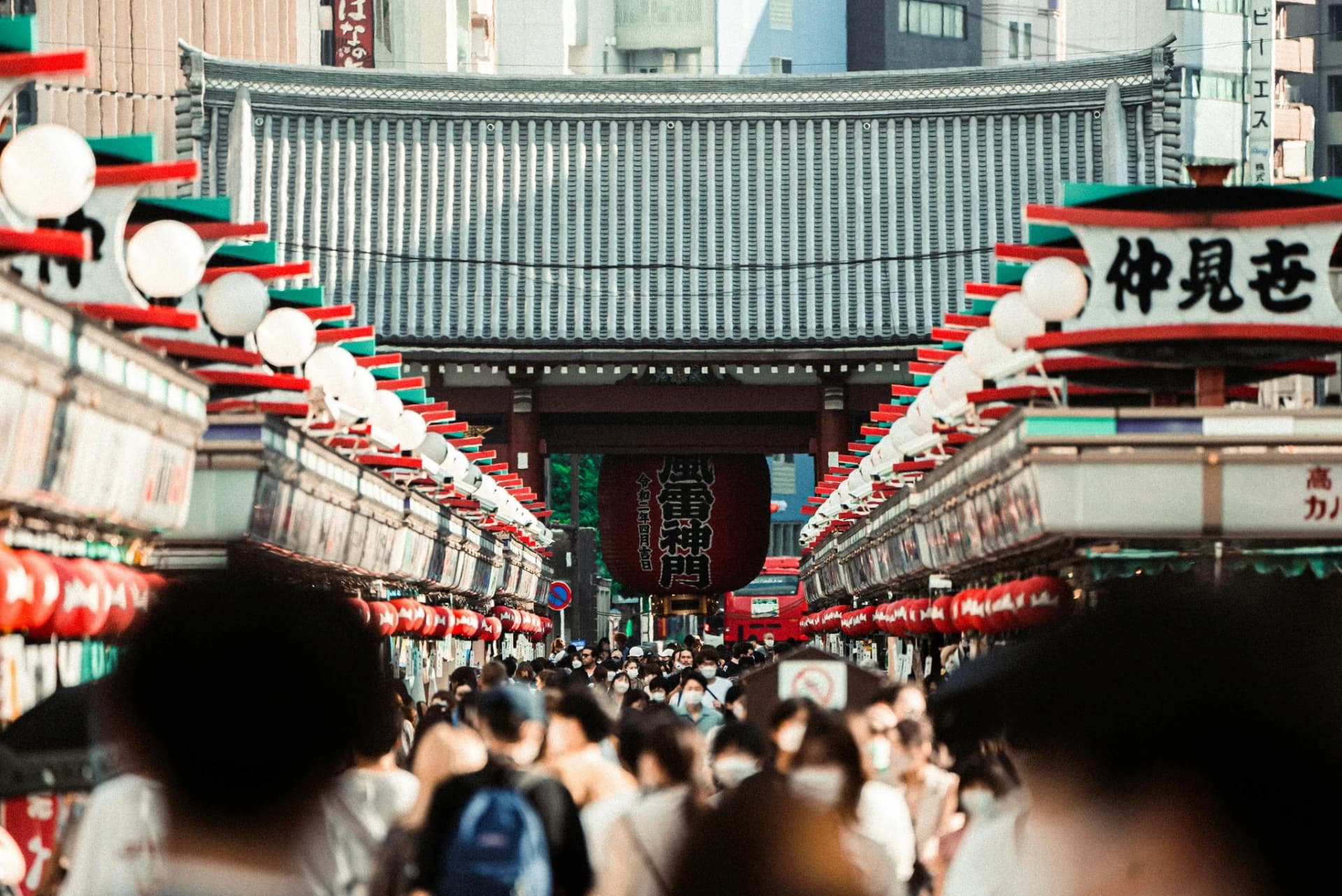
Nakamise runs 250 meters from Kaminarimon to Hozomon Gate, lined with eighty-seven shops: 52 on the east side and 35 on the west. The shopping street dates to the Genroku-Kyoho eras (1688-1735), when the Tokugawa shogunate let nearby residents set up stalls in return for keeping the temple grounds clean.
So it started as a labor deal. You swept, and you got to sell. The shops near the Nio Gate, a cluster of 20 teahouses, were called yakudana. The ones closer to Kaminarimon were called hiramise and sold toys, sweets, and souvenirs to pilgrims.
The street has been rebuilt three times. In 1885 the Tokyo government had every shop pulled down and replaced with Western-style brick buildings, which the 1923 Great Kanto Earthquake then destroyed. The current Nakamise went up in 1925 in reinforced concrete and Momoyama-style vermilion lacquer, and it still looks that way. In 1989 every shop shutter was painted with scenes from "Asakusa Picture Scrolls" showing the neighborhood's annual festivals, under the supervision of Tokyo University of the Arts professor Ikuo Hirayama.
Some families have been selling here for over a century. Kimuraya Honten, founded in 1868 at the Sensoji end of the street, is the oldest ningyoyaki (figure cake) shop in Asakusa. The cakes come in four shapes: dove, paper lantern, five-story pagoda, and Raijin the thunder god. The current owner, Kimura Atsushi, grew up in the back of the shop wrapping cakes while his mother and grandfather worked the griddle. He joined the business at 24 and still bakes with the original molds. The cakes were first called meishoyaki, "famous-place cakes," before the name ningyoyaki stuck.
Tokiwado Kaminariokoshi Honpo has held the corner at Kaminarimon for over 200 years. Its thunder crackers, puffed rice bound with sugar syrup, come in roughly 50 varieties. The name is a pun. Kaminari means thunder (Kaminarimon is the Thunder Gate), and okoshi means "to raise up" or "to prosper," so you buy thunder crackers to raise your fortune. That joke has been selling rice snacks since the late Edo period.
Some Nakamise stories end badly. Kinryuzan, a sweet shop founded in 1675, at least 13 years before the formal Nakamise existed, closed in 2021 after 346 years. It sold mochi, agemanju, and kirizansho, a peppery rice cake found only in Asakusa. The family closed because nobody in the next generation could take it on.
Roku-ku: where Beat Takeshi learned comedy and Tokyo learned cinema
West of Sensoji is Block Six, the sixth ward of the old Asakusa Park system set up in 1884. The name sounds bureaucratic. In practice it meant this block was zoned for entertainment, and for 80 years it was the center of popular culture in Japan.
The first theater, Tokiwaza, opened in 1887. By the early 1900s the area had movie houses, opera halls, and live stages packed side by side. In 1890 the Ryounkaku, a 12-story brick tower, went up here. At 52 meters it was the tallest building in Tokyo and one of the tallest in Asia, and it had Japan's first electric elevator. The 1923 earthquake brought it down.
Fuji-kan and Daishokan opened in 1908 as dedicated movie theaters. In 1910, Luna Park, billed as Japan's first amusement park, opened on the same block and burned down six months later. The Asakusa Opera era ran from 1907 to 1944, centered on the Sanyukan theater, and mixed Western opera with Japanese popular performance into something nobody in Europe would have recognized. The critic and novelist Yasunari Kawabata captured the whole scene in his 1930 novel The Scarlet Gang of Asakusa.
At its peak, Block Six had roughly 30 theaters and entertainment halls. Asakusa Toei, Asakusa Shochiku, Asakusa Toho, Asakusa Roxy, and Tokiwa-za were all running at once through the 1950s and 1960s.
After the war, everything shifted. In 1951 the Franceza strip theater took over the old Sanyukan opera house. That sounds like decline, yet the Franceza and its sister venue, the Toyo Theater, trained a generation of comedians. Kiyoshi Atsumi, later one of Japan's best-loved film actors as Tora-san, performed here. So did Kinichi Hagimoto. Beat Takeshi, long before he was an internationally known filmmaker, did manzai comedy at the Franceza and the Toyo Theater as a young man.
Most of the theaters closed between the 1970s and 2003: Fuji-kan in 1973, Chiyoda-kan in 1976, Asakusa Shochiku in 1991, Asakusa Toei in 2003. The main street is now Rokku Broadway, a 300-meter shopping strip that kept the name and lost most of the theaters.
Two venues keep the tradition going. Asakusa Engei Hall is one of Tokyo's few remaining yose, traditional comedy halls where rakugo storytellers perform every day. Tickets are 3,500 yen for adults (regular performances; 4,000 yen for special performances, with night discounts from 18:00), and you can stay all day. The Toyo-kan, in the same building, has variety acts, manzai, and magic shows, in the same spot where Beat Takeshi once bombed in front of half-empty rooms.
The hanamachi: Asakusa's geisha quarter, 400 years and still operating
Behind Sensoji, in the area called Kannon-ura (literally "behind the Kannon"), is one of Tokyo's six remaining hanamachi, or geisha districts. The Asakusa kagai has roughly 400 years of continuous history. Most English-language guides either leave it out or mention "a geisha district" and nothing more.
The quarter grew out of three separate groups of geisha who worked different parts of old Asakusa. The Hirokoji geisha, called dengaku geisha, worked the well-known dengaku teahouses near Hirokoji. The Sanyabori geisha entertained at boathouses along the canal, serving men on their way to the Yoshiwara pleasure quarter. The Saruwaka-cho geisha came out of exclusive teahouses attached to the Kabuki theaters, which were moved near Sensoji during the Tempo Reforms of 1841-1843.
After the Meiji Restoration, the three groups merged in 1885 around the newly developed Asakusa Park area and became the Koen-Geisha. A formal union, the Koen-Kenban, was set up in 1896 to handle geisha bookings and keep standards up.
The district peaked around 1920 with 49 restaurants, 250 machiai-jaya (meeting houses), and 1,060 working geisha, which made it one of the largest geisha districts in Japan.
The numbers are much smaller today, but the structure is still there. The Asakusa Kenban still operates. Geisha are split into tachikata (dancers) and jikata (musicians who play shamisen, drum, and flute), and there are also houkan, male entertainers sometimes called taikomochi. The district is still one of the Tokyo Rokkagai, the six major hanamachi of Tokyo, along with Shinbashi, Akasaka, Yoshicho, Kagurazaka, and Mukojima.
Walk the right streets in Asakusa 3-chome and 4-chome in the evening and you can hear shamisen. Some visitors have seen geisha walking to a ryotei on these blocks without realizing what they were looking at.
Kusatsutei, a ryotei founded in 1872, still serves Edo-era banquet cuisine in this quarter. The story goes that the founder had a dream in which Daikokuten, one of the seven gods of fortune, told him to bring mineral water from Kusatsu Onsen and open a restaurant. Believe the dream or not, the restaurant has been here for over 150 years and still offers banquets with geisha entertainment. It went bankrupt in 2018, was bought by the food company Funachu, and reopened in 2019 with the food and the setting intact.
Hoppy-dori: 80 meters of stew and postwar drinking culture
Hoppy Street runs about 80 meters, west of Sensoji. It's also called Nikomi-dori, "Stew Street," because every place on it serves nikomi, beef tendon slow-cooked with vegetables, and each has its own recipe.
The street takes its name from Hoppy, a beer-flavored fizzy drink with 0.8% alcohol, invented in 1948. Postwar Japan couldn't afford real beer, so workers mixed Hoppy with cheap shochu to get close to the taste for a fraction of the price. The habit stuck, and the drink and the culture around it outlasted the hard times. Everyone can afford beer now, and some people still order Hoppy.
Shochan, open since 1951, is where most people start. The original beef tendon stew has been cooking in the same pot since opening day; they top it up and never start over. There are ten counter seats inside and six tables outside. Beef tendon stew is 550 yen, a Hoppy set is 600 yen, and another pour of shochu is 300 yen, so a usual visit of stew and two drinks comes to about 1,450 yen.
Okamoto, open since 1959, is known for a spicy version of the stew that cooks for over six hours. They also pour Denki Bran, a herbal liqueur made in Asakusa since the Meiji era.
Go after 6 PM. A few places are open at lunch, but the outdoor seats fill up and the street gets lively in the evening: red paper lanterns, cash only, stools on the pavement, locals and visitors at the same tables. Hoppy Street is the izakaya side of Tokyo that most tourists never see, a drinking culture that grew out of the postwar neighborhood. If you visit Asakusa only in the morning and leave by lunch, you'll miss it entirely.
The craft shops that predate modern Tokyo
Kurodaya was founded in 1856, next to Kaminarimon Gate. It sells handmade washi paper from all over Japan, woodblock prints, calligraphy supplies, postcards, wind chimes, and papier-mache ornaments, with over 100 cherry blossom washi patterns alone. It's open 10 AM to 6 PM and closed Mondays. The shop is right on the main tourist route, and most people walk straight past it.
Miyamoto Unosuke Shoten, founded in 1861, makes taiko drums, mikoshi (portable shrines), and festival equipment. Its customers include shrines, Buddhist temples, the Kabuki-za theater, and the music department of the Imperial Household Agency. The Drum Museum on the fourth floor of the Nishi-Asakusa store shows roughly 200 drums from a collection of 800, covering Japanese taiko as well as African, European, and American instruments, and you can play most of them. Admission is 500 yen for adults, and there are materials in English.
Kamata Hakensha was founded in 1923 by Kosuke Kamata after the Great Kanto Earthquake and is now in its fourth generation. The business went from Kosuke to Masao to Seiichi to Yosuke, who runs it now. They stock over 800 types of knives, from hand-forged honyaki blades made in Sakai, Osaka to their own Kamata brand, and engrave knives you buy there for free. The shop is an eight-minute walk from Asakusa Station.
Fujiya specializes in some-e tenugui, cotton towels hand-dyed with traditional stencil methods. Maekawa Inden works in lacquered deerskin, a craft with roots in the Koshu region. Both are on or near Orange Street in western Asakusa, which has a cluster of artisan workshops.
Ura-Asakusa: the neighborhood behind the neighborhood
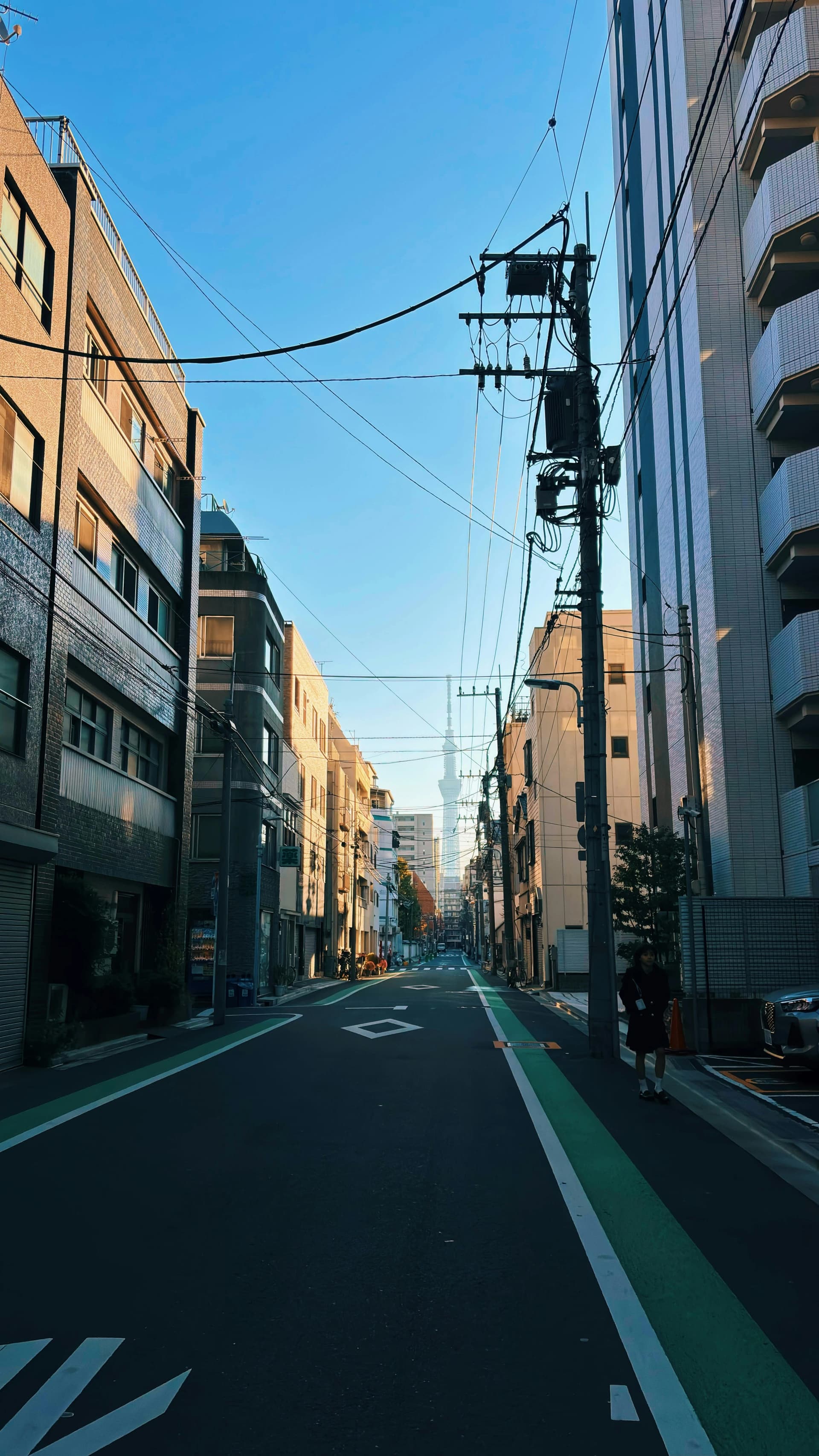
North of Sensoji, in the area called Ura-Asakusa or Oku-Asakusa, the streets go quiet. You get residential blocks, faded shop shutters, small Buddhist temples, and two-story wooden buildings that survived because nobody had a reason to tear them down.
Nothing here is an attraction on its own. Old soba and tempura places sit alongside renovated machiya (townhouses) that are now coffee shops or small galleries. The Taito Ward tourism office runs a walking course from Sensoji through Oku-Asakusa to Sumida Park, past shrines and historic markers that aren't on any tourist map.
People come for the buildings and the feel of the streets. These blocks are what Asakusa looked like before tourism took over the southern half, with Showa-era neon signs, corrugated metal fronts, and potted plants crowding the narrow sidewalks. In the evenings some of the geisha quarter's activity spills into these streets. This is also where you notice the Sumida River, which most Asakusa visitors never reach because Sensoji faces away from it.
It's easy to get to. Walk through the temple grounds and keep going north. Most people just don't, because nothing tells them to, and once you're there nothing labels what you're looking at.
Asakusa underground and the Showa-era passages
Under Asakusa Station is a 1955 underground shopping arcade most visitors never find. The main entrance is tucked near the Ekimise building and has no signs from the tourist route. Inside are stand-and-eat soba counters, old izakayas, a barber, stationery shops, and fluorescent lighting that hasn't changed since the Showa era. It runs about 100 meters and comes out at the Shin-Nakamise shopping street.
Denboin-dori runs 200 meters west from Nakamise, parallel to the temple approach. It has traditional shop buildings, some over 100 years old, selling handmade goods and foods particular to Asakusa. It crosses Nakamise without any fanfare, and most people walking Nakamise miss the turn.
How to build an Asakusa day that works
The standard 30-minute visit covers Kaminarimon, Nakamise, and the main hall, and that's fine as far as it goes. Beyond that, the neighborhood runs on different hours depending on what you're after.
Morning (6-9 AM): Sensoji opens at 6 AM April through September and 6:30 AM October through March. The temple grounds are nearly empty and no shops are open. Come then for quiet temple photos and to watch the morning rituals.
Midday (10 AM-3 PM): All 87 Nakamise shops are open, along with Kurodaya, Kimuraya Honten, and the craft shops. Weekends are the most crowded. This is the time to visit the traditional shops, provided you know which ones are worth it.
Late afternoon (4-6 PM): The crowds thin and the light on the temple buildings gets dramatic. Most shops stay open until 5-7 PM.
Evening (after 6 PM): The shops close and Sensoji is lit up. You can see the painted shutters on Nakamise, and Hoppy Street gets going. The temple and the izakaya district are on the same walk but need different hours. Our nightlife guide has more on Tokyo after dark.
If you want temple quiet, craft shopping, and Hoppy Street stew in one visit, you'll need either two trips or a plan built around the timing.
What pairs with Asakusa: Ueno is five minutes away on the Ginza Line. Tokyo Skytree is a 15-minute walk over the Sumida River pedestrian bridge. Nikko day trips leave straight from Tobu Asakusa Station with no transfers. Yanaka, a bit farther out, has the same prewar neighborhood feel.
Where Hinomaru One fits
Our guides know the layers: which knife to pick at Kamata Hakensha, why to choose a particular paper at Kurodaya, what the shutters show when Nakamise closes for the night. They know where Roku-ku's last comedy halls still run and which streets in Kannon-ura might have a geisha walking to a ryotei. Getting around Asakusa is easy enough on your own; what a guide adds is knowing what you're looking at.
Tokyo Essentials uses Asakusa as the traditional anchor of a six-hour day that also takes in Tsukiji and Ueno. From $430 for 2 people.
Timeless Tokyo follows 1,200 years of Tokyo through temples, gardens, and historic streets, building up the background over the day so that Ura-Asakusa makes sense when you reach it at the end. Eight hours. From $550 for 2 people.
Infinite Tokyo is fully customizable. If you want a long Asakusa day with Hoppy Street in the evening, several craft shops, and the geisha quarter on foot, we build the itinerary around that. Eight hours. From $550 for 2 people.
At Hinomaru One, we design unrushed, customized private Tokyo tours for first-time and seasoned travelers.
Frequently asked questions
Is Asakusa worth visiting or is it a tourist trap?
It's both, depending on which part you see. Nakamise is built for mass tourism and does that job well. Go three blocks in any direction and you'll find 150-year-old craft shops, a working geisha district, izakayas that haven't changed their stew recipe since the 1950s, and comedy halls where working performers learn their trade. The tourist corridor is 250 meters and the neighborhood goes on for blocks, so it comes down to whether you leave Nakamise.
How much time do I need in Asakusa?
Thirty minutes covers the standard walk from Kaminarimon to the temple. Two to three hours gives you time to explore the temple and shop on Nakamise. With half a day you can add backstreets, craft shops, and Hoppy Street if you time it right. To see both the daytime temple district and the nighttime izakaya scene, you need a full day that runs into the evening, since they keep completely different hours.
What is Ura-Asakusa and how do I get there?
Ura-Asakusa (also called Oku-Asakusa) is the residential neighborhood north of Sensoji. Walk through the temple grounds and keep going; no signs point you there. It has old soba shops, small temples, renovated townhouses, and Showa-era streets, and it connects to Sumida Park along the river. Once you're there, nothing explains what you're looking at, which is where a walking course or a guide helps.
Can I see geisha in Asakusa?
Asakusa has one of Tokyo's six remaining geisha districts, centered on Asakusa 3-chome and 4-chome behind Sensoji. Geisha walk these streets in the evening on their way to engagements at ryotei. You might see one, but you can't approach or photograph them without permission. The Asakusa Kenban manages the district. Public performances happen at the annual Asakusa Odori event, and Kusatsutei, a ryotei founded in 1872, offers banquets with geisha entertainment if you book ahead.
What should I buy in Asakusa?
Skip the generic souvenirs on Nakamise and go to the named shops. Kimuraya Honten (1868) for ningyoyaki figure cakes baked in the original molds. Tokiwado (200+ years) for thunder crackers at the Kaminarimon corner. Kurodaya (1856) for handmade washi paper. Kamata Hakensha (1923, four generations) for Japanese kitchen knives with free engraving. Miyamoto Unosuke Shoten (1861) for taiko drums and festival gear.