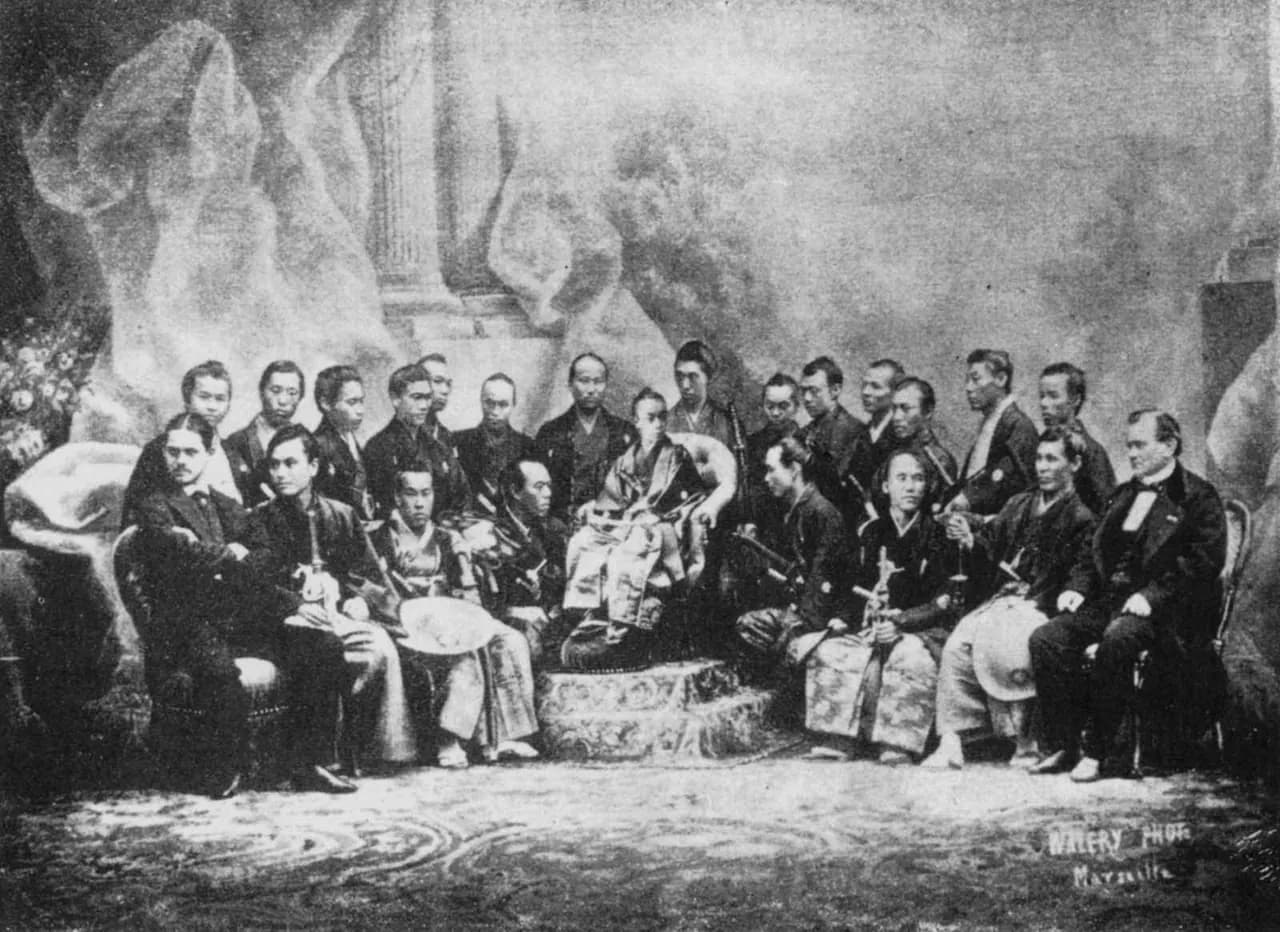
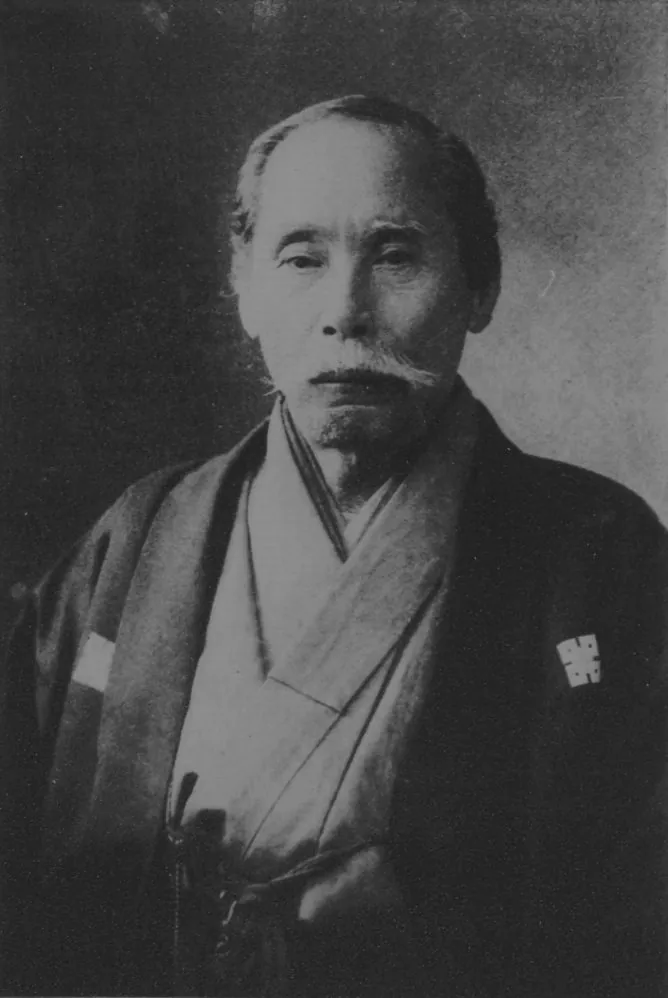
In 1869, at Hakodate in Hokkaido, a doctor named Takamatsu Ryoun ran the hospital of the rebel army that was making the last stand against the new imperial government. The rebels were led by Enomoto Takeaki, a former shogunate admiral. Ryoun had been physician to the last shogun, Tokugawa Yoshinobu. He told his medical staff to treat every wounded man the same, whichever side he fought for.
His older brother was fighting in the same army.
A village headman's son in Paris
Ryoun was born in 1837 in Chikugo, now Ogori in Fukuoka, the third son of a village headman. He studied Dutch medicine in Edo and at Ogata Koan's school in Osaka, and by 1866 he was a physician to the shogun.
In 1867 he sailed to Paris with the shogunate's mission to the world's fair, led by the shogun's younger brother Tokugawa Akitake. Shibusawa Eiichi, later the face of the 10,000-yen note, was in the same party. Ryoun stayed on to study medicine. At the Hotel-Dieu hospital he saw its free ward for the poor.
The hospital at Hakodate
While he was away the shogunate fell. He came home in May 1868, found Edo in the new government's hands, and sailed north with Enomoto's fleet. Enomoto made him head of the Hakodate hospital. He took the job on condition that he had full authority over it.
He then told his doctors to treat soldiers who could no longer fight, whichever army they belonged to. The Hakodate city culture foundation's profile of him adds that he treated six wounded imperial soldiers, that one died, and that the other five were sent home to Honshu.
The brother
Ryoun's brother, Furuya Sakuzaemon, was a commander in Enomoto's army. On 12 May 1869 the imperial ironclad Kotetsu shelled Goryokaku, the star-shaped fort, and several of Furuya's officers were killed. Furuya was badly wounded. Ryoun treated him, but he died on 14 June, aged 37.
That same week, officers of the imperial Satsuma troops visited his hospital asking for help in ending the fighting. On 13 May Ryoun and a colleague, Ono Gonnojo, wrote to Enomoto urging surrender. Goryokaku surrendered on 18 May. Ryoun was held in custody in Tokushima for a time, then pardoned. In November 1870 he opened a clinic in Asakusa in Tokyo.
Why he stayed out
The new government offered him many posts. He refused all of them. In 1877, during the Satsuma Rebellion, Sano Tsunetami asked him to help found the Hakuaisha, the forerunner of the Japanese Red Cross. He said no. The reason usually given is that he did not think a Red Cross should be founded by the military.
In 1879 he and a group of doctors set up the Doaisha, which gave free treatment to poor people in Tokyo. Sources put the number of patients it treated between 700,000 and a million. He died in 1916.
See it yourself
- Ryoun's grave. Yanaka Cemetery, plot Otsu 5-go 2-gawa. The stone reads 高松凌雲 配 久子 墓, "Takamatsu Ryoun and his wife Hisako".
- His brother's grave. Furuya Sakuzaemon is recorded in the same cemetery, a short way off, at Otsu 2-go 10-gawa. The stone reads 古屋家之墓, the Furuya family grave.
Hear it on the tour
Planning a visit?
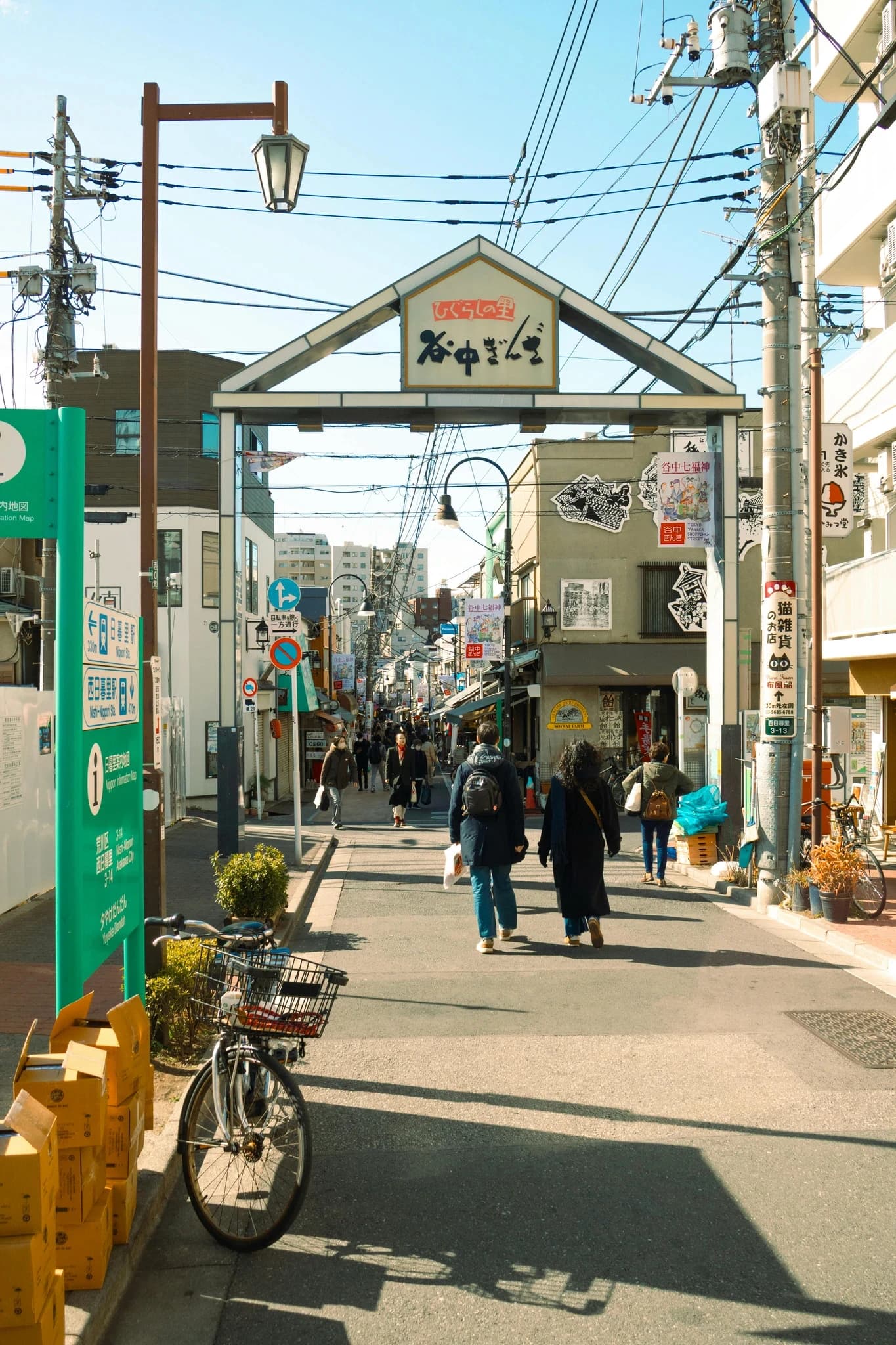
Our Yanaka guide covers the temples, the cemetery and the backstreets.
Sources
- 高松凌雲, Japanese Wikipedia
- 古屋佐久左衛門, Japanese Wikipedia
- 高松凌雲, Hakodate Culture and Sports Foundation
- 函館市史 通説編第2巻, 五稜郭開城 降伏交渉開始, Hakodate city history
- 髙松凌雲, 最後の武士達の物語 (Minami-Hokkaido Boshin War 150th project)
- 古屋佐久左衛門, same project
- 高松凌雲と鶯渓医院, Yodenji (Nichiren temple) local history column
- 高松凌雲, Ogori-Mii Medical Association
- 佐野常民, Japanese Red Cross museum column
Photo credits
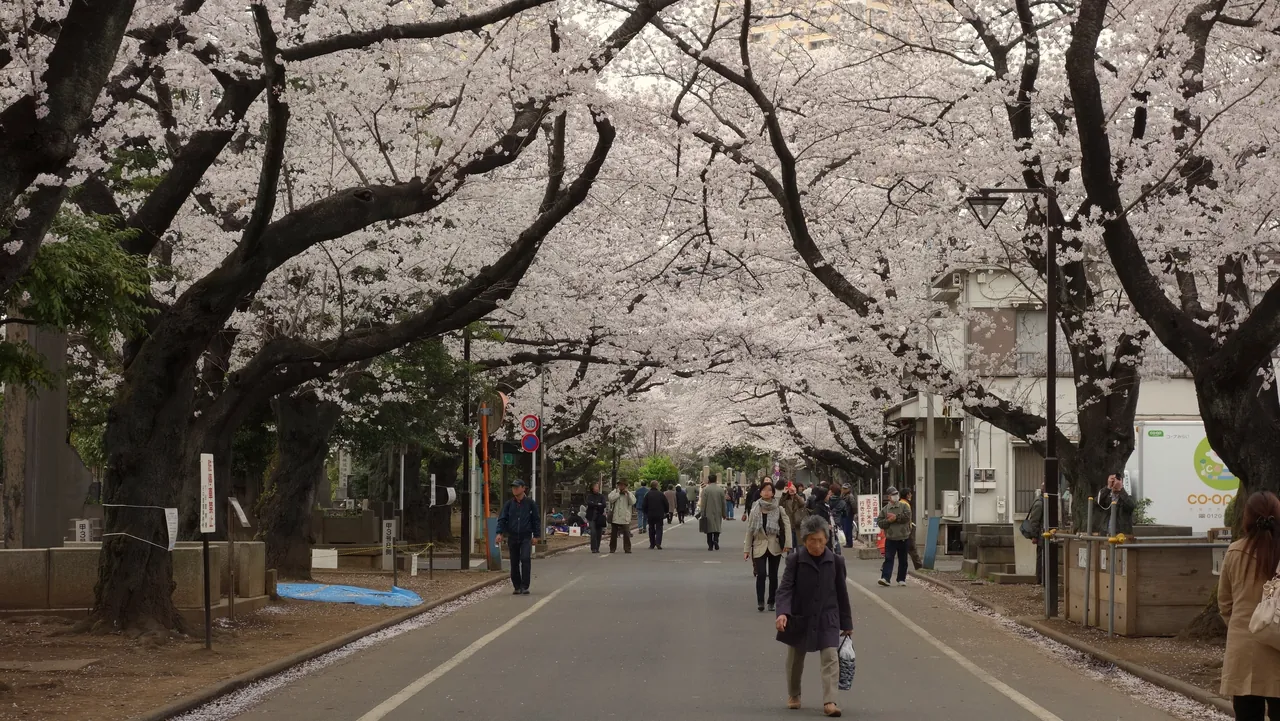
- The main path through Yanaka Cemetery under cherry blossom: Ka23 13 / Wikimedia Commons, CC BY-SA 4.0, resized