Tokiwa-so was not a starving artists' garret but a pricey building full of young working professionals, and the rebuilt museum lets you stand in the rooms where they nearly failed.
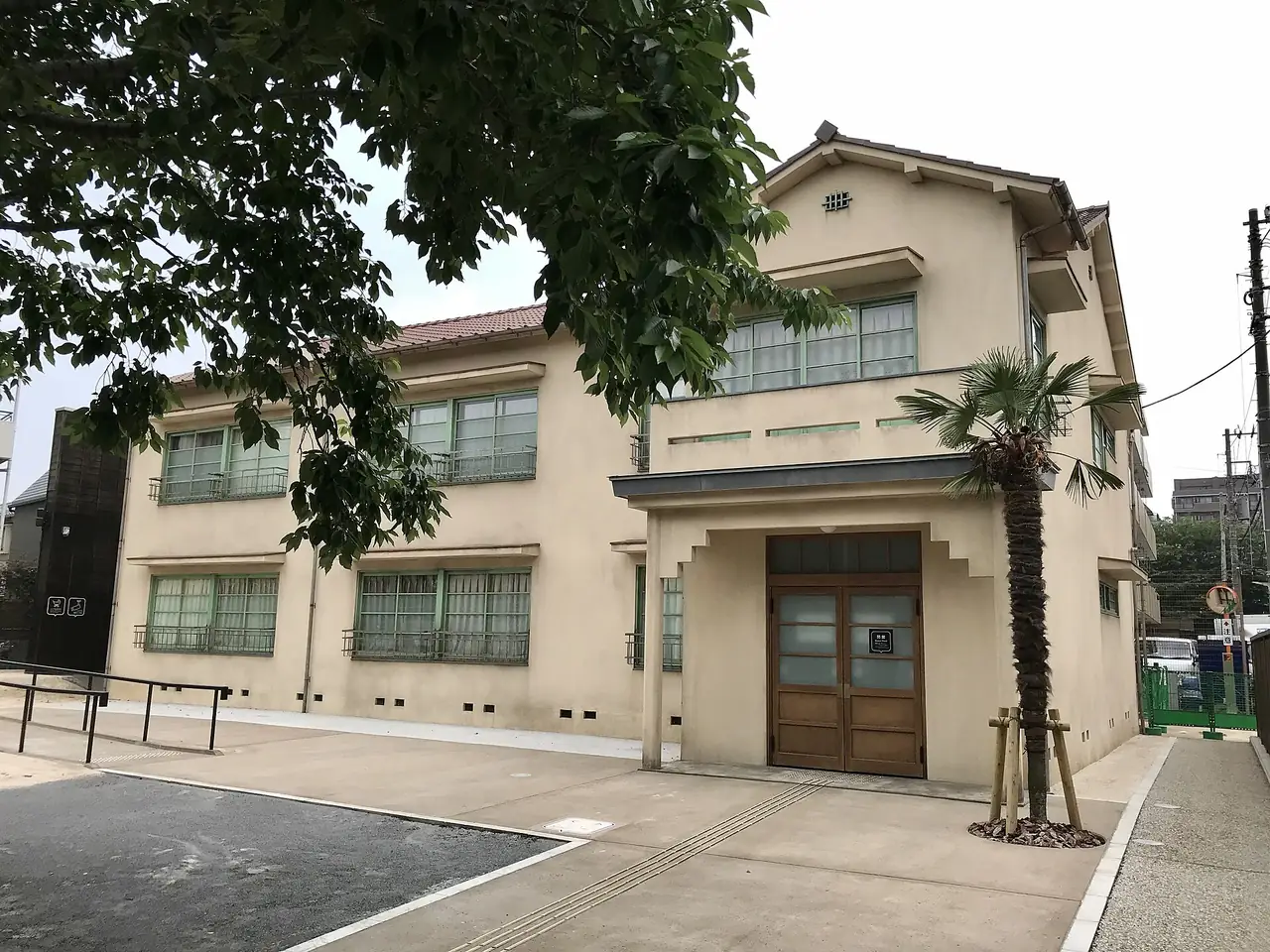
The Tokiwaso Manga Museum is a copy of a building that no longer exists. Tokiwa-sō, a two-storey apartment block in Toshima ward, was demolished in 1982. In 2020 the ward rebuilt it in Minami-Nagasaki Hanasaki Park, a few hundred metres from where it stood, down to the shoe cupboard by the front door. You leave your shoes there and walk upstairs in your socks.
Most English guides call it the place where struggling young artists lived in poverty. The Japanese record says something more interesting. By the standards of the 1950s, the rent and the deposit at Tokiwa-sō were high. The people who moved in were not dreamers hoping for a break. They were young artists who already had paid work, and who were busy enough to need a room of their own to draw in. What the museum shows is how close some of them came to losing it all anyway.
What Tokiwa-so Was
Tokiwa-sō went up in December 1952 in what was then Shiinamachi, now Minami-Nagasaki. Tezuka Osamu, already the biggest name in manga, moved in the following year. His publisher, Gakudōsha, which put out the magazine Manga Shōnen, found the room for him. About a year later Terada Hiroo arrived the same way. After that the building filled with young artists who had come to Tokyo to work.
The names that passed through the second floor are the reason fans call the area manga's holy ground. Tezuka lived there from 1953 to 1954. The duo Fujiko Fujio, who would later create Doraemon and Ninja Hattori-kun between them, lived there from 1954 to 1961. Ishinomori Shōtarō and Akatsuka Fujio both moved in during 1956 and stayed until 1961. Terada was there from 1953 to 1957, and became a kind of older brother to the rest.
The building was not a studio or a school. It was an ordinary apartment house with a shared kitchen and shared toilets, and ordinary families lived there too. What made it famous was the habit of the artists on the second floor of helping each other, with deadlines, with work, and with rooms. As it aged it was torn down, on 29 November 1982, and a publisher's office now stands on the original site.
What's Inside the Museum
The museum opened on 7 July 2020, delayed about three months by COVID. The builders worked from documents, photos and interviews with two former residents, the animator Suzuki Shin'ichi and the artist Mizuno Hideko. They aimed to show the building as it was around ten years after it went up, when the most artists lived there. The real Tokiwa-sō was wooden. The rebuild has a steel frame for fire safety, but the steel is hidden inside double walls so you never see it.
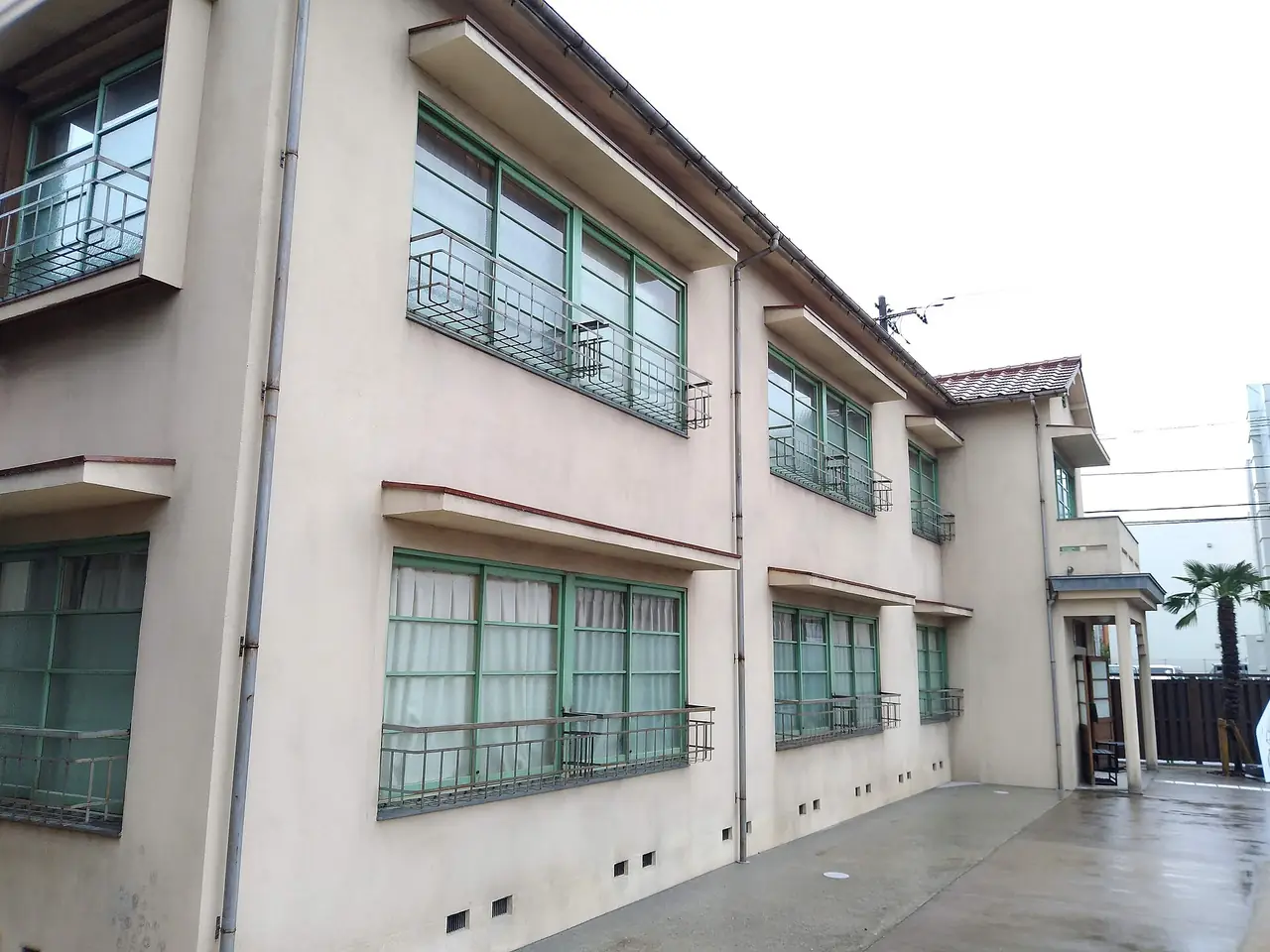
The second floor is the reason to come. The artists' rooms, the shared kitchen and the toilets have been recreated, each room fitted out for the person who lived in it. Room 14, which Tezuka handed on to Fujiko Fujio, is up here. So are the rooms of Akatsuka, Ishinomori and Terada. The stairs and corridor are built to creak underfoot as the old ones did, and that sound does more than any display panel to put you back in 1955.
The ground floor has a manga lounge, where works by artists connected with Tokiwa-sō are on display. You can't read or borrow the books there. If you want to sit and read, the museum points you to Tokiwa-sō Manga Station, about five minutes' walk away, where Tokiwa-sō titles and many other manga are free to read. The ground floor also has the special exhibition room, which hosts the museum's paid exhibitions.
As of November 2026, the special exhibition is a 90th-birthday show for Tsunoda Jirō, running until 23 November. The next, on the artist Mizuno Hideko, runs from 5 December 2026 to 22 March 2027. Photography is not allowed in most of the museum because of copyright, though some spots are marked as photo-friendly. Video, flash and selfie sticks are banned everywhere.
The Room Tezuka Gave Away
The story most visitors know is that Tezuka gave his room to two penniless young fans. The fuller version, pieced together in Japanese from the duo's own diary and later accounts, is better.
Fujimoto Hiroshi and Abiko Motoo, two friends from Toyama, had been working professionally since 1951 and signing their work together as Fujiko Fujio. In June 1954 they took a night train to Tokyo. Their first home was a two-tatami room, about three square metres, in a relative's house in Morishita. That July, while Abiko was helping Tezuka with his pages, Tezuka asked whether they would like to take over his room at Tokiwa-sō, since he was moving out.
They moved into Room 14 on 30 October 1954. The pair didn't have the money for the deposit, so Tezuka covered the 30,000 yen for them and left his writing desk where it was. It was not a gift. The duo's chronology records that they paid the deposit back to Tezuka on 14 August 1956.
Work poured in after the move. Before long they had close to ten jobs a month. At New Year they went home to Takaoka, planning to keep drawing there. It didn't work. Of eleven jobs, nearly every deadline slipped, and five pieces never ran at all. Abiko later gave his reasons, which the Japanese source notes are partly paraphrased: he could barely remember sleeping before the trip home, the New Year sake put him to sleep, and the kotatsu, the heated table of a northern winter, didn't help. Most of the missed work is said to have been Fujimoto's, and he may have been unwell.
Editors noticed. By the October issues of 1955, every series they had was gone, and for a while they thought about giving up manga. Terada, the older artist down the corridor, talked them into carrying on. By the end of that year they were working through the night again, and the following year they had new serials. They lived at Tokiwa-sō until 1961.
When you stand in Room 14 at the museum, this is the room you're standing in, rebuilt. One more detail from the Japanese record: a big part of why Tezuka is called "the god of manga" today is that these two never stopped calling him that.
Tokiwa-so Street and Matsuba
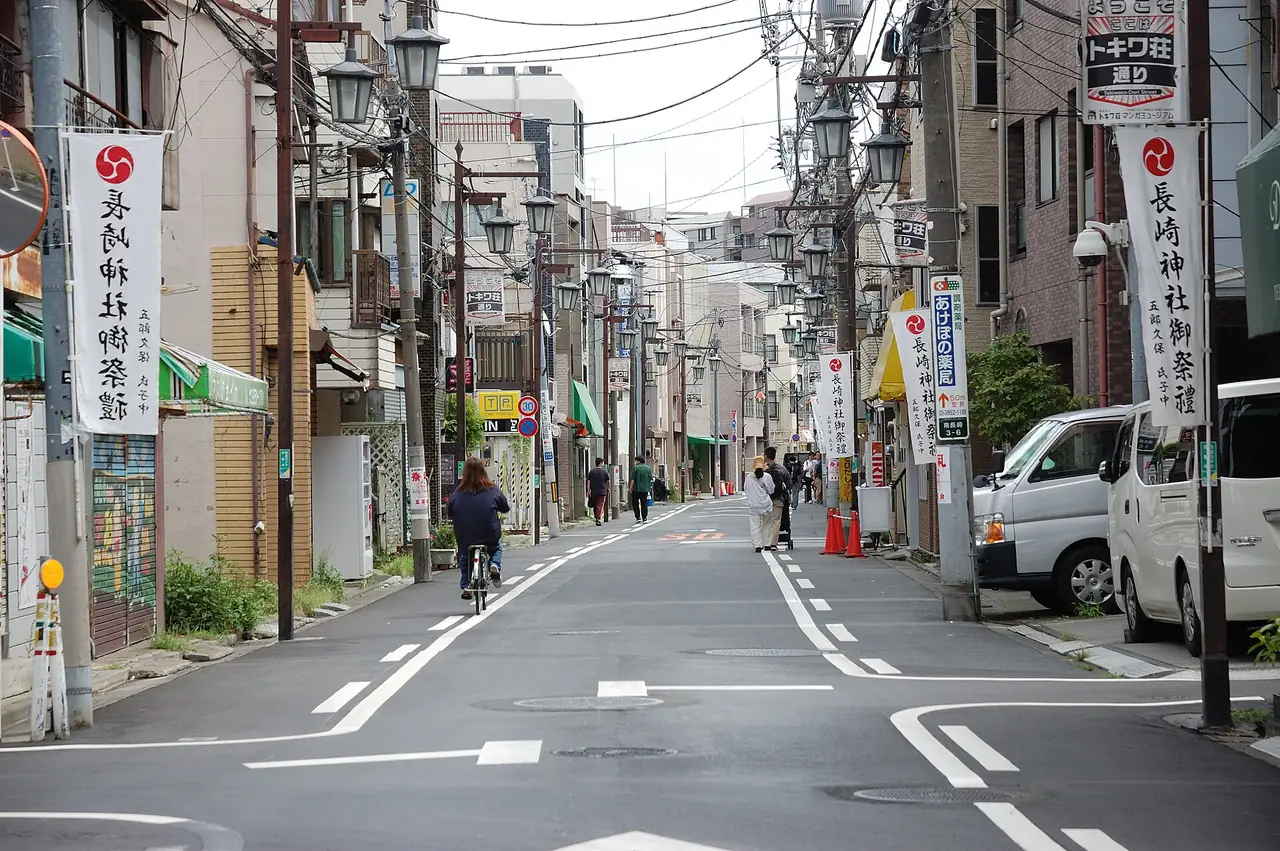
The museum sits in a residential neighbourhood, and the walk around it is part of the visit. The main shopping street, Tokiwa-sō-dōri, runs past the area where the original building stood. Since 2016 the ward has put up monuments of the residents' characters around the neighbourhood, and explanatory boards mark places the artists used, as recorded in their diaries and manga.
Two small ward facilities sit on the street. The Tokiwa-sō-dōri Rest Stop (お休み処), opened in 2013, sells the museum's goods and has a small exhibition space. The Tokiwa-sō-dōri Shōwa Retro-kan opened in November 2022 inside a market building put up in the decade after the war, with dioramas of old Toshima streets.
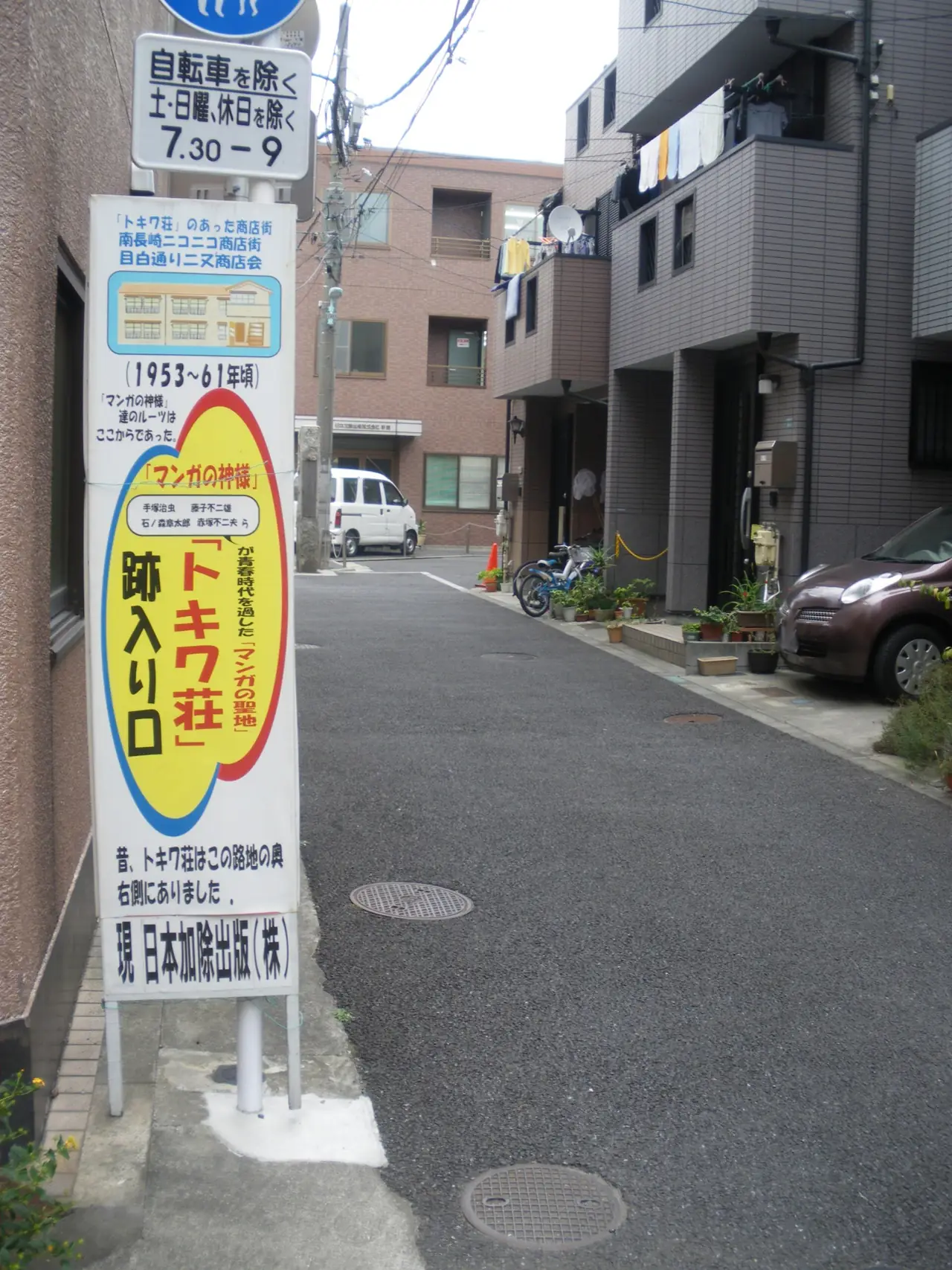
Opposite the alley that once led to Tokiwa-sō is Matsuba, a Chinese restaurant that has been there since the building's early years. The residents ordered its ramen by delivery. Fujiko Fujio Ⓐ drew it repeatedly in his autobiographical manga Manga Michi, and its ramen is said to have shaped Koike-san, the ramen-loving character who turns up in Fujiko Fujio's manga. Matsuba is still open, and has revived a ramen made to the old recipe. It's a small neighbourhood restaurant with limited hours, so check before you plan lunch around it.
Tickets, Reservations and Hours
The museum is open from 10:00 to 18:00, with last entry at 17:30. It closes on Mondays (or the next weekday when Monday is a public holiday), over New Year, and between exhibitions while the next one goes in. Those changeover closures can last a week or two, so check the museum's calendar before you go.
During special exhibitions the whole museum is charged: ¥500 for adults and ¥100 for elementary and junior high school students, as of 2026. Preschool children, and visitors showing a disability certificate plus one carer, get in free. Cash and cashless payment are both accepted.
Entry works on a reservation-priority system. Book a time slot through the form on the official site up to 8:00 on the morning of your visit. If you turn up without a booking you'll be let in when there's room, but on weekends and during popular exhibitions it's safer to book.
There are a few house rules worth knowing in advance. You must take your shoes off at the entrance, and you can't go in barefoot, so wear socks. Strollers stay outside in a stroller area, and there are 100-yen coin lockers (the coin is returned) inside. No food or drink is allowed, though a lidded bottle can stay in your bag. Only pencils may be used inside. There is no permanent museum shop; goods are sold during special exhibitions and at the Rest Stop on Tokiwa-sō-dōri.
Getting There
The simplest route is the Toei Ōedo Line to Ochiai-minami-nagasaki Station. From Exit A2 it's about a five-minute walk to the park.
From Ikebukuro, take the Seibu Ikebukuro Line. Shiinamachi is the first stop and Higashi-Nagasaki is the second. Only local trains stop at either, so don't board an express. From the south exit of Higashi-Nagasaki it's about ten minutes on foot. From the south exit of Shiinamachi it's about fifteen, but that walk takes you along Tokiwa-sō-dōri past the old site and Matsuba, which is the better way to arrive. There's no general visitor parking.
Pairing It With Ikebukuro
Minami-Nagasaki is a quiet neighbourhood with not much else to see, so most people pair the museum with Ikebukuro, two stops away. A good half day starts with the walk from Shiinamachi along Tokiwa-sō-dōri, a look at the old site, then the museum, and then the train back to Ikebukuro's east side for its anime shops and the evening. For fans who want the full arc, from the room where postwar manga grew up to the stores that sell its descendants, add Akihabara on another day, or read our Tokyo anime guide for the wider map.
The museum is small, and you'll see it properly in an hour to ninety minutes. What a guide adds is the back story: who lived in which room, what happened to them, and why a ramen shop across the road still matters to fans. Our private anime tour can build a day around Tokiwa-sō, and Infinite Tokyo can fit it into a custom day across the city's west side.
FAQ
Do I need to book the Tokiwaso Manga Museum in advance? It isn't required, but it helps. The museum gives priority to visitors who have booked a time slot on its official site, and the form stays open until 8:00 on the day. Without a booking you're admitted when there's space, which is usually fine on weekday mornings.
How much does the Tokiwaso Manga Museum cost? As of 2026, during special exhibitions the whole museum costs ¥500 for adults and ¥100 for elementary and junior high school students. Preschool children get in free. Cash and cashless payments are accepted.
Can I see Tezuka Osamu's actual room? You can see a rebuilt version. The original building was demolished in 1982, and the museum is a full-size reconstruction. Room 14, which was Tezuka's and then Fujiko Fujio's, is recreated on the second floor along with the rooms of other residents.
Can I take photos inside? Only in marked areas. Most of the museum is no-photo because of copyright, and video, flash and selfie sticks are banned throughout. The building's exterior and the park are fine to photograph.
Where was the original Tokiwa-so? A few hundred metres east of the museum, down an alley off Tokiwa-sō-dōri, opposite the Matsuba restaurant. A publisher's office stands there now, with a small monument marking the site.
Photo credits
- The rebuilt Tokiwa-so, a cream two-storey apartment block with green window frames, now the Tokiwaso Manga Museum in Minami-Nagasaki: Tokyo-Good / Wikimedia Commons, CC BY-SA 4.0, resized
- Side wall of the rebuilt Tokiwa-so, with curtained windows on the upper floor where the artists rooms are recreated: KQuhen / Wikimedia Commons, CC BY-SA 4.0, resized
- Tokiwa-so Street in Minami-Nagasaki, a quiet shopping street lined with lamp posts and festival banners: トトト / Wikimedia Commons, CC BY-SA 2.1 JP, resized
- Local shopping-street sign marking the alley that led to the original Tokiwa-so site in Minami-Nagasaki: Kamemaru2000 / Wikimedia Commons, CC BY-SA 3.0, resized