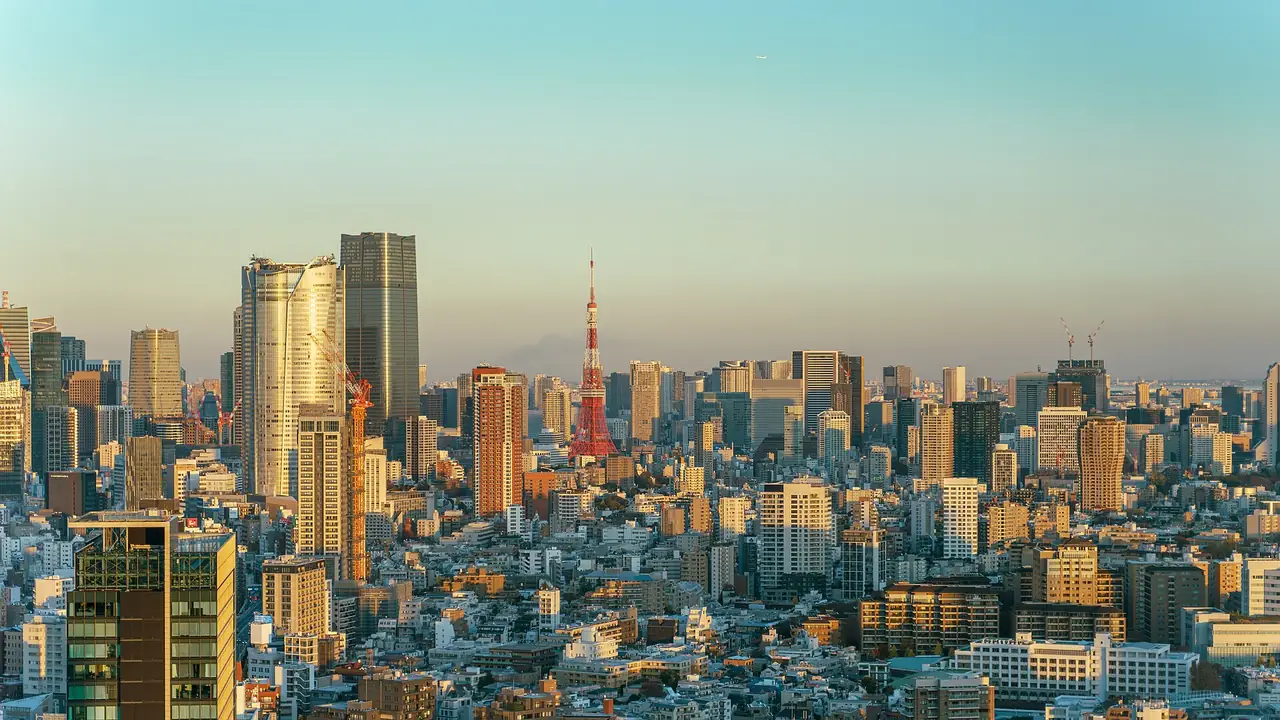
Tokyo Tower is the better-placed tower: from 150 m you look across central Tokyo rather than down on it, and the tower itself is the landmark you came to see.
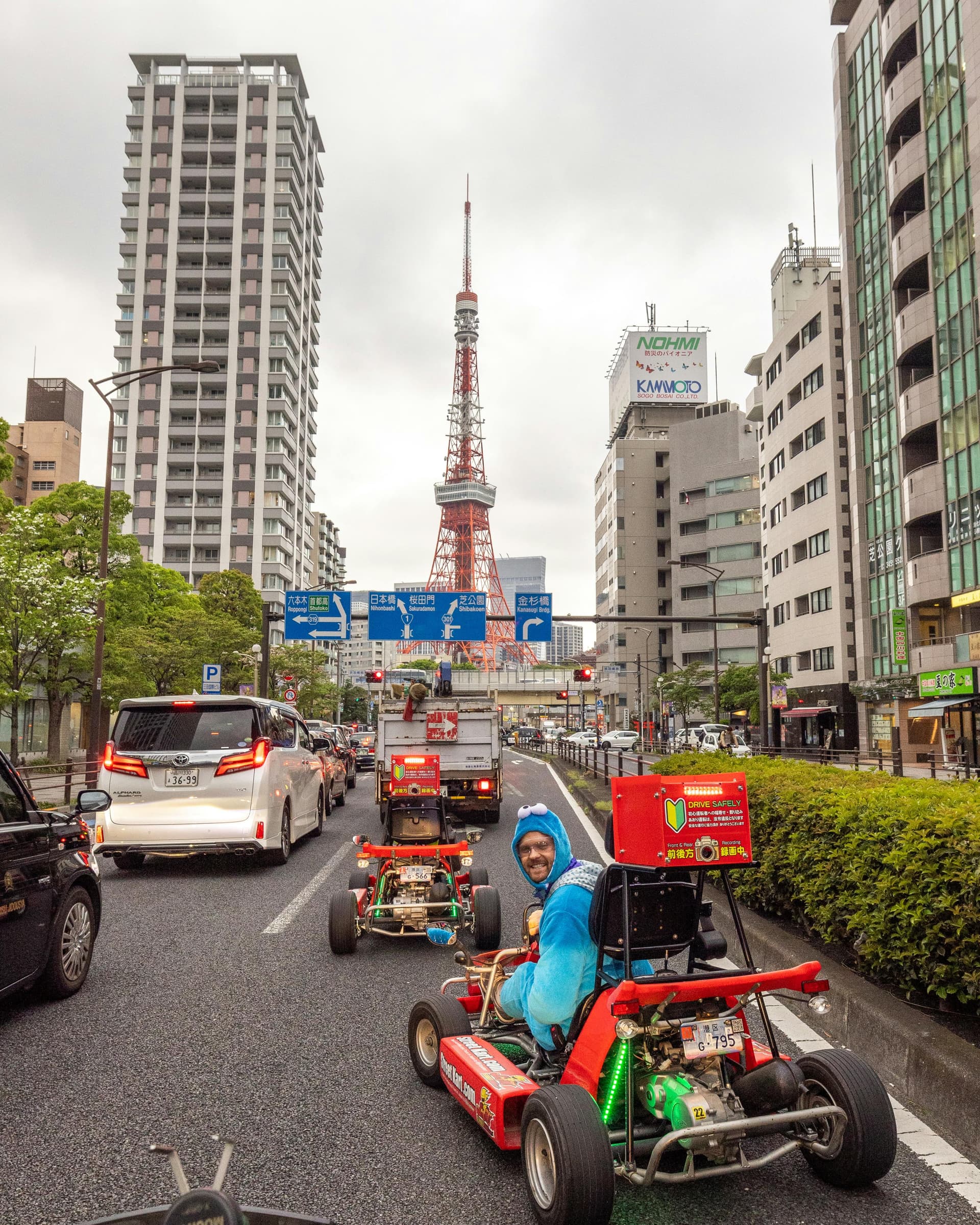
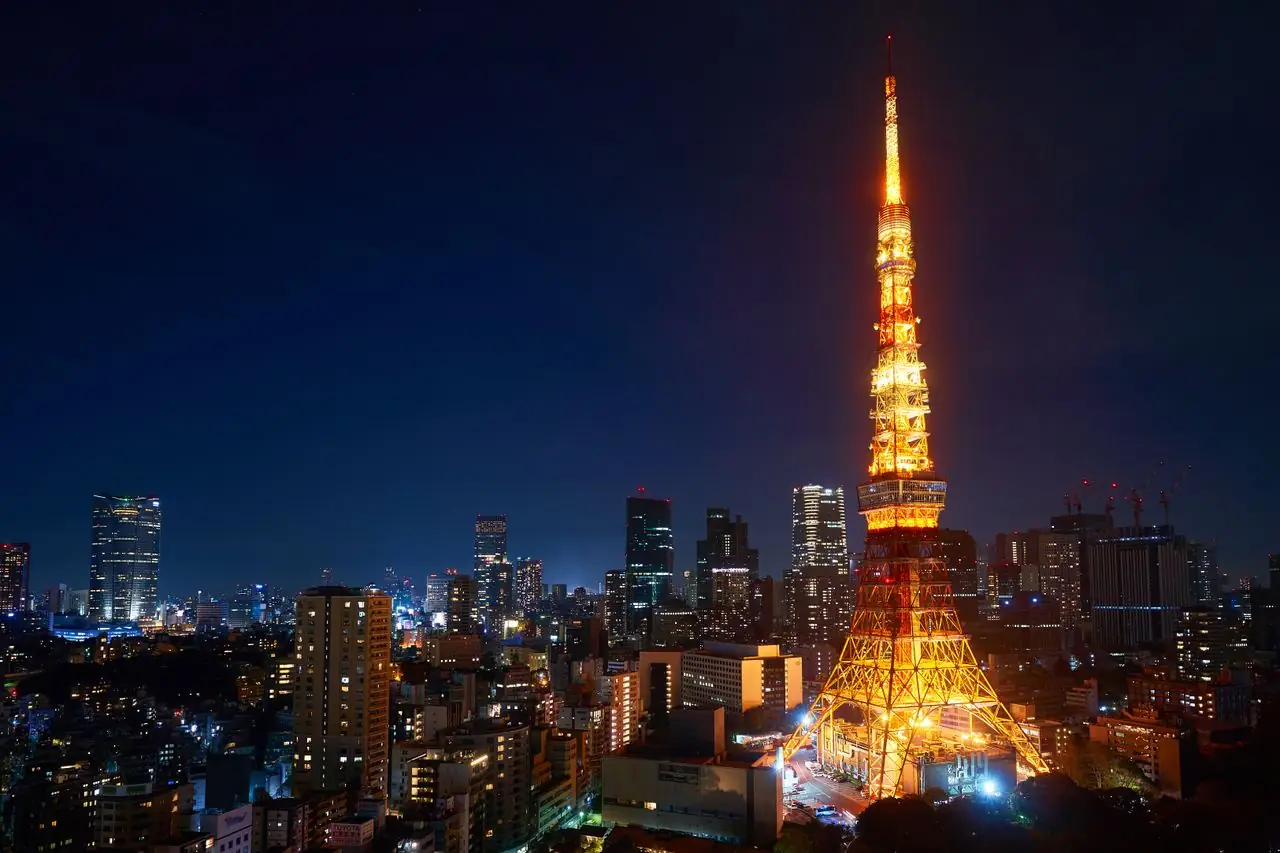
Tokyo Tower is 333 meters of orange and white steel in Shiba Park, and since 2012 it has been only the second-tallest tower in Tokyo. That matters less than you'd think. Skytree stands out east in Sumida, so from up there you look back at the center of the city from a distance. Tokyo Tower stands in the middle of it. From its Main Deck, Roppongi, Shiba, the bay and the Imperial Palace side of the city are all close enough to pick out buildings, and from anywhere else in Minato the tower itself is the view.
One thing first, because almost no English guide mentions it. The "150 m" Main Deck and "250 m" Top Deck are measured from sea level. The tower stands on a rise about 18 meters up, and above the ground the decks sit at roughly 125 meters and 223.55 meters. Japanese Wikipedia notes that the tower called the lower deck 125 meters when it opened, and switched to the sea-level figure later. Nothing is wrong with the view. Just know that the round numbers are generous.
Main Deck or Top Deck?
The Main Deck is the one most people need. It's two floors, wrapped in glass, and it costs ¥1,500 for adults as of 2026. On the lower floor there's the Skywalk Window, a glass panel in the floor that lets you look straight down the tower's legs, plus a café. The upper floor has the official shop and the Tower Daijingu, a small Shinto shrine put up in 1977 for the company's 20th anniversary. It's said to be the highest shrine in Tokyo's 23 wards. From this floor you transfer to the elevator for the Top Deck.
The Top Deck Tour costs ¥3,300 if you book online or ¥3,500 at the counter, and it includes the Main Deck. The Top Deck itself is smaller and quieter, and that's what you're paying for: the extra hundred meters, and fewer people beside you at the glass. The upper deck opened to the public in 1967, nine years after the tower, and was renamed the Top Deck in 2018 when it reopened after a renovation. It can close in bad weather, so check the day's status on the official site before you buy.
Above both sits the Tokyo Diamond Tour at ¥7,000, which adds a lounge. It runs on fixed departures, on the hour from 12:00 to 18:00, and is limited in numbers. For most visitors it isn't worth the extra over the Top Deck Tour.
Our advice: if the sky is hazy, buy the Main Deck ticket and spend the difference on dinner. If it's clear, and especially if you're hoping to see Fuji, the Top Deck earns its price.
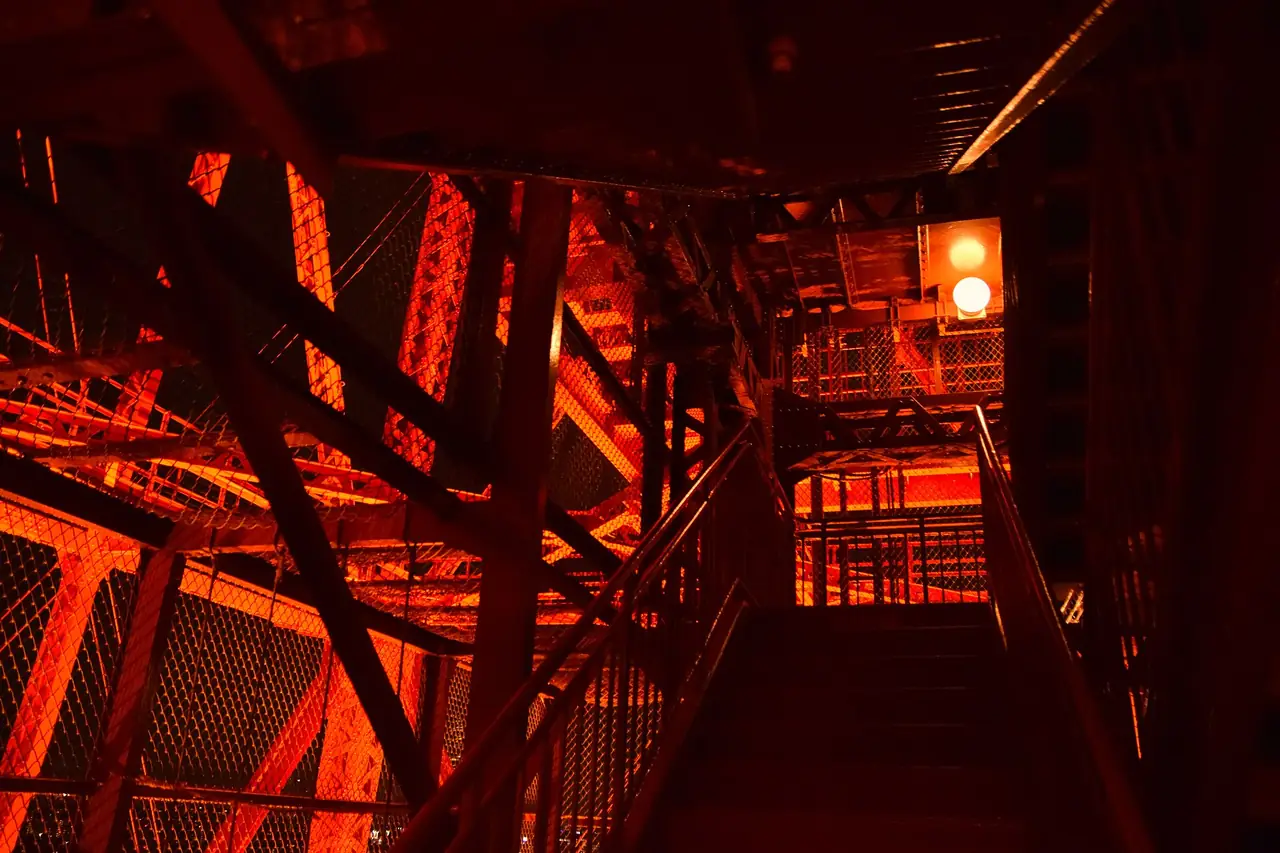
The Stairs
On some days there's a third way up. An open-air staircase of about 600 steps runs up from the roof of FootTown, the building at the tower's base, to the Main Deck, and you climb it for the price of a normal Main Deck ticket. It isn't open every day, and it has its own hours, so check the tower's site the day before. You climb inside the steel frame, with the girders painted the international orange that the aviation rules required, and the city drops away below you. Children tend to love it more than the deck itself.
A Newspaper Man's Tower, and the Story of the Tanks
In the early 1950s Tokyo had a television problem. NHK, Nippon Television and Radio Tokyo (today's TBS) had each built their own transmitter tower, and because home aerials were directional, changing channel could mean going up to the roof and turning the aerial toward a different tower. Japanese Wikipedia records that the towers were also too short, with signals reaching only about 70 kilometers. A single tall tower for every station would solve both problems.
The man who pushed it through was Maeda Hisakichi, an Osaka newspaper publisher who had built the paper now called the Sankei. He founded Nippon Denpato, the company behind the tower, and he did not want a modest one. Japanese sources quote him saying that if they were going to build it at all, it had to be the tallest tower in the world, or there was no point. He pointed out that Japanese carpenters had raised five-storey pagodas over 50 meters tall more than a thousand years earlier, so with modern engineering it could surely be done. English sources say his first idea was to beat the Empire State Building. Money and materials ruled that out. When the tower was finished in December 1958 at 333 meters, it was still taller than the Eiffel Tower, which had been the model for its design.
The steel is where the story gets good, and where you should hold it a little loosely. Japan in the 1950s was short of good structural steel. The story told in Japan is that some of the steel in the tower's upper section came from American tanks, scrapped after the Korean War. In one version it was about 90 tanks, used in the part above the old special observatory, today's Top Deck. A dealer who broke up American tanks, M4s and M47s, later said he had heard that 1,000 to 1,500 tonnes went into the tower's thin angle beams above 100 meters. English Wikipedia goes further and puts it at a third of the steel. The accounts don't agree on how much or where, and the most-repeated version was popularised by a Japanese TV trivia show. What's clear is that Japan was buying scrap, the Americans found it cheaper to sell old tanks than to repair them, and the idea that a peacetime TV tower is partly made of old weapons has stuck in Japan for decades.
The land has a story too. The tower stands on a plot of Zojo-ji's old grounds called Momijiyama, maple hill. From 1881 it held the Koyokan, a members-only ryotei where Meiji-era politicians, writers and naval officers came to eat. It burned in the air raids of March 1945, and its site was sold to Maeda's company. Little of this is marked on site, which is part of why we like to tell it on the deck, while you're looking down at the temple roofs next door.
Views, and Where to Look for Fuji
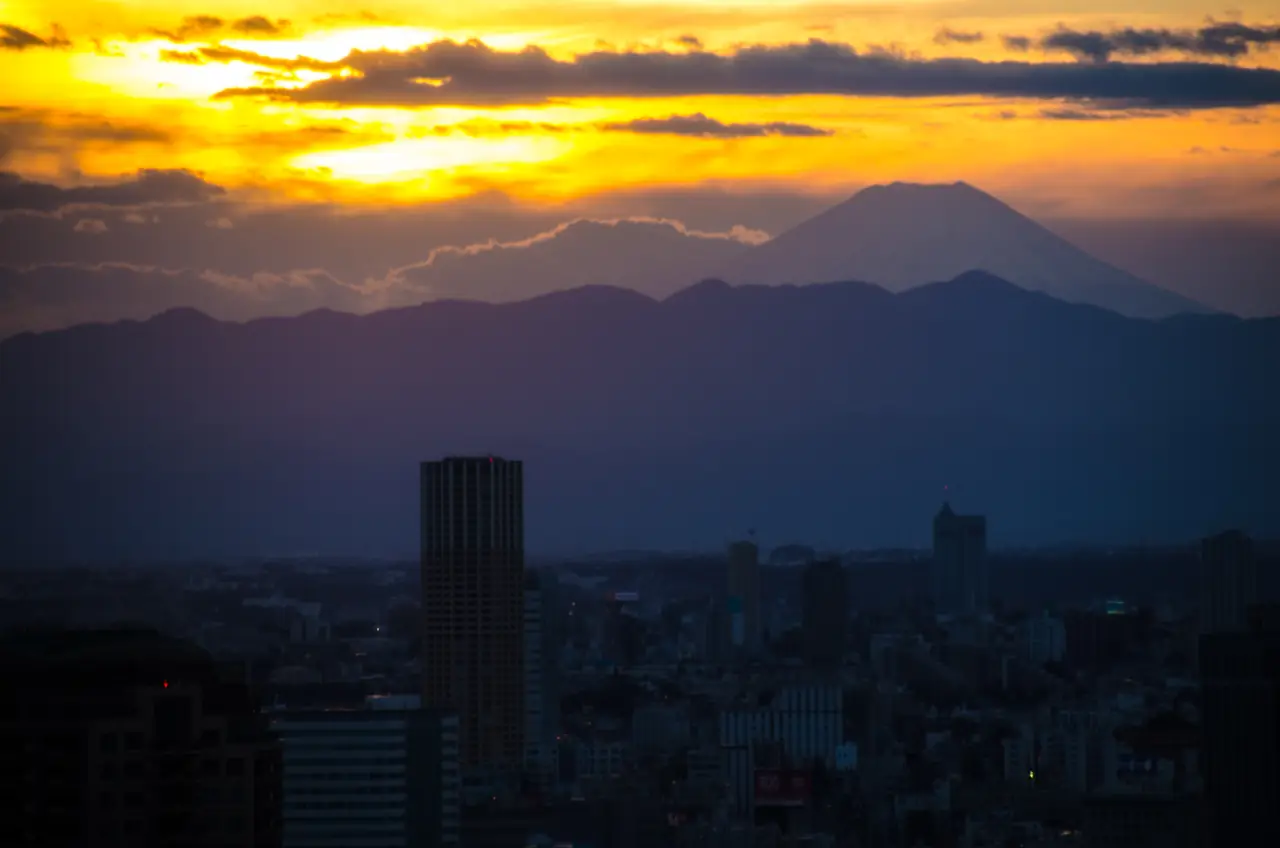
On a clear day from the Top Deck you can see Mount Fuji, roughly west-south-west, past the towers of Roppongi and Shibuya. You can also see Skytree to the north-east and, on the bay side, Rainbow Bridge and Odaiba. Fuji needs clear, dry air, so your odds are best on cold, bright days, which in Tokyo mostly means winter, and early in the day before haze builds up. At dusk in winter you sometimes get the mountain as a dark outline against the sunset.
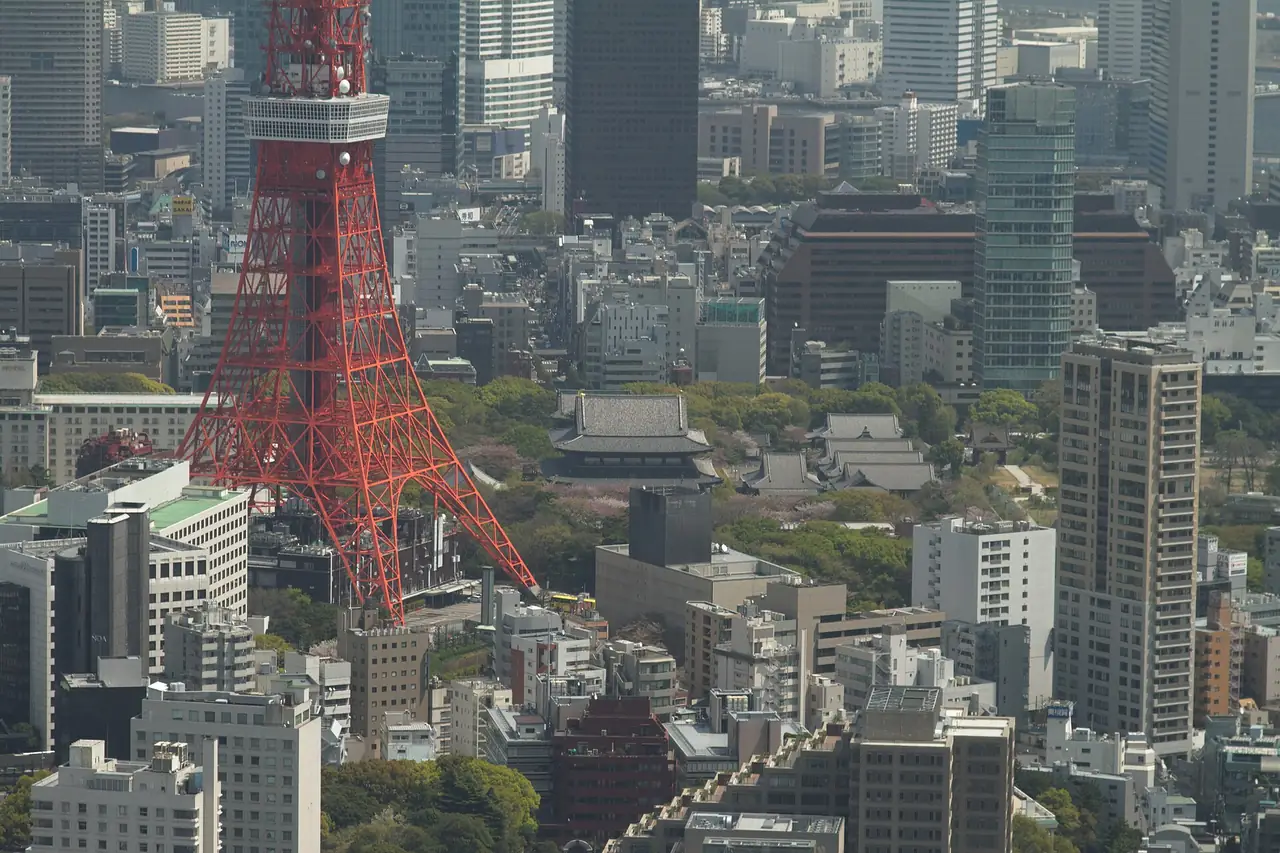
Look straight down too. Below you are the green of Shiba Park and the big hall roofs of Zojo-ji, the Tokugawa family temple. The contrast between the temple grounds and the glass towers around them is the best thing the view offers, and Skytree can't give you that.
Best Times to Go
The Main Deck is open from 9:00 to 23:00 with last entry at 22:30, and the Top Deck Tour runs to 22:45 with last entry at 22:15, as of 2026. The official site warns that Main Deck last entry can move earlier when it's busy. Weekday mornings are the quietest. Late evening is the other good window, after the dinner crowd has gone up and down, and you can still take your time.
If you want both the daytime view and the lights, arrive about an hour before sunset. You see the city in daylight, watch it turn blue, then see the lights come on. Our page on Tokyo at night covers how to build an evening around it.
The tower's own lighting is worth timing as well. The standard "Landmark Light" uses 180 lamps, designed by lighting designer Ishii Motoko and in use since 1989. It's warm orange from early October and switches to cooler white from 7 July, Tanabata, for summer. On Mondays and Thursdays from 20:00 to 22:00 the LED "Diamond Veil" lights the tower in a different color each month. From sunset to midnight, the tower also sparkles white for two minutes on the hour. You'll see all of this better from outside: Shiba Park, the approach to Zojo-ji, or a rooftop in Roppongi.
Shiba Park and Zojo-ji Next Door
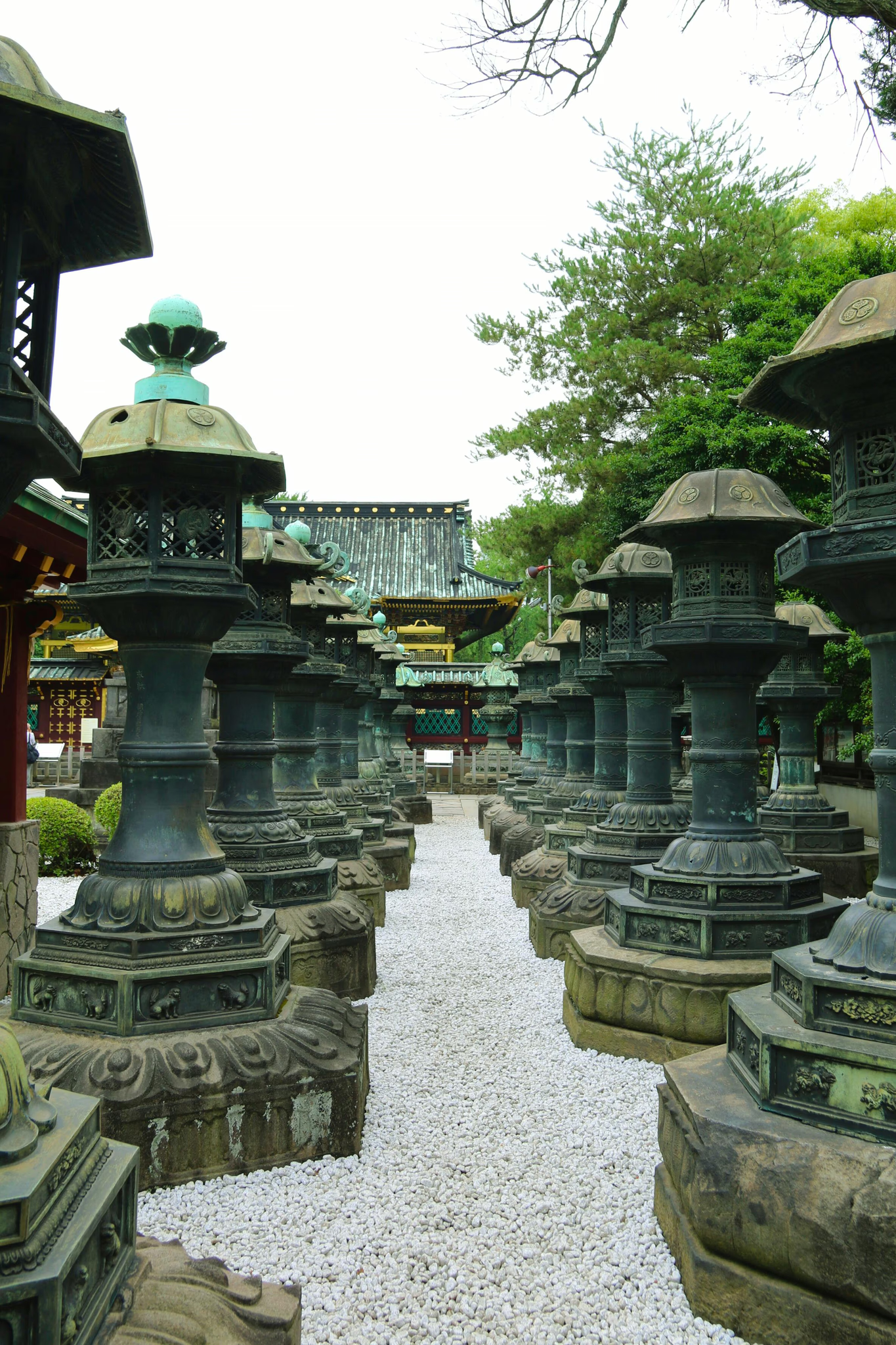
Tokyo Tower sits right beside Shiba Park and Zojo-ji, the head temple of the Jodo school of Buddhism, which was also the family temple of the Tokugawa shoguns. The classic photograph of the tower, with the temple's roof in front and the orange steel behind, is taken from the temple grounds, a couple of minutes' walk from the tower's base. Seeing both takes very little extra time, and it's the best pairing in this part of the city. We cover the temple, the shogun graves and the park in our Zojo-ji and Shiba Park guide.
Tokyo Tower or Skytree?
If you only have time for one, it comes down to what you want to see. Skytree's decks are at 350 and 450 meters, so you see much further, and on a clear day the whole Kanto plain opens up. But you're looking at the center from a distance, and you can't see Skytree in your own view. Tokyo Tower is lower but central. The view is closer and you can read more of it, and the tower itself is something you'll want in your photos from the street.
Tokyo Tower is also cheaper, and it has the stairs. Skytree has the bigger shopping center underneath and pairs neatly with Asakusa. We cover the honest case for Skytree in our Skytree guide. If you're staying a while, do both, Skytree by day for the distance and Tokyo Tower in the evening for the city lights.
Getting There
The closest station is Akabanebashi on the Toei Oedo Line, 5 minutes on foot. Onarimon on the Toei Mita Line is 6 minutes, Kamiyacho on the Hibiya Line is 7, and Shibakoen and Daimon are both about 10. From JR Hamamatsucho on the Yamanote Line it's about 15 minutes, and the walk through Zojo-ji's main gate and up past the temple is the best way in. From Tokyo Station, the Tokyu bus route 東98 takes around 20 minutes to the Tokyo Tower stop.
| Main Deck (150 m) | ¥1,500 adults · ¥1,200 high school · ¥900 elementary and junior high · ¥600 ages 4+ |
| Top Deck Tour (150 m + 250 m) | ¥3,300 online / ¥3,500 at counter (adults) |
| Tokyo Diamond Tour | ¥7,000 adults, hourly departures 12:00–18:00 |
| Hours | Main Deck 9:00–23:00 (last entry 22:30); Top Deck Tour 9:00–22:45 (last entry 22:15) |
| Nearest stations | Akabanebashi (Oedo) 5 min · Onarimon (Mita) 6 min · Kamiyacho (Hibiya) 7 min · Hamamatsucho (JR) 15 min |
Prices and hours are as of 2026. Check tokyotower.co.jp before you go.
A Tower Day With a Guide
The decks are easy to do on your own: the signs are in English and the tickets are simple. A guide adds the parts on the ground: walking in through Zojo-ji, the Koyokan and Momijiyama story, the tanks, and the stretch from Shiba to Azabudai and Roppongi that ties the old city to the new. Infinite Tokyo is our custom private tour, so we can build a day around the tower, its temple and the evening view. If you're traveling with kids, the stairs and the glass floor are a natural highlight on our family tours.
FAQ
Is the Top Deck worth it over the Main Deck? On a clear day, yes, especially if you want a chance at Fuji, and it's quieter. On a hazy or rainy day, no: the Main Deck at ¥1,500 gives you most of the view, and the Top Deck can close in bad weather anyway.
Can you really see Mount Fuji from Tokyo Tower? Yes, on clear days, looking roughly west-south-west from the Top Deck. Cold, dry winter days give you the best chance, and mornings are usually better than afternoons, when haze builds up.
Do I need to book Tokyo Tower tickets in advance? For the Main Deck, no. You can buy at the counter. For the Top Deck Tour, booking online saves ¥200 per adult. The Diamond Tour has fixed departures and limited places, so book that ahead.
Is it true Tokyo Tower was built from tanks? That's the story, and it's widely told in Japan. Accounts say some steel in the upper part came from American tanks scrapped after the Korean War, but they disagree on how much and where, and the best-known version spread through a TV trivia show. Treat it as a good story with real history behind it, not a measured fact.
How long should I spend at Tokyo Tower? About an hour for the Main Deck, an hour and a half with the Top Deck. Allow extra time if you take the stairs, and another hour if you walk through Zojo-ji and Shiba Park, which we'd recommend.
Photo credits
- Tokyo Tower rising above the Minato skyline at golden hour: David Kernan / Wikimedia Commons, CC BY 4.0, resized
- The open-air staircase inside the orange steel frame of Tokyo Tower at night: Raita Futo / Wikimedia Commons, CC BY 2.0, resized
- Mount Fuji silhouetted at sunset, seen from Tokyo Tower: Tomi Mäkitalo / Wikimedia Commons, CC BY-SA 3.0, resized
- Tokyo Tower with the Zojo-ji temple halls and Shiba Park beside it: KimonBerlin / Wikimedia Commons, CC BY-SA 2.0, resized