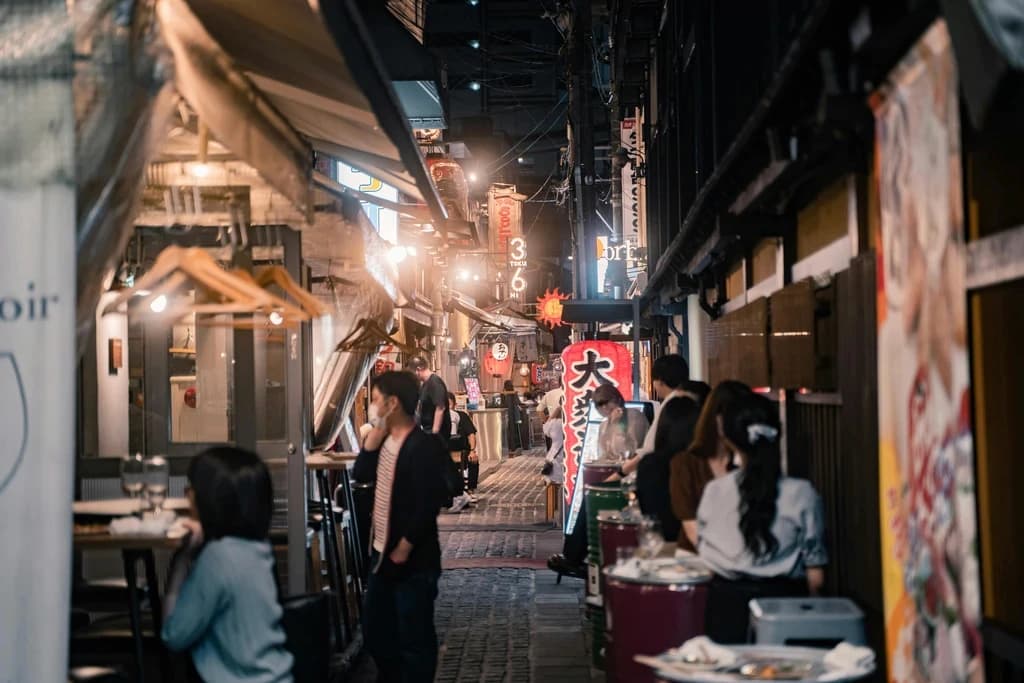
Golden Gai's ¥1,500 covers aren't rip-offs—they're signals. Understanding this framework changes how you navigate any Tokyo drinking district.
Tokyo standing bars and the drinking districts around them run on cover charges that most visitors misread. Golden Gai's ¥1,500 cover is a signal about who the bar is set up to serve, and once you can read that signal you'll find your way around any drinking district in the city.
A standing bar in Nakano that charges ¥0 is sending a signal too. The prices follow a pattern, and it tells you what kind of night you'll have before you open the door.
What Cover Charges Actually Tell You
In Tokyo's drinking districts, the cover charge filters the customers. The price a bar posts tells you who it's set up for, and who it would rather send somewhere else.
The ¥1,500+ Signal: Tourist Welcome, Regulars Protected
Bars charging ¥1,500 or more have set themselves up for visitors who'll come once, spend well and leave. They have English menus, take international credit cards, and have staff who can explain the house rules in basic phrases. Some put up "no cover charge for foreigners" signs because they want your business.
That's a service model, and a fair one. Cocktail bars filter even harder: reservations only, 8 seats, and bartenders who expect you to describe what you like instead of ordering from a menu. The cover pays for access in a city where most bars can't offer it.
The high cover also protects the regulars. A tourist-level entry fee keeps bar-hoppers off the four seats Tanaka-san expects to find empty when he walks in at 9pm, as he has for fifteen years.
The ¥500-800 Signal: Transitional Spaces
Many izakayas charge ¥300-500 as an otoshi, a small appetizer you can't refuse that works as a seating charge. Some Golden Gai bars sit in the ¥500-800 range. Izakaya dining has its own guide, since that's a different decision.
These places sit in the middle. They aren't set up for tourists and they don't mind them either. Expect basic English, some patience, and a local crowd that's happy to share the room.
The ¥0 Signal: Local Economics (But Language Barrier)
Standing bars, called tachinomi, charge nothing to enter. Drinks run ¥200-500 and food dishes cost ¥100-500. With no seating there's no table charge, turnover is fast, and prices stay low.
The catch is that these bars work in Japanese. There are no English menus and no translations. Nobody's being unfriendly; you just can't talk to each other.
Golden Gai: What You're Choosing, What You're Not
Golden Gai packs 200+ bars into six narrow alleys and is still one of the most photographed places to drink in Tokyo. The atmosphere is genuine, and so is the change in how its bars make money.
What ¥1,500 Buys You
Paying covers in Golden Gai buys you an easy way in. Bars that expect tourists have English menus, card machines, and bartenders who can explain how things work. You can walk in, order, and join in without any Japanese.
You also get the look of the place: the narrow alleys, the neon, the walls covered in stickers and signed photos. You've seen those pictures because tourists can get in to take them.
What ¥1,500 Doesn't Buy
You don't get the salary worker pace, the bars where regulars have their own seats and bottles kept behind the counter, or the ¥300 drinks.
Those bars are still in Golden Gai, but they aren't the ones waving in walk-ins and waiving covers. One traveler noted that cover charges "could get a little expensive if you went on a bar crawl." Three bars at ¥800 each comes to ¥2,400 in covers before your first drink. That's what hashigo-zake (bar-hopping) costs in tourist-friendly Golden Gai.
When Golden Gai Is the Right Choice
Golden Gai suits you if you want the experience without the hassle: one evening, two or three bars, some photos and the atmosphere. Treat the covers as the price of easy access and you'll have a good night.
It suits you less if you want to drink the way Tokyo residents do, which is cheaper and longer, in neighborhoods people go back to week after week instead of visiting once for the photos.
The Economics That Moved West
The original standing bar model, with no covers, cheap drinks and local crowds, is still going. It's just in neighborhoods most tourists don't visit.
| Neighborhood | From Shinjuku | Fare | Drink Prices | Establishments |
|---|---|---|---|---|
| Nakano | 4 min (JR Chuo) | ¥170 | ¥200-500 | Dozens |
| Nishi-Ogikubo | ~10 min (JR Chuo local) | ¥170 | ¥500-1,000 | 50+ |
| Kichijoji | 15 min (JR Chuo) | ¥230 | ¥200-500 | ~100 |
Note: Rapid trains skip Nishi-Ogikubo on weekends and holidays, so take the local.
Nakano: 4 Minutes from Shinjuku, Same Showa Atmosphere
Nakano is one stop from Shinjuku on the JR Chuo Rapid line: four minutes and ¥170. The north exit opens onto side streets full of izakayas, tachinomi and bars.
PachiPachi does standing-only drinks at local prices. Okajoki, a seafood izakaya going back to the 1970s, grills fish over a robata hearth. Daini Chikara Sakagura fills up by early evening with locals ordering sake flights. Juke 80s, a basement bar with a jukebox, plays music videos on request.
The streets feel like Omoide Yokocho in Shinjuku, with the same Showa-era lanes, retro lanterns and grill smoke, minus the tourist pricing.
Nishi-Ogikubo's Willow Alley: 50+ Bars Without Cover Charges
Willow Alley (Yanagi Koji) in Nishi-Ogikubo runs along a single block southwest of the station, with over 50 places packed into what used to be a black-market strip.
Handsome Shokudo, a Thai izakaya that opened in 2001, changed the alley's reputation from seedy to cosmopolitan. Chinmitei has served Taiwanese food for three generations. Toyaji, run by a mother and daughter, has regulars who come for the home-style cooking. Yoneda does yakitori. Minton House has live jazz. Wokashiya pairs traditional wagashi sweets with sake while a barn owl watches from the window.
Drinks run ¥500-1,000, and nobody charges a cover. One regular described it as "easier for younger crowds and solo parties to enter" than the more famous yokocho.
Kichijoji's Harmonica Yokocho: 100 Bars, Drinks from ¥200
Harmonica Yokocho is just north of Kichijoji Station, about 15 minutes from Shinjuku on the JR Chuo Rapid line. It's named for the way its crisscrossing alleys look like the reeds of a harmonica.
Roughly 100 places operate here. Minmin makes the gyoza locals line up for, and Katakuchi serves sashimi at the counter.
Drinks cost ¥200-500. One resident said they bring every visitor here and watch them "love it more than Golden Gai."
A practical note: most Harmonica Yokocho bars don't have their own bathrooms. The shared ones are down the alleys, and staff will give you a key.
Kichijoji regularly tops the lists of neighborhoods Tokyo residents most want to live in, and its bars are the kind locals keep going back to. For more on the neighborhood beyond its bars, see our Kichijoji guide.
South of Shibuya on the Tokyu Den-en-toshi Line, Sangenjaya has the same thing in the Sankaku Chitai, a dense tangle of postwar alleys where standing yakiton bars and ¥300 beers have barely changed since the Showa era.
Why Bars Empty by 11:30pm (And Why That Helps You)
Tokyo's trains stop around midnight. The JR Yamanote Line runs until about 12:30 AM and Tokyo Metro stops around the same time, so everyone who isn't walking home has a train to catch.
The Midnight Constraint: Everyone Needs Trains
The last train shapes the whole drinking culture. Bars empty by 11:30 because their customers have to get to the station. Standing bars close around 10pm because they exist for workers having one or two quick drinks on the way home.
Standing Bars Close Early Because That's the Point
When a tachinomi closes at 10pm, it's doing what it was built for: a quick stop before home. The format started in the 1940s around crowded commuter stations, with fast drinks, decent snacks and no fuss.
If you want late-night drinking, seated izakayas and Golden Gai bars stay open past midnight. You'll need a taxi home, or a hotel nearby.
Planning Around Last Train (Or Paying ¥3,000-4,000 for Taxi)
Miss the last train from Kichijoji to central Tokyo and you're looking at a taxi ride of ¥3,000-4,000, plus a 20% late-night surcharge after 10pm.
Most travelers find the early finish works in their favor. An evening that ends at 10:30pm still feels full, and you have energy left for the next day.
The Language Barrier Is the Actual Barrier
The bars with ¥0 covers are in plain sight. What keeps visitors out is the language.
What "No Foreigners" Usually Means (It's Usually Not What You Think)
Some bars in Golden Gai and other drinking districts post "No Foreigners" signs. They're a minority, and most bars welcome tourists.
A sign like that usually means one of two things: the bar is for regulars and has no room for walk-ins, or the owner isn't confident serving customers in English. As one explanation put it: "Some owners feel anxious because they can't confidently serve customers in English... For many, speaking a foreign language still feels like a high hurdle."
In most cases it comes down to communication anxiety.
The Bars Aren't Hidden—They Just Can't Explain the Rules in English
You can find every standing bar in Nakano, Willow Alley or Harmonica Yokocho on Google Maps. Ordering once you're inside is the hard part. Menus are handwritten in Japanese, every place prices things its own way, and nobody explains the etiquette, because the regulars already know it: returning your own dishes, wiping your glass rim with the oshibori before passing it over for a refill, keeping your stay to about an hour.
What a Guide Actually Provides: Language Bridge, Not GPS Coordinates
There are no secret standing bars for a guide to reveal. A guide reads the menu, explains how each place works, walks you through the etiquette, and gets you past a doorway that would otherwise feel intimidating.
One traveler reviewing Harmonica Yokocho found only one downside: "none of the bars offer English, so you'll definitely need someone to show you around."
Your First Tachinomi: What to Do
It's simple once you've watched someone do it.
Order Beer First, Read the Menu Second
Say "toriaezu nama," which means draft beer, for now. Every regular starts with it, and it tells the staff you're settling in and will order food shortly. The beer shows up in 30 seconds, and you can study the menu without holding up the counter.
If you don't drink beer, a chuhai (shochu + soda, usually lemon or grapefruit) does the same job. Order something quick so the staff can see you're staying.
The Drink Menu, Decoded
Three drinks define tachinomi culture.
Hoppy: A beer-flavored soft drink (0.8% alcohol) invented in 1948 as a cheap stand-in for beer. You get a bottle of Hoppy and a glass of shochu and mix them yourself, usually 4:1 Hoppy to shochu. When your glass runs low, order "naka" (more shochu) or "soto" (another Hoppy bottle). It's one of the few drinks where you decide how strong it is.
Chuhai: Shochu mixed with soda and fruit, with lemon as the default. Most tachinomi charge ¥200-400. Salarymen drink it when they want something light and cold after a shift.
Highball: Whisky and soda. The Japanese highball revival began in standing bars, well before the cocktail bars picked it up. Suntory Kakubin is the standard pour, usually ¥300-500.
You'll find sake and wine too, though they aren't the default. If a bar specializes in nihonshu you'll know, because the menu will be organized by prefecture and rice variety.
Physical Etiquette
Find an open spot at the counter and stand there. Nobody assigns places. If the bar is full, come back in 20 minutes; turnover is fast.
When you're done, put your plates and glasses on the edge of the counter. Some bars have a return shelf. Staff clear quickly, but stacking your empties shows you know how the place works.
Don't spread out. You get about two feet of counter. Bags go between your feet, or on a hook under the counter if there is one.
Cash Reality
Most tachinomi only take cash. Bring ¥5,000-8,000 in mixed bills for a full evening (drinks + food at 2-3 bars). A few newer places in Nakano and Kichijoji take cards now, but plan on cash unless you can see a payment terminal at the register.
With drinks at ¥300, coins pile up fast, so bring a coin purse or keep one pocket for change.
Evening Cost Comparison: Golden Gai vs. West Tokyo
The two models cost very different amounts, and which one you want depends on the night you're after.
The Math: What an Evening Actually Costs
| Golden Gai Evening | Standing Bar Evening | |
|---|---|---|
| Cover charges | 3 bars × ¥800 avg = ¥2,400 | ¥0 |
| Drinks | 4-5 drinks × ¥600 avg = ¥2,500 | 4-5 drinks × ¥350 avg = ¥1,600 |
| Food | Light snacks: ¥1,000-1,500 | 2-3 dishes × ¥400 = ¥1,200 |
| Total | ¥5,900-6,400 | ¥2,800 |
Golden Gai costs roughly twice as much for the same number of drinks. The gap is the cover charges, which pay for the English-friendly service.
The standing bars in west Tokyo get you more drinks for less money, and in exchange you deal with Japanese menus and local etiquette.
Tours That Navigate the Economics For You
Two evening tours cover the ground above:
Standing Room Only: Four hours through Nakano, Nishi-Ogikubo and Kichijoji. $314 for 2 people, starting 6:15pm. This is the tachinomi route.
Kushiyaki Confidential: Six hours through Shibuya, Ebisu and Nakameguro. $430 for 2 people, starting 6:15pm. This one is yakitori and izakaya.
On both, the guide introduces you at bars that have no English menu. Food and drinks are extra; budget ¥4,000-8,000 per person depending on appetite.
Planning Your Evening
Budget Beyond Tour Price: ¥2,000-5,000 for Food and Drinks
The tour price covers the guide, transport planning and logistics. What you eat and drink at each place is up to you.
At standing bars, expect to spend ¥2,000-3,000 per person for 4-5 drinks and light food. At yakitori izakayas, budget ¥3,000-5,000 for a fuller meal with drinks.
Bring cash. Most tachinomi don't take cards.
If You Don't Drink Alcohol
Standing bars serve oolong tea, soft drinks and non-alcoholic options alongside the beer and highballs. You can share the counter, eat the bar snacks and enjoy the evening without drinking.
Lean toward places built around food. Yakitori bars, gyoza specialists and ramen counters all work well for non-drinkers who want to try the format.
What to Combine with Evening Drinking
Make a standing bar evening its own thing instead of tacking it onto a packed day. It takes energy and attention, and you'll want to be flexible.
Keep the afternoon easy: a park, a slow lunch, some downtime at your hotel. Arrive fresh at 6pm and you'll get more out of the night.
Note: many traditional tachinomi allow smoking, and ventilation varies. If smoke bothers you, ask your guide to choose smoke-free places.
Where Hinomaru One Fits
Standing Room Only goes through Nakano, Nishi-Ogikubo and Kichijoji, the neighborhoods where ¥200 drinks and no covers are still normal. Your guide reads the handwritten menus, explains how to order, and does the talking that keeps most visitors from walking in.
At Hinomaru One, we design private Tokyo tours for first-time and returning travelers. Every one is customized, and we take our time explaining what you're looking at.