Akigawa is activity-first: BBQ, river play, and zero logistics. No hiking required, no equipment to carry.
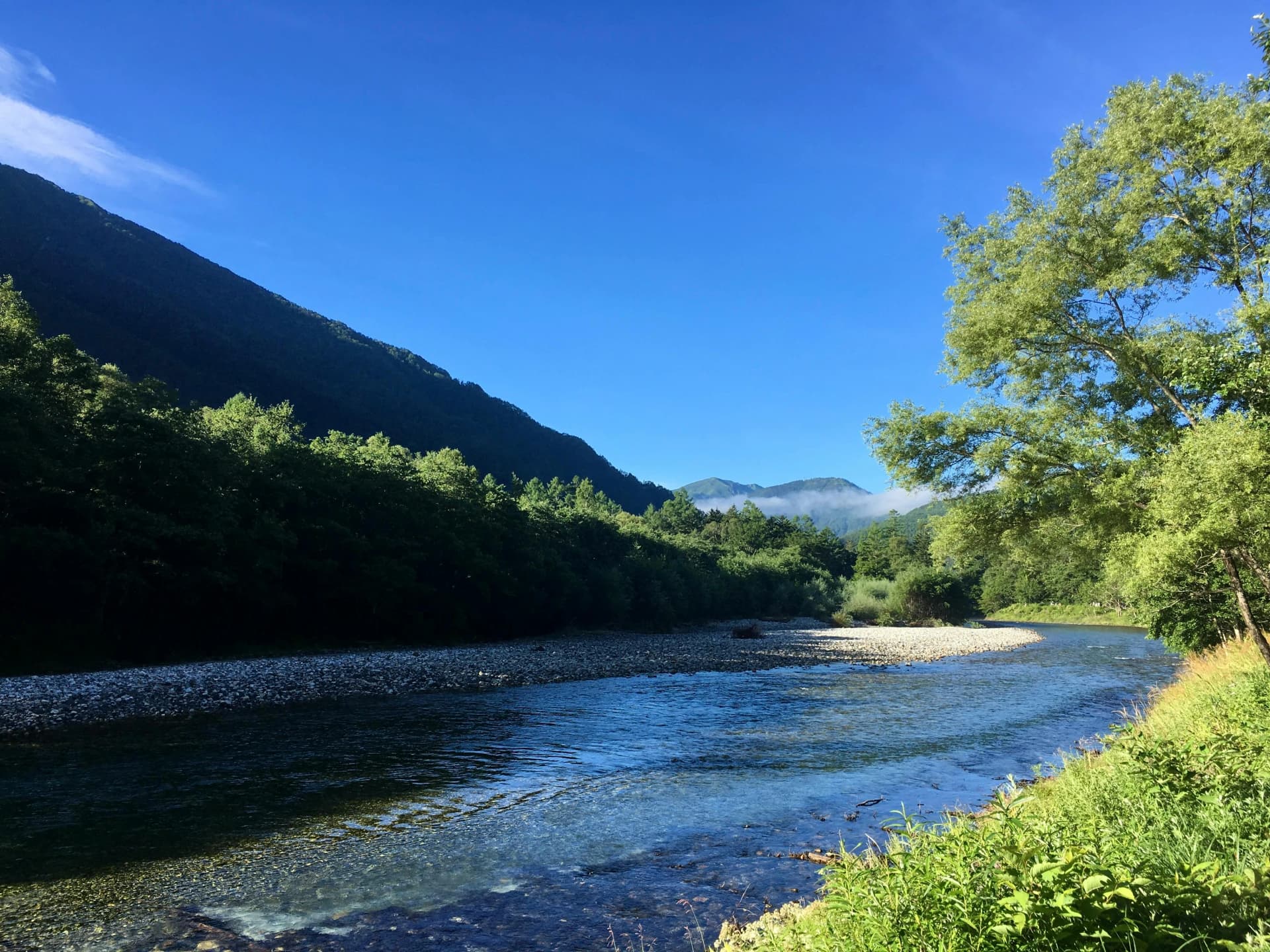
Akigawa Valley (秋川渓谷) is a river valley 60 minutes from Shinjuku by train, at the western edge of Tokyo Prefecture where the mountains begin. The Akigawa River runs clear through a forested gorge, cold in spring and warmer by midsummer. The valley has been developed for outdoor recreation — BBQ facilities, fishing, river play — in a way that removes the logistics barrier that keeps many Tokyo residents from spending time in nature.
The distinction: you don't need to plan an outdoor expedition to come here. Bring yourself. Everything else is on-site.
Getting There
From Shinjuku, take the JR Chuo Line to Haijima (approximately 45 minutes), then transfer to the JR Itsukaichi Line for Musashi-Itsukaichi Station, the terminal stop (15 minutes more). Total travel time from Shinjuku: around 60 minutes, one transfer, no special rail passes required — a standard IC card works throughout.
From Musashi-Itsukaichi Station, the valley splits into distinct zones reached by Nishi Tokyo Bus, which departs from Bus Stop No. 1 directly outside the station. The main BBQ area at Akigawa Bridge River Park is a short walk from the station on foot. For Seoto-no-yu hot spring and the Jūriki district, board a bus bound for 十里木・瀬音の湯方面 and ride about 15 minutes to the dedicated Akikawa Keikoku Seoto-no-yu stop. For the upper valley — Hossawa Falls, Kazuma, Hinohara — separate bus lines also leave from Stop No. 1.
If you're driving, Route 411 from central Tokyo or the Akigawa IC off the Ken-O Expressway puts you at the main facilities in about 75 minutes. Akigawa Bridge River Park has 350 parking spaces, but they fill by 9am on summer weekends. The train-and-bus combination removes this pressure entirely.
The BBQ Facilities: What You're Actually Choosing Between
The valley runs for 20 kilometers. "Akigawa Valley BBQ" isn't a single venue — it's a dozen different facilities strung along the river, each with different character and access requirements.
Akigawa Bridge River Park BBQ Land (秋川橋河川公園バーベキューランド) is the anchor — the largest facility, closest to the station, and the most visited. Entry to the river park itself is free, but equipment rental is mandatory; you cannot bring your own fuel, charcoal, or grills. Multiple providers operate here, including あきる野渓谷BBQ, BBQ-PARK, and BBQ-HOPE, each running a delivery service that drops a grill, charcoal, tongs, and plates at your chosen riverside spot. A delivery fee of roughly ¥1,000 per group applies. The park closes on Tuesdays outside peak season (mid-July through August), and rental equipment must be returned to the park office by 3pm. No fireworks.
Jūriki Land (十里木ランド) sits deeper in the valley, accessible by bus to the Jūriki stop followed by a seven-minute walk. It's quieter than the main park and offers proper hands-free BBQ packages where food and equipment arrive together. Crucially, it has covered sections — which matter when the weather turns and which also mean wind isn't ruining your charcoal setup.
Sankeihp (自然休養村 山渓) operates as a traditional country inn with an attached BBQ area and warm-water shower facilities for post-river cleanup — the facility to choose if you have young children who need a rinse before the train home. The inn also runs trout-catching sessions in the river directly below the property, so small children can catch a fish and have it grilled for lunch without anyone needing to be patient about bait.
Tokura Resort Hoshitake BBQ Land (戸倉リゾート 星竹バーベキューランド) is positioned near a section where the riverbed broadens into a shallow gravel flat — ankle-to-knee depth across a wide stretch of clear water. For families with very small children, this matters more than any facility rating. The approach here is gentler than the sections near the main park.
How the Hands-Free Model Works
"Hands-free BBQ" (手ぶらBBQ) is the core proposition across most facilities, but it's worth understanding what you're actually getting. The base version is equipment-only rental: a grill, charcoal, starter, tongs, and plates delivered to your riverside spot. You bring your own food and drinks. This is sufficient for most groups visiting from Tokyo — a convenience store stop near Musashi-Itsukaichi Station covers the gap.
The full hands-free package adds food delivery: meat sets (typically short ribs, chicken, pork belly, and vegetables), sides, and sometimes sauces, ordered in advance through the provider's website and priced per person at roughly ¥3,000–5,000 for a set menu. The advantage isn't just convenience — it means no grocery bag on the train, no miscalculation about how much food four people actually eat outdoors.
One constraint worth knowing: you cannot rent a grill alone without booking the full equipment package. If your group wants to bring only food, you still need to reserve the full kit. This is consistent across providers at the main park. For weekend bookings in July and August, reserve your equipment rental at least a week in advance. Weekday visits in June or September can often be secured with a day or two's notice.
The River
The Akigawa River is clean enough for wading and swimming in summer — clear, cold-ish (snowmelt feeds the upper reaches), and fast-moving in the narrower sections. The experience here is casual river play rather than a beach: wading through rocky shallows, sitting in natural pools, occasionally jumping from low outcroppings at spots where the water depth has proven safe over many seasons.
Depth varies significantly by section. The areas near Akigawa Bridge and the Tokura Resort section both feature broad, shallow approaches where children can wade independently without being swept anywhere. The pools below larger boulders upstream run considerably deeper. For families with young children, stick to the main park areas rather than hiking upstream looking for deep pools.
There are no lifeguards. This is a public river, not a managed beach. Japanese families arrive with their own float toys; the water is safest in late July and August when flow from the mountains has settled into summer levels. June can carry more force after rainfall — read the current on arrival, not from photos.
Trout Fishing
Several facilities offer trout fishing as a standalone activity or combined with BBQ. The model at managed sections in Jūriki and at Sankeihp: pay a session fee, rent a rod, fish in a designated stretch. Catch goes to the grill. The combination — fish, cook, eat riverside — works particularly well for groups that want an activity between cooking rounds, and it covers the question of what to do in the hour before lunch when the charcoal hasn't settled.
For ayu (sweetfish, 鮎), the prime window is early June through August. Ayu require a permit from the Akigawa Fisheries Cooperative, which some facilities bundle into their packages — check before you arrive if ayu is specifically what you're after. Trout fishing at managed facility sections doesn't require the Cooperative permit; it's handled on-site.
Seoto-no-yu Hot Spring
Seoto-no-yu (秋川渓谷 瀬音の湯) sits within the valley, reachable from Musashi-Itsukaichi Station on the same Nishi Tokyo Bus network — about 15 minutes to the dedicated bus stop. It's a proper onsen drawing natural spring water, open from 10am to 9pm (last entry 8:30pm).
Day-use admission is ¥1,000 for adults covering a three-hour session, ¥500 for elementary school children, and free for younger children. Extensions cost ¥200 per adult per hour. Outside the main building, a free public footbath is open without admission — if your group splits between those who want to soak and those who don't, the footbath makes the wait less painful.
The natural pairing: BBQ lunch at the river park, late afternoon river play, then a 15-minute bus ride to Seoto-no-yu before the evening return. You arrive back at Shinjuku clean and warm rather than damp and river-sand-covered, which makes a meaningful difference in how the day feels on the train home.
Rainy Days
The BBQ model isn't automatically ruined by rain. Jūriki Land's covered sections and tent setups at the main Akigawa Bridge park mean a light rain passes through lunch without stopping anything. The practical issue is the river itself — wading in light rain is fine until it isn't, and significant rainfall raises water levels and speeds unpredictably.
If the forecast is genuinely bad, the day's anchors shift to Seoto-no-yu and Tsurutsuru Onsen (つるつる温泉), another hot spring facility reachable by a different bus line from Musashi-Itsukaichi. Both are full-facility onsen with restaurant areas. A genuine rain-day alternative: bus to Seoto-no-yu, morning in the baths, lunch at the facility restaurant, free afternoon footbath. Not the day you planned, but a reasonable one.
When to Go
June through September is the active season. Swimming is comfortable from late June. Midsummer weekends — late July through August — are peak; arrive before 9am or accept crowds at the main park. September drops the temperature slightly and thins the crowds considerably. It's arguably the best month for the combination of comfortable swimming and a relaxed atmosphere.
October brings foliage. The river is too cold for swimming, but Ishibunebashi Bridge frames the valley's autumn colors through a stone arch in a way that photographs beautifully and feels like a completely different version of the same place. BBQ facilities stay open through October at most sites. Fishing extends year-round.
Spring sees fresh green hillsides, cold clear water, and quiet facilities. Fishing and walking rather than swimming. Seoto-no-yu is worth visiting even then — the contrast between cold valley air and hot spring water is its own kind of reward.
Who This Day Trip Suits
Families have the clearest path here: hands-free BBQ lunch, kids in the river shallows, onsen cleanup before the train. Choose the Tokura Resort section for the safest shallow wading, or Sankeihp for the trout-catching add-on. The logistics demand almost nothing beyond booking equipment in advance.
Groups of friends looking for a summer day out of the city: large groups can reserve adjacent spots at Akigawa Bridge River Park and run a single equipment order for 10–15 people through one of the delivery services. The river becomes the afternoon activity once the coals die down.
Couples often find the Jūriki area calmer than the main park on summer weekends. Quieter facilities plus a trip to Seoto-no-yu afterward shape a genuinely unhurried day — outdoors without being logistically demanding.
The valley is straightforward enough that most groups navigate it fine independently. Where a guide adds value: understanding which facility suits your group, navigating Japanese-language reservation systems, timing the river, onsen, and train as a single smooth day. Infinite Tokyo allows any custom day trip built around whatever combination makes sense for your group.
FAQ
Do I need to speak Japanese to book a BBQ facility?
Most reservation services have English-accessible booking pages, and the form fields are simple enough to navigate without Japanese fluency. Providers like BBQ-PARK handle reservations online with clear step-by-step flows. Having your hotel's phone number on hand as a contact point covers the rare cases where a provider calls to confirm your slot.
Is the river safe for children who can't swim?
The shallows near Akigawa Bridge River Park and the Tokura Resort section are ankle-to-knee depth across a broad gravel flat — safe for children who are walking and playing rather than swimming. Deeper pools exist upstream and are not right for non-swimmers. Stay to the main facility sections and assess the current on the day; heavier rainfall upstream can change conditions faster than the weather at the park suggests.
Can I visit in autumn without doing BBQ?
Yes. Ishibunebashi Bridge and the surrounding valley are worth the trip on their own in October and November when the foliage peaks. Seoto-no-yu operates year-round. Many visitors treat the autumn version as a walking and photography day with an onsen finish — a complete day that shares almost nothing in structure with the summer version.
What's the difference between Seoto-no-yu and Tsurutsuru Onsen?
Both are hot spring facilities reachable by bus from Musashi-Itsukaichi. Seoto-no-yu sits closer to the main BBQ area and integrates more naturally into a valley day — it's the obvious choice unless you're specifically heading toward Hinohara. Tsurutsuru Onsen is in a different bus direction, better if you're combining the onsen with Hinohara village or the stalactite cave.
What should I actually bring?
For a full hands-free package: swimwear, a towel, a change of dry clothes for the train home, and beverages. The equipment and food arrive at your spot. If you're using the equipment-only rental and bringing your own food, add a cooler bag from a convenience store near the station. The one thing most people wish they'd brought: sandals or water shoes for the rocky riverbed — bare feet on river stones get old quickly.
At Hinomaru One, we design culturally rich, stress-free private Tokyo tours for first-time and seasoned travelers. Unrushed. Insightful. Always customized.