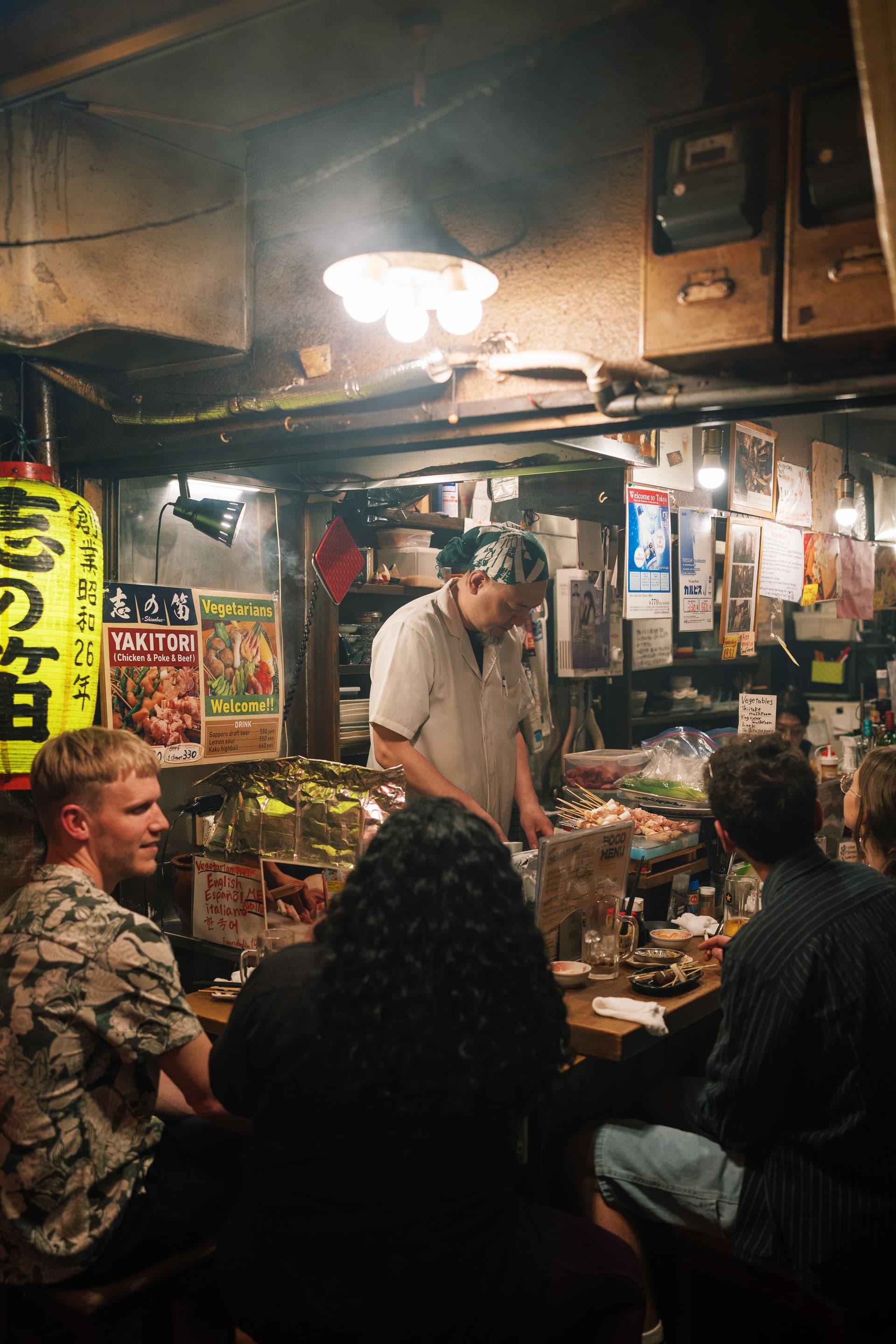
Tokyo's most compelling dining experiences are found in working-class neighborhoods where salarymen have eaten for centuries, not Michelin-starred restaurants.
Tokyo food tourism has a good reference point in Kanda, where the head of the world's most valuable semiconductor company picked a ¥80 skewer izakaya for dinner. On July 15, 2026, Jensen Huang spent two hours at Yakiton Sankichi, a grilled pork skewer restaurant one minute from Kanda Station's North Exit. He wore his usual black leather jacket, the one that earned him the nickname "kawa-jan" in Japan. We think his choice says a lot about eating well in this city: the most interesting meals are often in the working-class neighborhoods where Tokyo's salarymen have eaten for centuries, a long way from the Michelin-starred dining rooms.
Most visitors assume great food in Tokyo means high prices. They queue for hours at famous sushi counters or book kaiseki months ahead. Huang did something else. With NVIDIA's market cap at approximately $4.7 trillion at the time of his visit, he sat on the same stools as Tokyo's office workers and paid what they pay. He was there for a business dinner with Japanese semiconductor executives, in a restaurant where the whole group's bill would barely cover one omakase course in Ginza.
The Kanda District: Tokyo's Salaryman Dining Heritage
Kanda still feels like an old Edo downtown. Savor Japan calls it a "traditional town of Edo people" that "retains a nostalgic landscape," with Kanda Myojin shrine and the Kanda Festival calling up images of old Tokyo. The district is very much alive, though. The food culture that grew up to feed Edo-period construction workers now feeds office workers.
That food culture came out of need. In the Edo period, building the samurai quarters brought in a huge population of male laborers who wanted quick, cheap meals. A food trade grew up to feed them, with itinerant merchants selling on the street. Between 1624 and 1830, Edo cooking advanced a great deal as these vendors refined what they sold. Kanda sat close to the old castle and was packed with small streets, so it became a natural center for all of this.
The line from Edo laborers to today's salarymen is a straight one. Both needed food that was fast, filling, and cheap, and both ate on a schedule set by work. Kanda's restaurants were built around that, and it's a big part of why they've lasted while trendier neighborhoods keep turning over.
These days Kanda is known for what Metropolis Japan calls "old-school soba shops and affordable lunch culture." Along with Shinbashi and Yurakucho, it's one of the main salaryman izakaya districts, and Reddit threads point people to "izakayas around the tracks in Kanda" for drinking with salarymen. People come here for a cheap, good dinner on the way home.
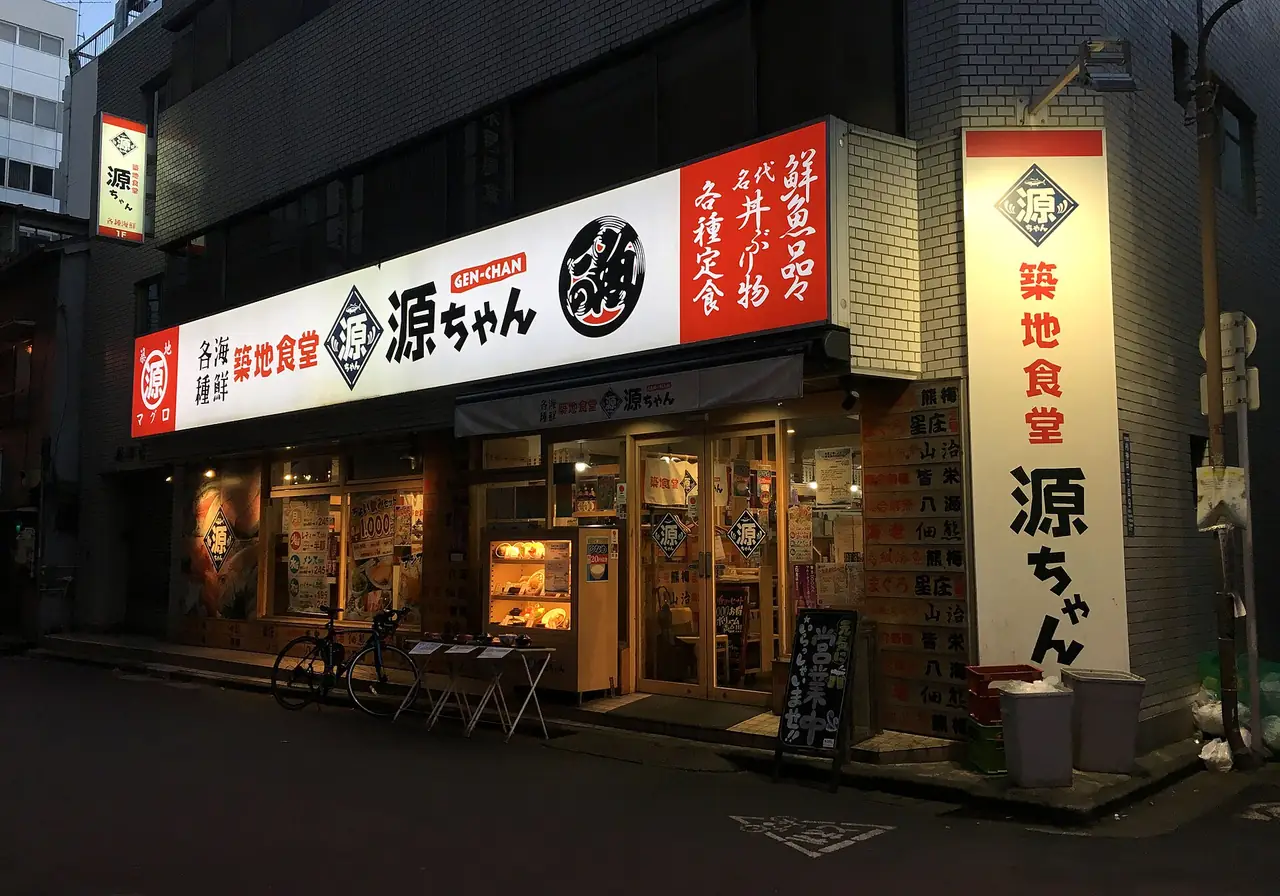
You can see the history in the restaurants. Many sit in spaces that have held eateries for generations. The buildings are narrow and deep to fit as many seats as possible into a small footprint. Most of the seating is at counters, so solo diners and small groups can eat without the formality of table service. Menus are short and focused on soba, yakiton, or tempura. Each place does one thing, and has done it for decades.
What Is Yakiton? The Working-Class Skewer
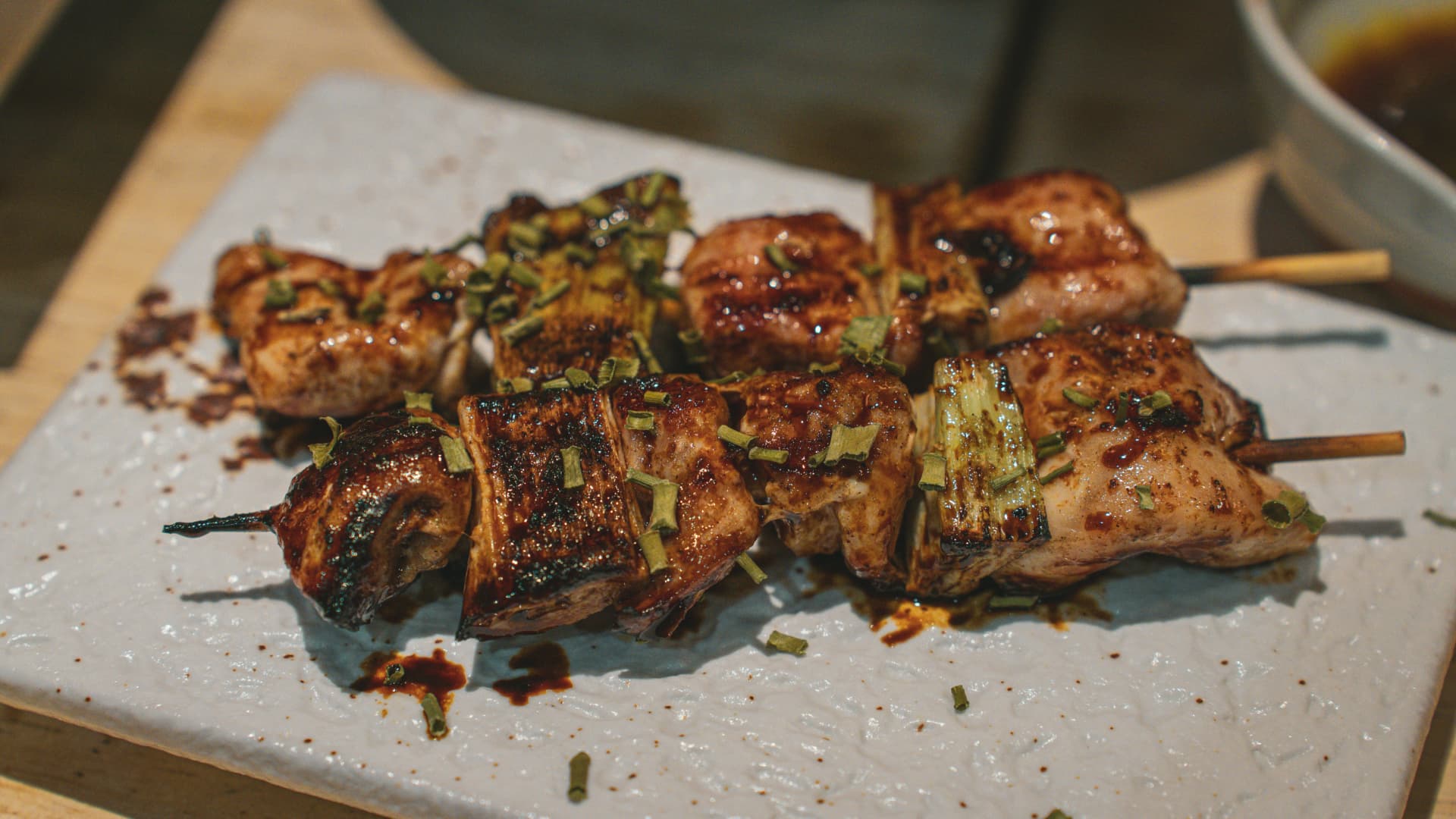
Yakiton is grilled pork on skewers. Yakitori is the chicken version, and it's famous worldwide, while yakiton is still mostly unknown outside Japan. It's laborers' food: cheap protein, cooked fast over charcoal, eaten with a beer after work.
The traditional fuel is binchotan, a Japanese white charcoal that burns hot with very little smoke. It's expensive and hard to manage, and keeping the heat steady takes skill, so it only pays off for places that grill all evening long. Casual spots use gas, and the serious yakiton shops use binchotan.
At Kanda Torahachi, a three-minute walk from Kanda Station's West Exit, skilled grill cooks work "morning-fresh offal" (朝びきもつ) over binchotan. Skewers start at ¥130. The restaurant seats 100, has a private room for groups, and allows smoking throughout. It's set up for workers who want grilled meat and cold beer, and tourists are an afterthought.
Prices are set for that crowd. Yakiton Sankichi, where Huang ate, charges ¥80 a skewer. Chikuzenya, a chain with a Kanda branch, offers three sauces: a secret miso sauce (the one they recommend), savory tare, or salt. The cooks trim off excess fat so the meat stays juicy.
The food is only part of it. Izakaya culture includes the "otoshi," a small appetizer brought to the table automatically, which works as a table charge. Counter seats are the ones to get, because you can watch the cooks and talk to them. People drink beer and sake, and some places offer "nomihoudai" (all-you-can-drink) packages. Expect it to be loud and quick, with no airs.
Yakiton makes more sense once you know the salaryman schedule. Work ends late, often after 20:00, and colleagues drift in for dinner at different times. Food has to come fast, get eaten fast, and be ordered in rounds. Skewers suit that well, since they cook quickly, keep arriving, and can be eaten standing or sitting. A yakiton dinner is usually one stop in a longer night out.
The Huang Dinner: What Actually Happened
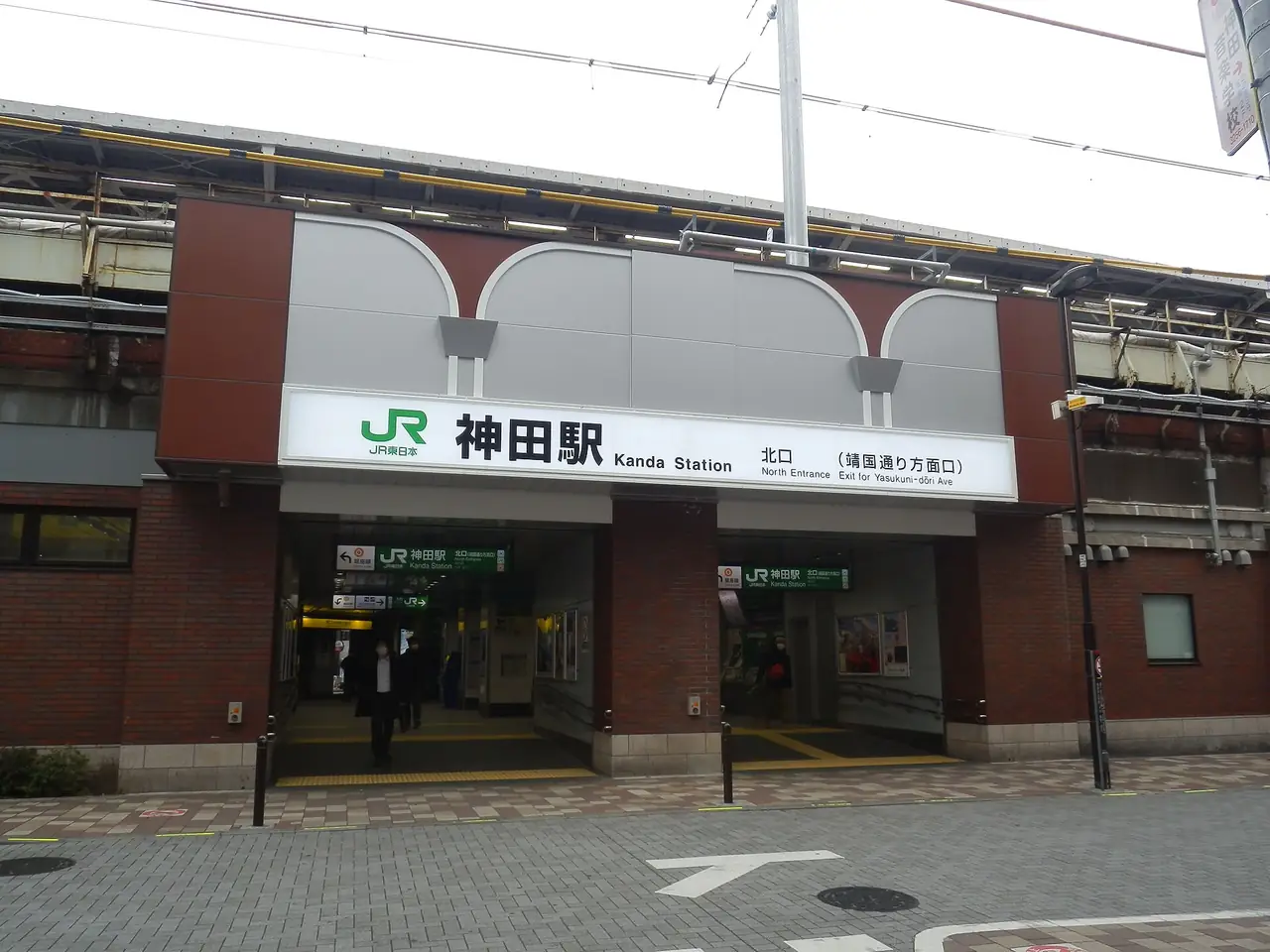
On July 15, 2026, Jensen Huang arrived at the Kanda North Exit branch of Yakiton Sankichi, at 3-22-9 Uchi-Kanda, Chiyoda-ku, one minute on foot from Kanda Station North Exit. He had on his trademark black leather jacket, which is why Japanese media call him "kawa-jan," a play on "kawa" (leather) and his name.
He came with executives from Japanese makers of semiconductor materials and equipment, and the dinner ran approximately two hours. Bloomberg reported it as a preview of "Japan AI," and Nikkei described it as relationship-building with supply chain partners, held in a working-class izakaya.
Right before Tokyo, Huang had eaten fried chicken in Korea, so there's a pattern of picking cheap local food over luxury dining. After dinner he handed out red bean buns (anko) to the bystanders who had gathered outside, which Business Insider and Benzinga both reported.
The venue also made strategic sense. NVIDIA's AI chips depend on Japanese suppliers for critical materials and manufacturing equipment. Eating in Kanda instead of a private room at a luxury hotel showed respect for Japanese business culture and made Huang approachable to the executives whose companies feed NVIDIA's supply chain. We'd guess the room was doing more work that night than the ¥80 skewers.
NVIDIA's market cap at the time was approximately $4.7 trillion (¥800 trillion). Huang could have eaten anywhere in Tokyo and he picked a place where skewers cost ¥80, which is the part we find interesting.
Why This Matters for Food Tourists
When the head of the world's most valuable company eats at a Kanda izakaya, that's a strong endorsement, and since nobody arranged it to promote Kanda, it's easy to believe.
Tokyo has been named the best culinary destination of 2026, and it has the world's largest concentration of Michelin-starred restaurants. More travelers now want authentic, experience-driven trips, but "authentic" is hard to pin down and easy to fake. Huang's dinner gives you something concrete to point at, and it points at Kanda.
You can do this too. Yakiton Sankichi is open Monday through Thursday from 15:00 to midnight, Friday from 15:00 to 04:00, and weekends from 14:00 to midnight, and it takes online reservations. You pay what office workers pay, which is far less than tourists are charged at themed experiences.
In 2026, tourists really do need reservations. The Tokyo Izakaya Guide 2026 reports that even neighborhood izakayas have moved to reservations to manage the crowds, so you'll need to plan ahead for popular places. Walking in on a whim is getting harder, but booked tourists get the same seats as the locals.
There's a lot going on around food in the city right now. Tokyo Tokyo Delicious Museum 2026, held May 15-17 at Symbol Promenade Park in Ariake, presented Tokyo as a record-smashing global food hotspot, and the city's food tourism infrastructure is growing fast. The part we care about hasn't changed in centuries: neighborhoods that have fed the city's workers since the Edo period still do it well and cheaply.
If you travel for food, Huang's dinner is a decent model. Do your own research instead of following rankings, and go where locals eat. Prices will be fair and the food excellent, and the evening will mostly be in Japanese. That's the dining culture that got Tokyo named the world's best culinary destination.
FAQ
What is the difference between yakiton and yakitori? Yakiton is pork and yakitori is chicken. Both are skewers grilled over charcoal, though yakitori is known around the world and yakiton is still mostly unknown outside Japan. Yakiton leans on pork offal and fatty cuts, while yakitori covers chicken prepared many different ways.
How do I get to Kanda from central Tokyo? Kanda Station is on the JR Yamanote Line, the Chuo Line, and the Tokyo Metro Ginza Line. It's one stop from Tokyo Station on the Yamanote Line, so it's easy to reach from anywhere in central Tokyo.
Do I need reservations at Kanda izakayas? Yes. The Tokyo Izakaya Guide 2026 reports that tourists now need reservations in 2026, because even local places have moved to reservations to handle the crowds.
What is the average cost of a yakiton meal in Kanda? Expect ¥80-130 per skewer. A full meal with drinks usually runs ¥3,000-5,000 per person, depending on how much you have. That's a lot less than a similar meal in the tourist districts.
Is English spoken at these restaurants? Usually not. At the counter you can point at what other people are eating, and some chains have picture menus, but don't count on fluent English. A guide or a translation app helps, though you don't need either to order skewers and beer.
Conclusion
When Jensen Huang wanted dinner with his Japanese partners, he went to Kanda, where Edo-period food culture lives on in restaurants that still feed the city's workers. If you want to understand why Tokyo was named the best culinary destination of 2026, start with a meal like that one. In our experience the most expensive meal of the trip rarely explains it.
Photo credits
- The North Exit of JR Kanda Station under the elevated railway tracks: Kaze315 / Wikimedia Commons, CC BY-SA 4.0, resized