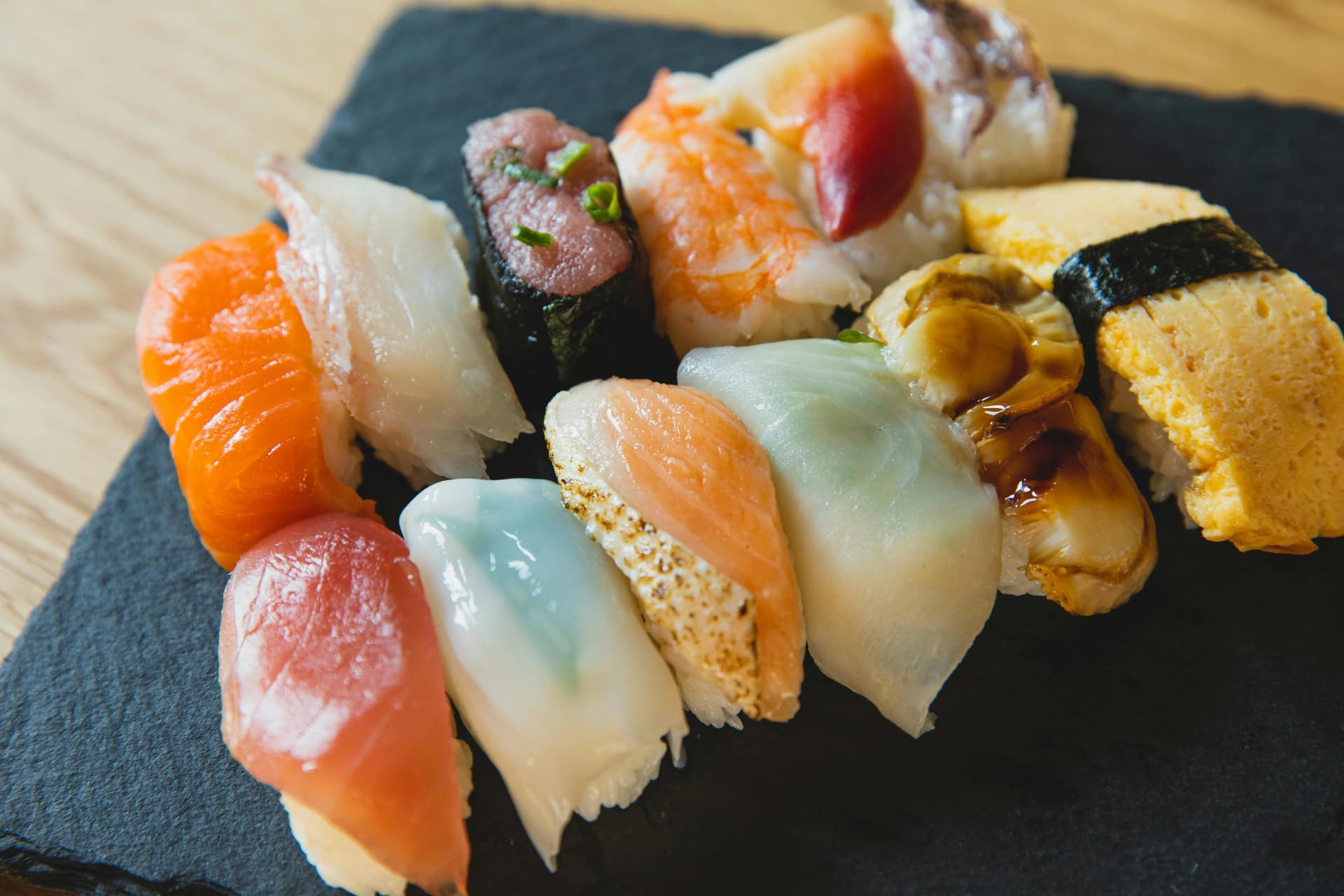
Most visitors either overpay for dinner omakase or undershoot with conveyor belt sushi. Lunch omakase at ¥3,000–8,000 is where quality and value overlap.
Sushi in Tokyo splits most visitors into one of two camps. They either spend ¥40,000 on a dinner omakase because a blog told them to, or they hit a conveyor belt chain and wonder what the fuss was about. Both are fine experiences. Neither represents the sweet spot.
That sweet spot is lunch omakase. ¥3,000 to ¥8,000, which works out to $21 to $55 USD. You sit at a counter. A chef who has been doing this for decades presses rice and places seasonal fish in front of you, one piece at a time. The fish is the same quality as dinner service. The experience is the same. The price is 30 to 50 percent less.
This is common knowledge among people who live here. It's barely mentioned in English-language guides. The rest of this article covers everything those guides get wrong, skip over, or overcomplicate.
What Makes Tokyo Sushi Different
Tokyo sushi is Edomae sushi. The name literally means "in front of Edo," Edo being the old name for Tokyo, and it refers to a tradition that started in the early 1800s when fish came from Tokyo Bay.
There was no refrigeration. Sushi chefs developed preservation techniques to keep fish safe and flavorful. Vinegar-curing, called sudzime, kept mackerel and gizzard shad fresh while adding a bright, clean acidity. Soy-mirin marinades, known as zuke, transformed lean tuna into something deeper and more savory. Simmering and glazing with a sweet reduction, called tsume, turned conger eel and clams into soft, lacquered bites. Raw preparations existed too, but they were one option among many.
These techniques weren't workarounds. They were flavor engineering. A kohada (gizzard shad) that's been salted and vinegar-cured for the right number of hours has a complexity that raw fish can't match. Modern Tokyo sushi still uses every one of these methods alongside raw preparations. That's the real difference between Edomae sushi and sushi in most other countries: what the chef does to the fish before it reaches your plate, not how fresh it is.
The other factor is supply. Toyosu Market, which replaced the inner market at Tsukiji in 2018, handles over 480 varieties of seafood. Chefs shop there before dawn, selecting fish based on what looks best that morning. By the time you sit down for lunch, those fish have been on ice for hours, not days.
The Sushi Spectrum: ¥1,000 to ¥60,000
Tokyo has sushi at every price point. Here's what each tier actually looks and feels like.
| Tier | Price (¥) | Price (USD approx.) | What you get |
|---|---|---|---|
| Conveyor belt (kaiten) | ¥1,000–4,000 | $7–28 | Self-serve plates on a belt, no reservation needed |
| Standing sushi bar | ¥1,000–3,000 | $7–21 | 15-minute meal at a station counter, order by pointing |
| Neighbourhood counter | ¥3,000–10,000 | $21–69 | 10–15 piece set course, small room, personal service |
| Lunch omakase | ¥3,000–10,000 | $21–69 | Chef's choice course, same fish as dinner, 30–50% cheaper |
| Dinner omakase | ¥12,000–60,000+ | $83–415+ | Full ceremonial experience, 18–30 pieces, 90min–3hrs |
Conveyor Belt (Kaiten-zushi): ¥1,000 to ¥4,000
Plates ride past on a belt. You grab what looks good. Budget chains run ¥95 to ¥150 per plate, so a full meal lands at ¥1,000 to ¥2,000 ($7 to $14). Premium kaiten spots near Tsukiji or in Ginza charge ¥300 to ¥990 per plate, pushing meals to ¥4,000 to ¥8,000 ($28 to $55).
Conveyor belt sushi is fun, low-pressure, and genuinely good at the better chains. Best option if you're traveling with kids who want to pick their own food. No reservations needed, though popular spots have waits of an hour or more during peak lunch.
Standing Sushi Bars (Tachi-gui Zushi): ¥1,000 to ¥3,000
These are often tucked near train stations. You stand at a counter, order a few pieces, eat, and leave. Fifteen to twenty minutes, ¥1,500 ($10), done. The fish is solid. The atmosphere is working-lunch efficient. Locals use these constantly. Tourists almost never find them because they don't have English signage and they don't show up on TripAdvisor.
No reservations. No English menus at most of them. Point at what's in the case, hold up fingers for quantity. It works.
Counter Sushi (Mid-Range): ¥3,000 to ¥10,000
This is the category most guides skip entirely. Small neighborhood sushi restaurants with 8 to 12 counter seats, a chef who knows you by your third visit, and set courses of 10 to 15 pieces. ¥5,000 to ¥8,000 ($35 to $55) gets you excellent fish, personal attention, and zero pretension.
Reservations recommended but not always required. Many of these places have lunch sets starting at ¥2,000 to ¥3,000. They're scattered across every neighborhood in Tokyo, not concentrated in tourist areas.
Lunch Omakase: ¥3,000 to ¥10,000
Here's the move. Many restaurants that charge ¥15,000 to ¥25,000 for dinner offer lunch courses at ¥5,000 to ¥8,000. Same chef. Same counter. Same fish from Toyosu that morning. The course is shorter (12 to 15 pieces instead of 20 to 25) and the atmosphere is slightly less ceremonial. But the quality gap between lunch and dinner at the same restaurant is small. The price gap is enormous.
Ginza has the highest concentration of these spots. Weekday lunch is significantly easier to book than weekends. Some places take reservations through TableCheck or OMAKASE, which is a booking platform, not the dining style.
Dinner Omakase: ¥12,000 to ¥60,000+
The full experience. Eighteen to thirty pieces over 90 minutes to three hours. The chef reads your reactions and adjusts the course. Sake pairings. Seasonal specialties you won't see on any menu because there is no menu.
At ¥12,000 to ¥20,000 ($83 to $138), you get an outstanding meal at an established restaurant. At ¥20,000 to ¥30,000, you're at Michelin-starred places. Above ¥30,000, you're in the territory of three-star counters where reservations open months in advance and require a Japanese phone number or a concierge connection.
If dinner omakase is calling you, the ¥12,000 to ¥15,000 tier is genuinely excellent. The jump in quality from ¥15,000 to ¥30,000 is real but incremental. The jump from ¥5,000 to ¥15,000 is where the difference hits you. For booking platforms, etiquette, and how omakase works beyond sushi, see our full omakase guide.
Walking Through a Lunch Omakase
You find the restaurant down a side street in Ginza. There's no flashy sign, just a small wooden placard and a noren curtain across the entrance. You push through it and step into a room that's smaller than most hotel bathrooms. Eight seats at an L-shaped counter, a glass display case filled with fish arranged on crushed ice, and a chef in a white coat already working. Two other customers are seated, eating in silence.
The staff gestures to your seat. You sit down, and someone hands you a hot towel, an oshibori. You wipe your hands. The chef looks up, nods once, and asks if there's anything you can't eat. You mention shellfish. He nods again.
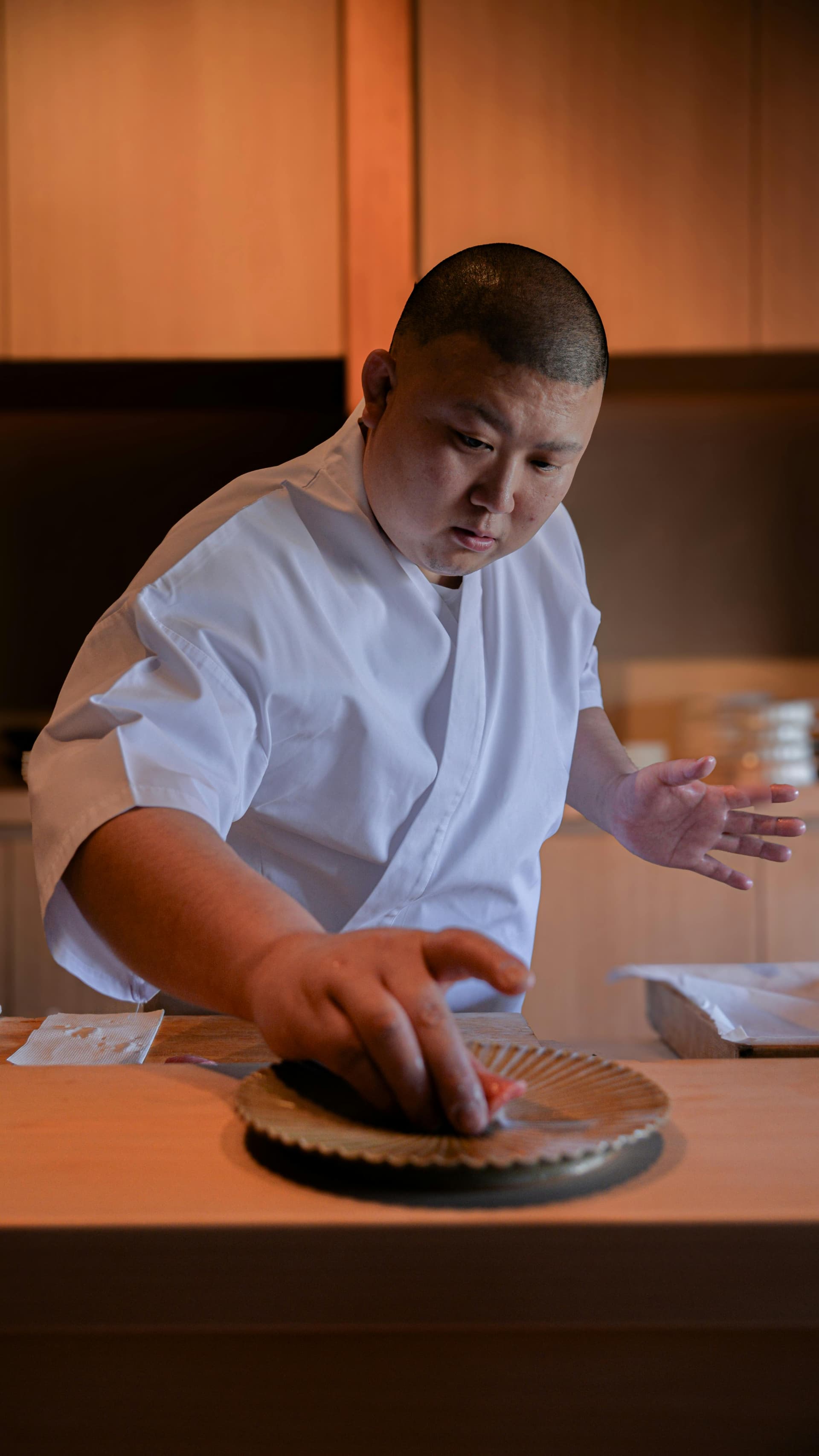
Then it starts. He reaches into the case, selects a piece of hirame, and begins pressing rice. His hands move quickly but without any sense of rush. He forms a small oval of rice, swipes a trace of wasabi across it with his finger, and lays a translucent slice of flounder on top. He places it on the wooden counter in front of you, directly on the wood, no plate.
You pick it up with your hands. The rice is warm. Not hot, not room temperature. Body temperature, and this is intentional. The fish is cool against the warm rice. You place the whole piece in your mouth. The flounder is clean, subtle, with a faint sweetness that fades almost immediately. The rice is lightly seasoned, a hint of vinegar, a touch of salt.
The chef is already preparing the next piece. This is the rhythm of a sushi counter: he presses, he places, you eat, there's a brief pause. Maybe thirty seconds between pieces. He says the name of each fish as he sets it down. Aji. Shima-aji. Kohada. You don't recognize all the names, and it doesn't matter. What matters is that each piece tastes different from the last. Bright, then fatty, then sharp, then creamy.
The kohada arrives looking like a tiny silver jewel, the skin catching light. It has a tang that surprises you, almost citrusy from the vinegar cure. The texture is firmer than the raw fish, more structured. You can see why people have opinions about this one.
Somewhere around the eighth piece, the chu-toro appears. Medium-fatty tuna, pale pink with visible lines of fat running through the flesh. You eat it and the fat dissolves on your tongue in a way that is nothing like tuna from a grocery store or a Western sushi restaurant. There's a sweetness in the fat, almost buttery, and the rice underneath provides just enough acidity to keep it from feeling heavy. This is the moment most people understand why sushi in Tokyo is a different category of food.
The pieces keep coming. A slice of squid with hairline knife cuts across its surface that make it impossibly tender. A gunkan of uni, creamy and briny, the nori still crisp because it was wrapped seconds ago. Anago near the end, warm and glazed with a sweet reduction, soft enough that it almost dissolves.
Tamagoyaki comes last. A small block of golden, layered egg omelet, slightly sweet. It's the chef's personal recipe. Every sushi chef has one, and they take pride in it the way a pastry chef guards a soufflé recipe. You eat it in two bites.
The chef sets down a small bowl of miso soup. You drink it. The meal is over. Forty-five minutes have passed. Twelve pieces of sushi, one soup. The bill is ¥6,000, $41.
You walk back out through the noren curtain, into the Ginza afternoon, and the thought that forms is simple: that was one of the best meals you've had, and it cost less than a mid-range dinner at home.
The Edomae Fish You'll Encounter
Knowing what you're eating changes the experience from "fish on rice" into something you can follow, anticipate, and remember. Here are the ones that show up most often at a Tokyo counter.
Maguro is tuna, and it comes in three grades that represent three completely different eating experiences. Akami, the lean cut, tastes clean and almost metallic, with a firm bite that resists your teeth slightly before giving way. Chu-toro, the medium-fatty cut, has visible marbling and a richer, rounder flavor. The fat coats your mouth without overwhelming it. O-toro, the belly, is the fattiest. It practically dissolves on contact, releasing a wave of sweetness that people often describe as buttery, though it's more specific than that. It's the sweetness of clean animal fat, rich without being greasy. Most omakase courses serve at least two of the three grades, placed strategically to show you the contrast.
Kohada is the fish that separates a good sushi counter from a great one. It's gizzard shad, a small silver fish that nobody would eat raw because it spoils quickly and tastes unremarkable on its own. What makes it matter is the curing process. The chef salts the fillets first, drawing out moisture and firming the flesh. Then comes a vinegar bath, timed precisely. Too short and the kohada tastes flat, barely different from raw fish. Too long and the vinegar overwhelms everything, turning it sour and one-dimensional. The sweet spot produces something with a bright, almost citric acidity layered over a subtle oceanic flavor, with a firm texture that snaps pleasantly between your teeth. Sushi chefs in Tokyo judge each other by their kohada. It's the piece where technique matters more than the quality of the raw ingredient, and where a chef's skill is most exposed.
Hirame is flounder, and at the counter it looks almost translucent, like a thin sheet of frosted glass laid over the rice. The flavor is gentle, clean, with a sweetness so faint you might miss it if you're not paying attention. Engawa, the muscle along the flounder's fin, is the cut that regulars specifically request. It has a distinct chewiness and a concentrated flavor that the rest of the fish doesn't have.
Aji, horse mackerel, is bright and assertive, with a clean oiliness that lingers on your palate. It's often served with a tiny mound of grated ginger and sliced scallion on top, which cuts through the fat. In season, aji is one of the most satisfying pieces at any counter. Full of flavor without being heavy.
Anago is conger eel, simmered until tender and then brushed with tsume, a glossy sweet reduction made from the simmering liquid. The result is warm, soft, and lacquered, completely different from the grilled freshwater unagi you might know from other Japanese restaurants. Anago melts. Unagi has chew. They're often confused but they're distinct preparations from distinct eels.
Ika, squid, is where you can see a chef's knife skills most clearly. The surface is scored with dozens of tiny parallel cuts, sometimes in a crosshatch pattern, that make the otherwise rubbery flesh tender enough to bite through cleanly. Those cuts also create tiny channels that hold soy sauce. Years of daily practice go into making those cuts consistent and even.
Uni, sea urchin, is the most polarizing item at any sushi counter. It sits in a gunkan wrap of nori, a small orange or golden lobe of custard-like roe. The flavor is intensely briny, creamy, and slightly sweet. People who love it describe it as tasting like a concentrated ocean. People who don't love it find the texture unsettling. Summer uni from Hokkaido, specifically from Rebun or Rishiri islands, is considered the benchmark. It's sweeter and less bitter than uni from other regions.
Ikura, salmon roe, arrives as a gunkan piece, the bright orange eggs held in place by a band of nori. Each egg pops between your teeth with a burst of salt and a clean, oceanic finish. The nori adds a toasted, seaweedy crunch that balances the richness of the eggs.
Tamagoyaki often closes the meal. It's a layered egg omelet, slightly sweet, cooked in a rectangular pan and sliced into blocks. Every sushi chef has their own recipe, adjusting the ratio of dashi, sugar, mirin, and egg. Some versions are custardy and sweet. Others lean savory with more dashi. Eating it last lets you taste what the chef considers their personal statement.
Ebi varies by season. In winter, kuruma-ebi, tiger prawn, is sweet with a satisfying snap when you bite through the flesh. In warmer months, botan-ebi, spot prawn, is served raw, creamy and almost pudding-like in texture, with a sweetness that raw shrimp in other countries rarely achieves.
Seasonal Fish: What's Best When You Visit
Japanese cuisine is organized around shun, the concept of peak season. Fish at its shun has the best fat content, texture, and flavor. Chefs build their omakase courses around whatever is peaking. A sushi counter in March serves a fundamentally different meal than the same counter in October.
| Season | Months | Top Fish | Why It's Worth Ordering |
|---|---|---|---|
| Spring | Mar–May | Katsuo (bonito), Tai (sea bream), Akagai (ark shell) | Hatsu-gatsuo arrives lean and bright; tai is at peak sweetness |
| Summer | Jun–Aug | Uni (sea urchin), Anago (conger eel), O-toro | Hokkaido uni reaches peak creaminess; o-toro fat content peaks |
| Autumn | Sep–Nov | Sanma (pike mackerel), Buri (yellowtail) | Sanma is the defining autumn fish; buri builds fat as temps drop |
| Winter | Dec–Feb | Kuruma-ebi (tiger prawn), Hotate (scallop), Buri | Hokkaido scallop sweetens in cold; buri at annual peak richness |
If you visit Tokyo more than once, come in a different season. You'll eat a different meal at the same counter, and you'll understand why regular sushi customers in this city never get bored.
Etiquette: What Actually Matters and What Doesn't
Online sushi etiquette guides are a mess. Half of them overstate the formality. The other half get specific details wrong. Here's what's actually real, ranked by how much it matters.
Hands or chopsticks?
Both are fine. Hands are the traditional way to eat nigiri, and some chefs prefer it. Chopsticks work better for gunkan and rolls. Use whatever feels natural. Nobody at the counter is judging you for this choice.
Soy sauce
Dip the fish side, not the rice side. Rice soaks up too much soy sauce and falls apart. A light touch is better than submerging the piece. Some items come pre-seasoned, anything with a tsume glaze for example, and those don't need soy sauce at all. If you're unsure, watch the chef when he places the piece in front of you. If there's already sauce or seasoning on it, skip the soy.
Wasabi
The chef places wasabi between the fish and rice. That's the right amount for that piece. Mixing wasabi into your soy sauce dish is common at conveyor belt places and won't get you thrown out. At a counter with a chef working in front of you, it signals that you don't trust his preparation. If you want more wasabi, put a small dab directly on the fish. Or ask: "Wasabi, onegaishimasu."
One bite
Chefs size each piece to be eaten in one bite. This is the ideal. If a piece is too big, two bites are survivable. What you want to avoid is holding a half-eaten piece of sushi while you talk. Eat it, then talk.
Ginger
It's a palate cleanser. Eat a thin slice between different types of fish to reset your taste buds. It's not a topping. It's not a side dish you eat alongside each piece. Using too much dulls your palate for whatever comes next.
Photography
Quick, quiet photos are fine at most places. Flash is never acceptable. Don't photograph the chef without asking. At very high-end counters, constant phone use breaks the intimate atmosphere. Read the room.
The rule that actually matters
Eat at the chef's pace. When a piece is placed in front of you, eat it within thirty seconds. Sushi is temperature-sensitive. The chef presses the rice to body temperature. He selects fish at a specific temperature. The whole piece is engineered to taste best in the moments after it's served. Letting it sit on the counter while you compose a photo or finish a conversation is the one thing that genuinely bothers sushi chefs. Everything else on this list is etiquette. This one is about respecting the food itself.
Navigating a Sushi Counter Without Japanese
This is the part most people worry about. It's less difficult than you think.
At conveyor belt places, everything has pictures. Many chains have tablet ordering in English, Chinese, and Korean. Point and eat. Zero language barrier.
At standing bars, point at the fish in the display case. Hold up one or two fingers. Say "kore," which means "this one." That's the entire transaction.
At counter sushi and omakase restaurants, the language barrier almost disappears because you don't need to order. Omakase means the chef decides. When you sit down, mention any allergies or strong dislikes. "Ebi, dame desu" means shrimp, can't do it. Or just say "no shrimp" with a hand gesture. Most chefs at restaurants that accept foreign guests understand basic English food words.
A handful of phrases go a long way. "Oishii" means delicious, and saying it after a piece you particularly enjoyed is the most natural compliment you can give. "Okaikei" means you'd like the check. "Osusume wa?" means what do you recommend, useful at counter spots where you're ordering individual pieces.
If navigating a sushi counter feels intimidating, a private food tour changes the dynamic completely. Having someone who speaks Japanese sit next to you, explain what's being served, and chat with the chef on your behalf turns a stressful meal into a relaxed one. The chef opens up more when there's genuine conversation happening. Some of the best pieces and off-menu additions come out when the chef is enjoying the interaction at his counter.
The Lunch Omakase Play
Here's the practical version of everything above.
Book a weekday lunch omakase in Ginza or a neighboring area. Budget ¥5,000 to ¥8,000 per person. You'll sit at a counter with maybe six other people. The chef will serve 12 to 15 pieces of whatever looked best at Toyosu that morning. The whole thing takes 45 minutes to an hour.
You will eat better sushi than the vast majority of visitors to Tokyo. You will spend less than many of them spend at premium conveyor belt spots near Tsukiji. And you'll actually experience the thing that makes Tokyo sushi worth talking about: a chef who has spent decades learning how to prepare fish, working three feet in front of you, adjusting the course based on what's in season and what you seem to enjoy.
That's not something you get from a menu or a belt. It's the reason people who live in Tokyo eat sushi this way.
Where to Actually Eat
The restaurants below span the real sushi landscape: where locals eat, what tourists should try, and what genuinely represents value. Most require advance reservation; some expect you to walk in and wait. Each delivers something the others don't.
Sushi Tokyo Ten is the lunch omakase starter pack. Located in Shibuya Stream (3rd floor, directly connected to Shibuya Station), it offers a full omakase course for ¥4,950. The chef uses the same Toyosu fish as places charging twice as much for dinner. The counter is tight, the pace is efficient, and you'll finish in under an hour. Reservations via TableCheck are straightforward and instantly confirmed; walk-in lunch is also possible but expect a wait during peak hours (11:30am to 1pm). Weekday afternoons are quieter. Limited English, but the omakase format means you don't need much conversation. Mention allergies when you sit down.
Kyubey in Ginza is the institution. Running since 1936, with a lineage of chefs that spans generations. The lunch special is the Oribe set at ¥8,250: 10 pieces of pristine Edo-style sushi, virtually identical in quality to what Kyubey's dinner guests pay ¥20,000 for. Reservation required; book through TableCheck or call the restaurant directly (they handle English reservations). The room is small and formal enough to feel special without being stuffy.
Yamada sits in the heart of Ginza's sushi district, on the opposite end of the spectrum from the flashy places. Minimal signage, no fanfare, just excellent sushi at a clean price point. The chef's signature approach combines aged and fresh fish—roughly half the course is cured or aged for depth, the other half is pristine raw seasonal selections. A single course: 15 pieces for ¥10,000, no extras, no upsell. The rice is pressed perfectly warm. Zero pretension, and the chef treats walk-ins the same way he treats reservations. No English menu and minimal English spoken, but that's not a barrier at an omakase counter. Weekday lunch is easier than weekends; aim for 11:30am or 1:30pm to avoid the crush.
Nemuro Hanamaru bridges the conveyor belt and standing bar worlds. Multiple Tokyo locations (Kitte Building near Tokyo Station is the most accessible), with traditional kaitenzushi but hand-made nigiri from chefs who actually know what they're doing. Plates run ¥160 to ¥500 depending on the item; a satisfying meal lands at ¥2,000 to ¥3,000. The difference between this and the budget chains is immediately obvious: the fish is noticeably fresher, the rice is properly seasoned, and you can actually taste what you're eating. Walk-in only, English signage present, zero pressure. The conveyor belt experience without compromising on quality.
Uogashi Nihonichi is the standing sushi bar most accessible to tourists, and also the easiest way to have a legitimately good sushi lunch in under 20 minutes. Multiple locations in Shinjuku and Shibuya, right outside the stations. Eight to twelve pieces for ¥1,500 to ¥2,000, consumed at a shoulder-height counter in fifteen minutes. The secret is that unlike most standing bars, Uogashi sources quality fish and pays attention to rice temperature—you're not compromising on quality, just time and ceremony. The pace is working-lunch efficient, and you'll watch locals move through in the same rhythm. Order by pointing at the display case; hold up fingers for quantity. No reservation possible, no English required, no pretense.
Sushiro is the modern-chain option for travelers with someone who wants choices or anyone not ready to commit to omakase. Locations in Ikebukuro (Sunshine 60), Shinjuku, and Shibuya. Full English ordering on a touch screen, wide menu (cooked options, unusual rolls, desserts), and prices that make sense: ¥95 to ¥150 per plate for budget items, up to ¥500 for premium pieces. Personal conveyor belt delivers your order directly to your seat. High-volume, modern, and a genuinely decent meal. Use this if you want to ease into the experience without language stress.
If you'd rather skip the research and have someone book the right counter for your budget, navigate the reservation process, and sit next to you to explain what's being served, that's what our private food tour in Tokyo is built for. The chef opens up differently when there's genuine conversation happening. You'll get pieces and recommendations that don't appear on any menu.
If you want help finding the right counter for your budget and taste, or if you'd rather have someone handle the reservation and sit with you to translate, our guided food experiences are built for exactly that. We match you with restaurants based on what's in season, what you want to spend, and whether you want the full ceremonial dinner or the weekday lunch that locals prefer.
Skip the ¥40,000 dinner on your first visit. Start with lunch. You'll know immediately whether you want to go deeper.
For another traditional counter-style experience, see our guide to tempura in Tokyo, where the same lunch-over-dinner logic applies.