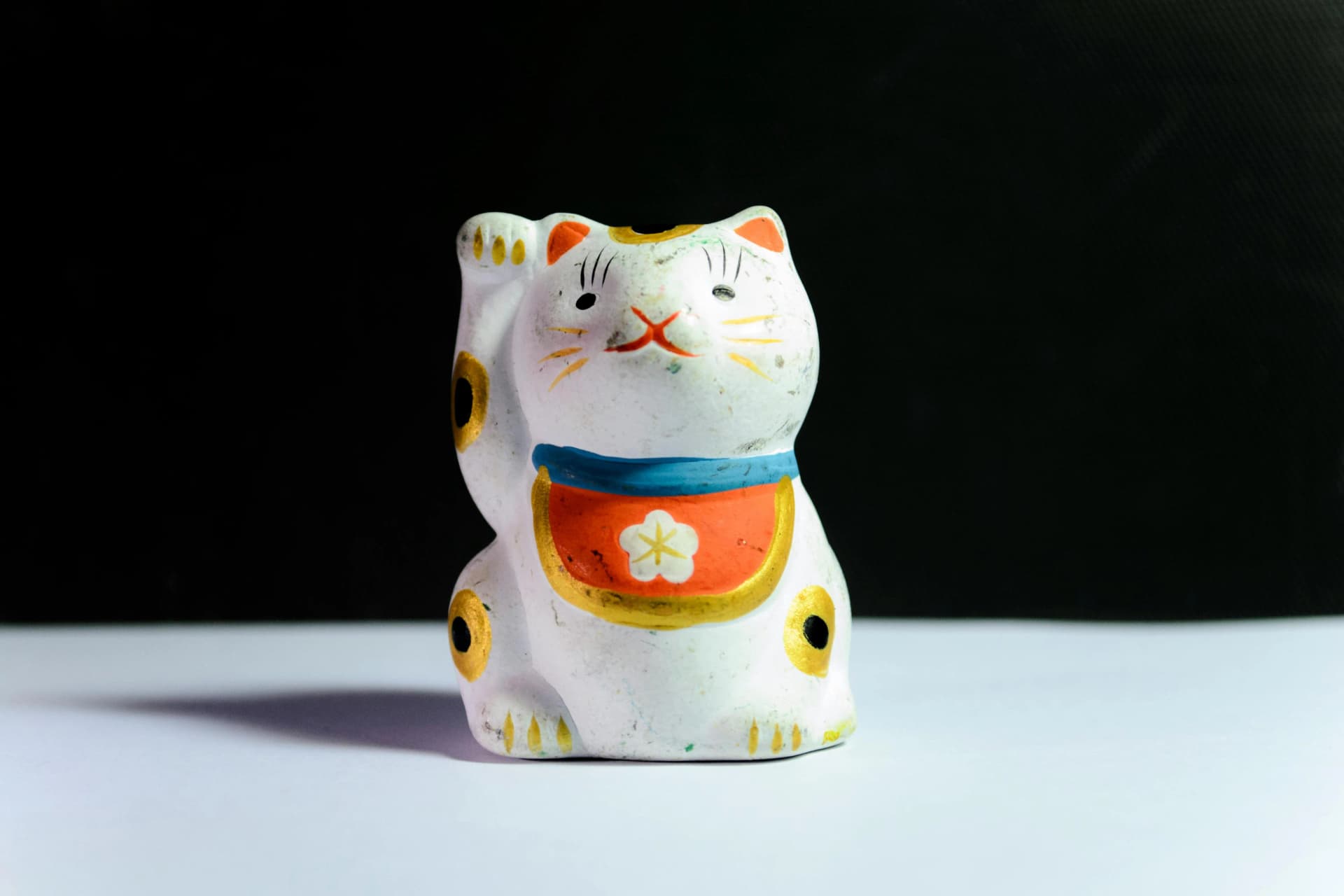
The maneki-neko started as a real story at this specific temple — and the donated cats have been accumulating ever since.
Gotokuji Temple in Setagaya Ward is where the maneki-neko — the white ceramic cat with one raised paw seen in restaurant windows and shop entrances across Japan and Asia — originated in 1633. It was not invented by a manufacturer.
The story: a white cat at Gotokuji Temple beckoned a passing samurai, Ii Naotaka, to take shelter beneath the temple gate during a rainstorm. Moments later, lightning struck the spot where he'd been standing. Naotaka became a patron of the temple. When the cat died, it was buried with reverence. The practice of placing beckoning cat figurines as offerings — inviting good luck and fortune — developed from this specific event.
The result, accumulated over centuries: hundreds of ceramic maneki-neko cats, all identically posed, fill a dedicated hall and spill into the surrounding area. The display is one of the most quietly extraordinary things in Tokyo.
The 1633 Story
Ii Naotaka was lord of the Hikone Domain — one of the most powerful han in the Tokugawa shogunate, strategically positioned at the gateway to Kyoto. In the summer of 1633, he was returning from a falconry outing through the rural Setagaya countryside when his party passed a small, dilapidated temple called Kōtoku-in. A monk's white cat sat at the gate. The cat raised one paw in what appeared to be a beckoning gesture.
Naotaka, intrigued, turned his party aside. They entered the temple and the monk offered tea and a dharma lecture. While they sat, a violent thunderstorm broke. Lightning struck the large tree under which Naotaka had been standing moments before. The party emerged unscathed, sheltered and enriched. Naotaka counted this as a profound stroke of fortune.
His response was decisive and lasting. He made a substantial donation to rebuild and expand the crumbling temple. The temple was renamed Gotokuji — and designated the Ii clan's official Buddhist family temple (菩提寺) in Edo. The founding act was both personal gratitude and political consolidation: 1633 was the same year the Setagaya area formally became Hikone Domain territory.
The cat that beckoned Naotaka died, as cats do, and was buried within the temple grounds. A small grave marker still stands. Over the following generations, worshippers began leaving ceramic cat figurines as votive offerings — a way of expressing thanks for wishes fulfilled, much as the original cat had seemingly brought fortune to Naotaka. The practice compounded. Centuries of gratitude have accumulated on the shelves of the Shofukuden Hall.
The Ii Clan Legacy
Gotokuji is not simply a cat temple. It is the official burial site of the Ii clan — lords of Hikone for nine generations — and their graves line a quiet, tree-shaded cemetery at the rear of the grounds. The most significant tomb belongs to Ii Naosuke, the 15th lord, who served as Tairō (Great Elder) to the shogunate in the final, turbulent years before the Meiji Restoration. Naosuke signed the Treaty of Amity and Commerce with the United States in 1858, forced through the agreement over imperial objection, and conducted the Ansei Purge — a sweeping political crackdown on dissidents. He was assassinated at the Sakuradamon Gate of Edo Castle in 1860, an event that marks a turning point in Japanese history. His grave is here, tended and quiet.
The cemetery is worth walking through even for visitors with no particular interest in feudal politics. Old stone markers, weathered and moss-covered, stand among the pines. Several former Prime Ministers are also buried within the grounds — a reminder that Gotokuji remained, long after the Meiji Restoration dissolved the old domain system, a place of significance for the families who once held power.
The temple itself belongs to the Sōtō Zen sect — one of the two major branches of Japanese Zen Buddhism — and carries the formal name Daikeizan Gotokuji (大谿山豪徳寺). It is a functioning religious institution with daily services, not a museum.
What You'll Actually See
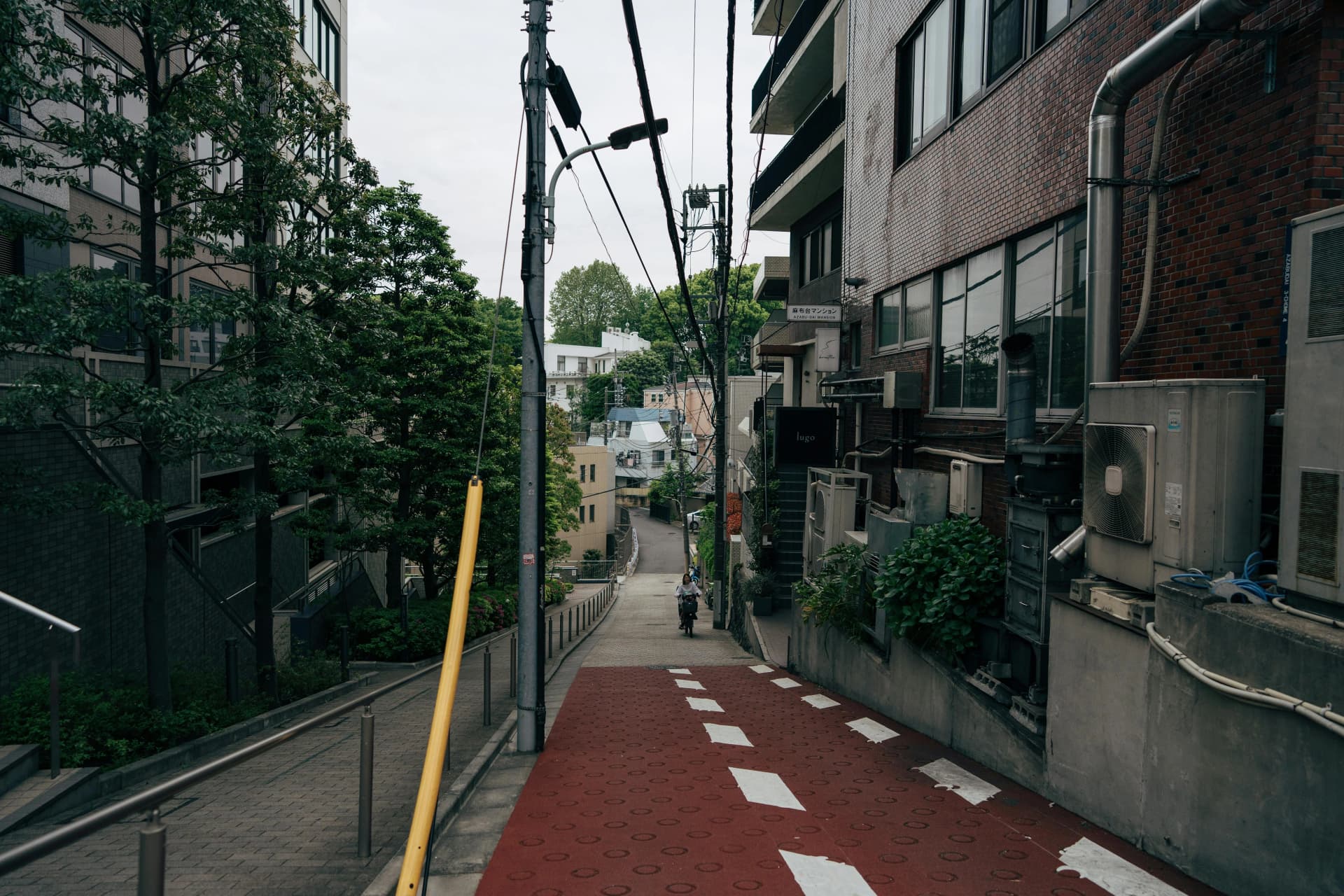
The approach from Miyanosaka Station runs through narrow residential streets. The Setagaya neighbourhood feels genuinely old in places — wooden houses, local shops, elderly residents going about their days. Cat motifs appear gradually as you get closer: ceramic cats in shop windows, cat-shaped signs, small sculptures at the entrance to the shopping arcade. The tram on the Setagaya Line running between Sangenjaya and Shimokitazawa sometimes operates in a special "lucky cat" livery — a small and legitimate delight if it happens to pull up at the platform.
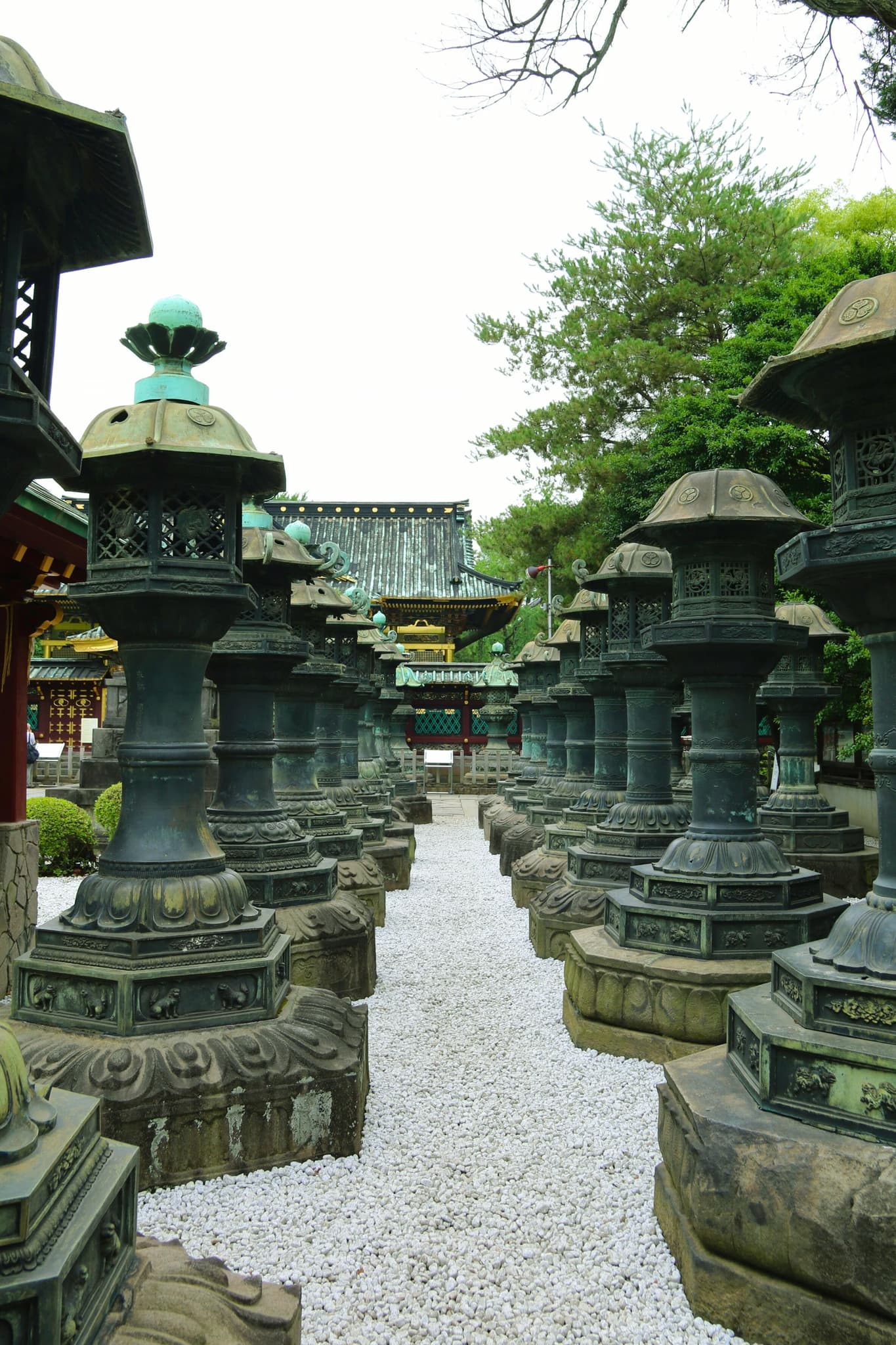
The main gate (Sanmon) opens onto a pine-tree-lined approach that leads into the main temple complex. Several structures face each other across the stone courtyard: the Butsuden (Buddha Hall), the main hall, a bell tower, and large Kokaku incense burners cast in the shape of a lion — visitors burn incense here before proceeding. At the far left of the grounds, a three-story wooden pagoda rises above the trees. This pagoda survived the American firebombing raids of 1945 intact, which is notable — much of the surrounding city did not. It is original Edo-period construction, not a postwar rebuild.
The Shofukuden Hall is modest in size, tucked toward the rear of the grounds. Nothing prepares you for the interior. Every available surface is covered in white ceramic cats — the same figure, the same right paw raised, the same blank gaze, accumulated in their hundreds. They sit in rows, stacked in columns, filling the shelves floor to ceiling and overflowing onto the steps outside. The cats are not decorative objects arranged for tourism. They are votive offerings: each one represents a wish that was made and fulfilled, brought back here as an act of gratitude. The density of them makes that visible.
The right paw raised is specific. At Gotokuji, the cats are not holding a gold coin (koban) — they are simply beckoning, with the right paw, an invitation toward fortune and good karma. The temple's official term for these figurines is shōfuku nekoiri (招福猫児) — "fortune-beckoning cats." The concept they embody is less about direct wealth and more about attracting en — the Buddhist notion of auspicious connection, fate, the meeting of people and circumstances that leads to good outcomes. The distinction matters here, where the tradition is active and specific rather than generic luck-seeking.
The Cat Ritual
The reception desk near the Shofukuden sells the Gotokuji figurines directly. Prices run from ¥500 for the smallest size to ¥7,000 for the largest; purchase is limited to one figurine per person. The desk also sells ema — the small wooden votive plaques on which you write a wish or prayer. If you want to write on your ema, bring your own pen: the desk does not lend them.
One important note that the temple has had to make explicitly: write your wish on the ema, not on the cat. In recent years, visitors — particularly from overseas — began treating the figurines like ema, writing messages and wishes directly on the ceramic surface. The temple has posted notices in multiple languages asking people not to do this. The cats are donated as-is, plain white, their meaning complete in the act of offering. The ema carries the words.
You have a choice at the Shofukuden. You can leave the cat there, placed among the others, as an immediate offering. Or you can take it home as a talisman — and return to donate it once your wish has been fulfilled. This second option is what many regular visitors do, and it explains the hall's endless accumulation: people come back.
After the Shofukuden, the Jizo Hall and the cemetery remain. Jizo is the protector of travellers and children in Japanese Buddhism, and the small statues here are adorned with red bibs in the traditional manner. The cemetery behind the main buildings is quiet and accessible — walking among the Ii clan graves takes perhaps fifteen minutes and requires no particular preparation.
Getting There
Setagaya Line: Miyanosaka Station — 5-minute walk. This is the recommended approach. The Setagaya Line (Tokyu) is a surface tram that runs through residential western Tokyo between Sangenjaya and Shimokitazawa. The ride from Sangenjaya takes about twelve minutes and passes through a neighbourhood that most tourists never see — old houses, local shops, schoolchildren walking home. It is itself part of the atmosphere.
Odakyu Odawara Line: Gotokuji Station — 10 to 12-minute walk. From Shinjuku, the journey takes about fifteen minutes. This is the faster option from central Tokyo if you prefer JR transfer connections.
The Setagaya Line route is recommended not for efficiency but for context. Arriving by tram through residential streets prepares you for the temple better than arriving by express train.
Admission and Hours
| Admission | Free |
| Hours | 6:00 AM – 5:00 PM (temple office and amulet sales: 8:00 AM – 3:00 PM) |
| Closed | No regular closure days |
The temple grounds are free to enter. The Shofukuden Hall is open and free. The only costs are the optional cat figurine (¥500–¥7,000) and ema (a few hundred yen).
When to Visit
Gotokuji has no famous seasonal peak — no cherry blossom festival, no illuminated autumn event, no queues forming for a specific occasion. This is its practical advantage: the temple is manageable any time of year, and the crowds that consume Shinjuku Gyoen in spring or Rikugien in autumn simply do not appear here.
That said, the grounds reward autumn visits. Maple trees (momiji) line several sections of the cemetery and the rear compound, turning deep red and orange through November. Ginkgo trees add yellow. Multiple visitors who've been in both seasons report the autumn atmosphere as genuinely exceptional — the ancient stonework, the cat-filled hall, and the flaming maples combine in a way the spring flowers don't quite match. If you're in Tokyo in mid to late November, Gotokuji is worth planning around.
Spring brings lighter crowds than Tokyo's famous flower-viewing spots. The temple grounds have cherry trees that bloom in late March and early April, though Gotokuji is not known primarily for them — meaning you'll see blossoms without the picnic crowds and the staked-out ground tarps.
Early morning visits, before 9:00 AM, offer the grounds mostly to yourself. The cats in the Shofukuden Hall look different in early light.
How Long to Plan
45 minutes: Temple grounds and Shofukuden, a pass through the cemetery.
90 minutes: Full cemetery walk, pagoda, Jizo Hall, Shofukuden with time to sit and take it in, the shopping arcade on the way back to Miyanosaka Station.
Half day: Combine with Shimokitazawa (one stop on the Setagaya Line from Yamashita Station) for vintage shopping and lunch. This circuit — quiet spiritual site in the morning, lively neighbourhood in the afternoon — makes for a coherent western Tokyo half-day that most visitors to the city never do.
Day Pairing
The Shimokitazawa circuit: From Miyanosaka Station, ride the Setagaya Line one stop to Yamashita, transfer to Gotokuji Station (or walk the connecting streets), then ride two stops onward to Shimokitazawa. The combination of Gotokuji's residential calm and Shimokitazawa's vintage-shop density makes for a satisfying contrast. Budget two hours in Shimokitazawa: it takes time to do it properly.
Setagaya slow day: Miyanosaka neighbourhood → Gotokuji Temple → Setagaya Park (15-minute walk from the temple) → local lunch → Carrot Tower observation deck (free entry, Sangenjaya, accessible on the Setagaya Line). This is residential western Tokyo as it actually exists, not as it appears in guidebooks.
For a guided exploration of this part of the city — the Ii clan connection, the maneki-neko tradition, the neighbourhood layers that don't read on their own — Ordinary Tokyo covers western Setagaya as part of a broader look at the Tokyo that lives outside the tourist circuit. For a custom day built around temples, historical figures, and the stories embedded in specific places, Infinite Tokyo builds around exactly this kind of layered site.
Frequently Asked Questions
Is the beckoning cat definitely from Gotokuji, or is that just one legend?
There are competing origin stories for the maneki-neko. Imado Shrine in Asakusa and Jishōin Temple in Shinjuku each have claims. The Gotokuji story — Ii Naotaka sheltered from the storm in 1633, the temple rebuilt, the cat buried with honours — is the most historically grounded of the three, with the date of patronage corresponding to verifiable Ii clan records. The temple itself describes its cats with the specific term shōfuku nekoiri rather than the generic maneki-neko, and the ritual of donation-after-wish-fulfillment is documented from the Edo period onward. Whether any single origin is definitive is a historian's question; as origins go, this one is more credible than most.
Can I write my wish on the cat figurine I buy?
No — and the temple has had to specifically ask visitors not to do this. Write your wish on the ema wooden plaque, which is sold separately at the reception desk. The cat figurines are donated as plain white ceramic, without any writing. If you want to write anything, buy an ema and bring your own pen.
Do I need to donate the cat at the temple, or can I take it home?
You can do either. Some visitors donate the cat immediately at the Shofukuden. Others take it home as a talisman and return to donate it once their wish has been fulfilled — which is how the hall's collection grew over centuries. Both practices are correct; the temple welcomes both.
Is the Ii family cemetery open to the public?
Yes, it's part of the main temple grounds and free to enter. The cemetery runs along the rear of the complex and includes the graves of successive Hikone Domain lords. Ii Naosuke's tomb — the most historically significant — is clearly marked. Treat it as you would any functioning Buddhist cemetery: quiet, no photography of individual grave markers, no wandering off marked paths.
What's the best way to pair Gotokuji with Shimokitazawa?
Take the Tokyu Setagaya Line from Sangenjaya or Shinjuku toward Miyanosaka Station. Visit Gotokuji first (morning). Then walk back toward Yamashita Station and ride two stops to Shimokitazawa. Lunch in Shimokitazawa, then vintage shopping in the afternoon. The return to Shibuya is straightforward: Shimokitazawa is on the Keio Inokashira Line and the Odakyu Line, both of which reach Shibuya in about ten minutes.