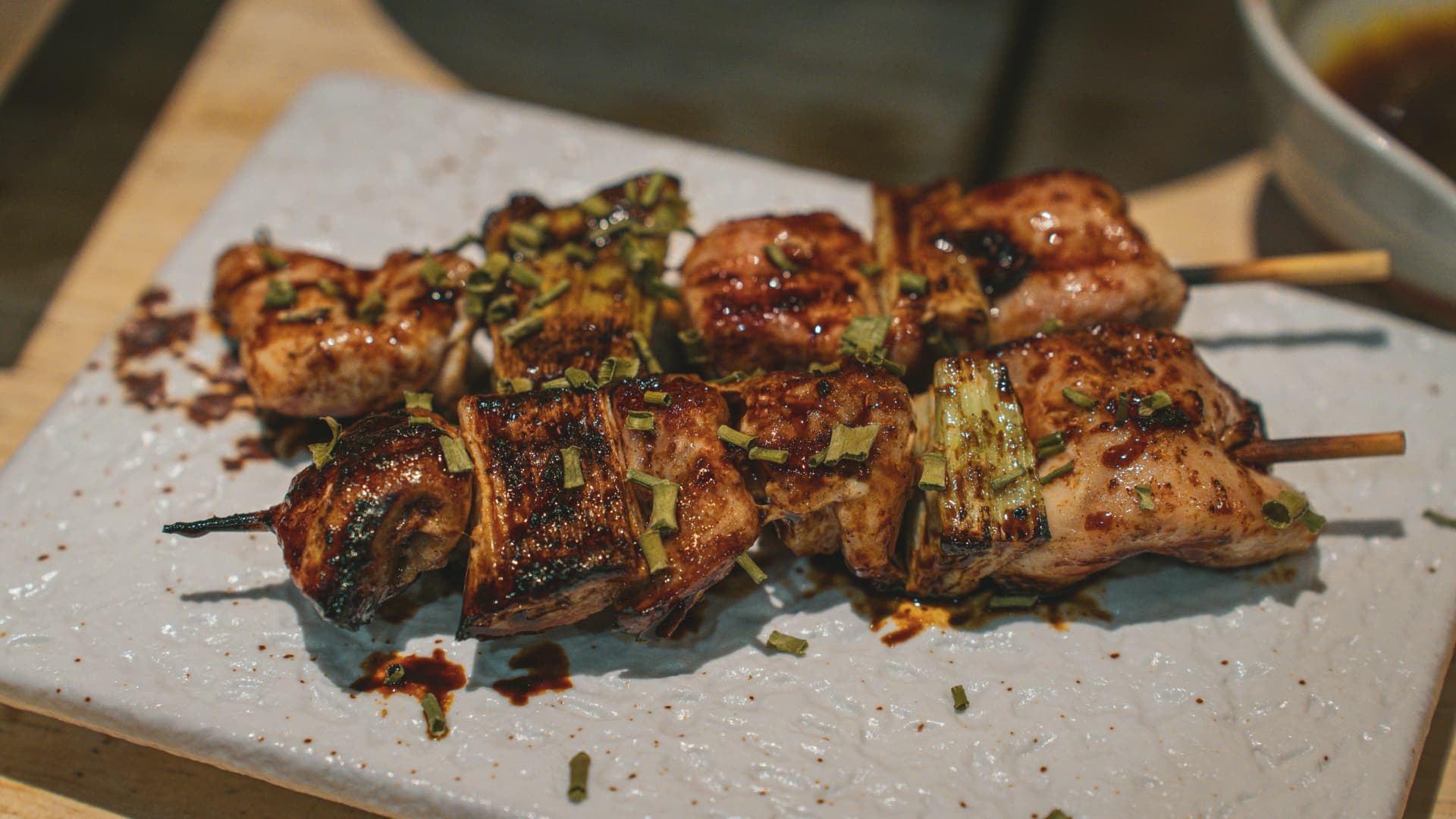
Yakitori is one of Tokyo's most accessible foods and one of its most misunderstood. The difference between a tourist meal and a local one comes down to knowing the parts.
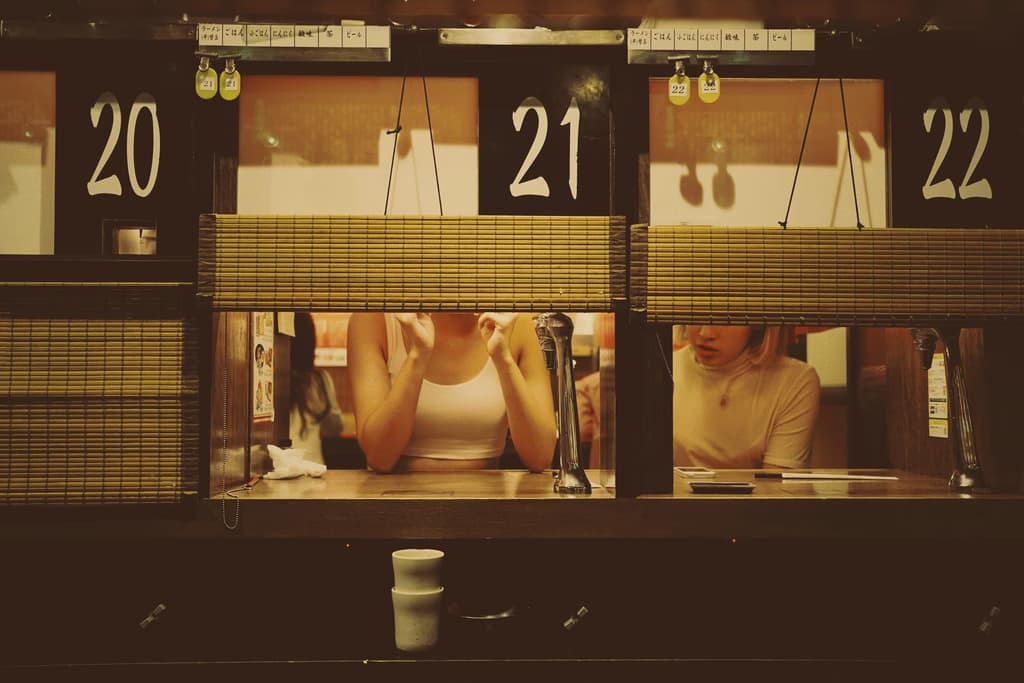
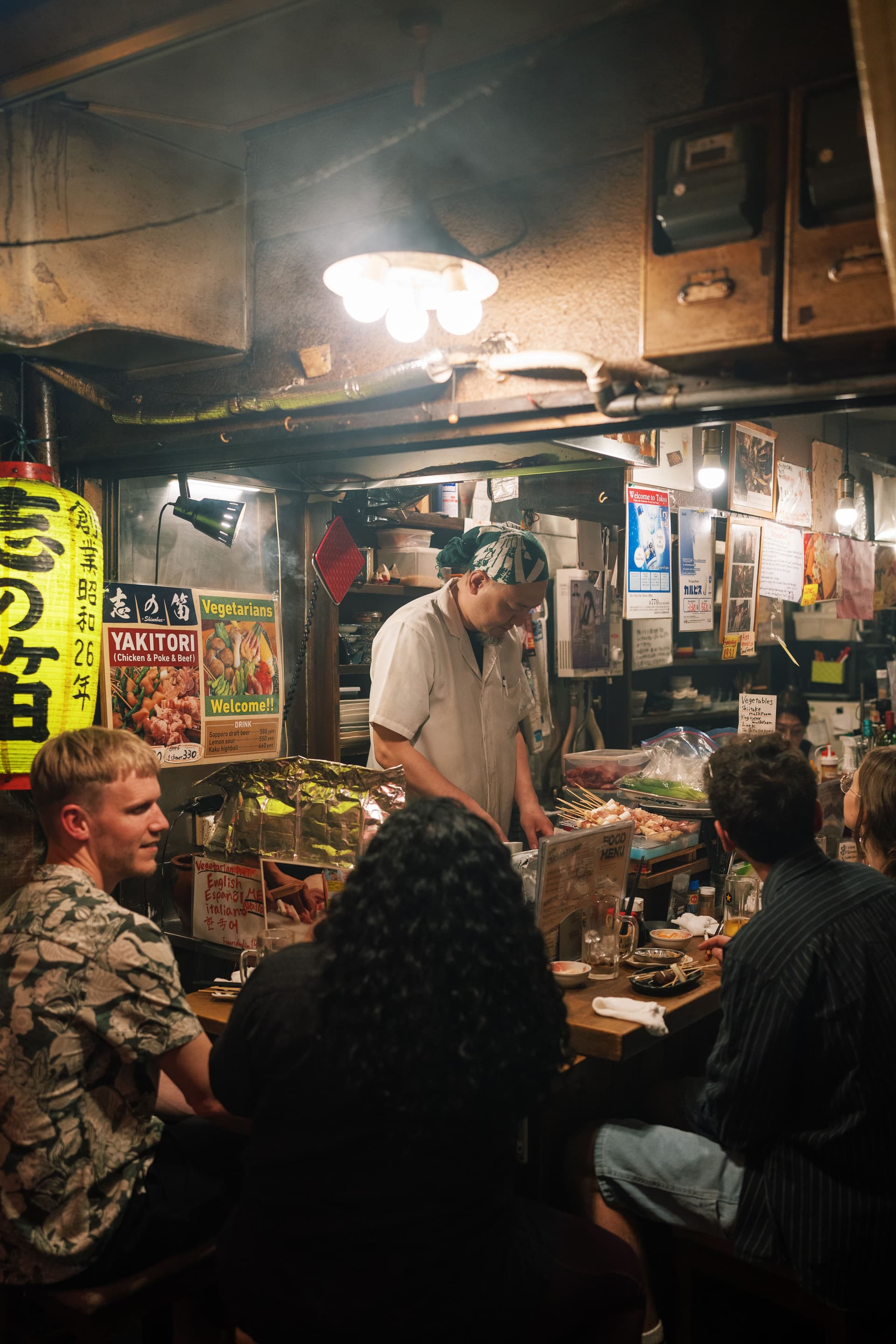
Yakitori in Tokyo means sitting at a counter in Shinjuku. It's narrow, maybe eight seats. The guy behind the grill has been turning skewers for twenty years. Smoke drifts up into a hood that doesn't quite catch all of it. He slides six skewers in front of you, each one a different shape, a different colour, a different part of the bird. You recognise exactly one of them.
This is the gap between "chicken on a stick" and what yakitori actually is. The word translates literally to "grilled bird," and in Tokyo, that means the whole bird. Heart, liver, skin, tail, gizzard, the cartilage around the breastbone, and if you're at a serious place, the fallopian tube with an unlaid egg yolk still attached. One animal, thirty possible skewers, each with its own texture and flavour and preferred seasoning. It's one of the cheapest great meals in Tokyo and one of the easiest to get wrong if you don't know what you're ordering.
This guide fixes that. By the end of it, you'll know what chochin is, why bonjiri is worth fighting over, and how to sit at any yakitori counter in Tokyo without guessing.
What Is Yakitori, Actually
The short version: chicken skewered on bamboo sticks and grilled over charcoal. The longer version matters more.
At a good yakitori-ya, the charcoal is Binchōtan, a dense white charcoal made from ubame oak. It burns at a consistent, high temperature and produces almost no smoke or chemical flavour. This sounds like a small detail. It changes everything. Cheap charcoal gives off acrid fumes that coat the meat. Binchōtan burns clean, so you taste the chicken, the fat rendering, the salt or glaze. Premium shops in Tokyo spend over ¥100,000 a year on charcoal alone. When someone tells you the charcoal doesn't matter, they haven't tasted the difference.
The skewering itself is a craft. Different cuts require different angles on the skewer. Thigh meat gets threaded so the fat side faces the heat first. Skin is layered three or four times over, folded tight so it crisps evenly. Heart is skewered through the centre at a precise angle so it cooks through without drying out. The chef manages a grill with dozens of skewers at different stages, rotating and repositioning each one based on how it's cooking. A great yakitori counter looks calm. The work behind it is relentless.
Tokyo has more technically serious yakitori chefs than anywhere else in the world because the city supports thousands of yakitori-ya across every price point, from ¥100 standing-bar skewers in Yurakucho to ¥30,000 omakase courses in Meguro. That range creates a ladder. Young cooks start at casual joints, learn the grill, move up. The best end up running eight-seat counters where every skewer is a minor engineering project. The concentration of talent, the competition, and a customer base that knows the difference between good and mediocre grilling: that's specific to Tokyo.
The Parts: A Yakitori Taxonomy
The Classics Everyone Orders
Negima is thigh meat alternating with sections of negi (Japanese leek) on the same skewer. The thigh fat renders into the leek, the leek caramelises and goes sweet, and each bite hits both rich and sharp. If you order one skewer at any yakitori-ya, this is probably it. Tare (the sweet soy glaze) is the standard seasoning, and it works because the fat carries the sweetness well. Negima is also one of the cheapest skewers on any menu, a low-risk starting point while you figure out the rest.
Momo is plain thigh, no leek. The workhorse of any yakitori menu. Less interesting than negima on paper, but a good test of the restaurant. At a mediocre place, momo is just chicken. At a great one, the exterior is slightly charred, the inside is juicy, and the tare has caramelised into a sticky, savoury crust. The quality of the bird matters most here because there's nothing to hide behind. Premium restaurants using breeds like Takasakadori will have momo that tastes completely different from a chain izakaya. Order it with tare.
Tsukune is the chicken meatball, and it changes more between restaurants than any other cut. Some places mix in cartilage for a crunchy, popping texture. Some add egg yolk as a dipping sauce on the side, so you crack the raw yolk open and roll the hot tsukune through it before each bite. Some shape them into flat patties, others into perfect spheres. The binding, the seasoning, the ratio of meat to fat: tsukune is a signature item. At good places, the meatball is loose-packed and juicy. At bad places, it's dense and dry. If a restaurant's tsukune is good, the rest of the menu probably is too.
The Offal Cuts That Separate Tourists from Regulars
Hatsu is chicken heart. Dense, firm, and almost beefy, with a mineral, iron-forward flavour that surprises people who expect it to taste like dark meat. Order it with shio (salt). Tare would mask the thing that makes hatsu interesting: that clean, faintly metallic bite.
Reba is liver, and it's polarising. At a bad place, reba is chalky, overcooked, and tastes like pennies. At a good place, it's pink in the centre, creamy, closer to foie gras than anything you'd associate with the word "liver." It often comes with a slice of raw ginger on the side to cut the richness. You either love reba or you don't, but try it once at a place that knows what they're doing.
Sunagimo is gizzard. The chewiest cut on the menu, with a firm, almost crunchy texture that takes longer to eat than anything else on the plate. Regulars love it for exactly that reason. It's something to work on between sips of highball. The flavour is mild and iron-rich. Salt only.
Chochin is the one that makes people pause. It's an unlaid egg yolk still attached to a section of fallopian tube, skewered together and grilled. The yolk goes warm and creamy, the tube has a slight chew. It's a single bite, rare even at good restaurants, and it exists only at serious yakitori-ya that break down whole birds and source female chickens specifically for these parts. Most tourists never encounter chochin. Many longtime Tokyo residents haven't either. If you see it on a menu, order it. A place that serves chochin wastes nothing.
The Underrated Easy Cuts
Kawa is chicken skin, and it's wildly underrated. A good kawa skewer has three or four layers of skin folded tightly around the skewer, grilled until the outside is crackling and crisp while the inside stays fatty and rich. Tare turns it into something close to candy. Shio keeps it savoury and lets the fat speak. Either way, kawa is one of the best things on any yakitori menu, and most visitors skip it because "chicken skin" doesn't sound exciting.
Bonjiri is the chicken's tail, the fattiest cut on the entire bird. A small, intense skewer, maybe two bites. The fat content is extreme, almost buttery, and it's popular with regulars who know to order it early before the kitchen runs out. Bonjiri is my favourite cut at any yakitori counter. If you try one new thing from this list, make it this.
Tebasaki is the wing. Often one of the largest skewers, with crispy skin wrapping around pockets of succulent meat. It takes the longest to cook and the longest to eat. The skin-to-meat ratio is high, which means a lot of crunch and a lot of flavour, especially with a bit of shichimi (seven-spice) on top.
How to Order
Don't order everything at once. Start with two or three skewers. Watch the chef. When you see something come off the grill that looks good, order it. Yakitori is meant to be eaten at the pace the chef sets, a few skewers at a time, with drinks in between. Ordering ten skewers upfront defeats the point.
Tare vs Shio: The Only Decision You Need to Make
Every skewer comes down to this choice. Tare or shio. Sauce or salt.
Tare is a glaze made from soy sauce, mirin, and sugar, reduced into a thick, sweet-savoury coating. At serious yakitori-ya, the tare pot has been simmering for years, sometimes decades. New sauce gets added on top of old sauce, and the mixture deepens over time. Tagosaku in Ebisu has been replenishing the same batch for over sixty years. Think of it like a sourdough starter: the older it gets, the more complex the flavour becomes. When someone says a restaurant has "good tare," they usually mean it's been alive for a long time.
Shio is just salt. Fine sea salt, applied before or during grilling. No glaze, no sweetness, no added complexity. What you taste is the chicken itself, the fat, the char from the grill, and whatever mineral quality that particular cut carries.
The general principle is simple. Fatty cuts suit tare. The sweetness of the glaze works with the richness of the fat, and the two amplify each other. Kawa, bonjiri, tsukune: tare. Leaner or more delicate cuts suit shio. You want to taste the meat without anything getting in the way. Hatsu, sunagimo, sasami (breast tenderloin): shio.
That said, there's no wrong answer. Japan is split roughly 50/50 between people who default to tare and people who default to shio, with about 15% who have no preference at all. The better move is to let the cut guide the choice, and if you're unsure, ask the chef. The phrase is: "Tare ka shio, docchi ga ii?" (タレか塩、どっちがいい?). It means "tare or salt, which is better?" and every yakitori chef in Tokyo will have an opinion.
Most places that care about their food will also make a recommendation on the menu or verbally when you order. Follow it. The chef knows which cuts are grilling well that night and which seasoning shows them off best.
What Yakitori Costs in Tokyo
| Tier | Setting | Price per skewer | Meal cost | Reservation |
|---|---|---|---|---|
| Standing bar / yokocho | Grungy, smoky, stools or standing | ¥100–300 | ¥1,500–3,000 | Walk-in |
| Casual sit-down yakitori-ya | Neighbourhood restaurant, counter + tables | ¥200–500 | ¥3,000–6,000 | Recommended |
| Premium / omakase yakitori | Counter only, chef selects, rare cuts | ¥400–1,000+ | ¥8,000–30,000 | Required, weeks ahead |
At current exchange rates, that's $10–20 USD for a full meal at the casual end, $20–40 at mid-range, and $55–200+ at the premium tier.
The jump in price reflects three things. First, charcoal: Binchōtan costs five to ten times more than standard charcoal, and premium restaurants burn through it. Second, sourcing: high-end places use brand-name chicken breeds like Takasakadori or Nagoya Cochin, birds that cost over ¥10,000 wholesale. Third, the cuts themselves. Cheap places grill thigh and skin. Premium places break down the whole bird, which means you get access to thirty parts instead of five. The rare offal, the chochin, the bonjiri, the heart root: those only exist where someone is doing the full breakdown.
Where to Eat
Omoide Yokocho, Shinjuku
A narrow alley of tiny bars and grill stalls next to Shinjuku Station's west exit. The air is thick with smoke, the seats are cramped, and nothing about it is polished. That's the point. Skewers run ¥100 to ¥200 each, a full meal with beers costs under ¥3,000, and you walk in without a reservation. English is limited, but the menus have pictures and the staff are used to tourists pointing. Arrive before 5pm on weekdays to skip the worst of the crowds. Best place to have your first yakitori meal in Tokyo.
If you want a larger space with air conditioning, Torien (鳥園), a multi-floor izakaya with multiple floors and large capacity, offers yakitori alongside fresh sashimi and cooked dishes like mentaiko dashimaki tamago and motsuni. It's ideal for groups and first-timers. For a more intimate, retro experience with Showa-era atmosphere and a focus on binchotan-grilled yakitori, Kappetei (かっぺ亭) specializes in skewers with all-you-can-drink course options.
Tagosaku, Ebisu
A no-frills counter izakaya with a sixty-year history and the tare to prove it. The sauce pot at Tagosaku has been continuously replenished for over six decades. Skewers are ¥150 to ¥200 each, meals land ¥3,000 to ¥5,000. The vibe is old-school Tokyo: locals at the counter, minimal English, zero pretension. Reserve for dinner or arrive before 6pm for walk-in counter seats. Eight minutes from Ebisu Station on foot.
Toriyoshi, Nakameguro
An upscale, counter-only yakitori bar. Walk-in only, no reservations accepted. You show up, you queue. Arrive thirty minutes before the 4:30pm opening or expect a one to two hour wait. The reward is access to rare cuts like chochin and some of the most precise grilling in the city. Meals run ¥5,000 to ¥8,000. The staff speak English. Don't leave without trying the soboro donburi (minced chicken rice bowl), their signature side dish. Ten minutes from Nakameguro Station.
Toritama, Shibuya
The restaurant for people who want to go deep. Toritama keeps thirty-plus standard cuts on the menu and runs a daily "secret menu" of rare and seasonal parts, sometimes pushing the total past forty. The chef will walk you through what's available if you ask. Meals run ¥6,000 to ¥10,000 depending on how adventurous you get. Reservations recommended for prime hours. English is basic but the staff can explain with gestures and pictures.
Ginza Torishige, Ginza
A ninety-three-year-old yakitori institution with the space, service, and English-language menus that make it the easiest high-quality option for visitors. Dinner runs ¥4,000 to ¥7,000, but the real move is lunch, where set meals start ¥1,500 to ¥2,500. The signature curried rice is worth ordering alongside your skewers. Reserve for dinner. Walk-ins work for lunch. Five minutes from Ginza Station.
Ukai Toriyama, Mount Takao
A day trip option for anyone with the time and budget. Ukai Toriyama is a premium garden restaurant at the base of Mount Takao, about fifty minutes by train from central Tokyo. You eat in private huts surrounded by landscaped gardens. Meals are multi-course and run ¥10,000 to ¥15,000 per person. In early summer, the restaurant releases fireflies in the garden after dinner. Book at least two weeks ahead. This is a special-occasion meal, not a casual Tuesday.
If you want someone local to take you through the best yakitori spots and handle the ordering, language, and logistics, consider a private food tour in Tokyo. It's the fastest way to skip the guesswork and eat well from the first skewer.
Yakitori Etiquette
Eat off the skewer. Bite the top piece, pull it clean, chew, repeat. As you work your way down and the remaining pieces get harder to reach, use your chopsticks to slide them toward the tip, then bite again. Removing pieces from the skewer onto a plate is fine, nobody will judge you for it, but eating directly off the bamboo is the standard approach and keeps the meat warmer longer.
Order two or three skewers at a time. Yakitori is grilled in small batches, and the chef is pacing the meal based on what comes off the grill when. If you order fifteen skewers upfront, they all arrive in a pile and half of them go cold. The better approach: order a few, eat them, drink, order a few more. This gives the chef room to time each batch properly.
The standard drink pairing is a highball, whisky and soda over ice. Beer works fine too, but the highball has become the default at most yakitori counters because the carbonation and the slight bitterness of the whisky cut through the fat. At a premium place, sake or shochu work with lighter cuts.
It's completely fine to ask the chef what's good. "Osusume wa?" (おすすめは?) means "what do you recommend?" and opens a conversation that usually leads to whatever the chef is proudest of that evening.
A few things to avoid. Don't double-dip in the communal tare pot if one exists at your table. Don't rush. Yakitori is a slow meal, meant to be drawn out over an hour or two with drinks and conversation. And don't leave mid-meal without telling the chef. A simple "gochisousama" (ごちそうさま, thanks for the meal) signals that you're done and is the polite way to close out.
How to Navigate Without Japanese
Most yakitori menus have pictures, or the cuts are visible on or behind the grill. Pointing works. The phrase "osusume wa?" gets you the chef's recommendation and sidesteps the entire menu. At serious yakitori-ya, you can also say "omakase de" (おまかせで), which means "chef's choice." The chef will select the skewers, the seasoning, and the order, and you eat whatever arrives. Good option if you want to skip the decision-making and taste a range of cuts you wouldn't have chosen yourself.
If you want specific items, the Japanese names in this guide are what you'll see on menus. "Bonjiri" is bonjiri everywhere. "Hatsu" is hatsu. The words don't change between restaurants. Learn five or six names from the taxonomy section above, and you can order confidently at any yakitori counter in the city.
For a more structured first experience, a guided yakitori experience pairs you with someone who speaks the language, knows the menus, and can explain each cut as it arrives. It removes the friction entirely and lets you focus on eating.
If grilled chicken doesn't speak to you, Tokyo's other great protein deep-dives are just as rewarding: tonkatsu for pork cutlets and wagyu for beef. The food scene guide ties it all together.