Cat cafés aren't a tourist gimmick. They're a response to a real constraint in how Tokyo residents live.
Cat cafe culture in Tokyo exists for a reason most guidebooks get wrong. Ask why and you'll get something vague about "Japanese people loving cute things." That's not wrong, but it's incomplete. The real reason is regulatory: the majority of Tokyo's apartments prohibit pets. Not discourage them — prohibit them. A resident who lives in one of Tokyo's millions of leased condominiums and wants animal contact has no option at home. Cat cafés are the infrastructure that fills this gap.
That origin story matters, because it explains why the format has evolved far beyond cats. Tokyo now has owl cafés, hedgehog cafés, reptile cafés, dog cafés, and a growing number of rescue cafés where the animals are up for adoption. This is not a tourist novelty that sprung up to extract yen from visitors. It's a subcultural ecosystem built to serve a real constraint in how Tokyo residents actually live.
Why Most Tokyo Apartments Ban Pets
The standard Tokyo lease for a マンション (condominium apartment) includes a no-pet clause. The reasoning is practical: animals cause noise, damage flooring, and create odor disputes between neighbors in buildings with thin walls and shared ventilation. Landlords enforce these clauses strictly, and violating one can result in eviction. Pet ownership in Japan is not low because residents don't like animals — ownership rates in houses without restrictions are comparable to Western countries. It's low in urban Tokyo because the legal structure of rental housing makes it nearly impossible.
This creates a population of millions of cat lovers in a city of 14 million people who cannot own cats. Cat cafés are the logical response. You pay for time, not ownership. You get animal contact. The café provides the cats. Everyone leaves satisfied.
The Origin Story: Taiwan First, Japan Second
Japan did not invent the cat café. The world's first opened in Taipei, Taiwan in 1998 — a place called Cat Garden (猫花園) that became a destination for cat lovers in a city with similar pet-restriction pressures.
Japan adopted the format in 2004, when Neko no Jikan ("Cats' Time") opened in Osaka's Tenjinbashisuji Shotengai — the longest covered shopping arcade in Japan. The concept spread to Tokyo within a few years, and the format exploded after 2008. Today Tokyo has somewhere between 150 and 200 cat cafés depending on how you count, and the city remains the global capital of the format both in quantity and variety.
Most English-language guides attribute cat cafés to Japan without mentioning Taiwan. Japanese sources are more accurate on this. The Taiwan origin is not a minor historical footnote — it shows that cat cafés emerge predictably wherever urban density meets pet restrictions, which is why the format has since spread globally.
What the Experience Is Actually Like
A first-time visitor's main surprise is usually the calm. You're not entering a pet store or a zoo — you're entering something closer to a lounge where cats happen to live. Most cafés seat around 20-30 people, the music is quiet, and the lighting is low. Cats move freely through the space, sleep on elevated platforms, or settle on whichever lap appeals to them at that moment.
You pay at entry for your time slot — more on pricing below — and receive a brief orientation from staff, usually covering the rules. Most visitors spend 60 to 90 minutes. Longer stays are less common because you'll run out of active cat interaction after an hour; the cats have their own schedules and don't perform on demand.
The café element varies. Some places serve full drinks and light food; others provide a drink bar included in the fee. The cats themselves range from breeds like Scottish Folds and Ragdolls at premium establishments to mixed-breed rescues at shelter cafés. The vibe at a themed boutique café (Temari no Ouchi's fairy-tale interior, for example) is completely different from a straightforward commercial chain like MOCHA — both are legitimate but they serve different purposes.
One thing nobody warns you about: cats are indifferent to your preferences. If you want to hold a cat, the cat decides. If a cat settles on your bag instead of your lap, that's what happens. This is the correct behavior, and it's part of what makes good cafés worth distinguishing from bad ones — at well-run places, the animals aren't handled constantly, which means they're relaxed enough to actually approach guests.
The Animal Café Ecosystem Beyond Cats
The pet-restriction problem that created cat cafés applies equally to owls, hedgehogs, rabbits, and reptiles. Tokyo's animal café scene has diversified significantly, and the formats serve quite different experiences.
| Type | What You Do | Top Location | Notes |
|---|---|---|---|
| Cat café | Sit, let cats approach, use toys | Shinjuku, Shibuya, Akihabara | Most accessible; book same-day or day before |
| Owl café | Hold owls on a glove, observe up close | Akiba Fukurou (Akihabara), Owlpark (Ikebukuro) | Reservations essential; 30-60 min sessions |
| Hedgehog café | Hold hedgehogs, handle small animals | HARRY (Harajuku, Asakusa) | Gloves provided; animals more shy — low activity |
| Reptile café | Handle lizards, snakes, geckos | Various Akihabara locations | Niche; better for enthusiasts than casual visitors |
| Dog café | Play with dogs in a supervised space | Scattered across the city | Less common than cat cafés; dogs more reactive |
| Rescue café | Interact with adoptable cats | Multiple across Tokyo | Same experience as cat café, animals up for adoption |
The owl cafés deserve a specific note. Akiba Fukurou in Akihabara houses over 40 owls and allows close handling under staff supervision. Owlpark in Ikebukuro combines owls with hedgehogs and reptiles on the same visit. These are timed, reservation-only experiences — walk-ins are rarely possible. The experience is genuinely unusual: owls are calm, heavy, and will lock eyes with you in a way that feels more intense than a cat encounter. They're also nocturnal animals being kept in artificial lighting conditions, which raises welfare questions some visitors find uncomfortable.
Hedgehog cafés like HARRY in Harajuku are quieter experiences. Hedgehogs are defensive by nature; they roll up when startled and need time to settle. Staff guide you through approach technique. It's calmer and slower than a cat café, and appeals to a specific type of visitor.
Specific Café Recommendations
Cat Café MOCHA (Shinjuku, Shibuya, and 40+ locations nationwide) is the default recommendation for first-timers because it's accessible, consistent, and well-run. The Shinjuku location near Shinjuku Station is the largest in Japan. The interior is modern and clean — less personality than boutique options, but the cats are healthy and the system is smooth. Pricing: ¥660 for 30 minutes, ¥1,320 for 60 minutes, capped at ¥2,640 for two hours or more (plus a ¥385 drink bar fee). No reservations needed at most MOCHA locations — you walk in, pay, and go.
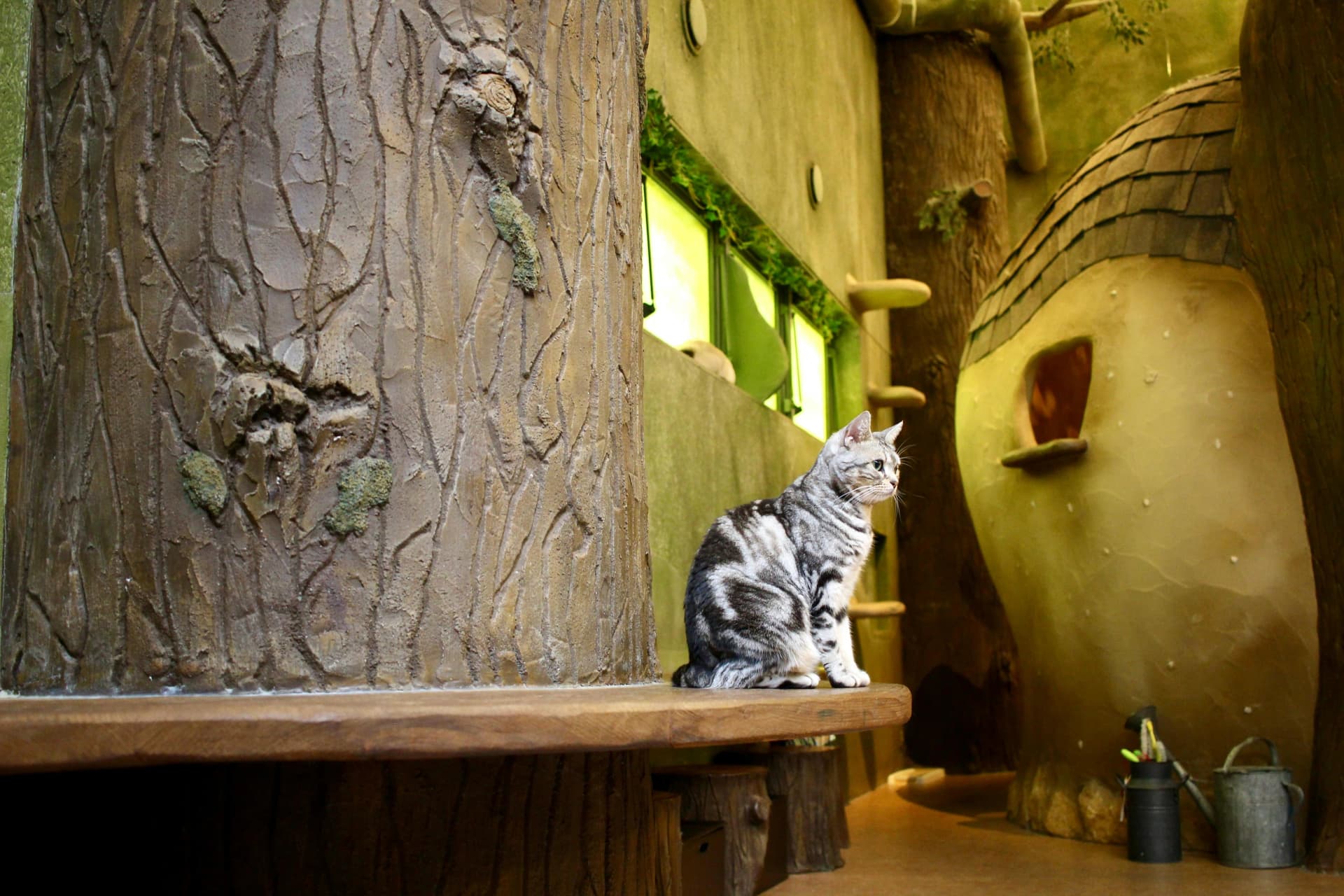
Temari no Ouchi in Shinjuku has a reputation as the most distinctive cat café in Tokyo. The interior is themed as a tiny village — low ceilings, wooden décor, handmade details — and it operates on a smaller scale than the chains. The cats here are treated more like residents than performers. It serves drinks and light cocktails. Book ahead; it fills up on weekends.
Nyafe Melange in Ebisu (3F, Hitoshi Building) has a neighborhood café atmosphere that feels less tourist-facing than most. Ebisu is a quieter neighborhood than Shinjuku or Akihabara, which filters the clientele. Recommended if you want an hour that feels like a local experience rather than a packaged one.
Nine Lives Cat Café gets consistent recommendations in discussions about ethically-run cat cafés in Tokyo. The cats show signs of lower stress and more natural behavior than at higher-volume commercial operations, which is what you want to see. Worth a look if animal welfare is a specific concern.
Rescue cafés (保護猫カフェ) don't have a single dominant name — there are dozens of them across Tokyo. The experience is functionally identical to a regular cat café, but the animals are rescues available for adoption. Your entry fee supports the organization. If you want to visit a cat café and have the sense that the money is doing something useful, seek these out specifically. A search for 保護猫カフェ + your Tokyo neighborhood will surface local options.
How to Book, What to Wear, and the Rules
Booking: MOCHA and the large chains accept walk-ins at most hours. Boutique cafés like Temari no Ouchi and owl cafés like Owlpark require reservations — book 2-3 days in advance for weekdays, a week ahead for weekends. Most booking can be done through the café's website, though some Japanese-only sites may require a translation assist or a booking platform like Asoview or Activity Japan.
What to wear: Avoid dangling jewelry — cats treat it as toys. Avoid strong perfume and strong-smelling lotions (cats find them off-putting). Dark clothing will accumulate visible cat hair; not a problem functionally, but worth knowing. Comfortable clothes you don't mind having a cat sit on.
The rules — enforced everywhere:
All cafés require hand-washing and alcohol sanitization before entering the cat area. This is non-negotiable. Flash photography is prohibited without exception — it stresses the animals. You don't wake sleeping cats. You don't chase or corner cats; you let them approach. Most cafés have rules about picking up cats — some allow it with both hands while seated, some prohibit it entirely. Listen to the entry briefing; staff will clarify.
One rule that surprises first-timers: you generally cannot bring in your own food, and you never feed the cats anything you haven't purchased from the café. Outside treats can cause digestive problems and introduce smells that disrupt the cats' territory.
The Welfare Question
It's worth addressing directly because visitors increasingly ask about it. Cat café welfare exists on a spectrum. At one end are well-run cafés where cats have multiple rest areas out of reach from customers, where handling is limited per session, and where veterinary care is regular and visible. At the other end are high-volume operations where animals are handled constantly and show signs of chronic stress.
The signs of a well-run cat café: cats are sleeping naturally in open areas (not hiding), they approach guests voluntarily, staff intervene if a cat is being held longer than it wants to be, and there are clearly defined rest zones customers can't enter. If cats are predominantly hiding when guests are present, that's a red flag.
Owl cafés attract more welfare scrutiny than cat cafés. Owls are solitary, nocturnal birds that don't coexist naturally with crowds of people. Reputable owl cafés limit handling time and session sizes. The question of whether even a well-run owl café is ethically sound is genuinely contested; visitors should go in informed rather than assuming the format is benign because it's legal and popular.
Rescue cafés sidestep most of these concerns by operating as adoption organizations — the animals are there temporarily and move on to homes.
FAQ
Do I need to speak Japanese to visit a cat café in Tokyo? Most tourist-facing cafés in Shinjuku and Shibuya have English signage and staff who can explain the rules in basic English. MOCHA's website has an English version. For smaller boutique cafés, Google Translate handles the booking page. The rules briefing at entry can usually be conducted with a combination of gestures, printed cards, and simple English phrases.
What's the minimum age for cat cafés in Tokyo? Varies by café. Most large chains like MOCHA allow children who can follow instructions — typically 5 and up with a parent. Some boutique cafés set a higher minimum (8-10) to protect the animals. Check the specific café's website before visiting with young children. For more on building a full day around family-friendly stops like this one, see our Tokyo with Kids guide.
How long should I plan for a cat café visit? Sixty minutes is sufficient for most people. The first 15-20 minutes involve setup and orientation; the next 40 minutes are active interaction. After 90 minutes, most visitors have had their fill and the cats are either sleeping or becoming habituated to your presence. The MOCHA pricing cap at 120 minutes exists because most people don't need more.
Is there a best time of day to visit? Weekday mornings (opening through noon) are consistently the least crowded. Weekends fill up regardless of time. Evening slots after 5pm on weekdays are a good middle ground — lower crowds than midday weekend rushes, cats are typically more active in lower light. First thing in the morning at boutique cafés means cats are freshest from their overnight rest.
What's the difference between a regular cat café and a rescue café? At a regular commercial cat café, the cats are employees — they live there permanently and are the product. At a rescue café (保護猫カフェ), the cats are rescues waiting for adoption. The daily experience is nearly identical. The difference is where your money goes and what happens to the animals long-term. Rescue cafés are non-profit or run with thin margins; your entry fee directly supports their operation.
Cat cafés fit naturally into a broader Tokyo day rather than standing alone as a destination. The neighborhoods with the highest concentration — Shinjuku, Akihabara, and Kichijoji — each have enough surrounding texture to build a full morning or afternoon around. If you're working with a guide on an Infinite Tokyo day, a 60-minute cat café stop pairs well with a neighborhood walk, a market visit, or a specialty ramen lunch nearby.