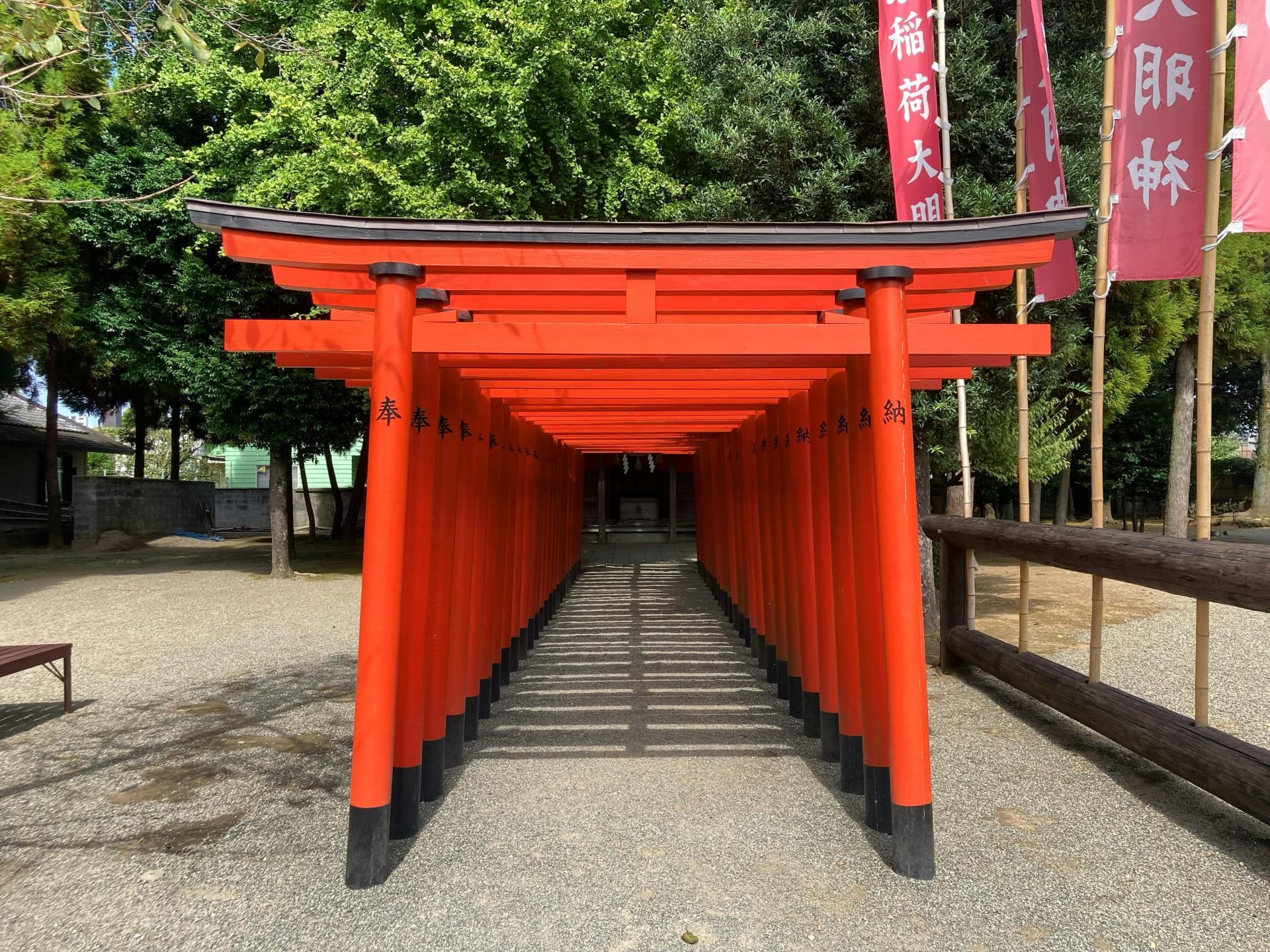
Nezu Shrine offers Fushimi Inari's visual impact within Tokyo — at a fraction of the crowd level.
Nezu Shrine is Tokyo's answer to Fushimi Inari — a tunnel of torii gates curving uphill through an Edo-period shrine complex, but at a fraction of the crowd. Fushimi Inari in Kyoto has thousands of torii gates and draws millions of visitors a year; you need to start before 5am to photograph the tunnels without people. Nezu has a smaller tunnel, curving uphill through the shrine grounds, and can be photographed at almost any hour.
This is the accurate comparison. Nezu Shrine is not a lesser version of Fushimi Inari. It's a distinct Edo-period shrine with its own history, its own architecture, and its own seasonal event (the April azalea festival). The torii tunnel is worth visiting. So are the seven buildings designated Important Cultural Properties, the 1706 main hall commissioned by Shogun Tokugawa Tsunayoshi, and the 3,000 azalea bushes that bloom across the hillside every April.
What Nezu Shrine Actually Is
Nezu Shrine is one of Tokyo's oldest functioning Shinto shrines — and one of the most architecturally significant. The current shrine complex was completed in 1706 under the direct patronage of the fifth shogun, Tokugawa Tsunayoshi, who commissioned it as a "tenka fushin" — a national construction project — on land that had belonged to his nephew and adopted heir, Tokugawa Ienobu (later the sixth shogun). The shrine served as Ienobu's birthplace deity, and Tsunayoshi's sponsorship was both a religious act and a public declaration of dynastic continuity.
What makes this matter for visitors: the buildings were constructed at once, as a single coherent ensemble in the Gongen-zukuri (権現造) architectural style, where the main hall (honden), offering hall (heiden), and worship hall (haiden) connect as one continuous structure under a shared roof line. This is rare. Most shrine complexes have been rebuilt, repaired, or partially replaced over the centuries. At Nezu, all seven major buildings completed in 1706 survive intact — not one has been lost to fire, earthquake, or war. The entire complex escaped the 1945 air raids that destroyed much of old Tokyo. Japanese architectural historians describe it as the largest surviving Edo-period shrine complex in Tokyo, a claim backed by the national cultural designation it holds.
Nezu Shrine is also one of the Tōkyō Jūsha (東京十社) — ten shrines designated by Emperor Meiji after his move to Tokyo as shrines of special imperial significance. This status is rarely mentioned in English-language guides and gives the shrine a different kind of authority than its modest Bunkyo Ward location might suggest.
The Senbon Torii: What You're Actually Looking At
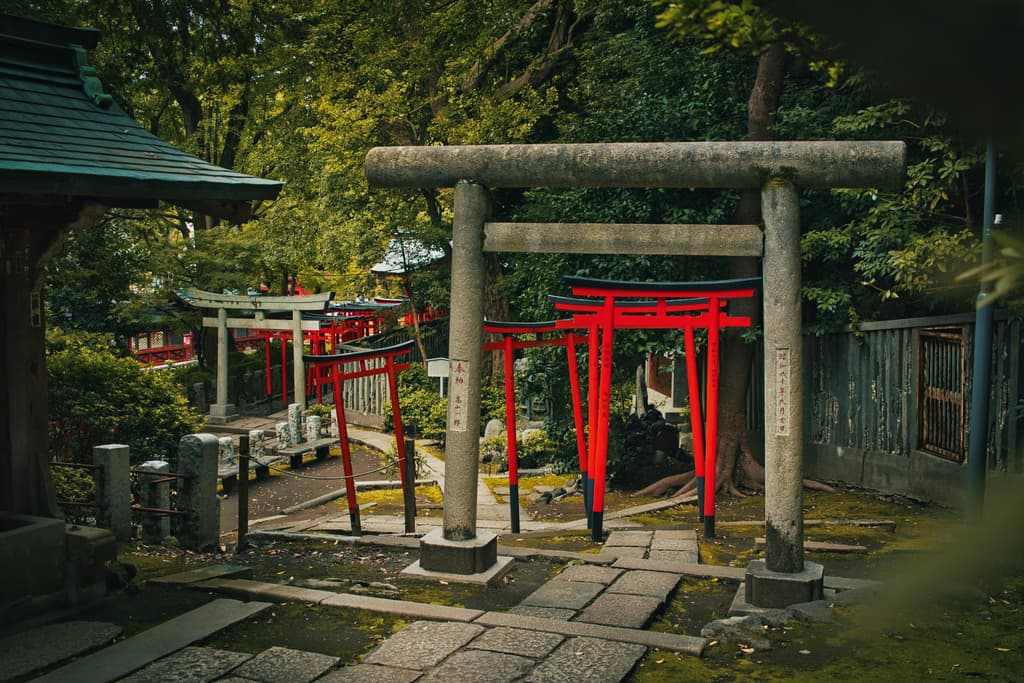
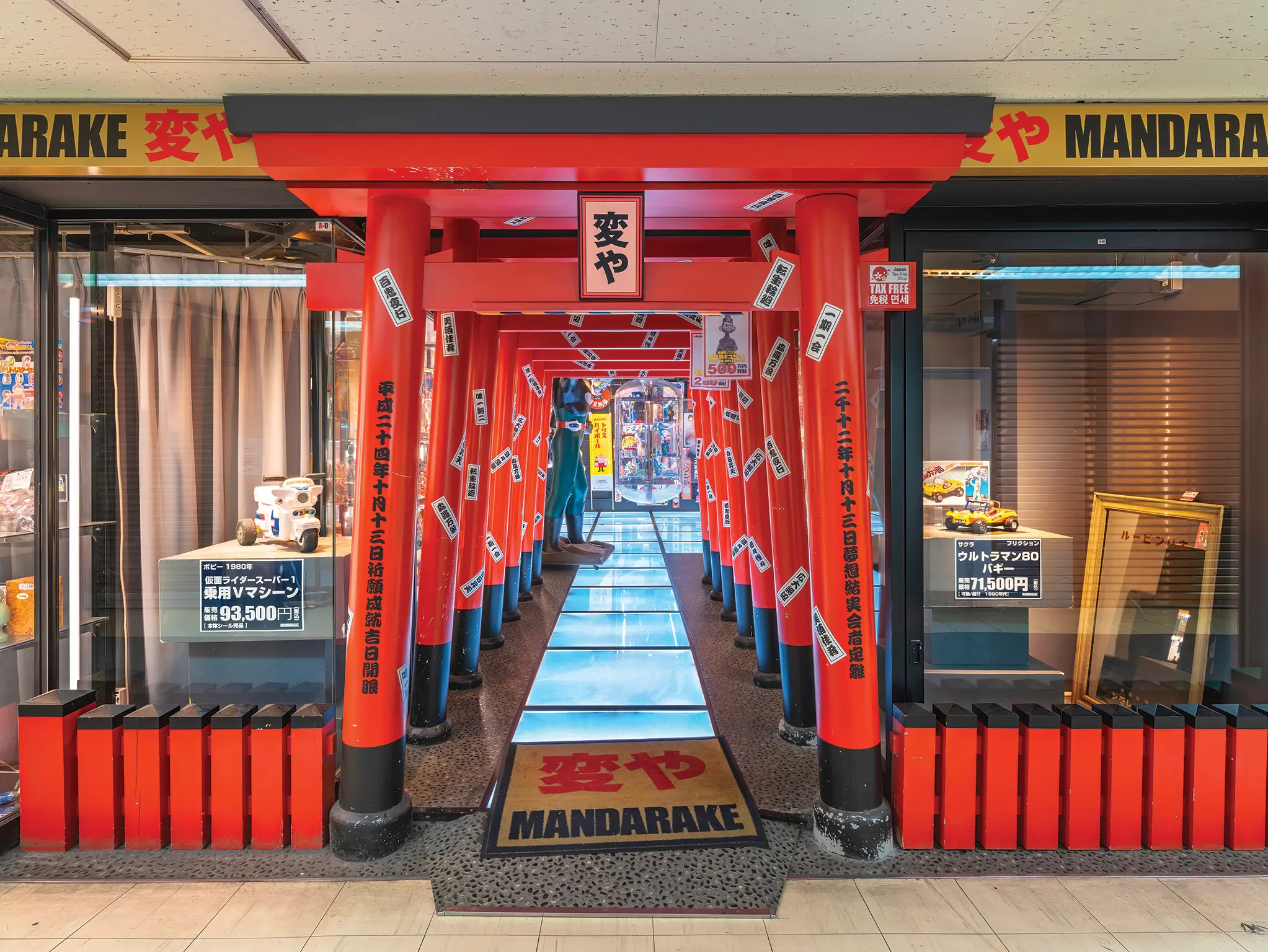
The torii tunnel at Nezu is specifically associated with Otome Inari Shrine (乙女稲荷神社), a subsidiary shrine within the grounds dedicated to the deity Ukanomitama-no-Kami. The rows of vermilion gates lead uphill from near the pond, framing a stepped path before emerging at the smaller Otome Inari hall. This is an important distinction from Fushimi Inari, where the torii are the primary attraction and the mountain trail extends for several kilometers. At Nezu, the torii tunnel is one element within a larger shrine complex — and the compact scale makes the experience more photographically manageable, not worse.
The shrine's official guidance on photography is worth knowing before you arrive. The pillars of each torii gate carry the name and prayer intention of the individual or company that donated it. The shrine requests that visitors photograph from the side that doesn't display these inscriptions, to respect the privacy of the donors. In practice: photograph from inside the tunnel looking toward the Otome Inari hall, rather than from the side where the dedicant characters face outward. This also happens to be the better compositional angle.
Early morning is the right time to photograph the tunnel — the shrine opens at 6:00 AM, and the first hour produces filtered light through the canopy above the gates. In spring, the surrounding greenery creates a red-and-green contrast that explains why the image circulates as widely as it does. The tunnel is shorter and more compact than any of Fushimi Inari's paths, which is actually an advantage: without needing to time multiple tunnels across a mountain, you can get the shot you came for in fifteen minutes.
Getting There
The shrine is in Bunkyo Ward, north of Ueno Park, in the old Yanesen (谷根千) neighborhood — an area that preserved much of its pre-war street fabric.
Nearest stations:
- Nezu Station (Tokyo Metro Chiyoda Line) — 5 minute walk
- Todaimae Station (Tokyo Metro Namboku Line) — 7 minute walk
- Sendagi Station (Tokyo Metro Chiyoda Line) — 8 minute walk (approaching from Yanaka direction)
By JR: Nishi-Nippori Station is a 15-minute walk through Yanaka Cemetery — a worthwhile approach if you're coming from the JR network.
Bus: Route #58 to "Nezu Shrine Entrance" stop, or the B-guru community bus (Bunkyo Ward loop).
Admission and Hours
Note the important distinction: the shrine grounds open at 6:00 AM, but the azalea garden (つつじ苑) has separate hours and a separate admission charge during the April festival period.
| Shrine grounds admission | Free |
| Azalea garden (April festival) | ¥500–¥1,000 (varies by bloom stage; children under primary school age free) |
| Shrine grounds hours | 6:00 AM – 5:00 PM (5:30 PM in summer, 4:30 PM in winter) |
| Azalea garden hours (April) | 9:30 AM – 5:30 PM (first day of festival: 11:00 AM open) |
| Closed | No regular closure days |
This split matters: if you arrive at 6:00 AM to photograph the torii tunnel (the best time), the azalea garden will not be open for another three and a half hours. Plan accordingly.
The Azalea Festival (April)
The Bunkyo Tsutsuji Matsuri has been held at Nezu Shrine every April since the early 1970s — the 2025 edition was the 54th annual festival. The azalea garden itself, however, is far older: the 6,600-square-meter hillside garden has been cultivated for approximately 300 years, predating the festival by centuries. The 3,000 azalea plants represent around 100 varieties, selected specifically so that early-blooming, mid-season, and late-blooming cultivars overlap — meaning the garden offers something across the entire festival period, not just a single peak weekend.
In practical terms, peak color runs through most of April, with mid-April typically showing the fullest bloom. The shrine's official Instagram account posts updates on current bloom status during the festival, which is the most reliable way to judge timing before your visit. Early April often sees the first pinks and whites already open; late April sees the bloom thinning but the crowds also dropping.
Crowd intensity is significant and should be planned around. On peak weekends in mid-April, crowds can extend beyond the shrine gates and back toward Nezu Station — a ten-minute stretch that sometimes fills with people. The azalea garden charges a variable admission of ¥500 to ¥1,000 depending on bloom stage: early and late festival days cost ¥500; peak bloom days cost more. This is listed at the entrance gate on the day.
Weekday mornings in the first two weeks of April offer the best combination of full bloom and manageable numbers. The garden opens at 9:30 AM; arriving at opening time on a Tuesday or Wednesday is the recommended approach for those who want both peak bloom and a calm experience. The garden sits on a hillside overlooking the torii tunnel below — the view from the upper paths, with the scarlet gates visible through the azalea branches, is the defining visual of Nezu Shrine in April.
The festival also includes food stalls (屋台) along the approach, and periodic events such as mikoshi (portable shrine) processions and children's festival parades. For the shrine experience beyond the garden, these are worth catching — they're harder to find information on in advance, but the shrine's official site (nedujinja.or.jp) lists event schedules during the festival period.
The Architecture: What Most Visitors Miss
The torii tunnel draws the eye and the cameras. The shrine buildings are what justify the visit as something more than a photogenic detour.
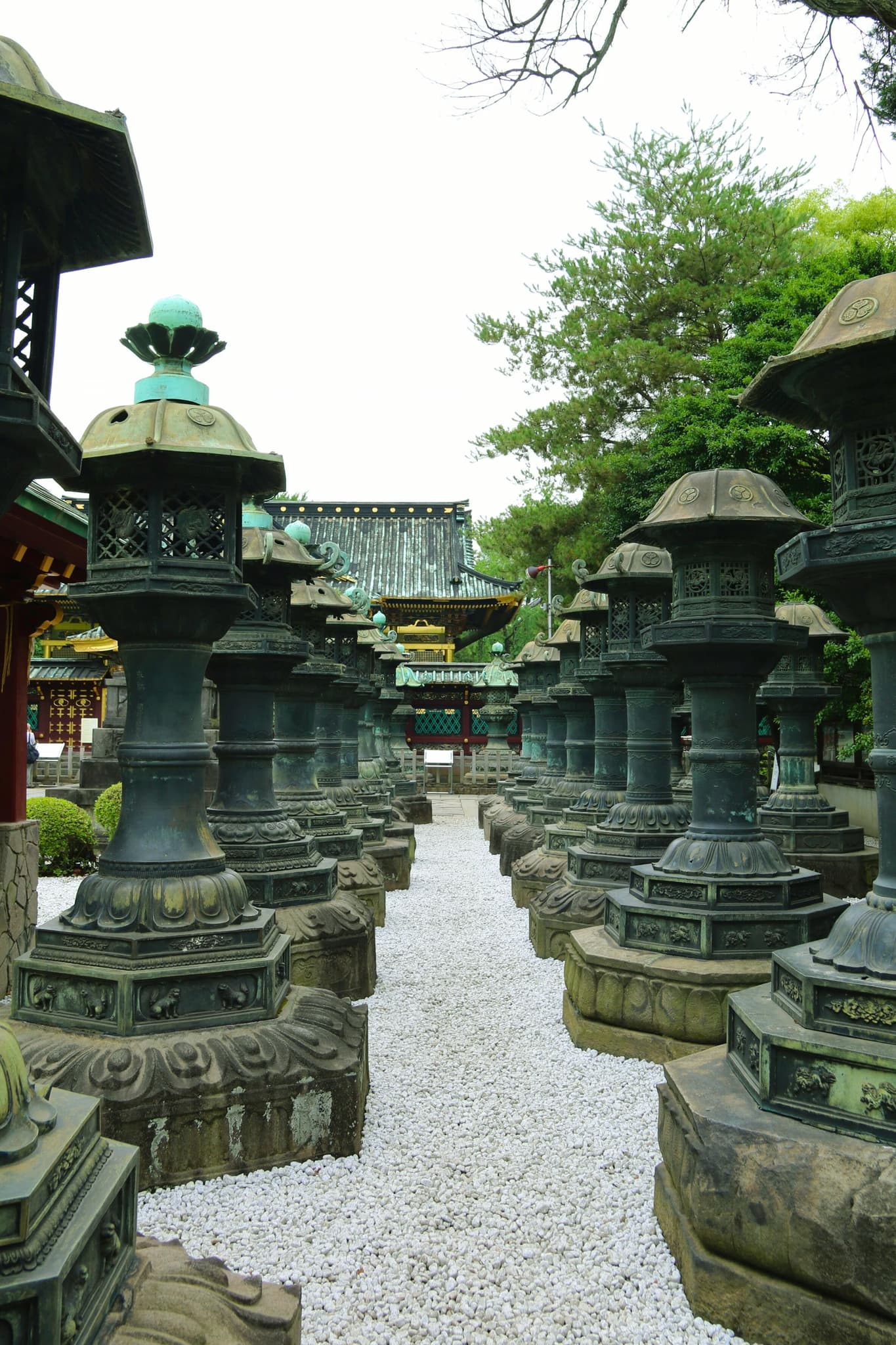
All seven buildings of the 1706 complex carry national Important Cultural Property designation — the list, as named in the national cultural heritage database, is: the main hall (本殿), the offering hall (幣殿), the worship hall (拝殿), the Chinese-style gate (唐門 karamon), the two-story gate (楼門 romon), the west gate (西門), and the ornamental fence (透塀 sukibei). The first three form the Gongen-zukuri unit: structurally connected, built under a single roofline, presenting as one continuous architectural body when viewed from the worship approach. The carvings on the karamon — the Chinese-style gate directly in front of the main hall — include intricate animal and floral motifs characteristic of the Genroku-era craftsmanship that Tokugawa Tsunayoshi patronized extensively during his reign. The romon (two-story gate) is the entrance most visitors pass through upon first entering the grounds; its proportions and lacquerwork are exceptional and visible at close range.
The transparency fence (透塀 sukibei) that encloses the main hall on three sides uses a latticework design that allows partial visibility of the honden while maintaining the sacred separation. This detail is specific to the Gongen-zukuri style and is worth examining slowly. The complete survival of all seven structures from the original 1706 construction — including the fence and west gate, which are the kinds of secondary elements that typically get replaced or lost — is what makes Nezu unusual by any standard. Other Tokyo shrines have individual Important Cultural Property buildings; very few have the complete original ensemble.
Most visitors spend time at the torii tunnel and the azalea garden and miss the main hall compound almost entirely. The karamon is five minutes from the torii tunnel and requires only a short detour.
When to Go
The shrine's 6:00 AM opening is the key practical advantage over most Tokyo attractions. The first two hours — from opening until around 8:00 AM — are the quietest the grounds will be all day, offering filtered morning light in the torii tunnel and the main hall courtyard to yourself or near-to. Locals walk dogs. The occasional early-rising visitor. This is the best version of Nezu Shrine.
April azalea season is the peak draw, and the crowds reflect it. If the azalea festival is the reason for the visit, plan for a weekday morning arrival and accept the ¥500–¥1,000 garden admission. If the festival is not the reason — if you're here for the architecture, the torii tunnel, or the neighborhood — then any non-April weekday morning is arguably better than any day during the festival.
September brings the Nezu Shrine Festival (根津神社例大祭), the annual main festival of the shrine, which includes a mikoshi procession through the neighborhood streets on a scale that the azalea festival's food stalls don't match. The exact dates shift slightly year to year but typically fall in mid-September. This is largely unknown to international visitors and offers a substantively different experience from the spring visit: the grounds are not overcrowded, the ceremony is real rather than tourism-facing, and the surrounding neighborhood absorbs the procession route naturally.
Outside both festivals, Nezu Shrine is quieter than almost any equivalent attraction in Tokyo — a functioning shrine with regular worshippers, traditional architecture, and a pond — in a neighborhood that rewards an unhurried morning.
Day Pairing: The Yanaka Circuit
Nezu Shrine sits within the "Yanesen" (谷根千) area — a portmanteau of Yanaka, Nezu, and Sendagi — which preserves more pre-war Tokyo than almost anywhere else in the city. Yanaka is a ten-minute walk from the shrine and offers a different but complementary experience: the old cemetery with its massive zelkova trees and poets' graves, the Yanaka Ginza shopping street, the temple district with its concentration of small Buddhist halls, and the wooden machiya townhouses that survived because this part of the city was never heavily industrialized.
One walking detail worth knowing: between the shrine and Yanaka Ginza, the street called Hebi-michi (蛇道, Snake Road) follows the curved course of the old藍染川 (Aizome River), which was channeled underground decades ago. The road's tight curves follow the original riverbed, a navigational curiosity that local guides describe as one of the few places in old Tokyo where you can literally walk the shape of a buried waterway.
The Yanaka area has literary associations that deepen a walk through it: the novelist Mori Ogai lived nearby and the area around the shrine preserves connections to the Meiji literary world. This cultural substrate is exactly what a private guide can make legible — the difference between walking a pleasant old neighborhood and understanding why this specific neighborhood survived while the rest of the city was rebuilt.
A practical circuit: Nezu Station → Nezu Shrine at opening (6:00–8:00 AM, torii tunnel and main hall) → breakfast at a local coffee shop along Yanaka's side streets → Yanaka Ginza for late-morning shopping → Yanaka Cemetery walk → Nishi-Nippori Station for onward travel. The whole circuit runs three to four hours at a relaxed pace.
For visitors interested in the deeper history of Edo-period shrine architecture and the shogunal patronage system behind it, Timeless Tokyo covers the cultural substrate of this part of the city. Infinite Tokyo allows any custom itinerary built around Bunkyo Ward, Nezu, and Yanaka.
Frequently Asked Questions
Is Nezu Shrine worth visiting outside of azalea season?
Yes — and arguably more so. During April, the azalea garden is the dominant draw and the grounds fill with visitors who came specifically for the bloom. Outside April, the shrine returns to a functioning religious site with seven Important Cultural Property buildings, a torii tunnel, and a neighborhood that rewards wandering. The 6:00 AM opening means early mornings in any season offer something rare in Tokyo: historical architecture in near-solitude.
How does Nezu Shrine compare to Fushimi Inari?
They share a visual element — torii gate tunnels — but are otherwise different in scale, setting, and purpose. Fushimi Inari's tunnel system extends for several kilometres up a mountain and is the primary attraction; visiting it takes several hours. Nezu's torii tunnel is compact and takes minutes; the shrine's main value is its complete Edo-period architectural ensemble and its position within an intact old neighbourhood. For visitors who are only in Tokyo, Nezu provides the torii experience without a trip to Kyoto. For visitors going to Kyoto anyway, both are worth doing — they're not the same.
What time does the azalea garden open, and is it the same as the shrine?
No — these are different. The shrine grounds open at 6:00 AM year-round. The azalea garden (つつじ苑) is a ticketed area that opens separately at 9:30 AM during the April festival, except on the first day of the festival when it opens at 11:00 AM. Admission is ¥500 to ¥1,000 depending on bloom stage. If you arrive at 6:00 AM hoping to enter the azalea garden immediately, you'll be waiting until 9:30.
How crowded does the azalea festival get?
Significantly crowded on peak weekends. At the height of bloom on a sunny Saturday or Sunday in mid-April, queues can extend from the garden entrance back through the shrine grounds and out toward Nezu Station. A weekday morning visit — arriving when the garden opens at 9:30 AM — reduces this substantially. The shrine's Instagram account posts real-time bloom updates during the festival, which helps with timing. If crowds are a concern, the last week of April offers thinning bloom but manageable numbers.
Can I visit Nezu Shrine and Yanaka in a single morning?
Yes, comfortably. The standard circuit — shrine at opening (6:00–8:00 AM), breakfast nearby, Yanaka Ginza, a walk through the cemetery — takes three to four hours total. Starting at 6:00 AM gets you back to a transport hub by 10:00 AM. Starting at 9:00 AM and skipping the azalea garden, you can reach Nishi-Nippori Station by noon. The circuit fits naturally as the first half of a longer day, pairing well with Ueno's museums or Akihabara to the south.