Kappabashi sells the same knives professional chefs buy, at the same prices. It's been doing this since the Meiji period.
Kappabashi-dori is an 800-metre stretch of Taito Ward with over 170 shops selling almost nothing but professional kitchenware. It exists because Tokyo's restaurant district historically clustered in this part of the city, and the suppliers followed. The street has operated continuously since the early twentieth century — and while it has opened up considerably to home cooks and tourists in recent years, the underlying logic hasn't changed. This is a wholesale district that happens to be open to the public. The prices and the product quality reflect that.
What distinguishes Kappabashi from a tourist shopping street is that the businesses here primarily exist to serve working restaurants, catering operations, and professional chefs. That means the products are professional grade. When you pick up a knife here, it's the same knife a sushi counter in Ginza ordered last week — not a tourist-market version of it.
How the District Got Here
Two origin stories compete for the name. The first says the street is named after a mythical kappa — a water sprite from Japanese folklore — because a small canal once ran nearby and locals reported sightings. The second, and probably more prosaic, holds that the name derives from kappa, the Japanese word for a raincoat, because a merchant in the area sold them. Neither theory has been settled, and locals seem to enjoy having two.
What's documented is that a merchant named Niimi Kisaburo began organizing street vendors around 1912, consolidating dealers in secondhand cooking implements and hardware who had previously scattered across the district. The timing mattered: Tokyo's restaurant industry was expanding rapidly during the Meiji-Taisho transition, and the city needed a supply chain. Kappabashi became that supply chain. Over the following decades, wholesalers, knife-makers, ceramics suppliers, and specialist importers gravitated to the same 800 metres, each feeding the restaurant trade that surrounded them. By the postwar period, the street had the critical mass that defines it today: enough specialists in one place that a chef can outfit an entire kitchen in a single afternoon.
The reopening of Japan's borders after the pandemic brought a surge in inbound visitors, and many shops have adapted — adding English signage, hiring bilingual staff, offering tax-free purchasing for visitors with passports. The core product mix hasn't changed. What has changed is that it's more accessible to non-professionals than it used to be.
Getting There
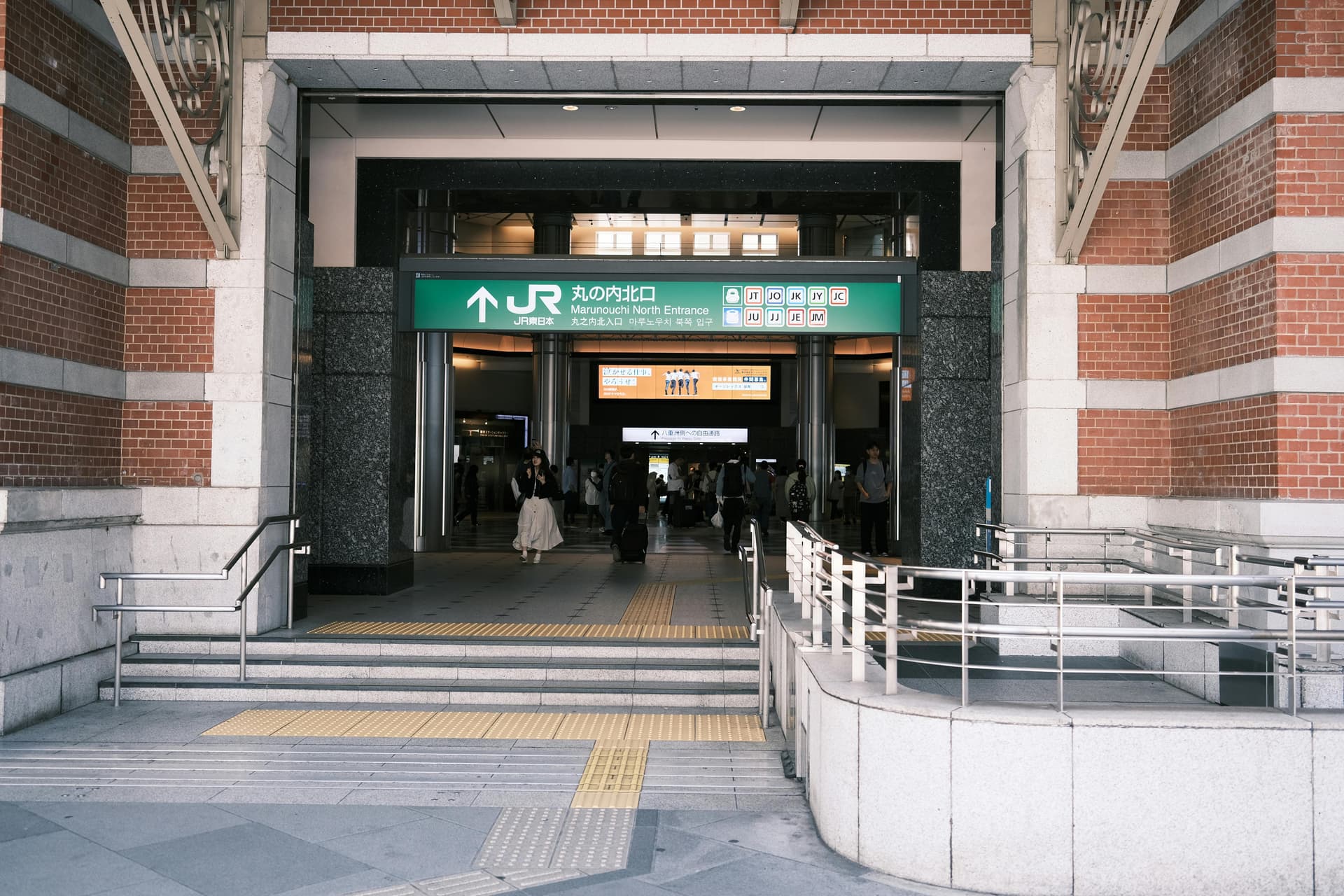
Tawaramachi Station (Tokyo Metro Ginza Line, Exit 3) — approximately 6-minute walk. Come out of the exit, walk straight, and turn left at the first major junction. The giant chef mascot head mounted on one of the buildings is visible from a block away.
Asakusa Station (Toei Asakusa Line or Tokyo Metro Ginza Line) — approximately 10–15 minutes on foot. This is the natural approach if you're combining Kappabashi with Sensoji and Nakamise-dori.
The street runs roughly north-south through Taito Ward, positioned almost exactly between Ueno and Asakusa. Start at the Tawaramachi end — that's the northern end — for the densest concentration of knife and specialist cookware shops.
Hours
Most shops open 9:00–17:00, with some larger stores staying open until 18:00 on weekdays.
Saturdays: Around 90% of shops are open. A good day to visit.
Sundays: Around 30% open. If you're visiting on a Sunday, check the specific shops you want to see before you go — the official Kappabashi street association (kappabashi.or.jp) publishes a current operating schedule. Showing up on Sunday without checking is a lottery.
The Kappabashi Matsuri runs each October and offers discounts of around 20% on selected items across the district. Worth timing your visit around if your travel dates are flexible.
The Knives: What Actually Gets Bought Here
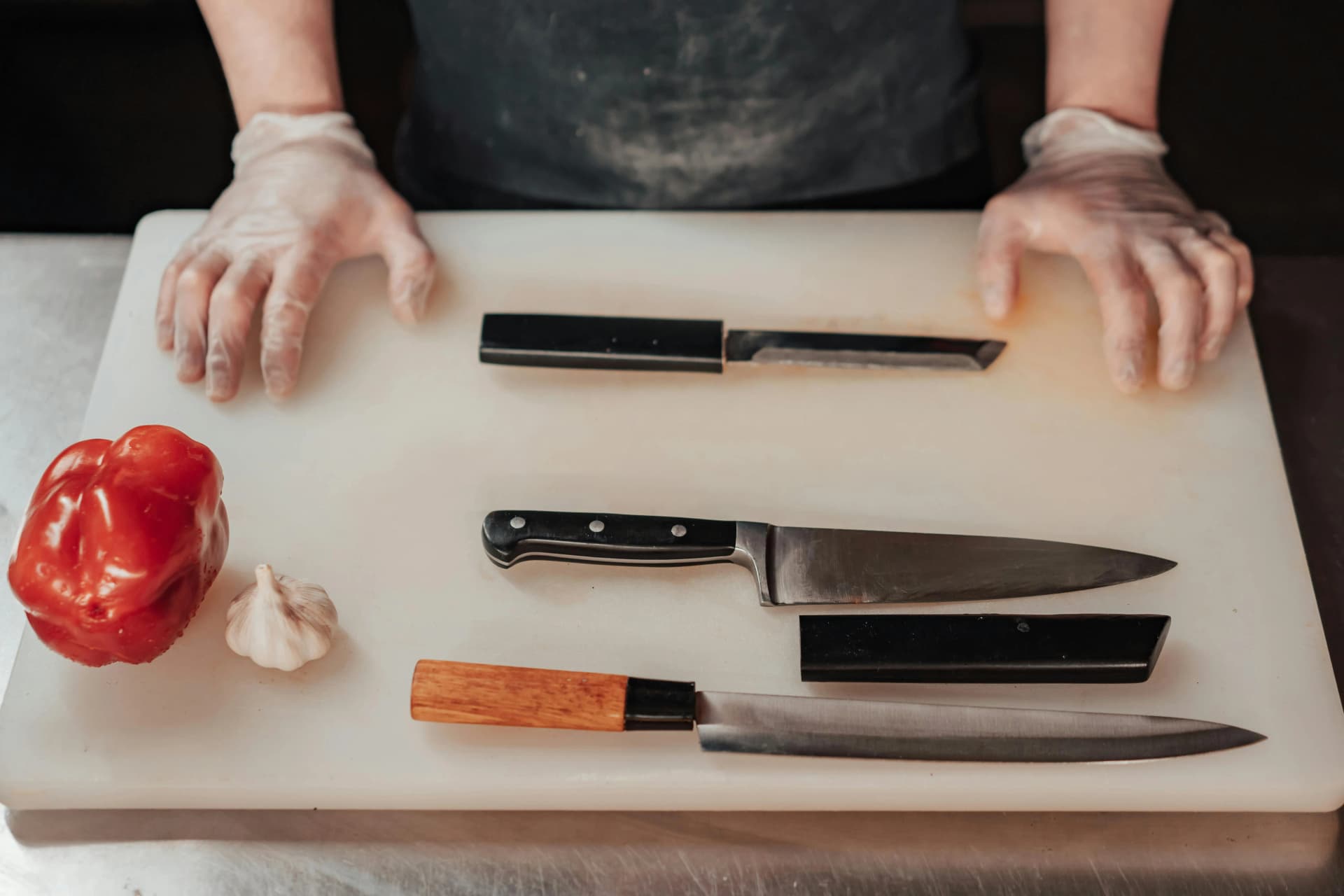
Japanese knives are the reason most international visitors come to Kappabashi, and the selection justifies the reputation. The range covers every style of Japanese kitchen knife — santoku (the versatile all-purpose knife), gyuto (closer to a Western chef's knife in profile), deba (a heavy single-bevel blade designed for breaking down fish and poultry), nakiri (a rectangular vegetable chopper with no tip), and yanagiba (the long, single-bevel sashimi knife built for drawing cuts). Entry-level functional knives start around ¥3,000. Hand-forged blades from named makers reach ¥50,000 and beyond.
Three shops come up consistently among professionals and serious home cooks:
Tsubaya is the most common starting point for first-time buyers. The shop is narrow and densely stocked, with knives at every price point. A sticker system makes the steel type immediately clear: yellow means carbon steel, green means stainless. Most knives here can be handled without asking staff to unlock a display case, which makes it easier to compare weight and balance across different styles. Good place to develop a feel for what you're looking for before committing.
Kamata is operated by a third-generation owner, Seiichi Kamata, who is recognized as a master sharpener. Every knife in the shop is personally sharpened to a correct edge before it's sold — something that sounds obvious but isn't universal. Kamata also offers a knife-sharpening class for ¥5,000, which includes a professional whetstone worth ¥5,400 and a certificate that gets you 10% off in-store. Notoriously difficult to book, but worth the attempt.
Kamaasa (釜浅商店) has been supplying professional kitchens since 1908 and is the shop most likely to be cited by chefs who have actually worked in Tokyo restaurants. The focus is Japanese-made tools across the full kitchen — not just knives, but iron pans, bamboo utensils, and traditional cookware that doesn't get made anymore in most countries. A calmer shop than Tsubaya; the staff here are the ones who will ask what you cook, how you hold a knife, and what cutting board you're using before recommending anything.
On steel: the key distinction for buyers is carbon versus stainless. Carbon steel (hagane) takes a sharper edge and holds it longer, but requires drying after use and will eventually develop a patina. Stainless is more forgiving and easier to maintain. Professional kitchens often use carbon; home cooks who don't want to think about knife care tend to be better served by high-quality stainless. Staff at the better shops will ask about your habits rather than defaulting to one recommendation.
Many shops offer sharpening services on the spot. If you have a dull knife from home, bringing it to Kappabashi and having it properly sharpened by someone who does this professionally is one of the more useful things you can do here.
Plastic Food Samples: The Other Thing Kappabashi Does
The hyper-realistic plastic food models displayed in restaurant windows across Japan — the ramen bowls, sushi platters, and desserts that look edible at three paces — are manufactured by a handful of specialist companies, and the retail side of that industry runs largely through Kappabashi. These shokuhin sanpuru (食品サンプル, literally "food samples") have been an industrial craft since the 1920s and 30s, and they've become one of the more distinctive Japanese exports in the souvenir category.
Ganso Shokuhin Sample-ya (元祖食品サンプル屋) is the most famous operator in the district, with a history going back to 1932. The shop sells individual pieces — single plates of plastic tempura, ramen bowls, desserts — with prices ranging from around ¥500 for simpler pieces to ¥5,000 for elaborate multi-component displays. More usefully, they run a hands-on workshop where participants dip rubber into hot water and hand-shape pieces into plastic tempura shrimp or lettuce. Sessions run approximately 40 minutes and cost around ¥2,000–2,500. They go quickly — book ahead on the Ganso website rather than walking in and hoping for a slot.
Plastic food makes a genuinely good Tokyo souvenir: lightweight, distinctive, and something that originates from Japan's specific commercial culture rather than being manufactured generically for tourists.
Ceramics, Tableware, and the Rest
Beyond knives and food samples, Kappabashi stocks the entire supply chain for Japanese restaurants. Ceramics are well represented at every level: everyday ramen bowls and sake cups alongside kaiseki-grade plates, lacquerware trays, and donabe clay pots designed for tabletop cooking. Prices are materially lower than in department stores or tourist-facing tableware shops, because the primary customer is a restaurant buyer, not a retail shopper. A handmade ceramic bowl that would cost ¥8,000 in a Ginza design shop might be ¥2,500 here.
The professional equipment section is interesting even if you're not buying. Bamboo steamers, tawashi palm-fibre scrubbers, copper tamagoyaki pans, restaurant-grade cast iron, noren curtains, chef's aprons and uniforms — most of this is available nowhere else in a concentrated form. Some is useful for home cooks; some is trade-only in application, but worth seeing for anyone curious about how a professional Japanese kitchen is actually stocked.
What Most Visitors Miss
The older buildings at the northern end of the street have upper floors connected by narrow staircases. Most visitors do a single pass along the ground level and leave. The upper floors tend to have a different product mix — less prominently displayed, more interesting. The better ceramics and the more unusual pieces are often up there. Going up costs nothing except a minute of climbing.
The staff at the knife shops want to talk about knives. This is their expertise and they're good at it. Asking genuine questions — about the difference between single-bevel and double-bevel edges, about what a specific knife profile is actually designed for, about whether the steel in a particular blade suits the way you cook — produces real conversation rather than a sales pitch. Even if you're not buying, the education is worth the time. You will leave knowing more about Japanese kitchen knives than you did, which makes any future purchase — here or elsewhere — a better one.
The kappa statue is worth finding. The golden figure of the district's mythical mascot stands a few blocks from the main street and makes a slightly absurd photograph. It's not labeled prominently. Ask a shop staff member where it is.
Day Pairing
Kappabashi + Asakusa is the natural combination. Both are in Taito Ward; the walk from Sensoji to Kappabashi takes 10–15 minutes. A practical structure: Nakamise-dori and the temple in the morning, Kappabashi after lunch, done by 17:00. One is Japan's most-visited historic temple district; the other is a working wholesale street that happens to be open to the public.
Kappabashi + Ueno works if your interests lean toward museums. The walk from Ueno is about 15 minutes. Museums in the morning, kitchenware in the afternoon.
For a guided exploration that puts Kappabashi in context — the district's history, which shops to prioritize based on what you actually cook, and how to choose a knife without spending an hour confused — Infinite Tokyo allows fully custom itineraries built around exactly this kind of specialist neighborhood.
Frequently Asked Questions
Can anyone shop here, or is it only for restaurant professionals?
Anyone can shop here. Kappabashi's shops are open to the public, and the shift toward retail visitors has accelerated since Japan reopened after the pandemic. Some wholesalers have minimum order quantities, but the shops on the main street — the ones with window displays and English signage — sell individual items to individual buyers. Bring your passport if you want to purchase tax-free; most shops participate in the tourist consumption tax exemption for purchases over ¥5,000.
What's the best knife to buy if you're not sure where to start?
For most home cooks visiting for the first time: a mid-range santoku or gyuto in stainless or semi-stainless steel (VG-10 is a common mid-tier steel with a good edge-to-maintenance ratio). Budget ¥8,000–¥15,000 for something you'll use and appreciate. At that price point, you're buying professional quality without venturing into the territory where the knife requires specialized care. Start at Tsubaya to handle a range of options; the staff will tell you honestly if you're looking at the wrong blade for your cooking style.
How long should I plan to spend?
Budget two hours minimum. Three is more comfortable if you're interested in buying and want time to compare shops without rushing. The street is dense enough that it rewards slow exploration — doubling back, going upstairs, asking questions — but compact enough that you won't run out of ground to cover in an afternoon. Add another hour if you're doing the food sample workshop at Ganso.
Are shops open on Sundays?
About 30% of shops operate on Sundays. If there's a specific shop you're planning around — a particular knife dealer, for example — check their website or call ahead before building your Sunday around Kappabashi. Saturday is a much better day to visit if you have schedule flexibility: roughly 90% of shops are open.
Can I book a food sample workshop without planning far ahead?
Ganso Shokuhin Sample-ya is the main workshop operator in the district, and their sessions fill up. Walk-in availability exists but isn't guaranteed, especially on weekends. The booking system on their website (ganso-sample.com) allows advance reservation by date and time. Sessions run 40 minutes and cost approximately ¥2,000–2,500 depending on the item you make. If you want to do this specifically, booking at least a week in advance is the safer approach.