A 4-hour tour of Naritasan fits an 8-hour Narita layover. A central Tokyo run doesn't — you'd need 12+ hours.
This Narita layover guide starts with the bad news: on anything under 12 hours at NRT, central Tokyo is too far.
What we suggest instead is 25-30 minutes from the airport to Naritasan Shinshoji, a working Shingon Buddhist temple founded in 940 CE. It has a main hall, a 58-meter pagoda, formal gardens, and an 800-meter food street leading up to the gate. Most layover travelers never see it, because they think the only choices are the terminal or a Tokyo run that doesn't fit their window.
The Narita Terminal Trap
The usual Narita layover goes like this. You land, clear immigration, find a lounge or a restaurant, sit for six hours, and board. If you've done it, you know the low-grade boredom and the bad coffee, and the odd feeling of being in Japan without really being there.
The alternative most people consider is a Tokyo city run: Narita Express to Tokyo Station, maybe Shibuya or Asakusa, then a rush back. On 8 hours the math is brutal. On 10 it's uncomfortable, and it only becomes reasonable at 12+. With less time than that, trying to see Tokyo means spending most of the day on trains.
The third option rarely comes up: stay near Narita, visit a temple that's been there for 1,000 years, and get back to the gate on time, all inside a 4-hour guided window.
How Long You Actually Need
Under 8 Hours: Stay at the Airport
With under 8 hours gate-to-gate, don't leave the airport. Immigration can take anywhere from 5-90 minutes depending on how many planes landed before yours. Add the round trip to Narita town and the 2-hour return buffer you can't skip, and you're left with barely any time at the temple, which isn't worth the logistics.
Rest instead. NRT has showers, lounges, and real food.
8-10 Hours: Naritasan Is Realistic
This is the range the 4-hour tour was made for. An 8-hour layover gives the guide a 4-hour airport-to-airport window, which is enough for Naritasan's main hall, the Great Pagoda, the gardens, and a 45-minute browse on Omotesando with a proper snack or lunch. The other 4 hours of your layover cover immigration delays, luggage, and your re-check-in and gate buffer. A ten-hour layover gives you room to slow down instead of keeping pace.
12+ Hours: Tokyo City Becomes Viable
At 12 hours you can technically make a Tokyo city run work, with ~3 usable hours in the city after transit. Below 12 hours, we'd pick Naritasan's 4-hour tour every time. At 12+ hours Tokyo becomes a real option, and you may want to book the Tokyo half-day tour instead.
Gate-to-Gate vs. Usable Time
| Total Layover | 4-Hour Naritasan Tour Fit | Usable Tokyo City Time | Best Option |
|---|---|---|---|
| 6 hours | Too tight | ~0 | Stay at airport |
| 7 hours | Too tight | 0 | Stay at airport |
| 8 hours | Fits with 2h return buffer | ~1 hour | Naritasan (4-hour tour) |
| 10 hrs | Comfortable | ~2 hrs | Naritasan (4-hour tour) |
| 12+ hours | Easy, consider extending | 3+ hours | Naritasan extended OR Tokyo city |
How we work it out: landing-to-exit (45-90 min) + transit to Narita town (15-20 min) OR Tokyo (95-125 min) + return transit + airport buffer (120 min minimum).
Naritasan Shinshoji: The Temple Twenty-Five Minutes Away
Naritasan Shinshoji was founded in 940 CE around a carved wooden image of Fudo Myoo, a wrathful Buddhist deity, consecrated by the priest Kancho during the Taira no Masakado rebellion. It's one of the most important Shingon Buddhist temples in eastern Japan and still a working pilgrimage site. During Hatsumode, the first shrine visit of the New Year, it draws over three million visitors.
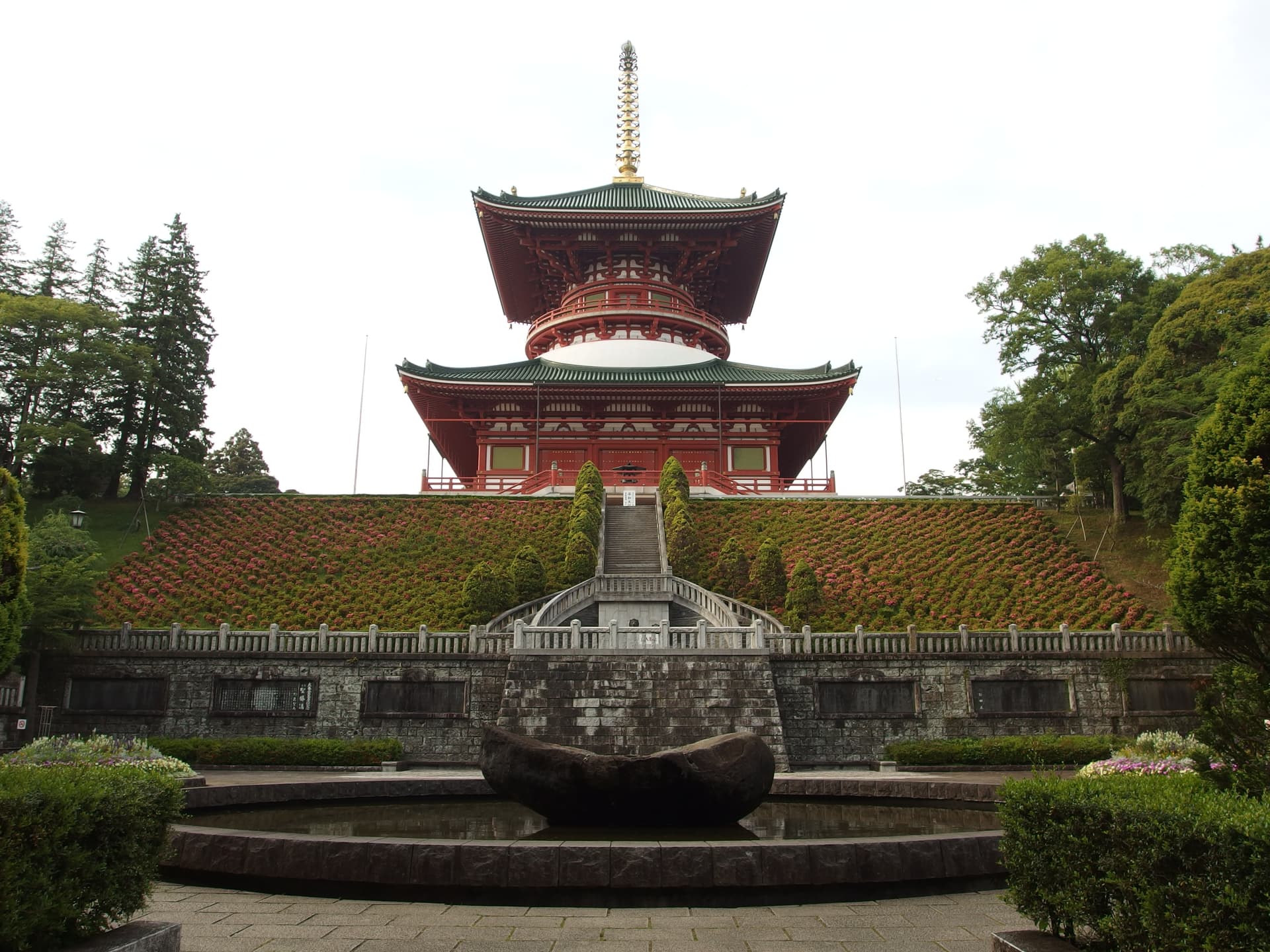
You'll see the main hall (daihondo), the Great Pagoda of Peace (58 meters tall, completed in 1984), the formal gardens with ponds and walking paths behind the main hall, and the Shakado and Komyodo, older halls that have come through fires and rebuilds over the centuries. It's bigger than people expect. A full loop takes 90 minutes at an easy pace, and the 4-hour tour is planned around that.
Because it's a major pilgrimage temple, the rituals go on around you while you visit: purification, incense offerings, calligraphy prayers.
Omotesando: 300+ Meters of Unagi Shops and Souvenir Stalls
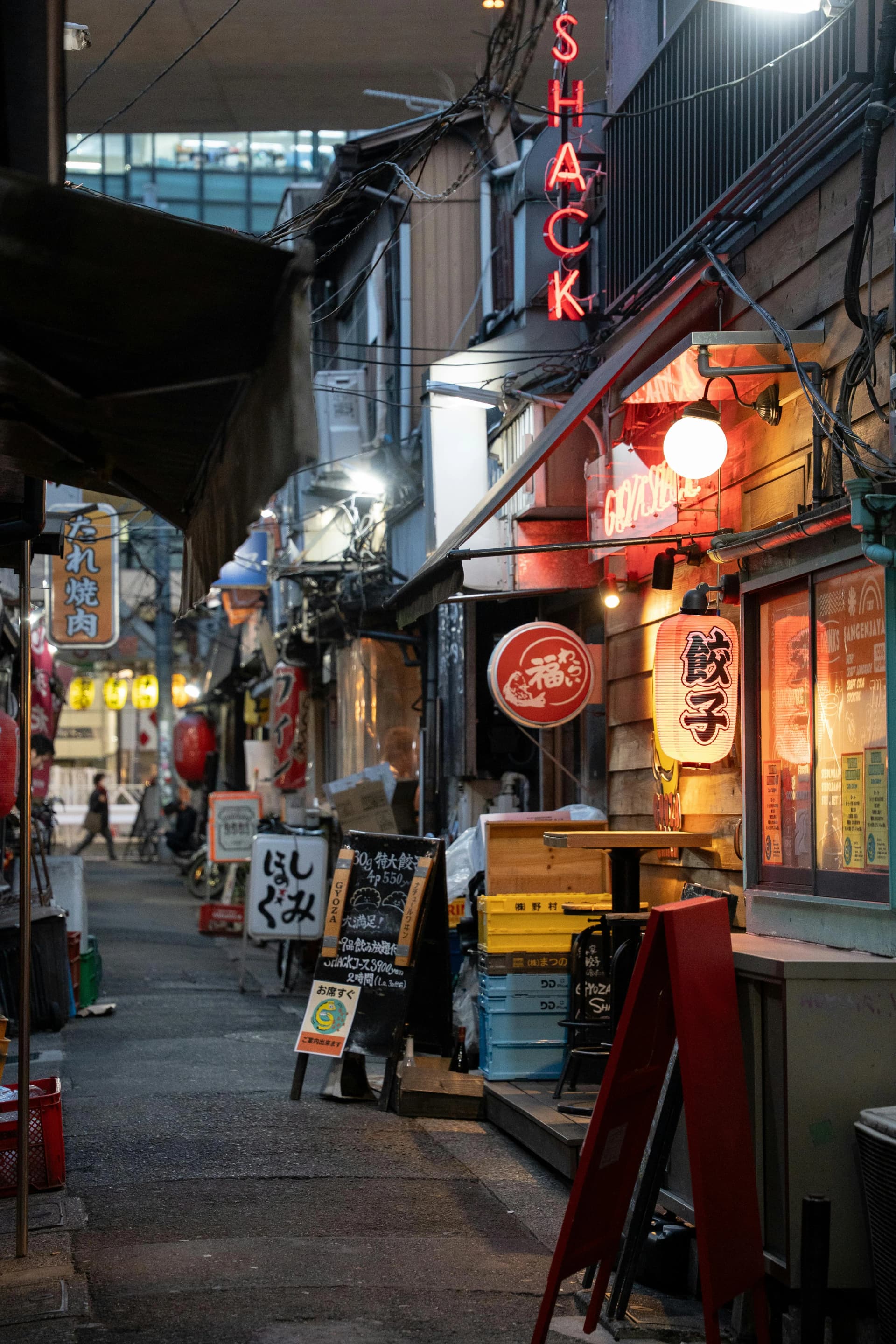
The approach street between Narita Station and the temple gate runs about 800 meters, and 300+ of those are the dense, shop-lined core. The dish to get is unagi, grilled freshwater eel over rice, and several shops have been run by the same families for centuries. Kawatoya and Surugaya are the names you'll hear most. There are roughly a dozen serious ones, plus plenty of souvenir stalls, sembei shops, and matcha soft-serve stands.
The street is compact and good for photos. At a normal pace you can walk it in 10 minutes. The 4-hour tour allows ~45 minutes on Omotesando, enough for a quick snack, a few photos, and a look at the shops on the way back to the station.
Luggage: Coin Lockers Only for Same-Day Layovers
Same-day layovers don't fit Yamato's delivery times. Yamato ships bags ahead to a hotel, and it won't hold them for a few hours. Use the airport.
| Location | Option | Cost | Notes |
|---|---|---|---|
| NRT T1 | Coin lockers | ¥400-800/day | Arrivals level; large lockers fit standard suitcases |
| NRT T1 | JAL ABC staffed counter | ~¥950/bag/day | Oversized or multiple bags |
| NRT T2 | Coin lockers | ¥400-800/day | Arrivals level |
| NRT T2 | JAL ABC staffed counter | ~¥950/bag/day | Staffed service, better for groups |
| NRT T3 | Coin lockers only | ¥400-800/day | No staffed counter; walk 15 min to T2 or take the 6-min shuttle |
Watch out for Terminal 3. If you fly in on a budget carrier that lands at T3 and you have more bags than a locker holds, allow 20-30 extra minutes at the start of the day to move your luggage before you can leave.
Sample 8-Hour Layover with the 4-Hour Tour
This is a day where immigration cooperates, on an 8-hour scheduled layover (land 10:15 AM, depart 6:15 PM).
| Time | Activity | Notes |
|---|---|---|
| 10:15 AM | Land at Narita | Flight arrives |
| 11:00 AM | Clear immigration | Assuming 45-minute processing |
| 11:00 AM | Meet guide at arrivals | Tour window starts, 4-hour guide clock |
| 11:10 AM | Board Keisei or JR Narita Line | 15-20 min into Narita town |
| 11:35 AM | Walk Omotesando to Naritasan | 10-minute walk through the food street |
| 11:45 AM | Naritasan — main hall, pagoda, gardens | ~90 minutes |
| 1:15 PM | Omotesando browse + snack | ~45 minutes, independent |
| 2:00 PM | Return train to NRT | 15-20 min back to the airport |
| 2:30 PM | Arrive NRT departure terminal | Tour ends, 2h+ buffer remaining before 6:15 PM departure |
| 3:00 PM | 4-hour tour complete | Collect luggage, clear security, walk to gate |
If immigration takes 90 minutes, the Omotesando browse gets shorter. The core stops (temple, main hall, pagoda) all still fit inside the 4-hour window.
If immigration takes 20 minutes, you get extra time at Naritasan for the gardens or a calligraphy prayer. We spend spare time going deeper at the temple instead of adding more stops.
Haneda Layover? Different Article
Connecting through Haneda instead of Narita? The numbers are completely different. HND is 25-35 minutes from the city, so a shorter layover can still fit a real Tokyo run, which Narita's 95-125 minutes rules out. See the Haneda Layover Guide for the Haneda-specific plan.
When a Narita Layover Tour Isn't Worth It
Under 8 Hours Total
The transit math doesn't work. Even the 4-hour tour leaves too little buffer for immigration delays and the airline's gate close. Stay at the airport.
Night Arrivals
Naritasan's main hall usually closes around 4:00 PM. The gates stay open later, but the ritual spaces close earlier. If your layover runs 10 PM to 7 AM, you can't get into the temple, so sleep instead.
Ready to Visit Naritasan?
A guide meets you at arrivals, the thousand-year-old temple is 25 minutes down the line, and an 8+ hour layover has room for a 4-hour tour built around it, without trying to squeeze Tokyo into a layover that can't hold it.
Book your private Narita layover tour →
Hero image: Great Pagoda of Peace at Naritasan by Guilhem Vellut, CC BY 2.0