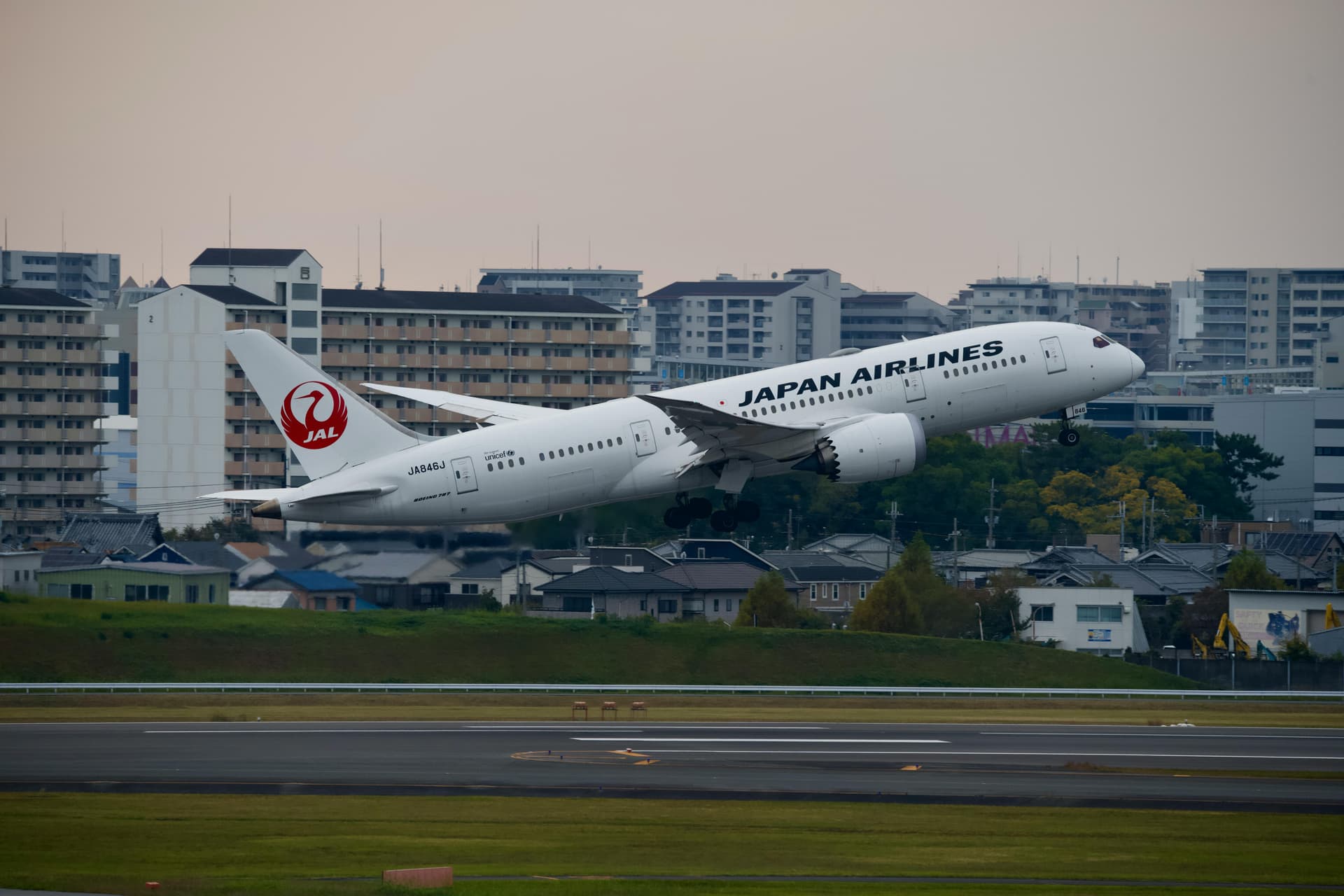
A layover tour isn't about seeing Tokyo—it's about a guaranteed, panic-free return to your gate.
This Haneda layover guide deals with the question most others skip: is eight hours between flights enough to see real Tokyo, or only enough to get lost trying?
Say you have eight hours on the ground at Haneda, give or take. Every guide and blog post gives you the same advice: make the most of it, see as much as you can, don't waste a minute.
The traveler who crams the most into a layover spends most of it watching the clock, checking train times and working out when to leave each stop. That worry follows you all the way round, until the whole day is background to one question: am I going to make my flight?
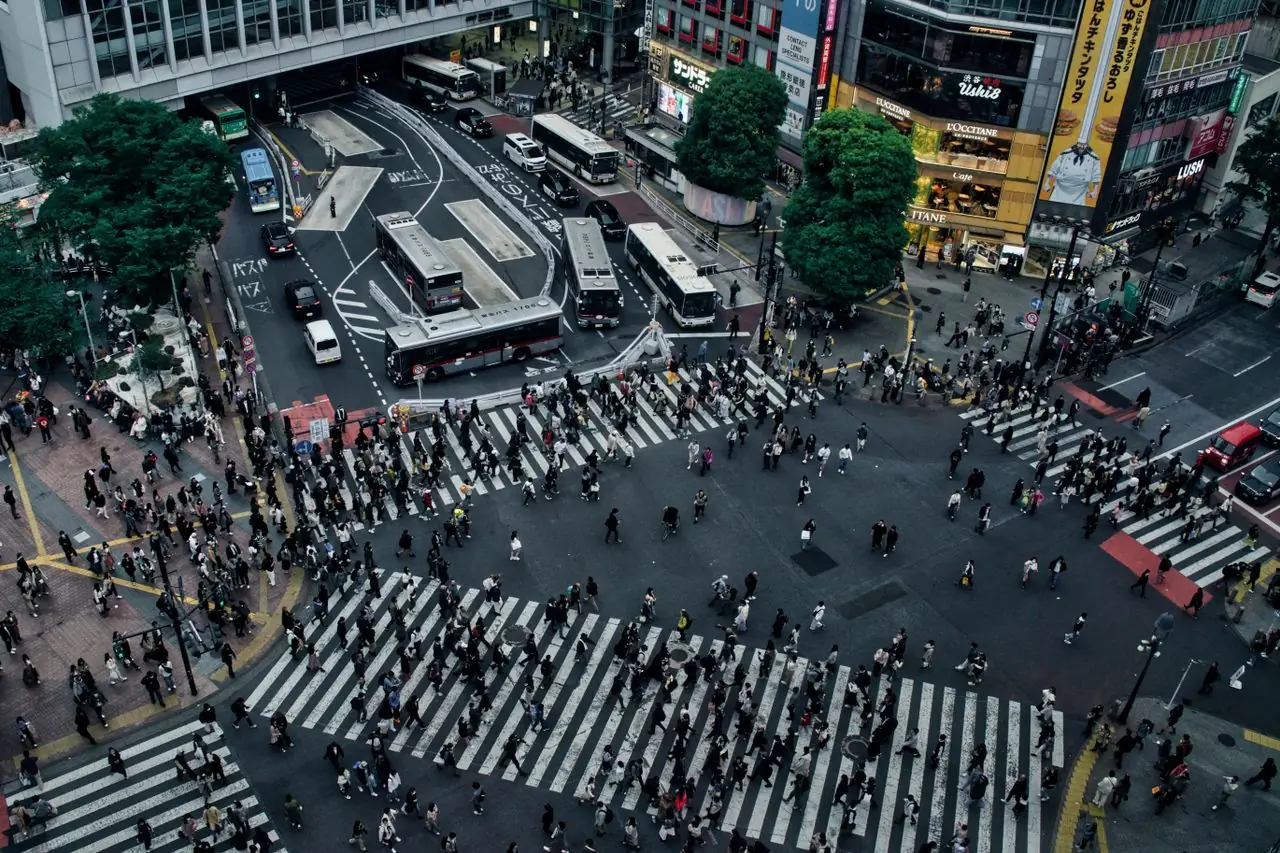
If someone else keeps track of the time, though, you can stand at Shibuya Crossing and actually take in the noise and the rhythm of it, instead of counting down to when you have to go.
Connecting through Narita instead? That's a different calculation, with 95-125 minutes each way against Haneda's 25-35. The Narita Layover Guide covers what fits in 10+ hours at NRT.
The Watch-Checking Problem
The 2:30 PM Hustle
You've finally relaxed in a ramen shop you found near Shinjuku Station. It's 2:30 PM, and your flight leaves at 5 PM.
You should have left at 2 PM. Now you're flagging down the server, gulping the broth, leaving cash on the table, and doing sums in your head. Yamanote Line to Shinagawa, then Keikyu to the airport, but how often do those trains run? Did you allow time to get from the restaurant to the platform?
The ramen was good, and you barely tasted it.
5 Minutes or 90: The Immigration Variable
What Determines Your Wait
You can't predict immigration at Haneda. Travelers report waits anywhere from 5 minutes to over 90, sometimes on the same day at the same terminal.
What decides it is mostly out of your hands:
-
How many aircraft landed in the 30 minutes before yours
-
How many immigration booths are staffed (often only 5 of 15)
-
Whether your fellow passengers completed Visit Japan Web in advance
-
Whether it's a holiday period: Golden Week, New Year, or cherry blossom season
One frequent traveler summed it up: "The wait is completely up to chance, just dependent on how many planes arrived before you."
The Afternoon Bank Problem
The worst delays come at peak arrival times. At Haneda, 4 PM to 6 PM is especially hard to call, because several long-haul flights land close together then.
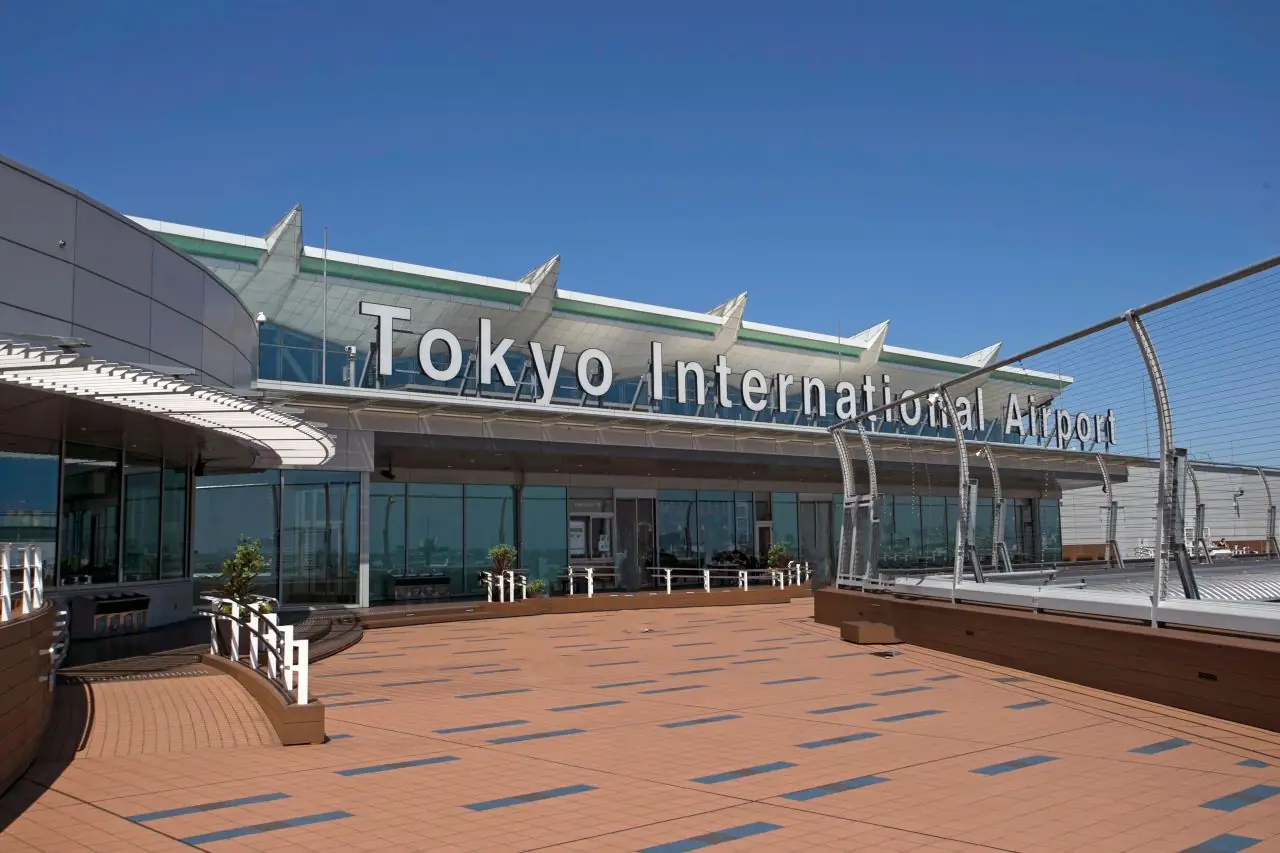
An experienced Tokyo guide puts it like this: "From landing to exit is usually 40-60 minutes, even for early flights. If my guests take longer than an hour, that's unusual—but very few are quicker than 40 minutes."
VJW: Helps but Doesn't Guarantee
Visit Japan Web lets you register ahead and get a QR code for immigration and customs. Travelers say again and again that it's faster than the paper forms.
It won't take the luck out of it, though. It shortens your likely wait, while the worst case stays about the same. If 200 passengers land ahead of you and half of them filled in paper forms, you're still waiting.
60 Minutes You Didn't Know You Had
Haneda: 13 Minutes to the City
From Haneda Terminal 3, the Keikyu Line gets you to Shinagawa in 11-13 minutes. The express Tokyo Monorail reaches Hamamatsucho in 13 minutes. From either station, most of central Tokyo is one or two stops away.
From walking out of the arrivals hall to the city center takes 25-35 minutes in total.
Being that close is the only reason a Haneda layover is worth thinking about. An 8-hour Haneda layover gives you roughly 3-4 hours in the city. A 10-hour layover gives you 5-6 hours, which is enough for a proper Shibuya-Harajuku-Shinjuku loop with a sit-down lunch.
When We'll Tell You Not to Book
Under 8 Hours Total
We won't book a guided layover tour for less than 8 hours gate to gate. Between the immigration lottery, the travel time, and the 2-hour return buffer we won't drop, anything shorter means you spend the tour stressed.
With a 6-hour layover, our honest advice is to stay at the airport. Haneda has good facilities, including shower rooms open 24/7 (¥1,500 for 30 minutes) in the 2F Arrival Lobby, with 21 shower rooms and 5 refresh rooms. There's an onsen at Villa Fontaine Grand, and the food in the terminal is good.
Wrong Time of Day
A night arrival changes the math. If you land at 10 PM, clear immigration by 11 PM, and fly out at 7 AM, that's time for sleep.
The trains stop around midnight. The last Keikyu leaves Haneda around midnight and the first runs around 5:30 AM, so if your window falls between those, you can't reach the city by train.
When You Need Sleep, Not Sightseeing
Exhaustion after a long-haul flight is real. Travelers who push through on willpower often say afterward that they were "being there but not really being there."
If you've been awake for 18 hours on a trans-Pacific flight, you need sleep more than another 4 hours of walking. That's what Haneda's refresh rooms with recliners (¥3,000 for 60 minutes) are for.
The Checked Bag Problem
JAL and ANA both require check-in 60 minutes before international departures. Count that in your return buffer: getting to the airport with 90 minutes to spare leaves you a lot less than 90 minutes of slack.
Luggage Storage Options
During a layover tour your bags can go in airport storage or city station lockers, or (on guided tours) your guide sorts them out.
Airport storage (recommended for most layovers):
| Location | Option | Cost | Notes |
|---|---|---|---|
| Haneda T3 | Coin lockers (2F Arrival Lobby) | ¥400-700/day | Available 24/7. Large lockers fit standard suitcases. |
| Haneda T3 | Baggage storage counter | ~¥800-1,000/bag | Staffed service. Better for oversized or multiple bags. |
City station lockers (if you need bags mid-tour):
| Size | Dimensions | Cost | Fits |
|---|---|---|---|
| Small | 35×25×57 cm | ¥300-400/day | Daypack, shopping bags |
| Medium | 35×34×57 cm | ¥400-500/day | Small carry-on, backpack |
| Large | 35×57×117 cm | ¥600-900/day | Full-size suitcase |
| Extra-large | Available at major stations | ¥900-1,000/day | Suitcase + bags, golf clubs |
Large lockers in the city go fast, often by mid-morning at Tokyo Station and Shinjuku. If you're coming in from Haneda around noon and planning to leave bags in the city, you may find only small lockers left.
Payment: Have ¥100 and ¥500 coins ready. Many lockers take IC cards (Suica/Pasmo), and some newer ones take credit cards.
Backup option: If the lockers are full, the staffed luggage counters at major stations (JR East Service Centers) store bags for ~¥700/bag. Station staff can point you there.
Best strategy for layovers: Leave your bags at Haneda. The airport lockers are built for people with luggage, and the city ones aren't. The 10 minutes you save by not going back to the airport rarely make up for not knowing whether you'll find a free large locker in town.
Our Tokyo luggage storage guide covers the rest of the options.
What Gets Cut When You're Running Behind
Core Stops vs. Optional Stops
We plan our layover routes so they can shrink. Some stops are essential, and the route doesn't make sense without them. Others are extras, good if there's time and easy to drop if there isn't.
On the Tokyo Trifecta route, Shibuya Crossing is core, and you'll go through it whatever happens. Meiji Shrine's inner forest is optional. The walk from Harajuku Station to the shrine entrance takes 1-3 minutes, but the forest path to the main hall adds another 10-15. If immigration took 75 minutes instead of 45, we skip the forest walk and go straight to the main hall, or drop the shrine and spend longer in Shinjuku.
The 75-Minute Immigration Delay
Say immigration took 75 minutes when you expected 45. That's 30 minutes of city time gone.
A guide makes it up by tightening the route on the fly:
-
Meiji Shrine forest walk: cut (saves 15 minutes)
-
Extended Harajuku browsing: cut (saves 10 minutes)
-
Shinjuku transit via Yamanote: optimized to fastest connection
You still see Shibuya, and you still finish in Shinjuku. The guide makes the cuts, and you won't even notice what was dropped.
Adding Time When You're Ahead
It works the other way too. If immigration takes only 20 minutes and the trains line up, you've gained time.
A guide spends that time on the stops you already have. A Meiji Shrine visit can run anywhere in a 60-120 minute range, so the extra time goes on sitting quietly at the main hall, the sake barrels, and the forest, which you can't enjoy while you're watching the clock.
Sample Layover Route: 10-Hour Haneda Stop
Here's a realistic 10-hour layover when immigration goes smoothly.
| Time | Activity | Notes |
|---|---|---|
| 10:00 AM | Land at Haneda | Flight arrives |
| 10:45 AM | Clear immigration | Assuming 45-minute processing |
| 11:00 AM | Meet guide at arrivals | Guide handles logistics from here |
| 11:25 AM | Arrive Shibuya | 25-minute Keikyu + Yamanote |
| 11:30 AM | Shibuya Crossing | Experience the scramble, Hachiko statue |
| 12:15 PM | Walk to Harajuku | Backstreets, Meiji-dori |
| 12:45 PM | Lunch in Harajuku | Guide knows which spots don't have lines |
| 1:30 PM | Meiji Shrine | Forest walk, main hall, sake barrels |
| 2:30 PM | Train to Shinjuku | 5 minutes |
| 2:45 PM | Shinjuku exploration | Omoide Yokocho, department store basement food halls |
| 4:00 PM | Begin return | Guide ensures buffer |
| 4:40 PM | Arrive Haneda | 2+ hours before 8:00 PM departure |
If immigration takes 90 minutes: The Meiji Shrine forest walk is cut and Harajuku becomes a quick pass-through. The core stops (Shibuya, Shinjuku) stay.
If immigration takes 20 minutes: You get longer at the shrine, a coffee stop, and more time in Shinjuku. The extra 25 minutes goes into the places you're already visiting instead of new ones.
The Haneda Layover Math
| Total Layover | Usable City Time | Viable for Tour? |
|---|---|---|
| 6 hours | 1-2 hours | No — stay at the airport |
| 8 hours | 3-4 hours | Yes — Tokyo Trifecta (4 hours) |
| 10 hours | 5-6 hours | Yes — Tokyo Essentials (6 hours) |
| 12+ hours | 6-8 hours | Yes — any format |
How we work it out: landing to exit (45-90 min) + travel into the city (25-35 min) + travel back (35-40 min) + airport buffer (120 min minimum).
The Return Buffer
Two hours before departure is the minimum. Check-in deadlines (60 minutes for JAL and ANA) are only part of it. The rest covers the things you can't plan for, like taking a wrong exit or a longer security line than expected. Japan's trains are very reliable, rated 6.8 out of 7 globally, so the buffer is there for everything apart from the trains.
Layover Tour Pricing
| Tour | Duration | Price (2 people) | Best For |
|---|---|---|---|
| Tokyo Trifecta | 4 hours | $314 | 8-10 hour Haneda layovers |
| Tokyo Essentials | 6 hours | $430 | 10-12 hour layovers |
| Infinite Tokyo | 8 hours | $550 | 12+ hour layovers |
Prices are per group. A family of 4 on the 4-hour tour pays $376 total ($94/person).
Payment: All major credit cards via Stripe. Charged in USD at booking.
Cancellation: Free cancellation up to 24 hours before your tour (full policy). Since layover timing can shift, book early and cancel if your flight changes.
What You're Actually Paying For
Not Geographic Knowledge
Guides know where Meiji Shrine is, and so does your phone.
Other operators advertise "hidden gems," "local secrets," and "off the beaten path." On a layover your time is short, and the right three or four stops, done without a hitch, will serve you better than anything obscure.
Timing Responsibility Transfer
Someone else watches the clock and knows when to leave Harajuku so you're not rushing Shibuya. They've already worked out the trip back from Shinjuku to Haneda (35-40 minutes via Keikyu, 45-50 via Monorail) and know which platform to head for. Here's what to expect on tour day.
When travelers talk about a guided layover afterward, what comes up most is what they didn't have to manage: "Got us back to the airport in time for our flight."
Who This Works For
Some travelers would rather see less and enjoy it properly than cover more ground while worrying about the time. If you'd rather not spend your layover working out train times, the trade is that you give up control and someone else does the thinking.
Families with children tend to value this most. As one parent said, "It just takes the hard work out of the trip for the parents... no one has to worry about having the train transfers sorted." First-time visitors are a good fit too, since a city you don't know takes more effort to get around, however well it runs.
On a tight budget, a guide is an extra cost you may not think is worth it. Repeat visitors who know the trains probably don't need someone to get them around, and if working it out yourself is half the fun, a guide takes that away. Doing it yourself is completely workable, and we cover when you don't need a private tour separately.
The Ability to Be Present
This one is harder to put a number on. When you aren't asking yourself again and again whether you'll make your flight, you start noticing where you are: the quiet of the shrine forest, the rhythm of Shibuya Crossing, the lanterns at Golden Gai.
Frequently Asked Questions
Is a Haneda layover tour worth it?
Yes, if you have 8+ hours at Haneda and finding your own way feels stressful. You're paying someone to take over the timing: they watch the clock, handle the transfers, and get you back to the airport. If you'd enjoy figuring it out yourself, going on your own works fine.
What's the minimum layover time needed?
Eight hours in total at Haneda, which gives you 3-4 usable hours in the city. Any less and you're better off staying at the airport, because the stress outweighs what you'd see.
Will I make my flight?
Good tour operators build in a 2-hour airport buffer and keep track of the time all day, so they know when to leave each stop. Late returns hurt a company's reputation, which gives them every reason to play it safe.
What can I actually see in a 4-hour tour?
Three or four well-chosen stops. A typical Haneda layover tour might cover Shibuya Crossing (Tokyo), a neighborhood walk (Harajuku or Asakusa), and one bigger experience (a temple, a food market, or an observation deck). That's less than you might hope for, but you'll see it properly and without rushing.
Where do I store my luggage?
You can use the Haneda Terminal 3 lockers (the most reliable choice), send bags ahead with a luggage delivery service to your next stop, or carry them on the tour (we don't recommend it). Your guide can help you pick what suits you. Most layover travelers leave their bags at Haneda.
Ready to Book?
A Haneda layover doesn't have to mean hours in the terminal. With a private guide meeting you at the airport, the wait between flights can become one of the best days of your trip.