Shimbashi is old Tokyo that hasn't been curated for visitors. That's exactly why it's worth knowing exists.
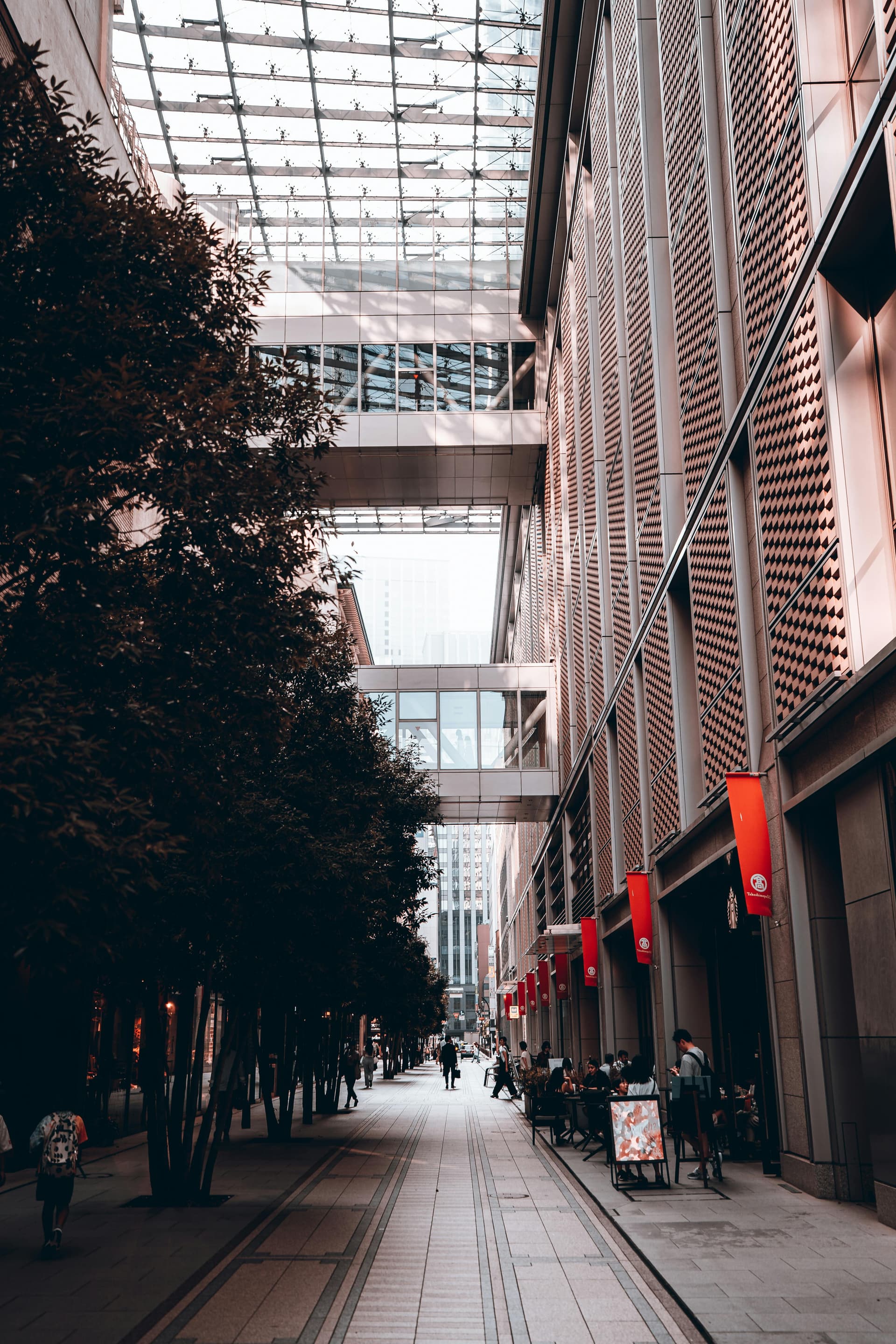
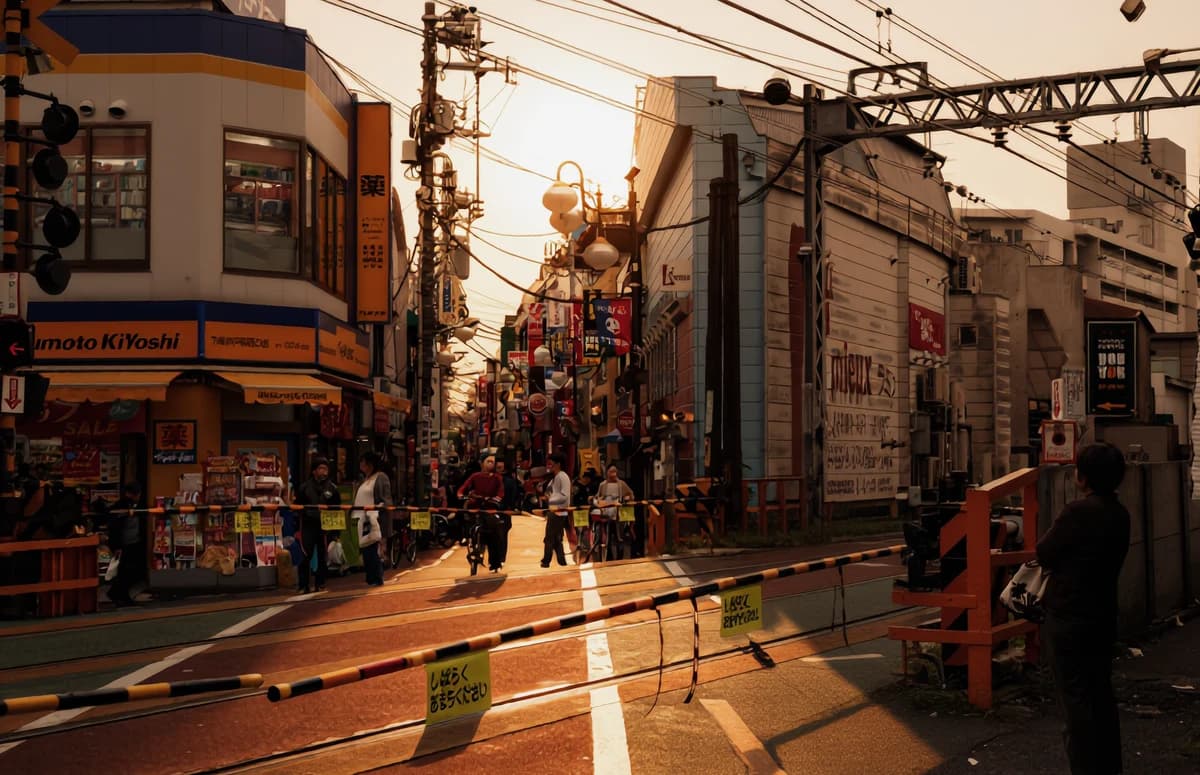
Shimbashi is not Ginza, despite being a five-minute walk from it. That distinction sounds obvious, but walking from one to the other is one of the more disorienting transitions in central Tokyo. Ginza is deliberate — wide pavement, luxury brands, tourists with shopping bags. Shimbashi is improvised. The footpaths are narrower, the signage is in a contest with itself, the air smells of yakitori smoke from somewhere you can't immediately locate, and on any given weekday after 6pm, the streets are full of salarymen moving with the specific purpose of someone who knows exactly where they're going and isn't interested in company.
This is Shimbashi's value: it is the part of central Tokyo that never prioritized your experience as a visitor. It was built for people working in the offices around Kasumigaseki and the government ministries nearby, and it has remained loyal to that original purpose for over a century.
The Railway Origin Story
Shimbashi's identity starts with a bridge. During the Edo Period, a bridge called Shimbashi was constructed over the Shiodome River — a waterway that has long since been filled in and is now buried beneath the streets heading toward the bay. The name survived the river's disappearance.
In 1872, the first railway line in Japan opened: Shimbashi to Sakuragicho (now part of Yokohama). The line ran 29 kilometers, took 53 minutes, and fundamentally altered the way Japanese people understood distance. For the 42 years until Tokyo Station opened in 1914, the original Shimbashi Terminal — later called Shiodome Station, now defunct — served as Tokyo's primary southern gateway. Every major intercity train arrived and departed from here. Tokyo's modern identity as a railway city was built from Shimbashi outward.
The current JR Shimbashi Station building dates from 1909. You can still see the evidence of this history directly outside the Hibiya Exit: the C11 steam locomotive, manufactured in 1945, sits in SL Square as a monument to the era when every departure was a departure from something that felt like the edge of the world. The locomotive plays a short steam whistle and emits a cloud of vapor at noon, 3pm, and 6pm — a detail that catches most visitors off guard because the surrounding streets are otherwise pure business district. A reconstructed version of the old Shimbashi Station building also survives within the Shiodome Shiosite complex — it houses a railway history exhibition and a restaurant inside a structure that looks exactly like what a Meiji-era station should look like, complete with the arched red-brick facade that was standard for European-influenced architecture of the period.
What the history means in practice: Shimbashi was not gentrified into relevance. It was relevant before Ginza existed in its current form. The salaryman culture that defines the district emerged from the same working-class energy that built the railway — the same population of laborers, station workers, and office clerks who needed somewhere cheap and fast to eat and drink after a shift.
What It Feels Like at 6pm
The shift in Shimbashi at the end of the workday is structural, not ambient. The west exit of JR Shimbashi Station opens directly into what is effectively an open-air izakaya district that has been there, in various forms, since the black market stalls of the immediate post-war period. The area rebuilt rapidly after the 1923 Great Kanto Earthquake, and the neighbourhood that emerged was shaped by people who needed to eat, drink, and decompress quickly after work — often in spaces that were technically temporary.
That improvisational DNA persists. The network of small alleys immediately west of the station — narrow enough that two people walking toward each other need to negotiate — is packed with standing bars, counter-seat izakayas, and places where you eat at a bar that happens to have a grill attached. Nobody is there for the Instagram documentation. Tachinomi — standing bars — are a legitimate institution here, not a novelty. You order, you drink standing, you move on or stay. The protocol is minimal: walk in, put your bag on the hook under the counter, order a beer or a highball, and point at whatever's on the grill or in the display case. Conversation with the person next to you is optional and often happens anyway after the second drink.
The food at these standing bars is functional in the best sense. Yakitori in every variation — negima (chicken and leek), tsukune (minced chicken meatballs), kawa (chicken skin grilled until it crisps). Motsu-yaki (grilled offal) is more common here than in most Tokyo drinking districts because the clientele isn't squeamish and the kitchen doesn't need to explain it. Oden simmering in large pots is a winter constant — fishcake, daikon, boiled egg, konnyaku, all sitting in the same dashi broth since the morning. Kushikatsu (deep-fried skewers) appears frequently. The portions are small because the point is to keep ordering as you keep drinking, not to have a single decisive meal.
The salaryman culture that defines Shimbashi is partly about economics and partly about ritual. The Japanese concept of after-work drinking (飲み会, nomikai) is formally embedded in Japanese corporate life in a way that makes refusing attendance notable. Shimbashi is where that ritual plays out at scale — not the curated version in Ginza or Roppongi, but the version that predates both. The hierarchy is visible if you know what to look for: the most junior person orders the first round, the section chief picks the second venue, and the decision about whether to move to a third place is made by collective exhaustion rather than anyone's explicit suggestion.
What to Do Here
Walk through SL Square first, then let the west exit alley system absorb you. There is no optimal route — the point is that you will find something interesting within approximately 30 seconds of turning any corner. The area has been a restaurant and drinking district continuously since the 1950s, which means density is high and quality has to be good enough to survive that long. The specific establishments change; the density doesn't.
The west exit alley network runs roughly between the JR station and the Shin-Shimbashi Building (ニュー新橋ビル), whose basement level has operating hours that run late enough to give you a genuine feel for the post-war continuity of the area. Walking through it at 9pm and again at 11pm gives you two completely different pictures of the same space. The building itself is worth understanding — completed in 1971, it was designed as a commercial complex for the salarymen who were already drinking in the area, and its labyrinthine basement floors still house tiny bars, massage parlors, mahjong rooms, and barber shops that have barely updated their interiors since opening.
The izakayas in Shimbashi skew toward working men's establishments rather than the boutique or design-forward venues you'll find in Nakameguro or Daikanyama. This means lower prices, smaller portions, more focused drinking, and a clientele that considers the food service a utility rather than the point. If you've been eating your way through Tokyo's tourist zones, Shimbashi will read as a correction.
The area directly west of the station — sometimes called the Shimbashi 飲食街 (Shimbashi Inshokugai, literally "Shimbashi eating and drinking district") — has a concentration of small restaurants that opens from late afternoon and closes when the kitchen can't continue. The pattern is consistent enough that you can walk through at 6:30pm and see salarymen who have been there since 5:30pm finishing their second drink while others are arriving for their first.
Hamarikyu Gardens is a ten-minute walk from Shimbashi Station and belongs on almost any Tokyo itinerary regardless of neighbourhood. This Edo-period garden was built as a detached palace for the Tokugawa shoguns — originally a duck hunting ground for the feudal lords, later gifted to the Imperial household, and eventually opened to the public in 1946. The garden's defining feature is its seawater pond, connected to Tokyo Bay by an inlet that passes beneath the Tsukiji outer market area. This is not decorative — the pond is genuinely tidal. The water level rises and falls noticeably over the course of a visit, and the species of fish visible from the bridges change with the tide. Mullet, sea bass, and gobies move in and out with the saltwater. No other major garden in central Tokyo has this mechanic.
The seasonal dimensions of Hamarikyu are substantial. Cherry blossoms in late March and early April draw moderate crowds, but the garden's real visual peak may be the cosmos fields that bloom in September and October — entire meadows of pink and orange against the glass towers of Shiodome rising directly behind them. That juxtaposition is one of the more photographed contrasts in Tokyo, and for good reason. In winter, the plum blossoms arrive in February, earlier than cherry blossoms and with a subtler, sweeter fragrance. The peony garden blooms in January. The 300-year-old pine tree near the entrance — trained and shaped continuously since the sixth Tokugawa shogun — is worth stopping at regardless of season.
Nakajima-no-Chaya teahouse, on a small island in the middle of the tidal pond, serves matcha and traditional sweets. You reach it by a low wooden bridge, and the view from the teahouse interior — water, pine trees, and the Shiodome skyline in the same frame — is one of the more complete garden-to-teahouse experiences in the city. The garden is consistently less crowded than Rikugien or Koishikawa Korakuen, partly because its location between Shimbashi and Tsukiji keeps it slightly off the standard tourist circuit.
Karasumori Shrine is a short walk from the station — small, understated, with a presence in the neighbourhood that predates the surrounding office buildings by a significant margin. It's the kind of shrine that locals use for actual daily prayer rather than photo opportunities. At lunchtime, you'll see office workers stopping in for a quick prayer on their break, which tells you more about the shrine's function than any guidebook description could.
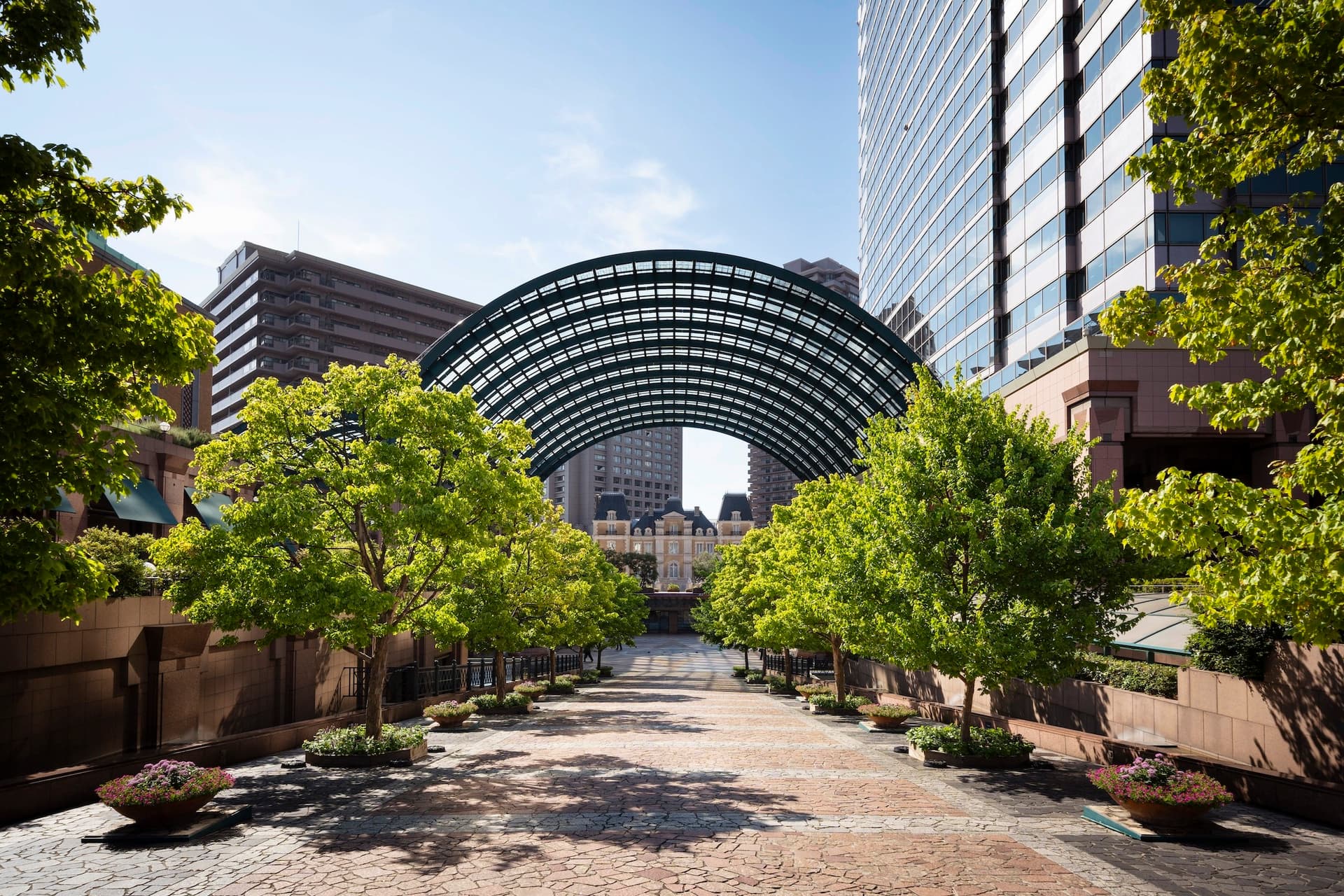
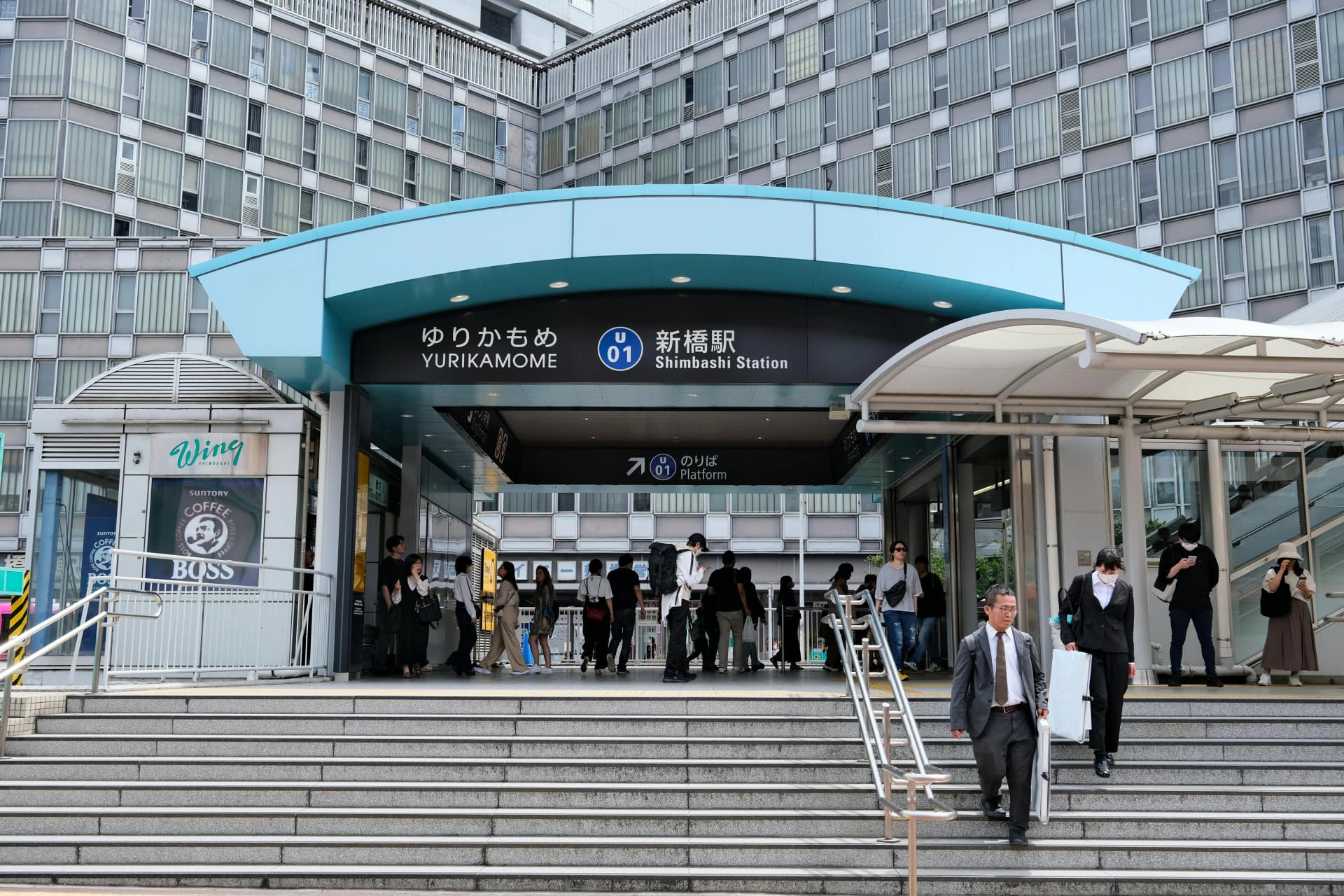
Shiodome — effectively the eastern extension of Shimbashi — is where Tokyo's modernization narrative plays out architecturally. The old Shiodome freight terminal tracks are now the elevated Yurikamome Line, and the area rebuilt as a business district in the 1990s and 2000s features some of the most striking post-bubble architecture in the city. Dentsu's headquarters — designed by Jean Nouvel — dominates the skyline with its grid of louvers and glass. Nippon Television's headquarters sits nearby with its distinctive Studio Ghibli clock on the exterior wall, designed by Hayao Miyazaki himself. The clock activates several times daily with an elaborate mechanical performance that draws small crowds of office workers and the occasional bewildered tourist who wandered over from Tsukiji.
The Shiodome Shiosite complex includes the Panasonic Center, the Park Hotel Tokyo (known for its artist rooms on the 31st floor), and the Italian-inspired Caretta Shiodome, which has a free 46th-floor observation deck that almost nobody visits. The contrast between the Shiodome towers and the Shimbashi alleys — visible within a single ten-minute walk — is one of the tighter urban contrasts in central Tokyo. The towers represent what Japan built during the late-90s recovery. The alleys represent what survived from before the question of recovery was relevant.
How to Get There
Shimbashi is one of the most connected stations in Tokyo — which is itself a statement about its historical importance as the city's original railway hub. Five separate rail lines converge here, and you can reach most of central Tokyo's key districts in under 15 minutes without a transfer.
JR Shimbashi Station handles the Yamanote Line (the main loop), the Keihin-Tohoku Line (north-south through Ueno, Akihabara, and Shinagawa), the Tokaido Line, and the Yokosuka Line. The Tokyo Metro Ginza Line provides a direct underground connection to Ginza in 2 minutes and Shibuya in 13 minutes. The Toei Asakusa Line runs direct to Asakusa in 14 minutes and connects through to Narita Airport via the Keisei Line without requiring a transfer at Asakusa — a detail that most station maps don't make obvious. The Yurikamome Line, departing from the adjacent Shiodome Station, connects to Odaiba and the Toyosu fish market area along the waterfront.
From Haneda Airport: approximately 30 minutes via Keikyu-Kuko Line direct. From Narita Airport: approximately 70 minutes via Keisei Access Express, transferring at Asakusa to the Ginza Line or walking from the Asakusa Line connection.
The practical advantage of Shimbashi as a stopping point is that it sits between the primary tourist zones and the actual working city — adjacent to Ginza but not part of it. Nothing about it feels curated for visitors. That is the feature, not a gap.
If you're combining Shimbashi with Hamarikyu Gardens, the walk from Shimbashi Station takes approximately 10 minutes and heads toward the bay direction. The garden's Nakano-Gomon Gate entrance is the closest from the station. From Shiodome Station, it's closer — approximately 5 minutes via the Otemon Gate entrance.
Frequently Asked Questions
Is Shimbashi safe for visitors? Yes — it's a working business and entertainment district, not a nightlife area in the sense that Kabukicho is. The salaryman bars are densely packed and the streets are active well into the evening, which means there are always people around and the general atmosphere is convivial rather than aggressive. Shimbashi is one of the safer late-night areas in central Tokyo precisely because its regular clientele treats it as an extension of the office, not a venue for unpredictability.
Do I need to speak Japanese to go to the izakayas in Shimbashi? For the standing bars and smaller izakayas: some Japanese helps, and menu literacy matters more than conversational ability. If you can read basic katakana (which covers most food and drink items), you'll manage. Point-and-order works at most places — many standing bars have their menu displayed on the wall or written on wooden boards behind the counter, and the food is often visible on the grill or in the display case. The larger chains and the restaurants inside Shiodome Shiosite are more approachable for non-Japanese speakers, with picture menus and some English signage.
What's the best time to visit Shimbashi? Late afternoon and early evening (5pm to 8pm) captures the salaryman inflow and the peak of the izakaya energy — the transition from business district to drinking district happens in real time, and the streets physically change character as the crowds shift from walking purposefully to standing and socializing. Late night (10pm onward) has a different character — quieter, more settled, less performance and more actual drinking. Lunchtime is also underrated: the same alley network runs affordable set-lunch specials targeting office workers, and prices are noticeably lower than Ginza equivalents a few blocks away.
Is Shimbashi a tourist area? No. This is one of its defining characteristics. You will see almost no other visitors in the west exit izakaya district. Ginza is five minutes away and absorbs whatever tourist traffic exists in this part of Minato Ward. Shimbashi is for Shimbashi.
At Hinomaru One, we build private Tokyo days around the city's real texture — not the version that appears in travel brochures. Shimbashi is a case study in why the proximity of places matters: 500 meters separates one of Tokyo's most tourist-saturated areas from one of its most deliberately un-touristed. Ordinary Tokyo is our full-day neighbourhood immersion for travellers who want to understand how Tokyo actually functions, not just how it presents itself.