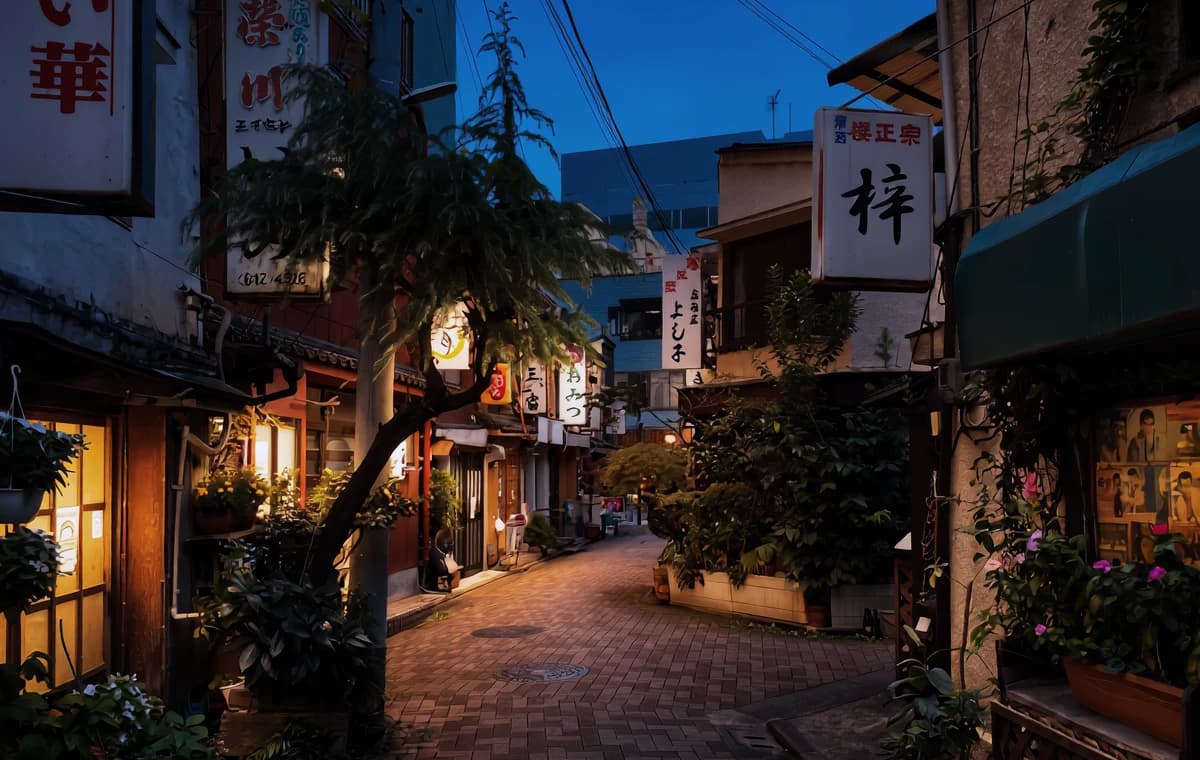
Monzen-Nakacho is for people who just want to drink well and eat cheaply without any performance. Shinjuku's Omoide Yokocho is for tourists who want the photo. Golden Gai charges ¥1,500 cover for a seat. Shibuya is chaos. Ebisu is polished. Monnaka is none of that.
Locals call it "Monnaka" (門仲). It sits in Koto Ward on the east side of the Sumida River, two subway lines running through it (Tozai Line and Oedo Line), about fifteen minutes from central Tokyo. The neighborhood grew up around two religious institutions that still anchor it today: Tomioka Hachimangu shrine and Fukagawa Fudo-do temple. Between them, a tangle of narrow streets packed with izakayas, standing bars, sake shops, and small restaurants that serve the after-work crowd six nights a week.
There are almost no tourists here. Not because anyone is keeping them out, but because the neighborhood never bothered to market itself. The bars don't have English menus. The signs are handwritten. The regulars have been coming for years. That's exactly why it's good.
Tomioka Hachimangu: The Shrine That Built the Neighborhood
Tomioka Hachimangu was founded in 1627 by the Buddhist priest Chosei Hoin, originally as Eitai Hachimangu on what was then a small island called Eitaijima. It grew into the largest Hachiman shrine in Edo and remains one of the Tokyo Ten Shrines (東京十社) today. The main deity enshrined is Emperor Ojin (Hondawake no Mikoto).
Also commonly known as Fukagawa Hachimangu (深川八幡宮), the shrine's connection to sumo runs deep and isn't just ceremonial. In 1684, the Tokugawa shogunate officially authorized spring and autumn kanjin-zumo (professionally organized sumo tournaments) to be held at the shrine grounds. This makes Tomioka Hachimangu the birthplace of organized professional sumo in Edo. Before this, sumo existed as entertainment but lacked official sanction. The shogunate's blessing at Tomioka Hachimangu essentially created the institutional framework that evolved into the sumo system we know today. The tradition is commemorated by the Yokozuna Rikishi Monument (横綱力士碑), a massive stone marker completed in 1900 at the initiative of the 12th Yokozuna, Jinmaku Kyugoro. It lists every yokozuna from the first (Akashi Shiganosuke) through to the 72nd (Kisenosato). The monument is about 3.5 meters tall, 3 meters wide, and weighs roughly 30 tons. During Setsubun in February, active sumo wrestlers still come to the shrine for the bean-throwing ceremony.
The 2017 Incident
In December 2017, the shrine made national headlines for something far darker. The former chief priest, Tomioka Shigenaga, attacked and killed the sitting chief priestess, his older sister Tomioka Nagako, with a Japanese sword near the shrine grounds. He then killed himself. The dispute was rooted in a long-running family conflict over control of the shrine's leadership. It was covered extensively by every major Japanese news outlet, from Sankei to the Huffington Post Japan.
The shrine remains fully operational today. Visitors come, festivals continue, and the grounds are well-maintained. But among locals, the incident is remembered, and it altered the shrine's public image in ways that haven't fully healed. If you visit, you'll find a beautiful, historically significant shrine. The history is complicated, and that's worth knowing rather than glossing over.
Fukagawa Fudo-do: Fire Rituals in Central Tokyo
Next door to Tomioka Hachimangu (literally adjacent), Fukagawa Fudo-do is the Tokyo branch temple (betsuin) of Narita-san Shinshoji, one of Japan's most important Shingon Buddhist temples in Chiba Prefecture. The deity here is Fudo Myoo, the fierce and immovable Buddhist protector.
The main draw for visitors is the goma fire ritual (護摩祈祷). Monks chant sutras while feeding wooden prayer sticks into a ceremonial fire. The flames grow large, the drums are loud, and the smoke fills the hall. It's an intense, physical experience that catches most first-time visitors off guard. These ceremonies run multiple times daily, and they're free to attend. Arrive early because seating fills up, especially on weekends and the 1st, 15th, and 28th of each month (the temple's ennichi days).
The newer main hall, completed in 2011, has a striking exterior covered in Sanskrit mantras (bonji). Inside, the ceiling features a large painting by the artist Nakajima Chinami. The temple complex also includes a corridor enshrining ten thousand small Fudo Myoo statues and a Shikoku 88-temple mini-pilgrimage circuit you can walk through on the 2nd floor of the Inner Buddha Hall.
The approach road (sando) leading to the temple from the station is lined with small shops and food stalls. This is the commercial spine of Monnaka, and the reason the area has always been a place where people come to eat and drink after paying their respects. The sando has a different energy depending on when you visit. Mornings feel devotional, with older visitors heading to the temple. By late afternoon, the same street tilts toward drinking, as the sake shops and standing bars that line it start filling up. It's a smooth transition. Nobody is confused by it. Temples and alcohol have coexisted in Japanese culture for centuries, and Monnaka is a living example of that relationship.
Fukagawa Meshi: The Local Dish Nobody Writes About
Fukagawa meshi (深川めし) is the neighborhood's signature dish, and it's genuinely rare to see it covered properly in English-language travel content. It was born as working food for Edo-period fishermen in the Fukagawa area, when the tidal flats around here were rich with asari clams.
The dish exists in two forms:
Bukkake style (ぶっかけ): A hot miso-based broth loaded with fresh asari clams and chopped negi (green onion), poured directly over a bowl of white rice. This is the original form. Fast, cheap, and filling. It's what the fishermen actually ate. The clams cook in the broth, and you eat it almost like a soupy rice bowl.
Takikomi style (炊き込み): Asari clams cooked together with the rice, seasoning, and vegetables in one pot. This is the more refined, restaurant-friendly version that developed later. The rice absorbs the clam flavor during cooking, making it drier and more concentrated than bukkake.
Fukagawa meshi is designated as one of Japan's 100 Regional Cuisines (郷土料理百選) and one of the Five Great Rice Dishes of Japan (日本五大銘飯).
Where to Eat It
Fukagawa-juku (深川宿) Tomioka Hachimangu branch: Located inside the shrine grounds. This is the most well-known spot, specializing in the traditional bukkake style. You can order a set that includes both styles to compare. Expect to spend around ¥1,500-2,000 for a set meal.
Monzen Chaya (門前茶屋): Located on the temple approach road near Fukagawa Fudo-do. They do a refined takikomi-style Fukagawa meshi. It's been around long enough to have a reputation among locals.
Both restaurants are within a few minutes' walk of each other, which makes a comparison lunch easy if you're interested. The bukkake style at Fukagawa-juku is more rustic and closer to what the dish originally was. The takikomi at Monzen Chaya is cleaner and more subtle. Try both if you have the appetite.
The Standing Bar and Izakaya Scene
This is the real reason to come to Monnaka after dark. The area around the station, particularly along the streets between the shrine and the temple approach, is dense with small drinking spots. The concentration of standing bars per block is among the highest in Tokyo, and the prices reflect a neighborhood that serves locals, not visitors.
Orihara Shoten (折原商店)
This is the one that gets mentioned in every Monnaka drinking guide, and for good reason. It's technically a sake specialty shop on the Fukagawa Fudo-do approach road, but it doubles as a standing bar (kakuuchi style). The concept: walk in, pick a bottle from the refrigerated case along the wall, pay at the register in the back, and drink it standing at one of the small tables.
The sake selection is enormous. Prices start from ¥150 per glass. The staff includes certified sake sommeliers (kikizake-shi) who can guide you if you're overwhelmed. They also serve simple drinking snacks like oden and shiokara. The shop also sells dagashi (old-fashioned cheap candy) and retro toys, giving it a nostalgic, slightly chaotic atmosphere.
Address: 1-13-11 Tomioka, Koto-ku (a few seconds walk from Monzen-Nakacho Station Exit 1). Tabelog rating around 3.55. No regular closing days. Open roughly 10:00-22:00, though the bar service may differ from shop hours.
Masurao (ますらお)
Featured prominently in the 2025 recommendations from Otona no Shumatsu magazine as "the strongest standing bar in Monzen-Nakacho." It's a standing izakaya known for being genuinely cheap with food quality that punches well above the price. Sake and small plates. The kind of place where you walk in alone at 5pm and leave at 8pm having talked to three strangers.
Sakaba Anchor (酒場 Anchor)
A newer addition, opened in 2024 at 1-26-16 Tomioka, Koto-ku. No cover charge, no compulsory appetizer (otoshi). Open Sundays. It fills a gap for people who want a relaxed solo drink without the standing-bar energy. Good for daytime drinking.
Fukagawa Hakkojo (深川醗酵所)
A standing bar on the first floor of its building, themed around Japanese fermentation culture. Japanese wine, local sake, and fermented food snacks. It's a slightly more curated experience than the classic Monnaka standing bar, but still unpretentious and affordable.
The Unnamed Sushi-Chef Bar
Multiple Japanese sources reference a standing bar in Monnaka, opened in 2014, run by a former sushi chef, that regulars consistently call "Monnaka's number one standing bar." The san-tatsu article describes kimono-clad staff and high-quality small dishes. No reservations. It gets packed early. I'm deliberately not naming it here because the specific identification across sources wasn't consistent enough to verify with full confidence, but if you ask around Monnaka, locals know it.
How to Approach the Scene
The best strategy: arrive around 5pm on a weekday. Start at Orihara Shoten for a sake tasting. Walk the temple approach road and the side streets south of the main road. Most standing bars don't require reservations and welcome walk-ins. Budget ¥2,000-3,000 for an evening of two to three stops with food at each.
The language barrier is real here. Menus are in Japanese, and most staff don't speak English. You can point and gesture your way through, but the experience changes significantly when you can actually talk to the person behind the counter. This is one of the neighborhoods where a standing bar tour with a guide makes the biggest difference.
The Canals and Kiba Park
Monnaka sits in what used to be Edo's waterfront working district. The Oyoko River and a network of smaller canals still thread through the area. Walking along them gives you a sense of the neighborhood's geography that you miss if you only stick to the main streets. This was the Fukagawa district: a low-lying area of reclaimed land, canals, and merchant activity that defined Edo's eastern frontier. The streets still follow the old canal grid in places, and if you look at a map, the neighborhood's shape makes more sense once you realize half of it was water two hundred years ago.
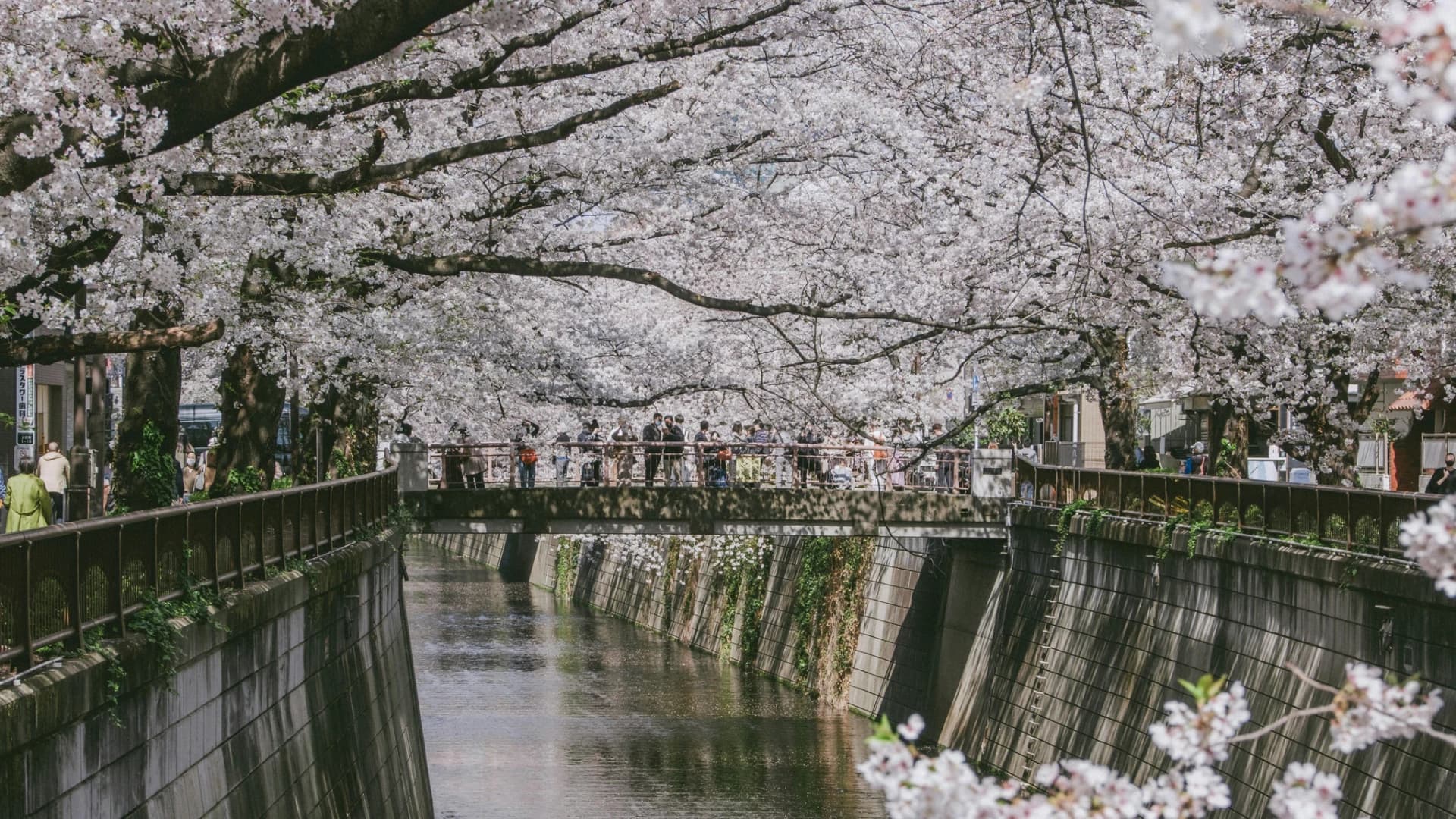
Kiba Park (木場公園) is a ten-minute walk east of the station, spread across both sides of the Sendaibori River. It's a large green space with walking paths, a barbecue area, and the Museum of Contemporary Art Tokyo (MOT) on its eastern edge. MOT is worth the detour if you have time. It's one of Tokyo's better contemporary art museums, and the permanent collection alone justifies an hour. In autumn, the park's trees turn and it's genuinely beautiful. In spring, there are cherry blossoms along the canal paths. Locals jog here in the morning and walk dogs in the evening. It doesn't feel like central Tokyo.
The park was built on land that was historically used for lumber storage (kiba literally means "lumber place"). Logs floated down the rivers to this area during the Edo period, and the timber industry defined the neighborhood until well into the 20th century. The annual Kiba no Kakunori log-rolling festival in October preserves this heritage. Performers balance and do acrobatics on floating logs in the park's event pond, a skill descended from Edo-period lumberyard workers who moved timber on the river. It's as entertaining as it sounds and draws decent crowds despite being almost unknown outside the neighborhood.
Getting There and Combining with Nearby Areas
Monzen-Nakacho Station is served by two lines:
- Tokyo Metro Tozai Line (T-12): Direct to Nihonbashi (3 min), Otemachi/Tokyo Station area (6 min), and Nakano (25 min)
- Toei Oedo Line (E-15): Direct to Tsukishima (2 min), Ryogoku (5 min), and Roppongi (15 min)
Combine with Toyosu: One stop on the Yurakucho Line from nearby Toyosu. If you're doing the fish market in the morning, Monnaka in the evening is a natural pairing.
Combine with Tsukiji: The outer market for morning food, then cross the river east to Monnaka for the afternoon temples and evening drinking.
Combine with Kiyosumi-Shirakawa: One stop on the Oedo Line. This is Tokyo's specialty coffee neighborhood, where Blue Bottle opened its first Japan location and independent roasters fill converted warehouses. Morning coffee in Kiyosumi, afternoon in Monnaka's temples, evening in the standing bars.
Combine with Ryogoku: Five minutes on the Oedo Line. The sumo connection is a natural thread: see the Yokozuna monument at Tomioka Hachimangu, then visit the Sumo Museum and Ryogoku Kokugikan. If a tournament is running (three Tokyo basho per year: January, May, September), the combination of tournament day at Ryogoku and evening drinks in Monnaka is hard to beat.
When to Visit
Fukagawa Hachiman Matsuri (deep August, mid-month): This is the big one. Tomioka Hachimangu's annual festival is one of Edo's Three Great Festivals (江戸三大祭), alongside Kanda Matsuri and Sanno Matsuri. The main event is the mikoshi (portable shrine) procession through the streets, where spectators throw water on the carriers from the sidewalks. It's called the "water-throwing festival" (水かけ祭り) and it's exactly as wild as it sounds.
The festival alternates between honmatsuri (full festival) and kage-matsuri (smaller festival) years. The 2023 edition was the first full honmatsuri in six years, with 53 mikoshi in the combined procession. Honmatsuri years draw massive crowds. Even in kage-matsuri years, there are children's mikoshi and neighborhood events.
Ennichi days (1st, 15th, 28th of each month): Fukagawa Fudo-do's special prayer days. More vendors set up along the approach road. The goma fire ceremonies are busier and more intense.
Setsubun (early February): Sumo wrestlers come to Tomioka Hachimangu for bean-throwing. A good excuse to visit if you're in Tokyo during early February.
Weekday evenings (any season): For the drinking scene, weekday evenings between 5pm and 9pm are the sweet spot. The bars are busy enough to have atmosphere but not so packed that you can't get a spot. Friday nights get crowded. Weekends are quieter because this is fundamentally a commuter drinking neighborhood. The people who drink here work nearby. On Saturday, they're home.
Lunchtime: Fukagawa meshi restaurants are busiest at lunch. If you're coming specifically for clam rice, arrive by 11:30am on weekdays or expect a short wait.
The neighborhood doesn't have a bad season. Summer is hot (it's Tokyo), but the festival compensates. Winter evenings with hot sake at a standing bar are arguably the best version of Monnaka.
What Makes Monnaka Different
Every neighborhood guide tries to say "this is the real Tokyo" and it's usually not true. Roppongi is "real Tokyo" for expats. Shibuya is "real Tokyo" for teenagers. Asakusa is "real Tokyo" for tourists.
Monnaka is real Tokyo for salarymen who want a beer and some clam rice after work. It's not trying to be anything. The shrine is there because it's been there since 1627. The standing bars are there because people who visit shrines get thirsty. The food is cheap because the customers are regulars who come three times a week.
No craft cocktails. No Instagram walls. No English menus. No cover charges. Just drinking that's been happening in the same spot for a very long time.
The shitamachi character here is different from Asakusa's version. Asakusa has the temples and the old-town atmosphere, but it also has 30 million annual visitors at Sensoji and a tourist infrastructure built around that reality. Monnaka has the same historical bones but none of the tourist overlay. The old-town feel isn't performed. Nobody is selling you "traditional Tokyo." It just is what it is because nobody changed it.
If that sounds like your kind of evening, Monnaka is probably your favorite neighborhood in Tokyo. You just haven't been there yet.
For a guided evening through Monnaka's standing bars and izakayas, see our Standing Room Only experience. A guide turns the language barrier into actual conversations with the people behind the counter.