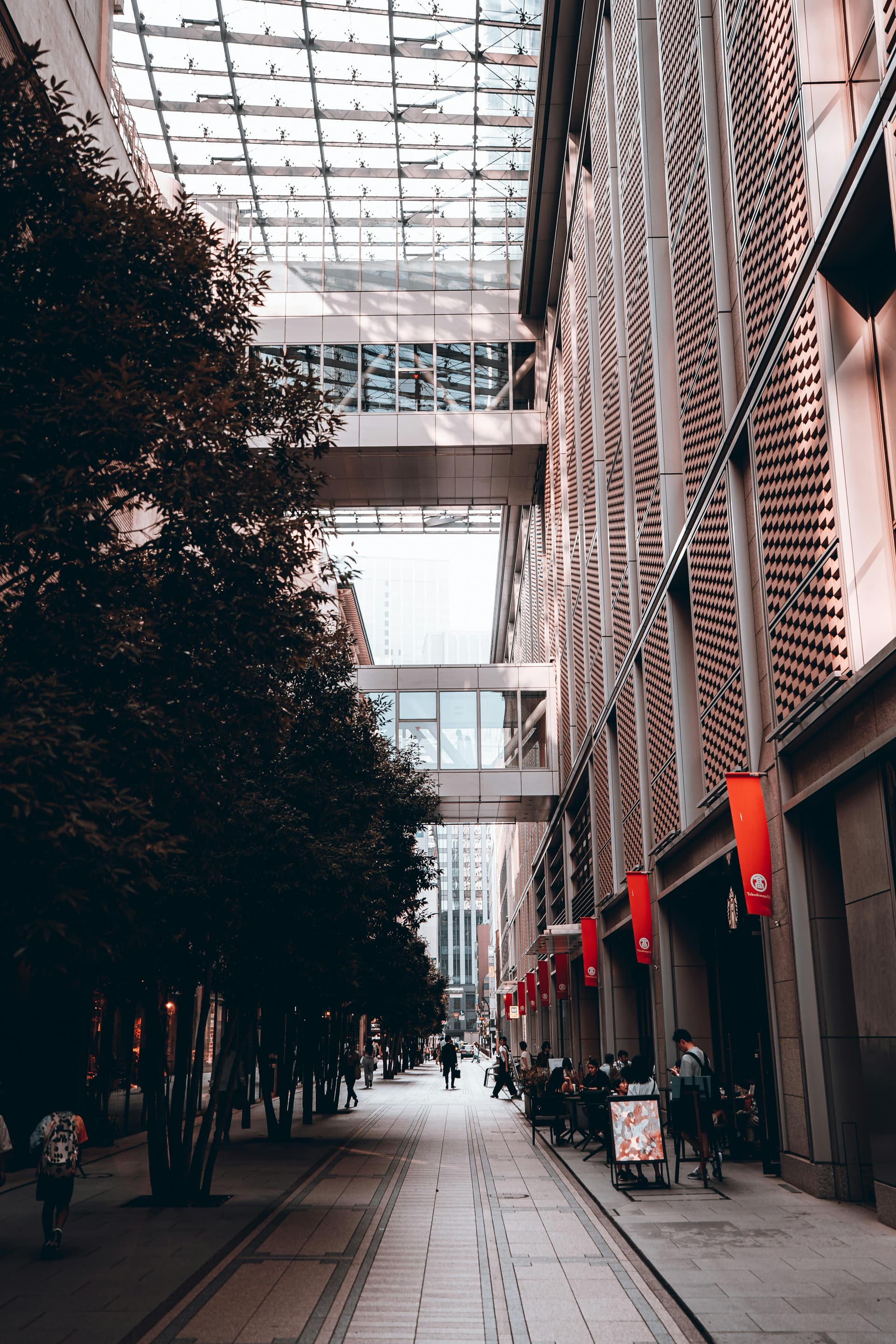
Nihonbashi's treasures hide behind doors, up elevators, in basements. Tourist-mode walking disappoints. Insider-mode exploration rewards.
Nihonbashi keeps its good stuff behind doors, up elevators and down in basements. Wander the streets like a tourist and you'll be let down; go inside and it pays off.
The bridge that named the neighborhood is the historic zero-kilometer point of Japan's whole road network, and it now sits directly under the elevated Metropolitan Expressway. That was a deliberate trade: preservationists kept the bridge and developers got the airspace. So Nihonbashi carries a lot of history and still gets overlooked.
The Wrong Way to Visit Nihonbashi
Most Tokyo neighborhood guides tell you to "stroll through" Nihonbashi's historic streets: walk around, photograph the famous bridge, peek into a few traditional shops. Do that and you'll come away feeling you missed something, and you'll be right.
What tourist-mode walking produces
Nihonbashi grew up around merchants and office workers, and trade, banking and department stores all happen indoors. In Asakusa the temples are visible from the street, and in Shibuya the street itself is the show. Nihonbashi doesn't work like either.
A Japanese professor once put the Nihonbashi Bridge on an "Ugly Japan" list, and from street level he had a point, since a 1960s expressway blocks the sky right above it. Travelers say as much: "blighted by a gigantic elevated freeway which keeps it in a perpetual shadow."
Where the rewards actually hide
The traditional craft shops the guidebooks mention are inside modern buildings with very little English signage. Many of the centuries-old businesses are still run by the founders' descendants, and you could walk past their doorways without noticing. The department store that looks like ordinary shopping has a rooftop shrine, fossils in its marble walls and a basement food hall worth a trip of its own.
So pick a building, go in, check the basement, and find the elevator to the roof.
What the Bridge Actually Offers
The view you'll actually get
The current Nihonbashi Bridge dates to 1911. It's stone, built to replace wooden bridges lost to fire, and it's an Important Cultural Property. Since 1964 the Metropolitan Expressway has run directly overhead and kept it in permanent shadow.
Go in knowing the expressway is there and photographs badly.
What to look for anyway
Up close, the bridge is worth a slower look:
-
Bronze Kirin statues at each corner, mythical creatures with dragon bodies, chosen to stand for Tokyo taking flight
-
Shishi lion-dog guardians at the center, modeled on Western bridge traditions
-
The Kilometer Zero marker: every distance in Japan is still measured from here, a holdover from the Edo-era road system
-
Firebombing scars from 1945 in the stone, if you look for them
The Nihonbashi Boarding Dock is directly beneath the bridge, and river cruises leave from there. From the water you're under the expressway looking downstream at old bridges instead of up at concrete.
Why 2040 might matter to your planning
A ¥320 billion project is moving the expressway underground. The tunnel opens in fiscal 2035 and the elevated road comes down by fiscal 2040, which will partly bring back the view after 77 years.
If you come back in the 2040s, Nihonbashi will look very different. Until then, expect the concrete.
Three Districts, Three Experiences
Nihonbashi is really several neighborhoods, and they feel nothing alike even though a 10-minute walk connects them.
Muromachi: Where traditional shops moved inside modern buildings
The streets around COREDO Muromachi and Mitsukoshi department store are the polished commercial center of Nihonbashi. When postwar development rebuilt the streetscape, the traditional craft shops (knife makers, gold leaf artisans, food purveyors going back centuries) moved into the new complexes. You'll find them inside COREDO and Mitsukoshi now, and you won't see them from the street.
The Nihonbashi Information Center in COREDO's basement has multilingual staff. Start there if you'd like some background before you explore.
Kabutocho: Where Tokyo's Wall Street became a creative district
The Tokyo Stock Exchange still operates in Kabutocho, but the area changed a lot after 2017. Heiwa Real Estate, which owns the Stock Exchange building, started a revitalization project that turned old financial buildings into places to eat, drink and stay.
The best known is Hotel K5, a 1923 bank building now a boutique hotel with:
-
B bar (Brooklyn Brewery's Tokyo flagship)
-
Switch Coffee (third-wave single-origin drip)
-
Caveman restaurant (fermentation and smoking focus)
Nearby, the BANK complex fills another former bank. Bakery Bank is on the ground floor with croissants from pastry chef Keisuke Oyama, Bistro Yen pours natural wines, and Coffeeshop & Bar Coin is in the basement.
Omnipollos Tokyo is a Swedish craft brewery in a 70-year-old former unagi restaurant; try the Mango Smoothie Sour, or the frozen beer slushie topped with soft serve. At Patisserie Ease you can watch the sweets being made. Teal sells ice cream in the Nisshokan, once the home of Eiichi Shibusawa, the "father of Japanese capitalism" who is now on the ¥10,000 bill.
Come here in the evening; the cafes and bars feel very different from daytime shopping in Muromachi.
Ningyocho: Where the old Edo atmosphere survived
Ningyocho ("Doll Town"), east of Muromachi, still has the shitamachi feel the rest of Nihonbashi lost to development. It came through both the 1923 Great Kanto Earthquake and the World War II firebombing, so what you see is old Tokyo and not a rebuild.
Most people come for Amazake Yokocho, a 400-meter shopping street named after the sweet sake shops that used to line it. These days you'll find:
-
Shigemori Eishindo (founded 1917): Ningyo-yaki cakes shaped like the Seven Lucky Gods, with extra-thin, puffy skin, ¥130 each. They sell about 3,000 a day, and you can watch them being made through the shop window.
-
Itakuraya (founded 1907): The first shop to make Seven Lucky Gods ningyo-yaki, in full-figure shapes. Opens at 9:00 and closes when it sells out.
-
Futaba (1907): Amazake made fresh every day, hot or iced. It started as a tofu shop and became the place for amazake after the original shop closed.
-
Gyokueidou (1576): Tiger-striped dorayaki called "torayaki."
Ningyo-yaki started here before spreading to Asakusa, and only three shops in Ningyocho still make it.
For a traditional meal, Tamahide (1760) is Japan's oldest restaurant and specializes in shamo chicken. Its founder was a falconer who supplied the Tokugawa shoguns.
What's Actually Inside (This Is Why You Came)
Mitsukoshi: A department store that's actually an attraction
Nihonbashi Mitsukoshi is Japan's oldest department store, and its building is a National Important Cultural Property. Visit even if you don't plan to buy anything.
Rooftop (above 7th floor, via stairs):
-
Nihonbashi Garden, with a pond, seasonal plants, and tables and chairs anyone can use
-
Mimeguri Shrine, a branch of the Mukojima original, enshrining Katsudo Daikokuten, god of business prosperity. He was the Mitsui family's guardian deity in the Edo period.
-
Golden Tower (1921), an Art Deco structure first used to fly weather forecast flags
-
Bonsai shop
Ground floor and central hall:
-
Marble atrium rising through floors 1-5
-
"Statue of Magokoro," an 11-meter wooden sculpture that took a decade to finish
-
Lion statues at the entrance (installed 1914, inspired by Trafalgar Square)
Fossil treasure hunt: Ammonite fossils are set into the marble walls all over the building. Look closely at the stone and you'll start spotting them.
Basement food hall (depachika):
-
Kayuan section with sweets picked from high-end brands around the country
-
Baumkuchen baked in-house
-
Hakone Akatsuki-an soba shop, where at certain times you can watch the soba being made by hand
-
Regional sake vendors who change weekly and pour tastings
-
Wa no Cha tea café by Itoen
COREDO Muromachi: Traditional shops, modern building
There are four COREDO buildings around Mitsukoshimae Station. The name is "CORE" + "EDO," meaning the center of old Tokyo commerce.
COREDO Muromachi 1 houses traditional shops that moved in from the surrounding streets:
-
Kiya knives (220+ years, shown in an 1805 picture scroll)
-
Hakuza gold leaf flagship (Golden Sky tower, gold leaf workshops, cosmetics, sweets)
-
Ninben dried bonito, with a "Dashi Bar" where you taste broths and see traditional hand-shaving
-
Okui Kaiseido kelp and seaweed from Fukui
-
Funabashiya Edo-era kuzumochi
COREDO Muromachi 2: Nine-screen cinema (first in Nihonbashi), food hall COREDO Muromachi 3: Lifestyle goods, housewares COREDO Muromachi Terrace: Eslite Spectrum (Taiwanese bookstore concept with curated Japanese items)
Hours: Shops 11:00-20:00 weekdays (10:00 weekends); restaurants until 23:00.
The 400-year-old shops you'll walk past without knowing
A few traditional craft shops in Nihonbashi barely show from the street:
-
Ibasen (founded 1590): Folding fans and uchiwa. It began as an ukiyo-e publisher.
-
Ozu Washi (founded 1653): Handmade washi paper on three floors, with a shop, a gallery of rotating exhibitions, and a history museum with an English audio guide. You can handle the different papers. Workshops take 1 hour (¥4,000 for basic papermaking, ¥5,500 with gold leaf), and you take your paper home the same day. Book ahead; staff speak some English, but the workshops are in Japanese.
-
Kuroeya (founded 1689): Lacquerware
These shops have been open for 200-400 years, and many are still run by the founding families. They don't advertise to tourists, so you have to know they're there.
Basements and rooftops: Where the best rewards are
Below ground: Every major building has basement levels. The depachika food halls in the department stores are worth the trip on their own, and the COREDO basement connects straight to Mitsukoshimae Station.
Above ground: A roof that looks like a maintenance area sometimes has a garden, a shrine or a public space. Mitsukoshi's is the most built-out, but check the elevator listings in other buildings too. "RF" or "rooftop" can lead somewhere good.
Experiences Worth Booking
Bank of Japan tour (English, free, requires planning)
The Bank of Japan headquarters was designed by Kingo Tatsuno, the architect of Tokyo Station. Finished in 1896, it was Japan's first Western-style brick masonry building and is an Important Cultural Property. It survived the 1923 Great Kanto Earthquake.
English tours run on the Wednesday of the third week of each month, 13:45-14:45. They're free and last 60 minutes: a 10-minute introductory video, then a 50-minute walk through the building.
What you'll see:
-
The underground vault (used until 2004)
-
The old banking floor
-
Exhibition rooms on the bank's history
Booking requirements:
-
Reserve through the online system at bojtour.rsvsys.jp
-
Booking window: 90 days to 5 days before the tour
-
Send the full names (as on passports) of everyone in your group one month ahead
-
Bring ID to reception
-
Minimum age: 11 years
-
Maximum 20 people per tour
Groups of 5+ can arrange English tours at other times by emailing post.prd12@boj.or.jp.
If you can't get a spot, the "BOJ from Home" virtual tour is a 3D walkthrough of the building.
The Currency Museum across the street is free and open Monday-Saturday 9:30-16:30.
River cruises from Nihonbashi Pier
The Nihonbashi Boarding Dock was built in 2011 for the bridge's 100th anniversary and sees 50,000-60,000 passengers a year. Boats leave from right under Nihonbashi Bridge.
Riverboat Mizuha (modern Japanese-style boat, English guide included):
-
Shared tours: ¥5,000 adults, ¥2,500 children
-
Charter: ¥69,000/60 minutes, ¥97,500/90 minutes (up to 12 people, BYOB welcome)
-
Booking: funaasobi-mizuha.jp/english/ or @riverboatmizuha on social media
-
Small wooden cabin with cushion seating on the front deck, blankets provided, restroom onboard
Zeal Co., Ltd. (44-seater boat):
-
Kanda River Cruise: 90 minutes, ¥2,500 weekdays / ¥2,800 weekends
-
Route: Nihonbashi River → Ochanomizu Valley → under Hijiri Bridge and Mansei Bridge → Sumida River (Ryogoku, Kiyosu, Eitai bridges)
What you'll see from the water:
-
Edo Castle stone walls at the outer moat
-
Historic bridges listed as Important Cultural Properties (Eitaibashi, Kiyosubashi)
-
Tokyo Skytree from river level
-
The underside of the expressway that blocks the bridge view from above
Cherry blossom season cruises (late March-early April) sell out fast. In peak seasons, book at least 1-2 weeks ahead.
A sunset cruise gets you both views, with the city going from daylight to lit-up skyline on the way back. Weekday evening departures are less crowded than weekends.
How Much Time Nihonbashi Deserves
The quick pass (1-2 hours)
If you're near Tokyo Station anyway, or pairing it with Ginza:
-
Walk to Nihonbashi Bridge (10 minutes from Tokyo Station Yaesu exit)
-
Find the bronze Kirin and lion statues and the Kilometer Zero marker
-
Go down to Mitsukoshi's basement food hall
-
Buy something to eat and take it up to the rooftop garden if you have time
-
Head back through the COREDO Muromachi basement (connected to Mitsukoshimae Station)
That's a good lunch stop or a break between other places. It won't show you much of Nihonbashi, but it's enough to tell whether you want to come back for longer.
A proper visit (half day)
Pick one district and go into several buildings:
Muromachi focus (shopping and food):
-
Start at the Nihonbashi Information Center in the COREDO basement to get your bearings
-
Look through the traditional shops in COREDO Muromachi 1 (Kiya, Hakuza, Ninben)
-
Lunch at a COREDO restaurant, or a bento from the Mitsukoshi basement
-
Mitsukoshi central hall, rooftop shrine and garden
-
Optional: Ozu Washi paper workshop (1 hour, ~¥4,000)
Ningyocho focus (traditional atmosphere):
-
Start at Ningyocho Station
-
Walk Amazake Yokocho street
-
Try ningyo-yaki at Shigemori Eishindo or Itakuraya
-
Fresh amazake at Futaba
-
Wander the side streets and the traditional sweets shops
-
Optional: Suitengu Shrine (deity of safe childbirth)
Kabutocho focus (evening/creative district):
-
Afternoon coffee at Switch Coffee (K5) or Coffeeshop Coin (BANK complex)
-
Browse Eslite Spectrum bookstore in COREDO Terrace
-
Evening drinks at B bar (Brooklyn Brewery) or Omnipollos Tokyo
-
Dinner at Caveman or Bistro Yen
The full exploration (full day)
Combine districts and book one fixed experience:
-
Morning: Bank of Japan tour (if it's the Wednesday of the 3rd week, 13:45 start) or a morning in Ningyocho
-
Midday: Muromachi shopping and Mitsukoshi
-
Afternoon: Ozu Washi workshop or a river cruise from Nihonbashi Pier
-
Evening: drinks and dinner in Kabutocho
A full day covers the whole range, from Edo-era crafts to the made-over financial district. Book the Bank of Japan tour or the river cruise in advance and fit the rest around it. You still won't see everything, and we'd rather you went deep in a couple of places than tried.
When a Guide Changes the Experience
What guidance adds
You can get around Nihonbashi on your own. COREDO has an information center with multilingual staff, the department stores are easy to navigate, and the subway stations connect straight into the buildings.
The traditional craft shops are harder. There's little English and nothing explaining what you're looking at. A 400-year-old fan shop looks like any other store until someone tells you it started as an ukiyo-e publisher, that the techniques haven't changed, and that the same family still runs it. Edo merchant culture, Meiji modernization, postwar rebuilding and the current revitalization are all stacked up here, and none of it shows unless someone tells the story. Understanding traditional craft and culture takes background the signs don't give you.
A guide brings:
-
Context for what's on the shelves
-
Knowing which unmarked doors to enter
-
The ability to talk with shopkeepers who don't speak English
-
The history connecting what you see to what used to stand there
-
Answers to questions you wouldn't think to ask
With crafts in particular, a guide can explain what makes a knife or a sheet of washi special, why prices run from ¥500 to ¥50,000, and whether the piece in front of you is worth buying.
When self-exploration works fine
You'll do fine on your own for:
-
Shopping in COREDO and Mitsukoshi (there's signage, and staff help with purchases)
-
Food halls and depachika (point and choose)
-
Kabutocho cafes and bars (set up for international visitors)
-
Walking and photography
If you mostly want to eat, drink and shop, you don't need a guide.
If you want to understand the history and the crafts you're looking at, a guide fills in that background.
Getting There and Getting Around
From Tokyo Station
Nihonbashi is a 10-minute walk from Tokyo Station. Leave by the Yaesu North or Nihonbashi Exit and walk east along Eitai-dori, or take the underground passages.
The free Metrolink Nihonbashi shuttle bus runs from Tokyo Station's Yaesu Exit to the COREDO/Mitsukoshi area every 10-15 minutes, 10:00-20:00 daily (closed January 1). The buses are bright yellow ("yamabuki-iro"), and there's no fare.
Subway stations
Multiple subway lines serve different parts of Nihonbashi:
-
Mitsukoshimae Station (Ginza and Hanzomon lines): Exits A4/A6/A8 lead straight into COREDO Muromachi. Best for the Muromachi district.
-
Nihonbashi Station (Ginza, Tozai, and Asakusa lines): Central, near the bridge itself.
-
Ningyocho Station (Hibiya and Asakusa lines): Best for Ningyocho and Amazake Yokocho.
-
Kayabacho Station (Hibiya and Tozai lines): Closest to Kabutocho.
JR lines don't stop in central Nihonbashi. Shin-Nihonbashi Station (Sobu Rapid Line) connects to COREDO, but from other JR lines you'll have to walk.
The free shuttle
Two free shuttle routes cover the area:
Metrolink Nihonbashi:
-
Route: Tokyo Station Yaesu Exit → Gofukubashi → Nihonbashi Station → Mitsukoshimae Station → Mitsui Memorial Museum → JR Shin-Nihonbashi → Nihonbashi Muromachi → loop back
-
Hours: 10:00-20:00 daily
-
Frequency: Every 10-15 minutes
-
A smartphone app shows where the buses are in real time
-
Bus location display at COREDO Muromachi B1F
Metrolink E-Line:
-
Goes out to the Ningyocho area (Ningyocho 1-chome stop)
-
Hours: 8:00-18:00 weekdays, 10:00-20:00 holidays
-
Frequency: Every 22 minutes
The paid Edo Bus (Chuo City community bus) is ¥100 a ride (¥300 day pass) and covers Yaesu, Nihonbashi, Ningyocho, Hamacho and Hatchobori.
Underground passages link many Nihonbashi buildings, which helps in rain or summer heat. COREDO, Mitsukoshi and the office buildings around them all connect below ground to Mitsukoshimae Station.
This guide is published by Hinomaru One, a Tokyo-based private tour operator.