The best hanabi experience in Tokyo requires choosing the right festival for your tolerance of crowds, arriving earlier than you think, and having a plan for getting home afterward.
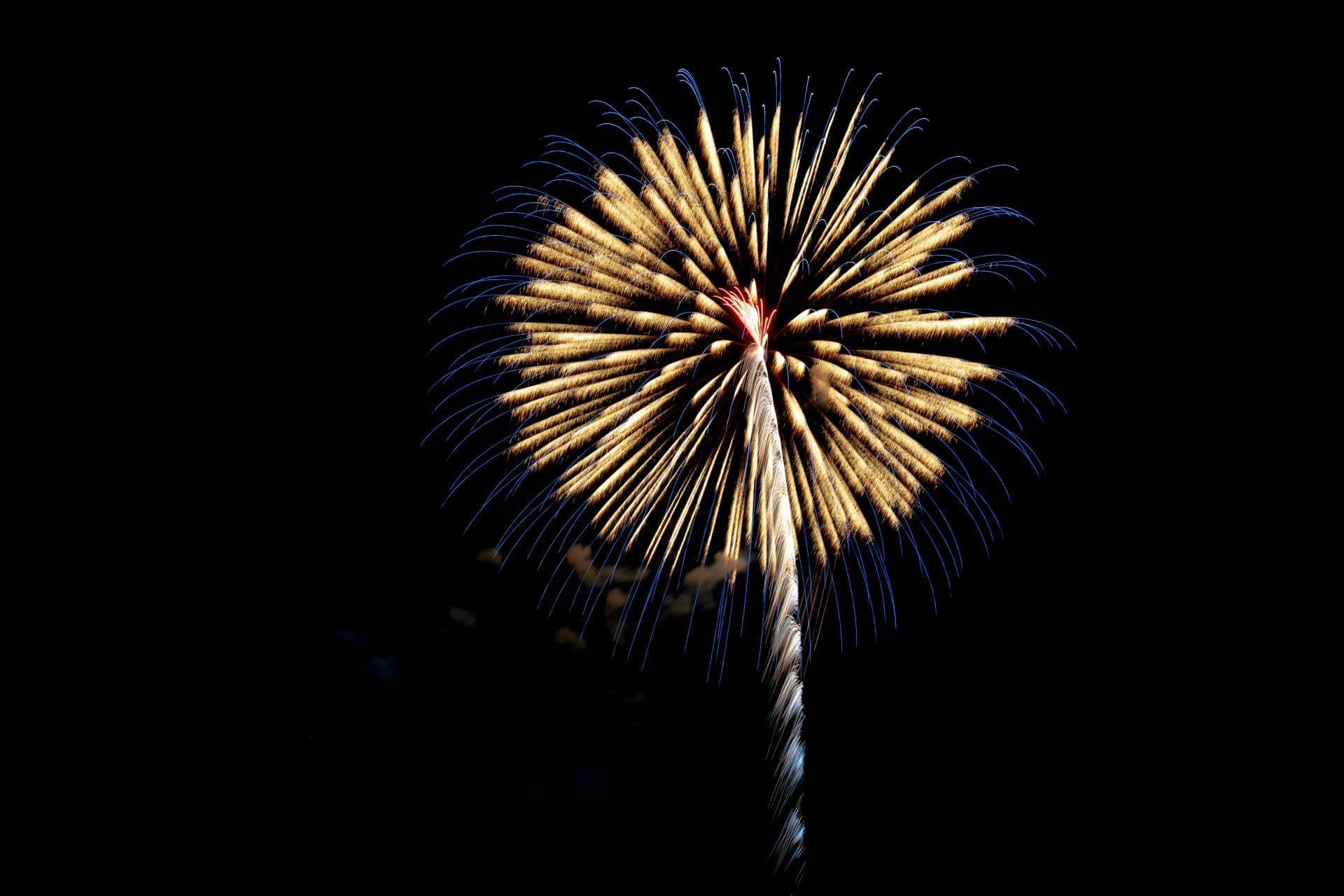
Tokyo's hanabi fireworks go back to 1733, when the eighth shogun, Tokugawa Yoshimune, ordered the Sumida River festival near Ryogoku Bridge. The reason was grim. The Kyoho Great Famine of 1732 and the dysentery epidemic after it had killed huge numbers of people across Japan, and the fireworks were launched to console the dead and ward off plague. Nearby restaurants got the shogunate's permission to fire their own displays, and the ritual turned into an annual competition that has run, with one fifteen-year interruption, for nearly three centuries.
Two rival fireworks houses came out of that competition: Kagiya, founded in 1659 and still in business, and Tamaya, a breakaway shop started by an apprentice in 1810. At the annual Ryogoku Kawabiraki each house got its own section of the river, and the crowd shouted the name of whichever one produced the better burst: "Tamayaaa!" or "Kagiyaaa!" Tamaya won most years. Then in 1843 its pyrotechnicians accidentally started a fire in Edo, and the house was banished from the city for good.
Two centuries later the company is gone, but "Tamaya!" is still the shout you hear at Japanese fireworks. Yell it at a particularly good burst and the people sitting near you will be amused and approving.
The 2026 Calendar
Tokyo's hanabi season runs from late May through September, and most of the big festivals fall in a six-week stretch from late May to early August. These are the confirmed dates for 2026:
| Festival | Date | Shells | Location |
|---|---|---|---|
| 足立の花火 (Adachi) | Sat May 30, 19:20–20:20 | ~13,000 | Arakawa riverbed, Adachi Ward |
| 隅田川花火大会 (Sumida) | Sat July 25, 19:00–20:30 | ~20,000 | Sumida River, Asakusa area |
| 立川昭和記念公園 (Tachikawa) | Sun July 26, 19:15 | Large | Showa Memorial Park |
| 江戸川区花火大会 (Edogawa) | Sat Aug 1 (expected) | ~14,000 | Edogawa riverbed |
| いたばし花火大会 (Itabashi) | Aug (date TBC) | ~15,000 | Arakawa riverbed, Itabashi |
| 葛飾納涼花火大会 (Katsushika) | Date TBC | ~15,000 | Edogawa riverbed, Shibamata |
| 神宮外苑花火大会 (Jingu Gaien) | Date TBC | ~10,000 | Meiji Jingu Gaien |
Adachi, on May 30, is the earliest major event, two months ahead of the traditional late-July peak. Late May is warm without the heavy humidity of midsummer, so it's a much more comfortable evening than the July and August festivals. Paid seats go on sale April 25.
The Sumida River festival on July 25 is confirmed as the 49th edition since the modern revival, counting from its 1978 restart after a fifteen-year gap. It draws more people than any other fireworks event in Tokyo, about 930,000 in 2025.
Most other festivals publish their 2026 dates by May or June. Check the official municipal websites before you commit to one.
Sumida: The One Everyone Goes To
The Sumida River festival fires about 20,000 shells from two venues along the river over ninety minutes. It's the largest and oldest fireworks festival in Tokyo, and the crowds are sized to match.
The First Venue launches between Sakurabashi and Kototoibashi bridges on the Taito Ward (Asakusa) side. This is where the competition happens: professional pyrotechnicians compete for prizes, so the individual shells are technically the best here. The classic photo frames the bursts against Tokyo Skytree. The nearest stations are Asakusa and Oshiage (Skytree-mae).
The Second Venue launches further downstream, between Komagatabashi and Umayabashi. It's known for creative starmine displays, rapid-fire sequences choreographed into patterns. The nearest stations are Kuramae, Ryogoku, and Asakusabashi.
You're not allowed to stand on any of the bridges during the event, and the marshals do enforce it.
How to Get a View
Most people claim a spot on the riverbank with a picnic blanket, and "early" means the afternoon. Popular free spots near Asakusa start filling from 1:00 PM, and by 4:00 PM the best riverside spots are effectively gone. Stations get extremely crowded after 5:00 PM, so be at your nearest station before then.
For an easier way in, use Honjo-Azumabashi Station instead of Asakusa. It serves the same area with far fewer people pushing to get in.
Spots that Japanese sources recommend:
Shioiri Park and Higashi-Shirahige Park are upstream from the First Venue, in the Minami-Senju area. Both are big parks with good sightlines. They're quieter than the riverside and easier with kids.
Downstream from the Second Venue, around the Shin-Ohashi and Kiyosubashi bridges, you get a more distant but romantic view, with the fireworks framed between the bridges. It's less crowded and an easy walk from Morishita or Kiyosumi-Shirakawa stations.
Paid seating costs ¥5,000 to ¥9,000 per person. The Taito Riverside Sports Center sells blocks for up to five people at ¥25,000. Applications run from late April to mid-May through TicketPay; some seats go first come, first served, and others are allocated by selection when demand is high. Keep in mind that paid seats are not refunded if the weather cancels the event.
Yakatabune, the traditional wooden houseboats that cruise the river during the show, are the top-end option. Shared plans start at about ¥8,000 per person with a full meal and drinks. Private charters for groups of twenty-five or more run around ¥15,000 per person. The Tokyo Houseboat Association (yakatabune-kumiai.jp) lists operators that take bookings in English. Sumida-night bookings for 2026 open around May. Book as soon as reservations go live, because they sell out within days.
Tokyo Skytree sells special observation deck tickets for fireworks night by lottery, usually opening in early to mid June, at about ¥10,000 to ¥15,000. From 350 meters up you look down on both venues at once, and nothing else in the city gives you that view. Competition for tickets is fierce.
The Festivals Worth Knowing Beyond Sumida
Adachi (May 30) is the smart pick if you want hanabi without the worst of the summer heat or the biggest crowds. It fires thirteen thousand shells in sixty minutes, it's one of Tokyo's oldest festivals (over a hundred years running), and you can reach it from Kita-Senju Station on the Chiyoda Line. Six hundred thousand people go, which is a lot, but a third fewer than Sumida.
Edogawa (expected August 1) packs fourteen thousand shells into a single hour, more per minute than any other Tokyo festival. Tokyo and Ichikawa City (Chiba) fire choreographed patterns from opposite banks of the Edogawa River at the same time. Counting the crowds on both banks, Edogawa's organizers say it's the biggest fireworks event in Japan by total attendance.
Itabashi and Katsushika each fire about fifteen thousand shells. They're nearly as big as Sumida and much less known abroad. Katsushika is held near Shibamata, the neighborhood made famous by the film series "Otoko wa Tsurai yo", and it feels local, with fewer tourists. Its name includes 納涼 (noryo, "summer cooling"), after the Edo-era habit of escaping the heat beside water.
Jingu Gaien is something else entirely: ten thousand shells set to J-pop and classical music at a venue in central Shinjuku. It's closer to a music festival with fireworks than a traditional hanabi. If you're after the Edo-period river tradition, skip it. If you want a choreographed show in the middle of the city, this is the one.
Tachikawa Showa Memorial Park is the comfortable option. You get a roomy park instead of a packed riverbank, some of the biggest individual shells in Tokyo (380-meter diameter bursts), and free park entry on the day. It's a good first hanabi if you'd rather not deal with the heaviest crowds.
What to Bring
A leisure sheet (レジャーシート) to sit on, since you'll be on riverbank gravel or grass. It also marks out your patch. Every convenience store and hundred-yen shop sells them.
Drinks and snacks for the wait. The food stalls take cash only and the lines are long, so stock up at a convenience store on the way. Insulated bottles keep drinks cold in the heat.
Water and sports drinks. Tokyo in late July is hot and humid, and you will need them. Japanese sources keep listing salt tablets alongside drinks to head off heat exhaustion.
A small towel (tenugui) and a folding fan (uchiwa). Neck-cooling rings are sold everywhere in Tokyo in summer, and one is worth the money.
Plastic bags for all your trash. Every Japanese source stresses this more than any other point of etiquette. Most hanabi venues have no bins, or bins that overflow almost at once, so you bring bags and carry everything out with you.
A small flashlight. The walk out after the finale is dark, and your phone battery has to last the trip home. A cheap keychain light saves your phone.
Cash and coins for the food stalls, since most don't take anything else.
Getting Home
Most visitors underestimate this part. When the Sumida finale ends at about 8:30 PM, nine hundred thousand people try to leave at the same time. The big nearby stations (Asakusa, Oshiage, Kuramae, Ryogoku) restrict entry, and the line just to get into the station runs from thirty minutes to over an hour. That goes on for about two hours after the finale.
Japanese sources suggest three ways around it, and all of them work:
Leave before the finale. If you skip the last ten minutes, you get to the trains ahead of eight hundred thousand people. You do lose the best part of the show, and you have to decide whether that's worth it.
Stay late. Wait a full hour after the show ends before going near a station, and use it to eat something and cool off. After ninety minutes to two hours the crush drops sharply. This is what most locals do.
Walk to a distant station. Walk twenty minutes to Ueno instead of fighting your way into Asakusa Station, to Kinshicho instead of Oshiage, or toward Akihabara instead of Kuramae. The extra walk cuts your wait at the station from an hour to almost nothing.
Don't try for a taxi, because the roads near the venue are closed. And don't drive: there's nowhere to park and the traffic restrictions cover a wide area.
Cancellation
All the major Tokyo fireworks festivals follow a policy called 荒天中止: in severe weather the event is cancelled, with no postponement. Light rain doesn't stop it (小雨決行, "light rain = proceed"). Thunderstorms, steady wind above seven meters per second, or an approaching typhoon will.
The Sumida River festival decides at 8:00 AM on the day and posts the decision on its official website and social media. There's no rain date. If it's cancelled, there's no festival that year, and paid seating tickets are not refunded.
Check the official website before you leave home. Mobile networks near the venue are badly congested during the event, and a webpage may not load at the riverbank.
Frequently Asked Questions
Which festival should I go to? Go to Sumida for the full cultural experience and the history, or Adachi for comfortable weather and a crowd you can manage. Edogawa has the most shells per minute and Tachikawa the most relaxed setting. Jingu Gaien suits you if you'd like fireworks set to music more than traditional hanabi.
How early should I arrive? For free viewing at Sumida, by 4:00 PM. For Adachi or Edogawa, by 5:00 PM. If you have paid seats at any festival, thirty to sixty minutes before the start.
Is the yakatabune worth it? If you can get a booking, yes. On the houseboat you skip the crowds completely, you watch the bursts at eye level as they reflect off the water, and dinner and drinks are included. Shared plans start at ¥8,000 per person. Getting one is the hard part, so book on the day reservations open.
What if it rains? In light rain the event goes ahead. Heavy rain or thunderstorms cancel it, with no postponement. Check the official site at 8:00 AM on the day. Paid seats are not refunded.
Should I wear a yukata? Wearing a yukata to hanabi is a real tradition, and plenty of the crowd will be in one too. Rental shops in Asakusa and Shinjuku have full yukata sets and will help you get dressed. If you wear geta (wooden sandals), put spare flip-flops in your bag. Geta give you blisters on long walks, and the walk home always turns out longer than you expect.
At Hinomaru One, our Tokyo Together itinerary includes hanabi season planning for summer visitors. We help you pick the festival that fits your schedule and a viewing plan that suits your group, then build a full Tokyo day around the fireworks evening, including how you get in and out.
![How Much Is a Tour Guide in Tokyo? [$200–$540/Day, 2026 Guide]](/_next/image?url=%2Fimages%2F37505d69f17f.png&w=1920&q=75&dpl=dpl_DZJmgsqi68zg6EUKG33PEksZaw14)