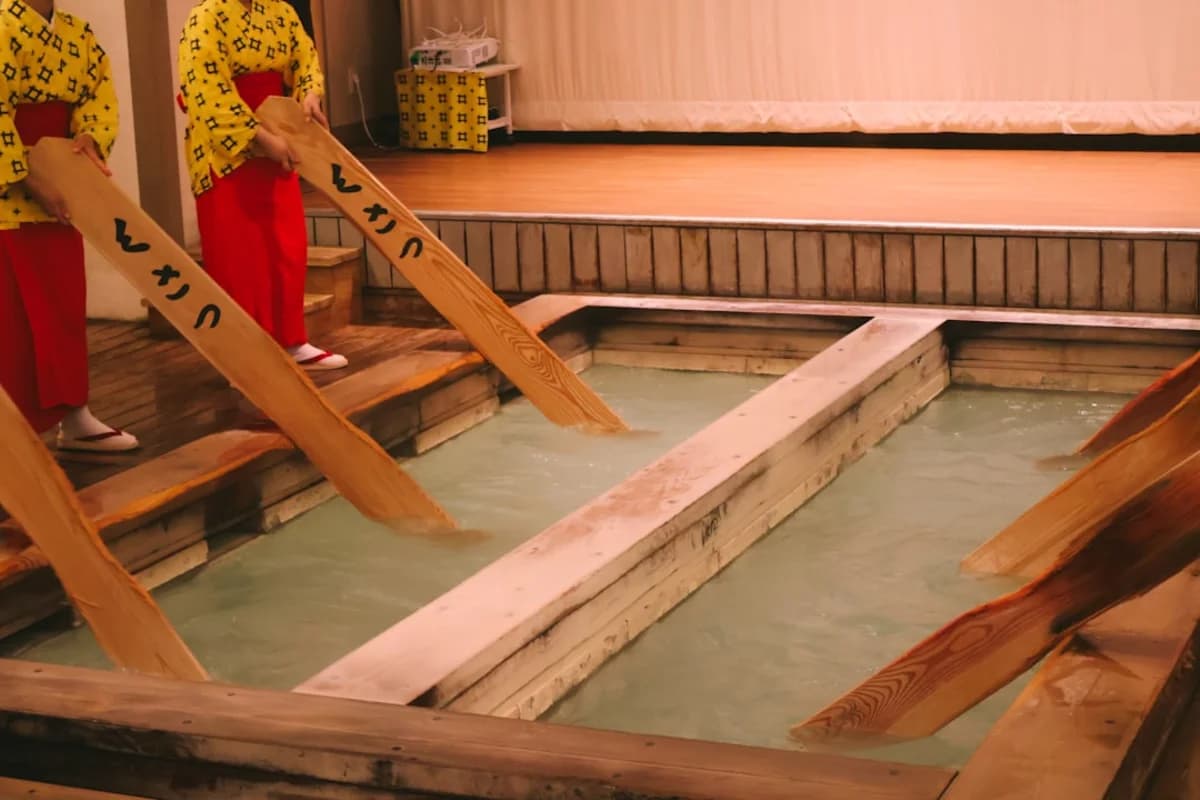
Onsen in Tokyo exist — just not as natural hot springs rising from the earth. Here is what that actually means for visitors.
Does Tokyo have onsen?
Yes. But not in the way most people picture.
When people say "onsen," they usually imagine an outdoor stone bath surrounded by mountains and steam. That image comes from places like Hakone, Beppu, or Kusatsu. Tokyo is a concrete megacity, so the assumption is that onsen don't exist here.
They do, but the situation is complicated. Tokyo sits on a geothermal zone, and deep drilling (sometimes 1,500 meters or more) can hit hot spring water in certain areas. Spa LaQua at Tokyo Dome City pumps natural hot spring water from underground. Some neighborhood bathhouses in areas like Ota-ku and Shinagawa tap into a distinctive brown-black mineral water called kuroyu (黒湯) that's unique to the Tokyo lowlands.
But most bathing facilities in the city use heated tap water or water trucked in from hot spring sources outside Tokyo. The label "onsen" on a Tokyo facility doesn't always mean what you think it means. Under Japanese law, the water just has to meet specific temperature or mineral content thresholds to qualify. The building could be a concrete box in a shopping mall and still legally call itself an onsen.
This matters because it sets expectations. If you want the mountain-stream-and-cedar experience, you need a day trip to Hakone or the Okutama area. If you want to experience Japanese bathing culture, understand the etiquette, and soak in hot water after a long day of walking, Tokyo has plenty of options. They're just different from the postcard version.
The terminology: onsen, sento, super sento, and spa
These four words get thrown around interchangeably by tourists, but they mean different things. Knowing the difference saves you from paying ¥3,500 when you wanted a ¥550 neighborhood bath, or vice versa.
Onsen (温泉) is defined by water quality, not by building type. Under Japan's Hot Springs Act, the water must meet specific temperature (25°C or higher at the source) or mineral content criteria. An onsen can be a luxury resort, a neighborhood bathhouse, or a facility inside a shopping complex. The word tells you about the water, not the experience. In Tokyo, legitimate onsen facilities exist, but they're the minority.
Sento (銭湯) is a neighborhood public bathhouse. These are regulated under the Public Bathhouse Act, and crucially, their prices are government-controlled. In Tokyo, the standard adult admission is ¥550 (set by the Tokyo Metropolitan Government; check current rates as this updates periodically). Sento typically use heated tap water, though some tap into natural mineral springs. The facilities are basic: an indoor bath, washing stations, maybe a small sauna. What you get is the real local experience. Old-timers reading newspapers in the changing room, hand-painted Mt. Fuji murals on the wall, the hiss of the faucet. There are still over 400 sento operating in Tokyo.
Super sento (スーパー銭湯) is the commercial, entertainment-oriented evolution. Think multiple bath types (jet baths, electric baths, carbonated baths), saunas, rock baths (ganban-yoku), restaurants, massage services, and relaxation lounges. Prices are unregulated, so each facility sets its own rate, typically ¥1,000 to ¥2,500 for basic admission. Some super sento use natural hot spring water and can legally call themselves onsen too. The categories overlap.
Spa in Japan usually refers to a large-scale facility that combines bathing with extensive amenities: lounges, dining, sometimes overnight stays, rock saunas, esthetic treatments. Spa LaQua and Tokyo Toyosu Manyo Club fall into this category. These are all-day destinations, not quick soaks. Expect to spend ¥3,000 or more and several hours.
In-city options
Spa LaQua (Tokyo Dome City)
The most well-known bathing facility in central Tokyo. Located inside the Tokyo Dome City entertainment complex in Bunkyo-ku, Spa LaQua pumps natural hot spring water from 1,700 meters underground. The water is sodium chloride-enriched, and it's one of the few facilities in central Tokyo using genuinely natural hot spring water.
Admission: From ¥3,500 for adults (18+). TD Point members or Tokyo Dome City app users get a ¥600 discount, bringing it to ¥2,900. The fee includes a towel set and facility clothing rental. The Healing Bade area (rock saunas with city views) costs an additional ¥1,100.
Hours: 11:00 AM to 9:00 AM the next morning. Last entry at 8:00 AM. Yes, you can stay overnight, though late-night surcharges may apply.
What it's like: This is a spa, not a bathhouse. Multiple indoor and outdoor baths, a 70°C sauna, cold plunge, relaxation lounges, and dining. It's clean, modern, and well-maintained. The crowd is a mix of tourists and locals on a day off. It's a solid half-day experience, especially if you add the Healing Bade.
Restrictions: Children under 6 are not permitted. Tattoos are not allowed (no exceptions, no covers).
Getting there: Korakuen Station (Marunouchi/Namboku Lines) or Suidobashi Station (JR Chuo/Sobu Lines). It's inside the Tokyo Dome City complex.
Tokyo Toyosu Manyo Club (Toyosu Senkyaku Banrai)
This is the facility that replaced the old Oedo Onsen Monogatari in Odaiba, which closed in September 2021. The new complex, called Toyosu Senkyaku Banrai (千客万来), opened in February 2024 in the outer area of Toyosu Market. The bathing facility occupies floors 2 through 8 and is operated by the Manyo Club chain.
Admission: ¥3,850 for adult day-use bathing. Discount coupons are available through various travel sites.
What it's like: Larger and more resort-like than LaQua. Hot spring baths, a 90°C sauna, 16°C cold plunge, rock saunas (ganban-yoku), lounges, standing bars, and a dinner buffet option (¥2,300). The upper floors have views over Tokyo Bay. There's also a hotel component if you want to stay overnight.
Getting there: Shijo-mae Station on the Yurikamome Line, right next to Toyosu Market. You can combine it with a morning visit to the tuna auction or the market's restaurant row.
Neighborhood sento
This is the option most tourists overlook and the one most worth trying. A neighborhood sento costs ¥550, takes 45 minutes, and gives you a window into everyday Japanese life that no tourist attraction can match.
You don't need to find a specific famous one. Almost every Tokyo neighborhood has at least one sento, and many have several. Look for the character 湯 (hot water) on signs, or the distinctive tall chimney that marks a traditional bathhouse. The Tokyo Sento Association website (1010.or.jp) has a searchable map.
A few that stand out for visitors:
Shimokitazawa's sento are walkable from the neighborhood's vintage shops and live music venues. Kotobukiyu in Takaido-nishi has been renovated with a modern aesthetic while keeping sento prices. Hisamatsuyu in Nerima is known for having facilities that rival a super sento (spacious outdoor bath, quality sauna) at the standard ¥550 rate.
The experience: you pay at the front desk (cash is standard), grab a locker, wash, soak, dry off, leave. No reservations, no English menus, no hand-holding. That's the point. Bring your own small towel and toiletries, or buy them at the front desk for a few hundred yen.
Tattoo policies
Here's the honest version, not the diplomatic one.
Most onsen and large bathing facilities in Japan ban tattoos. This isn't arbitrary. It comes from the association between full-body tattoos (irezumi) and yakuza membership. For decades, a visible tattoo was a reliable signal that someone was connected to organized crime. Facilities banned tattoos to keep yakuza out and make other customers feel safe.
The world has changed. Millions of people have tattoos with no criminal connection. Japan knows this, and the policy is slowly shifting. But "slowly" is the key word. As of 2026, the majority of large onsen and super sento in Tokyo still enforce a no-tattoo rule. Spa LaQua explicitly bans tattoos with no exceptions.
What "tattoo-friendly" actually means
It doesn't mean the same thing everywhere. Some facilities have no restrictions at all. Others require you to purchase and apply their cover seals (bandage-like patches that hide the tattoo). Others allow tattoos only during certain hours. You need to check the specific policy before visiting.
Facilities with defined tattoo policies:
Maenohara Onsen Sayano Yu Dokoro (前野原温泉 さやの湯処) in Itabashi-ku updated its policy in February 2024. They admit guests with tattoos provided you buy and apply their designated cover seals (up to two seals per visit, purchased at the facility). If your tattoos can't be fully covered with two seals, or if you refuse the covers, they'll turn you away.
Sakurakan (桜館) in the Ikegami area of Ota-ku allows tattoos with time restrictions.
The capsule hotel chain Anshin Oyado Premium (locations in Shinjuku, Shimbashi, and Ogikubo) has sauna and bathing facilities that are tattoo-friendly.
Your best bet: neighborhood sento
Traditional neighborhood sento are generally more tolerant than large commercial facilities. This isn't official policy in most cases. It's just that the owner-operator at a local bathhouse is less likely to enforce a strict ban than a corporate chain. TimeOut Tokyo and multiple Japanese bathing guides confirm this pattern. It's not guaranteed, but your odds are much better at a ¥550 neighborhood sento than at a ¥3,500 spa complex.
Resources
The website Tattoo-OK.jp maintains a searchable database of tattoo-friendly bathing facilities across Japan, including Tokyo-specific listings. The Yuran Seal Rally website also publishes a list of participating Tokyo facilities that welcome tattooed guests. Check these before you go rather than showing up and hoping for the best.
How to use an onsen or sento
This is the part Western visitors stress about most. The nudity. The rules they don't know. The fear of doing something embarrassing in front of a room full of naked strangers.
It's simpler than you think. Here's the full sequence.
Before you go in
The entrance will have separate doors or curtains for men (男) and women (女). The men's side is usually marked with a blue curtain, women's with red, but check the kanji. At a sento, you pay at the front desk before entering. At a spa, you'll get a wristband or locker key at reception.
The changing room
Put all your clothes and belongings in a locker. Everything. No swimwear. No underwear. No exceptions. Take only your small towel (if you have one) into the bathing area. Leave your phone in the locker. Cameras and phones are absolutely prohibited in the bathing area, for obvious reasons.
Washing
Before you touch the bath water, sit at a washing station (a low stool in front of a mirror, showerhead, and faucet) and wash your entire body thoroughly with soap and shampoo. Rinse completely. This is not optional and not just a rinse. Japanese bathers find it deeply unpleasant when someone enters the shared bath without washing first. It's the single most important rule.
The bath
Enter slowly. The water is hot, typically 40-43°C, which is hotter than most Western baths. If there are multiple tubs, they may be at different temperatures. Start with the cooler one if you're not used to hot water.
Your small towel does not go in the water. Place it on your head (the classic Japanese look), fold it on the edge of the bath, or leave it at your washing station. The bath water is shared. Anything that touched soap or your body before rinsing stays out.
Sit and soak. That's it. No talking loudly, no splashing, no swimming. The atmosphere is quiet and meditative. Even if the bath feels too hot, do not add cold water from the tap to cool it down. Other bathers set that temperature deliberately.
After
When you're done soaking, go back to the changing room. But first, wipe yourself down with your towel before stepping out of the bathing area. The goal is to not drip water all over the changing room floor.
If you have long hair, tie it up before entering the bath so it doesn't trail in the water. This applies to everyone, not just women.
The nudity question
Yes, you will be naked. Everyone will be naked. It feels strange for about 90 seconds, then it feels completely normal. Nobody is looking at you. Japanese bathing culture treats nudity in this context as entirely unremarkable. The fastest way to stand out is to act self-conscious about it. Walk in like you've done it before, even if you haven't.
The baths are gender-segregated. You will only be around people of the same gender (with rare exceptions at mixed-gender outdoor baths in rural areas, which don't apply to Tokyo).
What to bring
Small towel (tenugui): A thin Japanese cotton towel, about the size of a hand towel. You use it for washing and as a modesty cover while walking around. Most sento sell them for ¥200-300 at the front desk, and spas include one with admission. You can buy one at any convenience store.
Toiletries: Sento sometimes provide soap and shampoo, but many don't, or charge extra. Spas like LaQua include them. If you're visiting a neighborhood sento, bring travel-size shampoo, conditioner, and body soap, or buy a small set at the front desk. A few hundred yen.
Cash: Many sento are cash-only. The standard ¥550 admission, plus maybe ¥200 for a towel and ¥100 for a locker. Bring coins and small bills. Larger spa facilities accept credit cards and IC cards.
A change of clothes: This sounds obvious, but if you're fitting a sento visit into a day of sightseeing, you probably want fresh underwear and a clean shirt for afterward. You'll feel too relaxed to put on the same sweaty clothes you wore all day.
What NOT to bring: Swimwear (you won't wear it), jewelry (leave it in the locker; metals can react with mineral water), and any expectations of a luxury spa experience if you're going to a sento. Sento are functional, not fancy. That's part of the charm.
Day trips from Tokyo for a proper onsen experience
If you want the full outdoor, mineral-water, mountain-scenery onsen experience, you need to leave central Tokyo. The good news: you don't have to go far.
Hakone (90 minutes from Shinjuku)
The classic choice and the one most visitors default to. Hakone is a volcanic hot spring town with dozens of ryokan and day-use onsen facilities. The water is the real thing, heated by the same geothermal activity that created Owakudani's sulfur vents. Day-use options range from ¥1,000 at basic public baths to ¥2,000+ at private facilities. Tenzan near Hakone-Yumoto station is tattoo-friendly and has traditional outdoor baths in a forest setting.
We have a full guide covering the Hakone day trip, including how to choose between a scenic Loop day and an onsen-focused day, plus specific facility recommendations and prices.
Okutama and the Ome area (60-90 minutes from Shinjuku)
Fewer tourists know about this option. Western Tokyo's Okutama area is mountainous, forested, and has legitimate natural hot springs, all technically within Tokyo's administrative borders.
Moegi no Yu (もえぎの湯) in Okutama is a small day-trip onsen right along the Tama River gorge. Basic but scenic. Entry is around ¥750, and for an extra ¥300 you can rest in a hall overlooking the ravine.
Kawabe Onsen Umenoyu (河辺温泉 梅の湯) is next to Kawabe Station on the JR Ome Line. It's a proper onsen facility with natural hot spring water, open from 10:00 AM to 11:30 PM (last entry 11:00 PM). Convenient as a stop on the way back from hiking at Mt. Mitake or exploring the Ome area.
Tsurutsuru Onsen (つるつる温泉) in the Okutama hills is known for alkaline water that leaves your skin feeling smooth (the name literally means "smooth smooth"). Note that this facility uses a gender-rotation system where the men's and women's baths swap on alternating days, so check the schedule.
The Okutama area pairs well with hiking (Mt. Mitake, Mt. Takao) or river activities. Take the JR Chuo Line to Ome, then transfer to the Ome Line heading west. The whole trip from Shinjuku takes about an hour to Kawabe, or 90 minutes to Okutama Station.
Nikko (2 hours from Asakusa)
Less known for onsen than Hakone, but Nikko has hot spring areas including Yumoto Onsen at the far end of the national park. It's a longer day trip. If onsen is your primary goal, Hakone or Okutama are closer. But if you're already planning a Nikko day trip for the Toshogu Shrine and want to add a soak, it's possible with careful timing.
Making it part of your trip
Japanese bathing culture is one of those experiences that sounds intimidating beforehand and feels completely natural once you're in it. A 45-minute sento visit after a day of walking will do more for your energy levels than an extra hour of sleep. And it costs less than a cup of coffee at most Tokyo cafes.
If traditional Japanese culture is part of what drew you to Tokyo, bathing is one of the most accessible ways to experience it. No booking required, no language barrier that matters, no special knowledge needed beyond the etiquette above. Just walk in, wash, soak, and leave feeling like a different person.