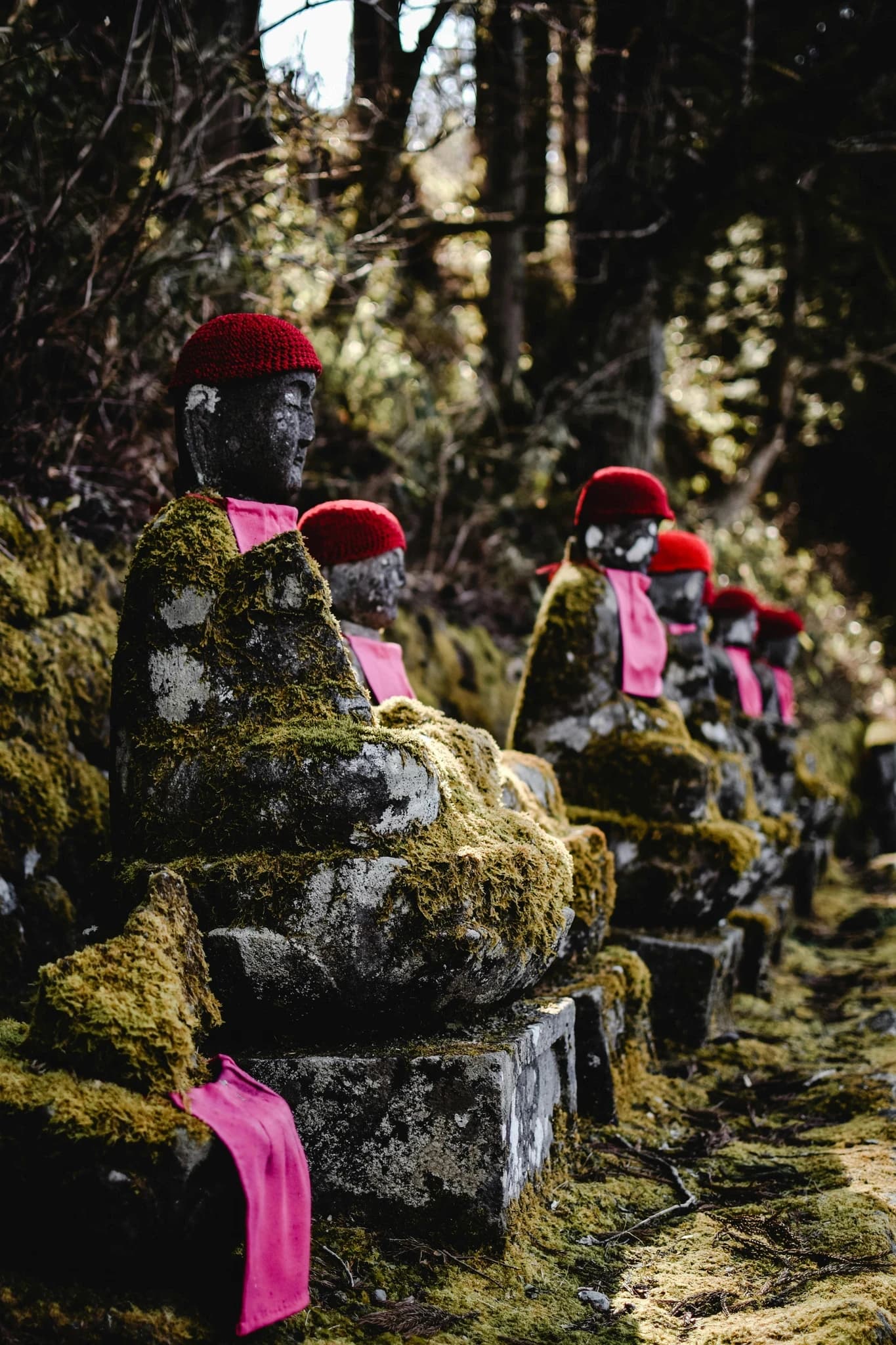
You get 5 hours in Nikko after an 11-hour day. What you do with them depends on whether you want photos or context, shrines or waterfall.
A Nikko day trip gives you roughly 5 hours of real sightseeing inside an 11-hour day. How you spend them comes down to two choices: photos or context, and the shrines or the waterfall.
From Tokyo the whole day runs 11 hours. You leave at 7 AM and get back around 8 PM, and once you take out the transit you have 5 hours on the ground. That number decides what you can realistically see, whether doing it yourself makes sense, and whether a guide is worth paying for.
Most Nikko guides skip over this, because "11 hours for 5 hours of sightseeing" doesn't sound like an easy day trip. Knowing it up front will help you plan a better day.
The 11-Hour Day Trip
Every guide says Nikko is "just 2 hours from Tokyo." For the train, that's true. For the day as a whole, it's misleading.
The train is the easy part
The Tobu Limited Express from Asakusa gets to Tobu Nikko Station in 1 hour 50 minutes, and that part goes smoothly.
Your day starts at your hotel, though, not at Asakusa Station. Getting to Asakusa, finding your way through the station and boarding adds 30-45 minutes, and the same again on the way back. If you want to reach Tokyo at a sensible hour, the last express trains leave Nikko around 5-6 PM.
That's why your hotel base matters for day trips. If you stay near Asakusa or Ueno, the 30-45 minute transfer disappears and you're already at the departure point.
Why 5 hours is what you actually get
A realistic schedule:
-
7:00 AM: Leave hotel in central Tokyo
-
7:30 AM: Arrive Asakusa, board the 7:30 or 8:00 train
-
9:30-10:00 AM: Arrive Tobu Nikko Station
-
10:00 AM - 4:00 PM: Time in Nikko (~5-6 hours)
-
4:00-5:00 PM: Board return train
-
7:00-8:00 PM: Back at hotel
One traveler who did a full itinerary on their own said most of the day went to waiting for public transport or sitting on it. They saw everything they wanted to, and got back to the hotel just after 9 PM.
What this means for your choices
Five or six hours is a decent amount of time. You can see Toshogu Shrine properly, or you can go up to Lake Chuzenji and Kegon Falls. Doing both well is rare unless you rush or have someone handling the timing for you.
The 20-Kilometer Problem
Nikko's two big draws, the UNESCO shrines and the lake with its waterfall, are nowhere near each other. Plan around that first.
UNESCO shrines: Nikko town (ground level)
Toshogu Shrine and the temple complex around it are in Nikko town, 30 minutes by bus from the train station. Most visitors spend their time here, on the ornate carvings, the three wise monkeys, the sleeping cat and Tokugawa Ieyasu's mausoleum.
The main shrines are close together and easy to walk between. Plan on 2-3 hours here; people who rush it in 90 minutes usually wish they'd stayed longer.
Lake Chuzenji: 1,269 meters up a winding road
Lake Chuzenji and Kegon Falls are 20 kilometers from the shrine area and 400 meters higher up. The bus climbs the Iroha Zaka, a mountain road with 48 hairpin turns, each named after a character in the traditional Japanese syllabary.
It's 50 minutes each way, so adding the lake costs you 1 hour 40 minutes of bus time.
At 1,269 meters, Lake Chuzenji is Japan's highest natural lake. It usually runs 5-7°C cooler than the lowlands, which is nice in summer and chilly in spring and autumn.
The bus that connects them (and its fragility)
In peak season, buses between the shrine area and Lake Chuzenji come every 15-30 minutes. That sounds fine until you see the queue.
If you miss one, you wait 20-30 minutes for the next, and a missed connection on the way back can wreck your afternoon. One traveler described a long wait, long lines, not making it onto the first bus, and not getting back to Nikko station until 6 PM. Miss the last bus and you're taking a taxi, roughly ¥12,000 from Chuzenji to Nikko Station.
Plenty of people who put the shrines first end up dropping the lake altogether, and some regret it: "We didn't have time to do Lake Chuzenji and we regret it." The distances force that choice between taking your time at the shrines and covering both areas, however well you plan.
When DIY Makes Sense
Doing Nikko yourself works well for some travelers. If this sounds like you, a guide is money you don't need to spend.
You're choosing shrines OR lake (not both)
If you've decided on the shrine complex alone and are skipping the lake and waterfall, going on your own is easy. The shrines are walkable, there's signage, and you set your own pace without watching bus times.
The same goes if nature is the main draw and you head straight for Lake Chuzenji. Trying to do everything is where it gets complicated.
You're comfortable with Japan transit
If you've ridden Tokyo's trains, Nikko won't throw you. The Tobu line from Asakusa is clearly signed, the Nikko buses are set up for tourists, and stops are announced in English.
Buy your Toshogu tickets at the tourist center in the station so you skip the line at the shrine entrance. The Chuzenji Onsen Free Pass (¥2,300) covers unlimited bus rides up to the lake area. For just the shrine loop, the World Heritage Bus day pass is ¥600.
You don't need the history layer
Toshogu looks spectacular even if you know nothing about it, with detailed carvings, lots of gold leaf, and a forest all around.
If you're happy taking photos and soaking it in, and don't need to know why the sleeping cat matters or what the three wise monkeys stand for, you won't miss what a guide would explain.
Some people would rather discover things than have them explained, and that's fine.
The sequencing trick that saves your afternoon
Go to the lake first. The usual plan does the shrines first because they're closer to the station. That puts you at Lake Chuzenji in the early afternoon, right when the tour buses from Tokyo peak, and then you're racing the sunset to get back down.
Do the lake first and you catch it while it's still quiet in the morning. By the time you're back at the shrines in early afternoon, the tour groups are on their way up to the lake, so you're always heading the opposite way from the crowds.
This only works if you take an early train (7:30 AM from Asakusa) and go straight to the bus terminal.
What a Guide Actually Adds
A guide does make the logistics easier, but most of what you're paying for is explanation, and that's only worth it if you care about the explanation.
The Tokugawa story that makes carvings make sense
Toshogu is political propaganda built as a shrine. Tokugawa Ieyasu unified Japan after roughly 150 years of civil war. When he died in 1616, his successors built Toshogu to make him a god, which locked in the Tokugawa clan's right to rule. His grandson Iemitsu enlarged it in 1636 so nobody could miss the point.
The carvings all mean something. The famous "three wise monkeys" (see no evil, hear no evil, speak no evil) stand for the Confucian principle of living a good life. The sleeping cat (Nemuri-neko) above the entrance stands for peace: a cat asleep means there's no threat, a nod to the stable years under Tokugawa rule.
A guide who knows these stories can tell you what the building meant to the people who built it, which is a lot more interesting than how ornate it is.
Pivoting when things go wrong
The weather turns, buses run late, crowds show up out of nowhere, and people get tired.
A guide who knows Nikko works around all of that, swapping in something indoors when it rains, rerouting when one spot is mobbed, slowing down when you're flagging. Guide Yukiko brought towels for the foot baths and ice packs on hot days. When rain threatened, Guide Yumi changed her plan so the group still saw every important site while staying out of exposed areas.
This matters most on a bad day. With perfect weather and light crowds, doing it yourself feels easy. When something goes wrong, someone who can change plans on the spot is worth a lot. One rain backup worth knowing about is Nikko Tamozawa Imperial Villa, Meiji-era architecture you can see indoors when the weather turns. Most self-planned itineraries leave it out.
The crowd-navigation advantage
Tour groups are predictable. They reach Toshogu around 10-11 AM, go up to Lake Chuzenji after lunch, and bunch up at the famous photo spots.
Guides who work Nikko regularly know this. They'll take you through the shrine complex in an order that misses the worst bottlenecks, and they know the smaller shrines with similar artistry and far fewer people.
One traveler noticed that after 9:30 AM the temples stopped being peaceful and filled up. Getting there early helps, and so does going with someone who knows where the crowds aren't.
The Hidden Alternative (Taiyuin)
Nearly everyone spends their time at Toshogu. A few minutes' walk away there's a shrine with similar artistry and a fraction of the visitors.
Same era, same artistry, fewer crowds
Taiyuin is the mausoleum of Tokugawa Iemitsu, Ieyasu's grandson and the third Tokugawa shogun. It's built in the same ornate Edo-period style as Toshogu, with elaborate carvings, gold leaf and dramatic gates.
It gets far fewer visitors. Toshogu is overwhelming by mid-morning, while Taiyuin stays calm. One visitor called it "almost just as grand and much more peaceful than Toshogu."
Look for the white dragon statue near the Karamon Gate and the Nio guardian statues at the Niomon Gate. The mountain forest around it makes the whole place feel quieter still.
Iemitsu's deliberate restraint
Taiyuin is smaller than Toshogu on purpose. Iemitsu's will said his mausoleum must not outshine his grandfather's, so it follows the same artistic tradition while staying a step below. It impresses you without wearing you out.
Admission is separate from Toshogu. If you hate crowds but want to see ornate Edo-period shrine architecture, Taiyuin may be a better use of your time than fighting for space at the main attraction.
What Private Tours to Nikko Cost
Prices for private Nikko tours vary a lot depending on what's included. If you want background on how Tokyo guide pricing works, it's set up the same way.
Guide-only vs. transport-included
The cheapest option is a guide who meets you at Nikko Station. You take the train from Tokyo yourself, and they handle everything once you arrive.
- Guide-only in Nikko: ¥25,000-40,000 for a full day
The pricier option includes getting there from Tokyo, either on the train with your guide or in a private vehicle.
-
Full-service from Tokyo: ¥50,000-80,000
-
Premium private car: ¥80,000+
The gap comes down to whether you're paying for the travel as well as the guiding.
Per-person vs. per-group pricing
Some operators quote per person and others per group, which makes a big difference for a couple compared with a family.
A ¥60,000 per-group price works out to ¥30,000 each for two people, or ¥15,000 each for four. A ¥40,000 per-person price is ¥160,000 for a family of four.
Check how the price is quoted before you compare.
What's typically included (and what's extra)
Most mid-range private tours (¥50,000-80,000 range) include:
-
English-speaking guide for the day
-
Public transportation within Nikko (bus + local taxi)
-
Service fees and tax
-
Sometimes: reserved seats on the limited express from Asakusa
Usually NOT included:
-
Shrine admission fees (¥1,600 for Toshogu, separate for Taiyuin)
-
Guide's admission fees (around ¥1,200 for combined shrines)
-
Lunch
-
Return train tickets from Tokyo (varies by operator)
Set aside another ¥3,000-5,000 per person for admissions and lunch on top of the tour price.
Is Nikko Even the Right Day Trip?
Before you sign up for Nikko's 11-hour day, check whether somewhere else suits you better. Our full guide to day trips from Tokyo has more options.
| Nikko | Hakone | Kamakura | |
|---|---|---|---|
| Day trip length | 11-12 hours | 10-12 hours | 8-10 hours |
| Train from Tokyo | 2 hours | 1.5 hours | 1 hour |
| Experience type | UNESCO shrines, waterfall | Hot springs, Mt. Fuji views | Temples, giant Buddha, coast |
| Best for | History, dramatic scenery | Relaxation, decompression | Easier day, coastal vibe |
| Overnight recommended? | No | Yes (for onsen) | No |
Hakone is better as an overnight if you want a proper onsen stay. Kamakura is the easiest of the three: closer, more compact, and simpler to get around.
Finding a Guide You Can Trust
What to look for in a Nikko guide
The best credential is Japan's national guide certification (Tsūyaku Annaishi). Getting it means passing tough government exams on language, history, geography and culture, and fewer than 10-20% of applicants pass.
Since 2018 it has been legal to guide in Japan without the license, and plenty of capable guides work without it. Still, the license shows someone has proven their knowledge.
Past credentials, look for:
-
Experience in Nikko specifically (not just "Japan tours")
-
Willingness to change the plan when conditions change
-
Clear answers about what's included
-
Reviews that praise the explanations, not just the logistics
Why we don't offer Nikko tours ourselves
Hinomaru One works in Tokyo only. Our company registration limits us to the Tokyo metropolitan area, so we don't run tours to Nikko, Hakone, Kamakura or other prefectures.
We wrote this anyway because straight information helps travelers, even ones we can't take out ourselves. If the Nikko advice is useful, maybe you'll trust us with your Tokyo days.
Operators we'd recommend
Over the years we've worked with, and heard feedback on, a number of Nikko tour operators. We'd rather not list them here, since lists go stale and quality depends on the individual guide, but we're glad to share current recommendations directly.
Get in touch with your dates, group size and priorities, and we'll point you to operators we'd trust with our own family.
Where Hinomaru One Fits
We try to answer every Tokyo question the way we've answered this one, with real time math and clear choices. We don't go to Nikko, but when you're planning your Tokyo days we'll be just as straight with you about neighborhoods, timing and logistics.
At Hinomaru One we put together private Tokyo tours for first-time and seasoned travelers, built around culture and planned so the day doesn't feel rushed or stressful. Every tour is customized, and we take our time.