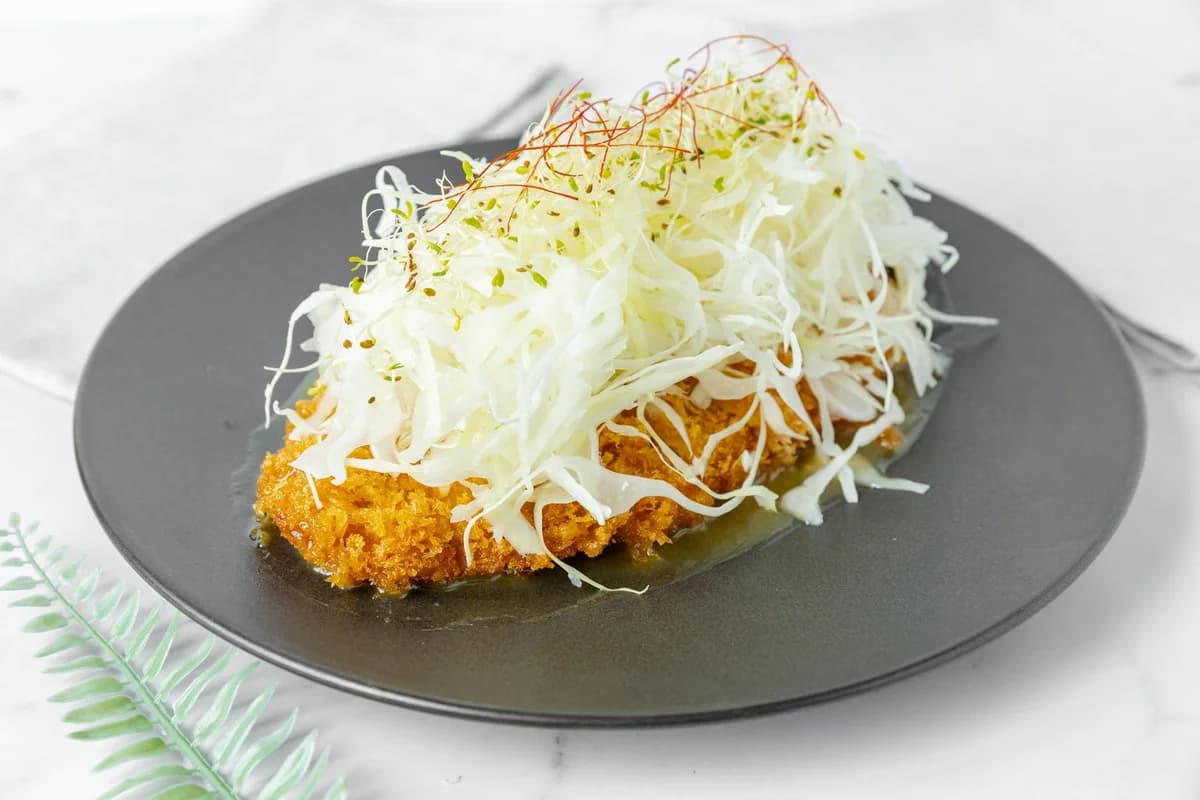
Tonkatsu looks like a simple dish. A thick slab of pork, coated in panko breadcrumbs, deep-fried until golden. Served with shredded cabbage, rice, miso soup, and a dark, sweet sauce. You could describe the entire concept in one sentence. Most people eat it that way too: order, eat, move on. It's good. They don't think much about it afterward.
But spend time in Tokyo and you'll notice something. Locals have opinions about tonkatsu the way New Yorkers have opinions about pizza. They argue about which shop in Kamata does it best. They have a preferred cut, a preferred sauce ratio, a preferred level of doneness in the centre of the pork. Some people travel forty minutes across the city for a specific lunch set. It's comfort food elevated to a minor obsession, and the technical gap between a mediocre tonkatsu and a great one is wider than most visitors expect.
The difference comes down to four things: the cut of pork, the breed of pig, the frying technique, and how you eat it. Get those right and tonkatsu goes from "nice fried pork" to one of the best meals you'll have in Tokyo. This guide covers all four, plus where to eat it across every budget.
A Tokyo Invention
Tonkatsu was born in Tokyo. In 1895, a Western-style restaurant called Rengatei (煉瓦亭) in Ginza began serving pork cutlets adapted from the European côtelette. The meat was thin, closer to a schnitzel than what you'd recognise as tonkatsu today. Rengatei is also credited with inventing the shredded raw cabbage side dish that now comes with every tonkatsu set in the country.
The dish evolved in the early twentieth century. By 1929, a shop called Ponchiken (ポンチ軒) in Ueno started frying thicker cuts of pork and is widely credited as the first restaurant to use the name "tonkatsu" (とんかつ), combining "ton" (pork) with "katsu" (cutlet). That shift from thin cutlet to thick slab changed the dish fundamentally. Thicker pork meant the breading had to protect the exterior while the interior cooked through gently. The technique became more demanding. The result became more satisfying.
Another early player worth mentioning: Ponta Honke (ぽん多本家) in Okachimachi, still operating today, has its own claim to the pork cutlet's development, inspired by Wiener Schnitzel. The origin story has multiple authors, but the geography is consistent. Tonkatsu as you know it was developed in central Tokyo, in the Ginza, Ueno, and Nihonbashi area, during the late Meiji and early Showa periods. When you eat tonkatsu in Tokyo, you're eating it where it was invented.
Rosu vs Hire: The One Decision That Matters
Every tonkatsu menu in Tokyo presents you with the same first choice: rosu (ロース) or hire (ヒレ). This is the cut of pork. Everything else on the menu is secondary to this decision, and most first-time visitors get it wrong by not understanding what they're choosing.
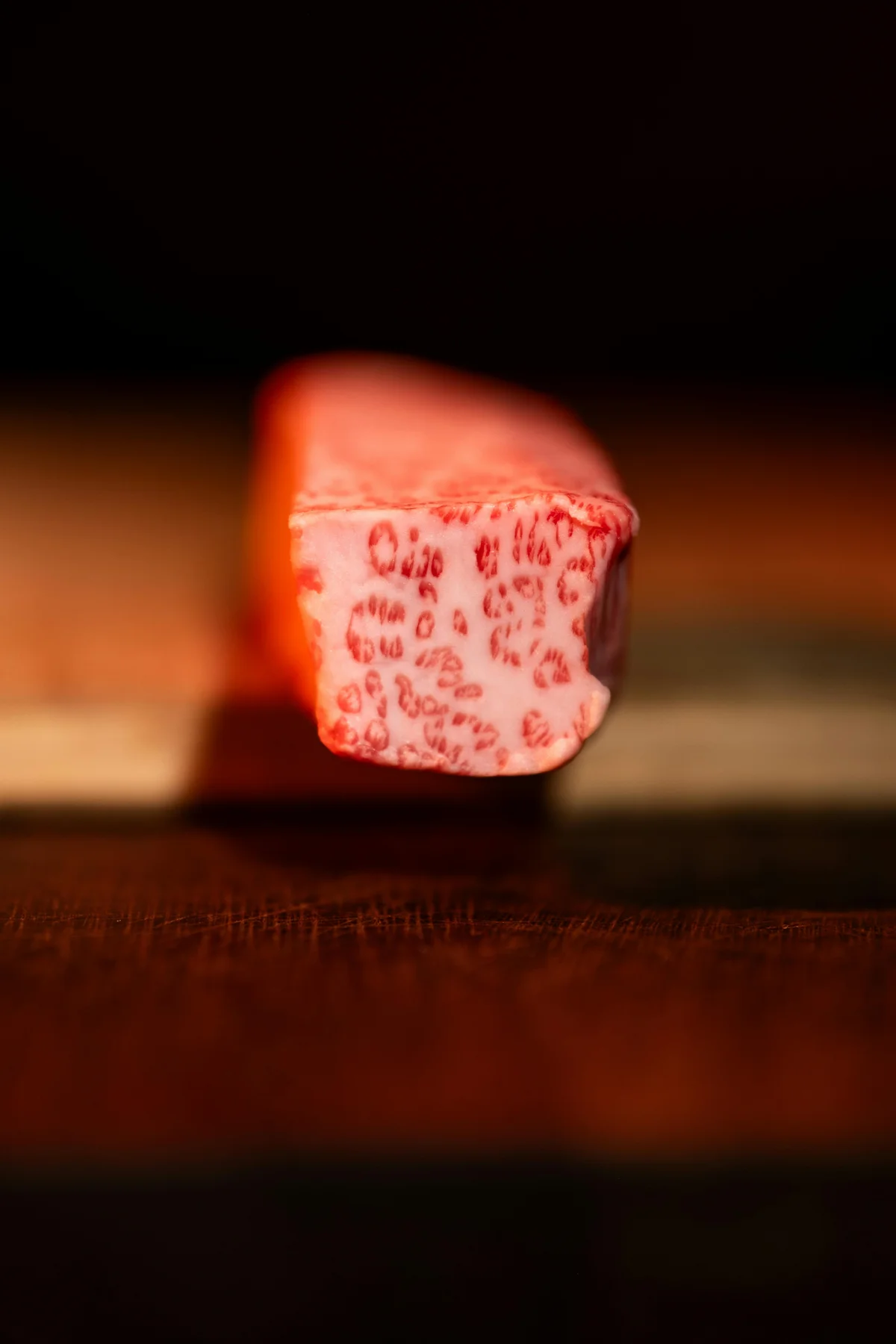
Rosu is loin. It has a visible band of fat running along one edge and marbling throughout the meat. When fried well, that fat renders and bastes the pork from the inside. The result is juicy, rich, and flavourful, with a sweetness that comes from the fat. Rosu is the default choice in Japan. It's what most people mean when they say "tonkatsu." One pig yields about 4.5 kg of loin, so it's not a rare cut, and it's priced accordingly.
Hire is fillet (tenderloin). It's the lean, tender muscle that sits along the inner spine. Almost no visible fat, very fine grain, and a soft, almost buttery texture when cooked correctly. A whole pig produces only about 1 kg of hire, which makes it the more expensive cut on most menus. The flavour is lighter, more delicate, and lets the pork itself come through without the richness of the fat.
Here's how to choose. If you want the full tonkatsu experience, fat and crunch and a savoury, indulgent bite, order rosu. If you want something lighter, gentler on the stomach, and focused on the quality of the meat itself, order hire. Neither is better. They're different meals.
One thing worth knowing: because hire is so lean, it absorbs more oil during frying than rosu does. The fat in rosu actually repels some of the frying oil. So the calorie difference between the two cuts, once they're breaded and fried, is smaller than you'd expect. If you're ordering hire purely for health reasons, the advantage is modest.
At most shops, a rosu katsu set runs ¥1,200 to ¥1,800. Hire is typically ¥200 to ¥500 more. Premium shops reverse this or charge the same for both.
The Pork Matters More Than You Think
Standard tonkatsu uses commercial pork. It's fine. At a good shop, commercial pork fried well is a genuinely satisfying meal. But if you see the word kurobuta (黒豚) on the menu, that's a different tier, and it's worth understanding why.
Kurobuta means "black pig." It refers to the Berkshire breed, a heritage pig originally from England that was brought to Kagoshima Prefecture in southern Japan during the Meiji era. Kagoshima kurobuta (かごしま黒豚) is the most famous brand, with strict production standards: the pig must be purebred Berkshire, raised in Kagoshima, and fed a diet that includes sweet potato for the final sixty days before processing. The sweet potato feeding changes the fat composition, making it sweeter and cleaner-tasting.
What does kurobuta actually taste like compared to regular pork? The muscle fibres are finer, so the texture is noticeably more tender. The fat has a lower melting point, so it starts to dissolve on your tongue faster. And there's a sweetness to the meat that standard pork doesn't have. In a blind test, most people can tell the difference. It's not subtle.
Is it worth the premium? At a kurobuta specialist, a rosu katsu set runs ¥2,500 to ¥3,500, roughly double the price of a standard tonkatsu lunch. Whether that's worth it depends on how much you care about pork flavour and texture versus getting a solid, satisfying fried meal. If you're eating tonkatsu once in Tokyo and you're curious, try kurobuta. If you're eating it several times, have one kurobuta meal as a comparison point and let your own palate decide.
Beyond Kagoshima kurobuta, you'll occasionally see other branded pork on Tokyo menus. "Mochibuta" (もち豚) refers to pork breeds known for a springy, mochi-like texture. Some premium shops source from specific farms and list the producer by name. As with wagyu grading, the branding creates a spectrum from commodity product to named-producer premium. The further up you go, the more you're paying for flavour differentiation and traceability.
How to Eat Tonkatsu Properly
A tonkatsu teishoku (定食, set meal) arrives as a tray with several components. How you approach them makes a difference.
The cabbage comes first. A mound of finely shredded raw cabbage sits beside the cutlet. It's not decoration. The crunch and freshness of the cabbage reset your palate between bites of rich, fried pork. Most shops offer free cabbage refills, so eat it generously. Some people dress it with the tonkatsu sauce. Some add a squeeze of lemon. Either works. The point is to alternate: pork, cabbage, pork, cabbage.
The sauce. Every table has a bottle of tonkatsu sauce, a thick, dark, sweet-savoury condiment similar to Worcestershire sauce but fruitier and less acidic. Bull-Dog brand is the most common, and it's been the default since your grandparents' era. The standard move is to pour a small pool of sauce onto your plate and dip each piece of pork into it. Don't drown the cutlet. The breading is the whole point of the dish, and too much sauce turns it soggy.
Karashi (Japanese mustard). A small dollop of hot yellow mustard, sharper and more pungent than Western mustard, usually sits on the plate or in a small dish. Use it sparingly. A thin swipe on one piece of pork gives you a sinus-clearing bite that contrasts the richness. Not every piece needs it.
Salt. Higher-end shops sometimes provide rock salt or flavoured salt as an alternative to sauce. If the pork is premium kurobuta, try the first bite with salt only. It lets the natural sweetness of the meat come through without the sauce masking it. This is the equivalent of trying good sushi with just a touch of soy: the less you add, the more you taste.
Grated daikon (大根おろし). Some shops, particularly those serving a Japanese-style (wafu) variation, provide grated daikon radish with ponzu sauce as an alternative to the standard sweet sauce. It makes the dish lighter and works especially well with hire, where the lean pork benefits from the bright acidity.
The rice and miso soup. Always included in a set. The rice is for alternating with the pork. A bite of cutlet, a mouthful of plain white rice, repeat. The miso soup is there to cleanse and warm. Many shops offer free refills on rice and miso soup as well.
The eating order that works: Start with cabbage. Take your first bite of pork with salt or a light dip of sauce. Try karashi on one or two pieces. Alternate between pork, rice, and cabbage. Finish with miso soup. There are no strict rules here, but the principle is contrast: rich followed by fresh, fried followed by plain.
Where to Eat: Verified Picks Across Every Budget
Tokyo has tonkatsu at every price point. Here's how the tiers break down, with shops that have track records you can verify on Tabelog, Michelin, or long operating histories.
Budget: Reliable Chains (¥700 to ¥1,200)
These are the chains that feed Tokyo's office workers every day. The food is consistent, the value is strong, and you won't have a bad meal.
Tonkatsu Wako (とんかつ和幸) is the largest dedicated tonkatsu chain in Tokyo, with over 30 locations. Their signature is free refills on rice, miso soup, and shredded cabbage. A rosu katsu set runs around ¥1,000 to ¥1,200. They use 100% vegetable oil and fresh panko breadcrumbs. The Subnade Shinjuku branch (underground near Shinjuku Station) and the Isetan Shinjuku branch are both easy to find. Wako pioneered the free-refill model that's now standard across the industry.
Tonkatsu Maruya (とんかつ まるや) is the lunch-crowd favourite in business districts. The rosu katsu set at the Shinbashi main branch starts at ¥700 to ¥800, with the special loin set at ¥1,000. Rice and miso soup refills are free. Lines form fast at noon, so arrive at 11:30 or after 1pm. Branches in Otemachi and Hamamatsucho serve the same menu.
Shinjuku Saboten (新宿さぼてん) operates as both a sit-down restaurant chain and a takeaway deli counter (you'll see their bento boxes in department store basements across Tokyo). The sit-down restaurants serve solid teishoku sets in the ¥1,000 to ¥1,500 range. The takeaway boxes are good for a quick meal on the go.
Mid-Range: Independent Shops (¥1,500 to ¥2,500)
This is where tonkatsu gets interesting. Independent shops choose their own pork suppliers, develop their own panko and frying techniques, and compete fiercely on Tabelog rankings.
Tonkatsu Aogi (とんかつ檍) in Kamata has been selected as a Tabelog Hyakumeiten (top 100) for five consecutive years. They're known for using high-quality pork, hand-made breadcrumbs, and precise frying temperatures. The Kamata main branch is the original. Lunch sets run around ¥1,500 to ¥2,200. Worth the trip to Kamata, which is on the Keikyu line near Haneda Airport.
Tonkatsu Keita (とんかつ けい太) in Nishi-Ogikubo holds a Michelin Bib Gourmand designation and has topped multiple popularity rankings. The shop is small. Lines form, especially on weekends. Budget ¥1,800 to ¥2,500 for a set. Take the Chuo line to Nishi-Ogikubo Station.
Ponta Honke (ぽん多本家) in Okachimachi has been operating since 1905, making it one of the oldest tonkatsu-adjacent restaurants in Tokyo. Their method is distinctive: they use only the lean portion of the loin and fry in lard rendered from the trimmed fat. The result is different from modern tonkatsu. Richer, more old-fashioned, tied directly to the dish's origins. Sets run ¥2,000 to ¥3,000. Five minutes from Okachimachi Station.
Premium: Kurobuta Specialists (¥2,500 to ¥4,000+)
At this tier, the pork breed is the centrepiece. You're paying for Kagoshima kurobuta, named-farm sourcing, or other branded pork that tastes distinctly different from standard cuts.
Premium kurobuta tonkatsu shops in Tokyo typically run ¥2,500 to ¥3,500 for a standard rosu set, and ¥3,500 to ¥4,500 for premium cuts or larger portions. Several Tabelog Hyakumeiten winners and Michelin-listed shops fall into this category, concentrated in areas like Takadanobaba, Meguro, and central Tokyo.
Look for shops that name their pork supplier on the menu. "Kagoshima kurobuta" (鹿児島黒豚) is the most common premium designation. Some shops go further and name the specific farm. That level of traceability usually correlates with quality, because a shop that puts its supplier's name on the wall is staking its reputation on that relationship.
A practical tip: many premium shops offer lunch sets at lower prices than dinner, using the same pork and the same kitchen. A ¥2,500 kurobuta lunch at a premium shop is often a better use of your money than a ¥4,000 dinner at the same place, because you're getting the same food with a smaller portion and fewer side dishes.
When to Go
Lunch beats dinner for value. Most tonkatsu shops serve teishoku sets at lunch that include rice, miso soup, cabbage, and pickles. The same pork, the same preparation, but the set price is typically 20 to 30% less than dinner. At chain restaurants the difference is smaller. At independent shops and premium places, the lunch discount is real.
Weekdays beat weekends. Popular shops like Aogi in Kamata and Keita in Nishi-Ogikubo have long queues on Saturday and Sunday. Visit on a weekday and you'll wait half as long or walk straight in.
The 11:30 rule. Office workers flood tonkatsu shops at noon. If you can arrive at 11:30, you'll beat the rush at most lunch spots. After 1pm works too, but some popular shops sell out of premium cuts by then.
Tonkatsu is an all-weather, all-season meal. Unlike yakitori counters where summer heat can make a smoky room uncomfortable, tonkatsu restaurants are indoor, air-conditioned, and identical year-round. Rain, heat, cold: tonkatsu works.
Quick Ordering Guide
You don't need Japanese to order tonkatsu. Here's the minimum.
The menu structure. Almost every tonkatsu shop organises the menu around cut (rosu or hire) and size. Some add a grade (regular, premium, special). A "teishoku" (定食) means a set meal with rice, soup, and cabbage. An "a la carte" option gives you just the cutlet.
Essential phrases:
- Rosu katsu teishoku (ロースかつ定食): loin cutlet set meal
- Hire katsu teishoku (ヒレかつ定食): fillet cutlet set meal
- Kurobuta (黒豚): black pig, premium pork
- Okawari (おかわり): refill (for rice, soup, or cabbage)
Pointing works. Most menus have photos. Point at what you want and hold up fingers for quantity. At chains like Wako and Saboten, the staff are used to foreign visitors and the ordering process is smooth.
Ticket machines. Some budget shops use a ticket machine (食券機) at the entrance. Insert money, press the button for your order, hand the ticket to the staff. The buttons usually have photos or clear katakana labels. If you're stuck, the staff will help.
Dietary note. Tonkatsu is not suitable for vegetarians or anyone avoiding pork. The miso soup at most shops contains dashi (fish stock). If you have severe allergies, the shared frying oil may be a concern. For help navigating dietary restrictions in Tokyo, see the food scene guide.
One Meal, Done Right
Tonkatsu is one of those foods where the gap between "fine" and "great" is enormous, but the price difference is modest. A ¥700 chain lunch feeds you well. A ¥2,500 kurobuta set at an independent shop might be one of the best pork dishes you eat anywhere. The techniques, the sourcing, and the century-plus of refinement that Tokyo's tonkatsu scene has built make it one of the city's most underrated food categories.
If you're visiting Tokyo for the first time, try tonkatsu at least once. Order the rosu. Use the sauce sparingly. Eat the cabbage. And if you want to go deeper into Tokyo's food culture, with someone local handling the ordering and the recommendations, the Kushiyaki Confidential experience covers the kind of food obsession that makes this city special.
For more on what to eat and where, see the Tokyo food scene guide. For other deep dives, we've covered yakitori, wagyu, and tempura in the same level of detail.