Wagyu in Tokyo is not a single experience — it's a spectrum. Most people arrive thinking it's a type of steak, some vaguely expensive, extremely marbled slab of beef that you eat at a fancy restaurant while someone in a white hat sears it on a teppan in front of you. That's one version. It's about 5% of the picture.
Wagyu is not a dish. It's not a cut. It's a category of cattle with specific genetics, raised under specific conditions, graded under a system that most English-language guides explain badly or not at all. The price range in Tokyo runs from around ¥3,000 for a solid yakiniku lunch to ¥50,000 or more for a full-course branded beef dinner. The difference between those two meals has less to do with quality than most people think and more to do with format, brand name, and location.
This guide covers what wagyu actually is, how the grading works (properly), which branded wagyus matter and why, the different ways Tokyo serves it, what you should expect to pay, and how to avoid the places that charge tourist prices for mediocre beef.
What Wagyu Actually Is
Wagyu means "Japanese cow." That's the literal translation, and it's basically the whole story. The term refers to four breeds of cattle native to Japan: Japanese Black (Kuroge Washu), Japanese Brown (Akage Washu), Japanese Shorthorn (Nihon Tankaku), and Japanese Polled (Mukaku Washu).
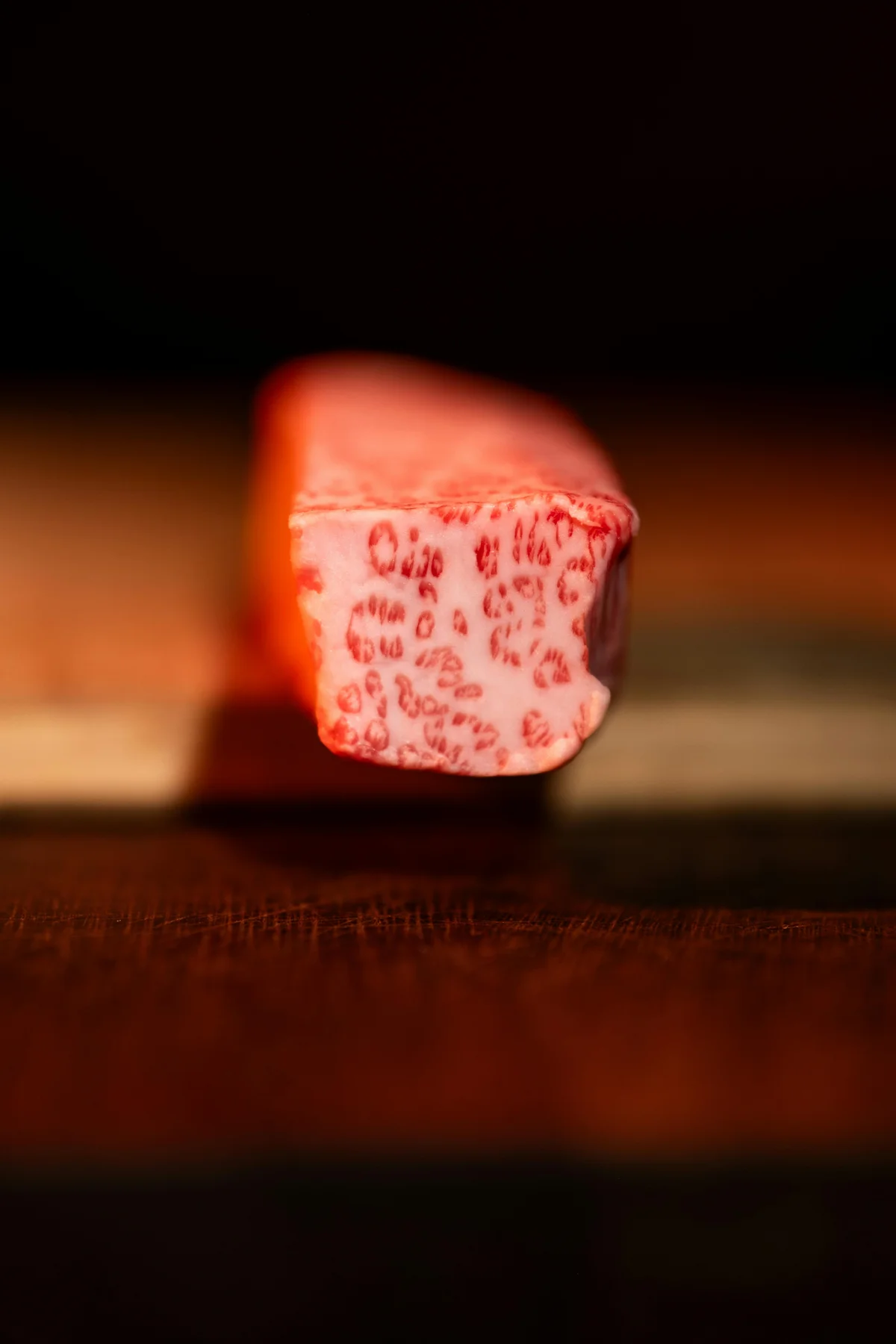
Japanese Black accounts for over 90% of all wagyu production. When someone says "wagyu" without specifying, they mean Kuroge Washu. This breed has a genetic predisposition to intramuscular fat. Not fat around the muscle, not fat under the skin, but fat woven through the muscle fibre itself. That's the marbling you see in photos, and it's the reason wagyu tastes fundamentally different from other beef. The fat melts at a lower temperature than your body heat, which is why a bite of high-grade wagyu seems to dissolve.
Here's what matters: wagyu is a genetic designation, not a quality guarantee. A poorly raised Kuroge Washu steer still qualifies as wagyu. The breed creates the potential for exceptional marbling. The raising, the feeding, and the grading system determine whether that potential is realised. This is why the grading matters so much, and why understanding it saves you money.
The Grading System (Most Guides Get This Wrong)
The Japanese Meat Grading Association (JMGA) assigns every carcass two scores: a yield grade and a quality grade. The final grade combines both. A5 means yield grade A, quality grade 5. Most English sources treat A5 as shorthand for "the best," which misses the point of the system entirely.
Yield grade measures how much usable meat comes from the carcass relative to its total weight. It runs from A (highest yield, 72% or above) through B (average, 69-72%) to C (below average, under 69%). This grade matters to wholesalers and butchers. It tells them how efficient the carcass is. It tells you, the person eating the steak, almost nothing about flavour. A B5-graded cut can taste identical to an A5 cut. The meat quality is the same. The cow just had a different body composition.
Quality grade runs from 1 to 5 and is determined by the lowest score across four separate evaluations:
- Marbling (BMS): The Beef Marbling Standard, scored 1-12. This is the most important factor for flavour and texture. BMS 8-12 earns a quality grade of 5. BMS 5-7 gets a 4. BMS 3-4 gets a 3.
- Meat colour and brightness: Scored against a standardised colour chart (BCS No. 1-7). The ideal range is BCS 3-5 with excellent gloss.
- Firmness and texture: How tight the grain is, how firm the meat feels. Scored 1-5.
- Fat colour and quality: The colour of the fat itself (ideally white to slightly cream) and its lustre. Scored against the Beef Fat Standard (BFS No. 1-7).
The critical detail: the quality grade equals the lowest of those four scores. A carcass with BMS 12 marbling but slightly off-colour fat gets knocked down. The system is strict by design.
| Grade | Yield | BMS (Marbling Score) | What It Means |
|---|---|---|---|
| A5 | 72%+ | 8-12 | Highest yield, highest quality. Peak marbling, colour, texture, fat quality all scoring 5 |
| A4 | 72%+ | 5-7 | High yield, excellent quality. Still heavily marbled, extremely good eating |
| A3 | 72%+ | 3-4 | High yield, good quality. Moderate marbling, leaner than A4/A5 but still clearly wagyu |
| B5 | 69-72% | 8-12 | Average yield, highest quality. Same meat quality as A5, just from a less efficient carcass |
| B4 | 69-72% | 5-7 | Average yield, excellent quality. Very good wagyu, often the best value |
| C3-C5 | Under 69% | 3-12 | Below average yield, variable quality. Rarely seen in restaurants |
The practical takeaway: A4 wagyu is outstanding beef. The gap between A4 and A5 is real but subtle. The gap between A3 and A4 is more noticeable. Below A3, you're eating beef that doesn't have the characteristic wagyu melt. When a restaurant advertises "wagyu" with no grade, assume A3 at best.
The Major Branded Wagyus
Japan has over 200 regional wagyu brands. Most of them are marketing. A handful carry genuine distinctions in genetics, raising methods, and flavour profile. These are the ones worth knowing.
Kobe Beef (神戸ビーフ)
The most famous wagyu brand in the world, and the most misunderstood. Kobe beef must come from Tajima-gyu cattle (a bloodline of Kuroge Washu) born, raised, and slaughtered in Hyogo Prefecture. It must grade at A4 or A5 with a BMS of 6 or higher. Only about 3,000-5,000 head qualify per year.
The flavour profile is delicate. Kobe is known for a refined, almost sweet fat with a light finish. It's not the most intensely marbled wagyu you can eat, but the consistency is remarkable. Every piece of certified Kobe comes with a 10-digit traceability number you can look up.
The catch: Kobe beef's fame makes it the most counterfeited wagyu in the world. In Tokyo, legitimate Kobe beef restaurants display their certification prominently. If you don't see a certificate or a Kobe Beef Marketing & Distribution Promotion Association seal, you're probably not eating Kobe.
Matsusaka Beef (松阪牛)
Raised in Mie Prefecture, Matsusaka beef is arguably the most luxurious of the big brands. The cattle are virgin heifers (never bred), which concentrates fat distribution. Raising periods are longer than average, often 900 days or more, and some farmers famously give their cattle beer or massage them (though this is less universal than the stories suggest).
Matsusaka's marbling tends to be the densest and richest of the top brands. The fat has a lower melting point, which translates to an almost creamy mouthfeel. It's the wagyu that wagyu enthusiasts tend to rate highest in blind tastings. It's also consistently the most expensive. Expect to pay 20-30% more than equivalent Kobe dishes.
Omi Beef (近江牛)
The oldest branded wagyu, with records going back over 400 years. Raised in Shiga Prefecture around Lake Biwa. Omi beef is known for a fine-grained texture and a clean, slightly sweet flavour that doesn't overwhelm.
Omi is the least internationally famous of the "big three" (Kobe, Matsusaka, Omi), which means restaurants serving it tend to be less touristy and slightly better value. If you see Omi on a menu in Tokyo, it's worth trying specifically because it's underappreciated outside Japan.
Miyazaki Beef (宮崎牛)
The rising star. Miyazaki wagyu has won the Wagyu Olympics (the National Competitive Exhibition of Wagyu, held every five years) three times in a row, in 2007, 2012, and 2017. It was also selected for the Academy Awards ceremony banquet menu for seven consecutive years. Only cattle graded A4 or A5 from Miyazaki Prefecture earn the Miyazaki Beef brand.
The flavour is rich and full-bodied with strong umami. Miyazaki tends to be bolder than Kobe, less refined but more satisfying in larger portions. Price-wise, it sits between Kobe and unbranded A5, making it one of the best value propositions in branded wagyu.
Others Worth Knowing
Yonezawa Beef from Yamagata Prefecture: often grouped with Kobe, Matsusaka, and Omi as one of Japan's top brands. Rich, well-balanced, excellent in sukiyaki.
Hida Beef from Gifu Prefecture: a Michelin-beloved brand known for its sweet fat. Often served at teppanyaki restaurants in Tokyo.
Olive Wagyu from Shodoshima Island: cattle fed on olive press residue. Extremely limited production, unusual buttery flavour, nearly impossible to find outside a handful of Tokyo restaurants. If you see it, order it.
How Tokyo Serves Wagyu
The same piece of A5 wagyu tastes completely different depending on how it's cooked. Tokyo offers five main formats, each with its own price structure and best use case.
Yakiniku (焼肉) — Grilled at Your Table
You sit at a table with a built-in grill (usually gas or charcoal) and cook thin-sliced beef yourself. Yakiniku is the most common and most accessible way to eat wagyu in Tokyo. You order individual cuts by the plate, dip them in tare (a sweet soy-based sauce) or salt them, and eat at your own pace.
Why it works for wagyu: You control the cook. High-grade wagyu needs seconds on the grill, not minutes. Yakiniku lets you sear a thin slice for exactly as long as you want. It's also the format where you can try the widest variety of cuts in one sitting: tongue, kalbi (short rib), harami (skirt), rosu (loin), and premium cuts like sirloin or chateaubriand.
Price range: ¥3,000-5,000 for a good lunch set with A4 wagyu. ¥8,000-15,000 for a dinner with premium cuts. All-you-can-eat wagyu yakiniku exists in the ¥4,000-6,000 range but the grade is usually A3 or ungraded.
Sukiyaki (すき焼き) — Simmered in Sweet Soy
Thin-sliced beef cooked in a shallow iron pot with warishita (a mix of soy sauce, sugar, and mirin), then dipped in raw beaten egg before eating. The egg coats the hot beef and creates a rich, silky texture. Tokyo-style sukiyaki sears the meat first before adding the broth. Kansai-style starts with just sugar and soy directly on the meat.
Why it works for wagyu: The sweetness of the broth and the richness of the egg amplify wagyu's natural fat. Sukiyaki is the traditional celebration meal in Japan. Families eat it on New Year's. It's comfort food with the volume turned up. It also stretches expensive beef: you cook vegetables and tofu in the same pot, and everything absorbs the beef fat.
Price range: ¥5,000-8,000 for a standard course. ¥10,000-20,000 for branded beef (Kobe, Matsusaka) at an established restaurant.
Shabu-Shabu (しゃぶしゃぶ) — Swished in Hot Broth
Paper-thin sliced beef swished through boiling kombu dashi for a few seconds, then dipped in ponzu (citrus soy) or sesame sauce. The name is onomatopoeia for the swishing sound. Shabu-shabu is the lightest way to eat wagyu. The quick cooking preserves the beef's natural flavour without adding much fat from the cooking process.
Why it works for wagyu: If you want to taste the beef itself without competing flavours, shabu-shabu strips everything back. The quality of the meat is fully exposed. This is the format where the difference between A5 and A3 is most obvious. It's also easier on the stomach than sukiyaki or yakiniku if you're eating rich food every day.
Price range: ¥4,000-7,000 for a standard course. ¥10,000-18,000 for premium branded beef courses. Lunch sets bring the entry point down to ¥2,500-4,000 at many restaurants.
Teppanyaki (鉄板焼き) — Chef Grills in Front of You
A chef cooks thick-cut steak on a flat iron griddle (teppan) right in front of you. This is the format most foreigners picture when they think "wagyu experience." The chef seasons and sears the beef, often finishing with garlic chips, wasabi, or a simple salt and pepper.
Why it works for wagyu: Showmanship aside, teppanyaki is the best format for thick cuts. A 2cm sirloin steak needs heat management that's hard to do yourself. A good teppanyaki chef knows exactly when to flip, when to rest, and when the internal fat has rendered to the right point. You're paying for skill, not just beef.
Price range: ¥10,000-20,000 for a dinner course. ¥15,000-50,000+ for branded beef at a top restaurant. Lunch courses can start around ¥5,000-8,000 and are one of the best deals in Tokyo if the restaurant uses the same beef for lunch and dinner service.
Steak House (ステーキ) — Western-Style
A thick slab, cooked in a kitchen, brought to your table. Tokyo has excellent steak houses that source top-grade wagyu and cook it simply. The format is familiar, the quality is not. Japanese steak house portions tend to be smaller than American ones (100-200g is standard) because the richness of A5 wagyu means most people hit their limit around 150g.
Price range: ¥8,000-15,000 for 150g of A4-A5 at a mid-range steak house. ¥20,000-40,000 at a premium restaurant. Some standing-style steak shops in areas like Akihabara serve 100g of A5 for ¥2,000-3,000, and they're genuinely good.
| Format | Price Range | Best For | Where to Find |
|---|---|---|---|
| Yakiniku | ¥3,000-15,000 | Variety of cuts, casual groups, control over your cook | Everywhere. Shibuya, Shinjuku, Shin-Okubo for Korean-style |
| Sukiyaki | ¥5,000-20,000 | Rich comfort food, traditional experience, stretching premium beef | Asakusa, Nihonbashi, Ginza for high-end |
| Shabu-Shabu | ¥2,500-18,000 | Tasting the beef itself, lighter meals, hot pot lovers | Shinjuku, Akasaka, department store restaurants |
| Teppanyaki | ¥5,000-50,000+ | Thick steaks, the "experience," special occasions | Ginza, Roppongi, hotel restaurants |
| Steak | ¥2,000-40,000 | Simple preparation, familiar format, quick meals | Akihabara standing steak shops to Ginza high-end |
The Budget Guide: What Your Money Actually Gets You
Around ¥3,000 (≈$20 USD)
A yakiniku lunch set with several plates of A4 wagyu, rice, soup, and sides. Or a standing steak shop serving 100-150g of A5 with rice. At this price, you're eating real wagyu, properly graded, in a no-frills setting. The beef is good. The ambiance is plastic trays and fluorescent lights. This is how most Tokyo locals eat wagyu on a normal day.
Around ¥8,000 (≈$55 USD)
A proper yakiniku dinner with premium cuts, or a sukiyaki/shabu-shabu course at a respected restaurant. The beef is A4 or A5, you get a wider selection of cuts, and the setting is comfortable. This is the sweet spot. You're eating excellent wagyu in a real restaurant without paying for a brand name on the certificate.
Around ¥15,000 (≈$100 USD)
A teppanyaki lunch course with branded beef (Kobe, Miyazaki), or a full sukiyaki dinner at an established restaurant. At this level, you're getting named-brand wagyu, attentive service, and a setting that feels like an occasion. The quality jump from ¥8,000 to ¥15,000 is smaller than the jump from ¥3,000 to ¥8,000.
¥20,000-50,000+ (≈$135-340+ USD)
Branded beef teppanyaki dinners, omakase-style wagyu courses, private rooms at century-old sukiyaki restaurants. The beef is A5 from a specific farm, often with a certificate on the table. The experience is polished. The question is whether the incremental quality over a ¥15,000 meal justifies the price. For most people eating wagyu once or twice in Tokyo, ¥8,000-15,000 gets you 90% of the experience at half the cost. For more on how omakase dining works across formats (including teppanyaki and yakiniku omakase), see our omakase guide.
How to Find Quality
Use Tabelog
Tabelog is Japan's dominant restaurant review platform, far more reliable than Google Reviews or TripAdvisor for Japanese restaurants. The scoring system runs from 1.0 to 5.0, but the distribution is harsh. A Tabelog score of 3.5 is genuinely good. A 3.7 is excellent. Anything above 4.0 is exceptional.
Search for 焼肉 (yakiniku), すき焼き (sukiyaki), or しゃぶしゃぶ (shabu-shabu) plus your area. Filter by budget. Read the reviews with photos. Tabelog reviewers in Japan are serious. They photograph every dish, list prices, and compare across restaurants. It's the single most useful tool for finding wagyu restaurants that locals actually eat at.
Look for Grade Transparency
Good wagyu restaurants tell you exactly what you're eating. The grade (A5, A4), the brand (Kobe, Miyazaki, or the specific prefecture), and sometimes the individual farm or producer number. Restaurants that say "wagyu" without any further detail are usually serving the lowest grade that technically qualifies. It's not necessarily bad. But it's not what you're picturing.
Lunch Over Dinner
Many high-end teppanyaki and sukiyaki restaurants use the same beef at lunch that they serve at dinner. The course is shorter, the portions slightly smaller, the setting less formal. The beef is identical. Lunch courses regularly run 40-60% less than dinner. A ¥25,000 dinner restaurant might serve a ¥8,000 lunch with 150g of the same A5 Kobe sirloin. This is how locals who want premium wagyu without the premium bill eat.
Department Store Restaurant Floors
The upper floors of Tokyo's major department stores (Isetan in Shinjuku, Mitsukoshi in Nihonbashi, Takashimaya in Nihonbashi) house restaurants that are consistently good and consistently overlooked by tourists. These aren't food court stalls. They're proper restaurants with Tabelog scores of 3.5+, serving wagyu sukiyaki and shabu-shabu courses at reasonable prices. The department store guarantees a baseline quality that street-level restaurants don't always match. For more on this, see the depachika guide.
Hotel Restaurants at Lunch
Tokyo's luxury hotels (The Peninsula, Andaz, Aman) have teppanyaki restaurants with world-class chefs and sourcing. Dinner is ¥30,000+. Lunch is ¥8,000-15,000 for a similar experience. The hotels want the lunch traffic. You want the beef. Everyone wins.
The Wagyu Tourism Trap
Tokyo has a wagyu tourist trap problem, and it's getting worse. Here's what to watch for.
The Ungraded "Wagyu" Restaurant
A restaurant in Shinjuku or Shibuya with English menus, photos of marbled steaks on the sign, and "WAGYU" in large letters. The menu says wagyu. It doesn't say what grade. The price seems reasonable for what looks like A5 in the photos.
What you're eating is probably A3 or lower. Maybe it's not even from a designated wagyu breed. The legal definition of "wagyu" in a restaurant context is loose enough that some places stretch it. The meat is fine. The problem is you're paying a premium for a word on the menu and getting mid-grade beef.
How to avoid it: If the grade isn't posted, ask. If the staff can't tell you the grade, eat somewhere else.
The ¥5,000 Wagyu Skewer
Tsukiji Outer Market and similar tourist areas sell wagyu-on-a-stick for ¥1,000-5,000. The street food guide covers this in detail, but the short version: you're paying ¥5,000 for about ¥300 worth of beef on a stick. The grade is unspecified. The markup is astronomical. If you want to taste wagyu, sit down at a yakiniku restaurant and spend the same ¥5,000 on a proper lunch set with multiple cuts, rice, and sides.
The "Kobe Beef" That Isn't
Some restaurants in tourist areas list "Kobe beef" or "Kobe-style beef" without actually serving certified Kobe. True Kobe beef comes with a certification number and a seal from the Kobe Beef Marketing & Distribution Promotion Association. If a restaurant serves it, they'll have the certificate. If they don't, what you're eating is Tajima-gyu that didn't make the grade, beef from Hyogo that's not from Tajima cattle, or wagyu from an entirely different prefecture with "Kobe" stuck on the English menu because tourists will pay more.
The All-You-Can-Eat Trap
All-you-can-eat wagyu yakiniku (食べ放題) at ¥3,980 sounds like a deal. It is, if you understand what you're getting. The beef at this price point is ungraded or A3 at best, often from Australian wagyu or domestic crosses. It's decent beef for a casual dinner. It's not the wagyu experience people fly to Tokyo for. If you've never had wagyu, an all-you-can-eat place will form an inaccurate impression. Eat the real thing first. Go back to tabehoudai when you want volume over quality.
Where to Eat: Recommended Restaurants
Restaurant recommendations age. Check Tabelog and the restaurant's official site before booking — prices change, places close, and reservation policies shift.
Yakiniku
Yoroniku (よろにく) in Minami-Aoyama is the yakiniku restaurant that changed how Tokyo thinks about grilled beef. Rather than ordering plates à la carte, you sit through a meat omakase where the chef selects cuts and tells you how to grill each one. The signature move — wagyu wrapped around a small rice ball with egg yolk — was invented here and copied everywhere since. Expect to spend ¥15,000-30,000 per person at dinner. Reservations are essential and can be booked through Tabelog or TableCheck, though popular dates fill weeks in advance.
Ushigoro (うしごろ) has multiple Tokyo locations, with the Ginza flagship being the most accessible for visitors. They source A5 Kuroge Washu exclusively and are known for using virgin heifers, which concentrates the fat distribution. The atmosphere is polished but not stiff — think date night, not formal occasion. Dinner runs ¥10,000-20,000 depending on the course. The Ginza Namikidori branch is slightly more affordable and does excellent hormone (offal) dishes if you want to explore beyond the prime cuts. Reserve through their website or Tabelog.
Nikuya no Daidokoro (肉屋の台所) in Shinjuku is the budget pick, and it's a legitimate one. Their signature all-you-can-eat course gives you 100 minutes of A4-A5 Kuroge Washu yakiniku for ¥6,050 including tax — 124 items including wagyu sukiyaki and a range of cuts you'd pay triple for at the places above. The catch is atmosphere (it's a loud Kabukicho restaurant, not a quiet counter) and the fact that all-you-can-eat portions are thinner than à la carte. But the beef is real, the grade is verified, and it's the best way to eat a lot of genuine wagyu without spending five figures. Walk-ins possible, reservations recommended on weekends.
Sukiyaki
Chinya (ちんや) in Asakusa has been serving sukiyaki since 1880, making it one of Tokyo's oldest beef restaurants. They relocated to a new building in 2022 but kept the traditional cooking style: sweet warishita broth, Senju leeks, and high-grade Kuroge Washu sliced thin and dipped in raw egg. The Tabelog score sits around 3.63, which in Tabelog's harsh grading puts it solidly in "good" territory. Dinner courses run ¥10,000-15,000, but lunch sets start around ¥3,500, which is one of the better ways to experience old-school Tokyo sukiyaki without the old-school price tag. Reservations recommended but not always required for lunch.
Ningyocho Imahan (人形町今半) is the other sukiyaki institution worth knowing, with their main restaurant in Nihonbashi's Ningyocho district. Imahan's style emphasizes searing the beef first — "cooking as if grilling" — which gives the meat a light crust before it meets the broth. The ground floor serves teppanyaki steak while the second floor handles sukiyaki and shabu-shabu in a traditional setting with private rooms available. Lunch sets start from ¥3,850, making it accessible for a midday meal. Multiple branches exist across Tokyo including Shinjuku and Kioicho, but the Ningyocho honten has the most character.
Shabu-Shabu
Seryna (せりな) in Roppongi has been a Kobe beef specialist since 1961 and is one of the few Tokyo restaurants that's both a certified Kobe beef retailer and genuinely good rather than just famous. Their shabu-shabu uses certified Kobe beef swished through a delicate broth, and the crab shabu-shabu is worth adding if you want variety. The setting includes private rooms and a traditional atmosphere that feels appropriate for what you're spending. This is a splurge — expect ¥15,000-25,000 per person for dinner. Reserve through TableCheck or the restaurant directly. They have an English website and are accustomed to international guests.
Steak / Teppanyaki
Omotesando Ukai Tei (表参道うかい亭) is the teppanyaki experience people picture when they imagine wagyu in Tokyo, and it actually delivers. The restaurant is built inside a relocated 150-year-old Kanazawa merchant house on the fifth floor of the Chanel building in Omotesando — the setting alone is worth the visit. The chef grills their house-selected premium Kuroge Washu on the teppan in front of you, and the skill level is genuinely high. Dinner runs ¥30,000-40,000, which is steep, but the lunch courses at ¥10,000-15,000 use the same beef and the same chefs. The Ginza branch (Tabelog 3.77) is slightly easier to book. Reserve well in advance through their website or ikyu.com.
Putting It Together
If you're eating wagyu once in Tokyo, spend ¥8,000-15,000 on a yakiniku dinner or a teppanyaki lunch with A4 or A5 beef. You'll taste what wagyu actually is, you'll have a proper meal, and you won't feel like you overpaid.
If you're eating wagyu more than once, do the ¥3,000 yakiniku lunch on day one to calibrate your palate, then a teppanyaki or sukiyaki dinner later in the trip at a higher price point. The lunch gives you a baseline. The dinner gives you the comparison. Together they teach you more about wagyu than any single blowout meal.
If you want the deep end, book a branded beef teppanyaki dinner and tell the chef you're interested in learning. Teppanyaki chefs in Tokyo talk about their beef the way sommeliers talk about wine. They'll tell you the farm, the prefecture, the feeding regimen, the age at slaughter. It's a food education disguised as dinner.
Wagyu in Tokyo isn't one thing. It's a spectrum from working-class lunch to once-in-a-lifetime dinner, and the quality is high across that entire range. The key is knowing what you're paying for at each level, so you can choose based on what you actually want rather than what a tourist-facing restaurant tells you to want.
For more on Tokyo's food scene, including sushi, yakitori, tonkatsu, and the broader food landscape, start with the food scene guide. And if you want to eat your way through Tokyo with someone who knows where the good stuff is, the Kushiyaki Confidential experience is built for exactly that.