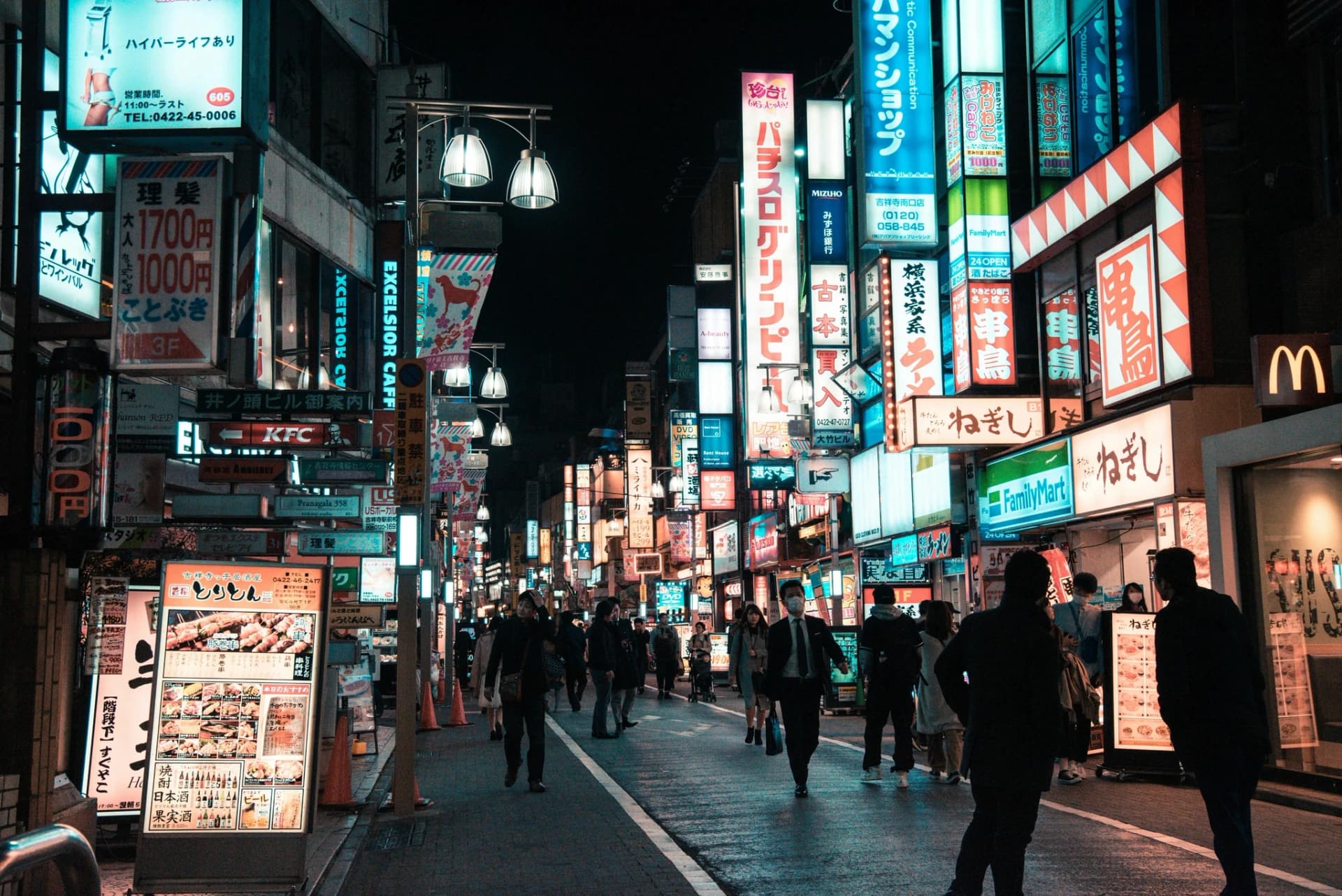
Bar crawls count venues. Tokyo residents count relationships. Understanding the difference changes what's possible.
Tokyo nightlife confuses most visitors because bar crawls count venues while the people who live here count relationships, and that difference decides what you can actually get into.
Tourist bar-hopping runs opposite to the way Tokyo drinks. The usual tour hits 5-8 venues in a night, with an Instagram shot at each and variety as the measure of success. For Tokyo residents, drinking is closer to infrastructure than entertainment: a way to decompress that's built around work schedules, train times, and keeping relationships in good repair. Once you understand why Tokyo drinks the way it does, as well as where, a lot more of the city opens up.
The Mismatch You Can't See From Outside
Drinking as Infrastructure, Not Entertainment
In Japan, drinking is part of how work gets done.
Nomikai, the after-work drinking gatherings, are an unspoken extension of the workday. The first party (ichijikai) runs two to three hours. Then comes nijikai (the afterparty) and sometimes sanjikai (the after-afterparty). Things go on until 11 PM or midnight, timed to catch the last trains.
The point is keeping working relationships healthy. Drinking loosens the strict hierarchy of the daytime. Junior employees pour for their seniors, and that pouring does real work in the relationship. The ritual lets honne (true feelings) come out, while tatemae (the public face) runs everything from 9 to 5. A tourist bar crawl uses these places for something they were never set up to do.
Last Train Shapes Everything
Last trains on the major Tokyo lines leave central stations between 12:00 and 12:30 AM. They're crowded, especially on Fridays.
That hard deadline sets the rhythm of the whole night. Nomikai are timed to it. "Until the last minute" literally means drinking until the moment you have to leave for the last train home. Miss it, and you're paying ¥3,000+ for a taxi or waiting until 5 AM for service to start again.
Manga cafes sell 8-hour overnight packages for ¥1,500-3,000 ($10-20): a private booth, free manga, and a drink bar. Missing the last train happens often enough to keep a whole industry going.
What "Regular Spot" Actually Means
People in Tokyo have regular spots. A salaryman goes to the same standing bar under the train tracks twice a week for years. The owner knows his order, the other regulars nod hello, and the conversation picks up where it left off last time.
That's what "authentic" means in Tokyo drinking: a relationship between a drinker and a bar, built up over time. A guide who gets you into that is lending you years of their own relationships, which counts for more than a list of hidden places.
Where the Tourist Map Ends
Golden Gai: What the Guides Still Won't Tell You
Golden Gai in Shinjuku packs 200 tiny bars into six narrow alleys, and every travel guide mentions it. Our complete Golden Gai guide covers what it's like now and when to go. The part most guides leave out, in one local's words:
"Golden Gai these days is just a tourist trap. It's packed by tourists... I don't think many Tokyo locals frequent Golden Gai anymore."
That's a longtime resident on how things stood in 2025. There are more tourists than locals now, smoking in almost every bar, and cover charges of ¥1,000+ for a tiny room where you stand all night.
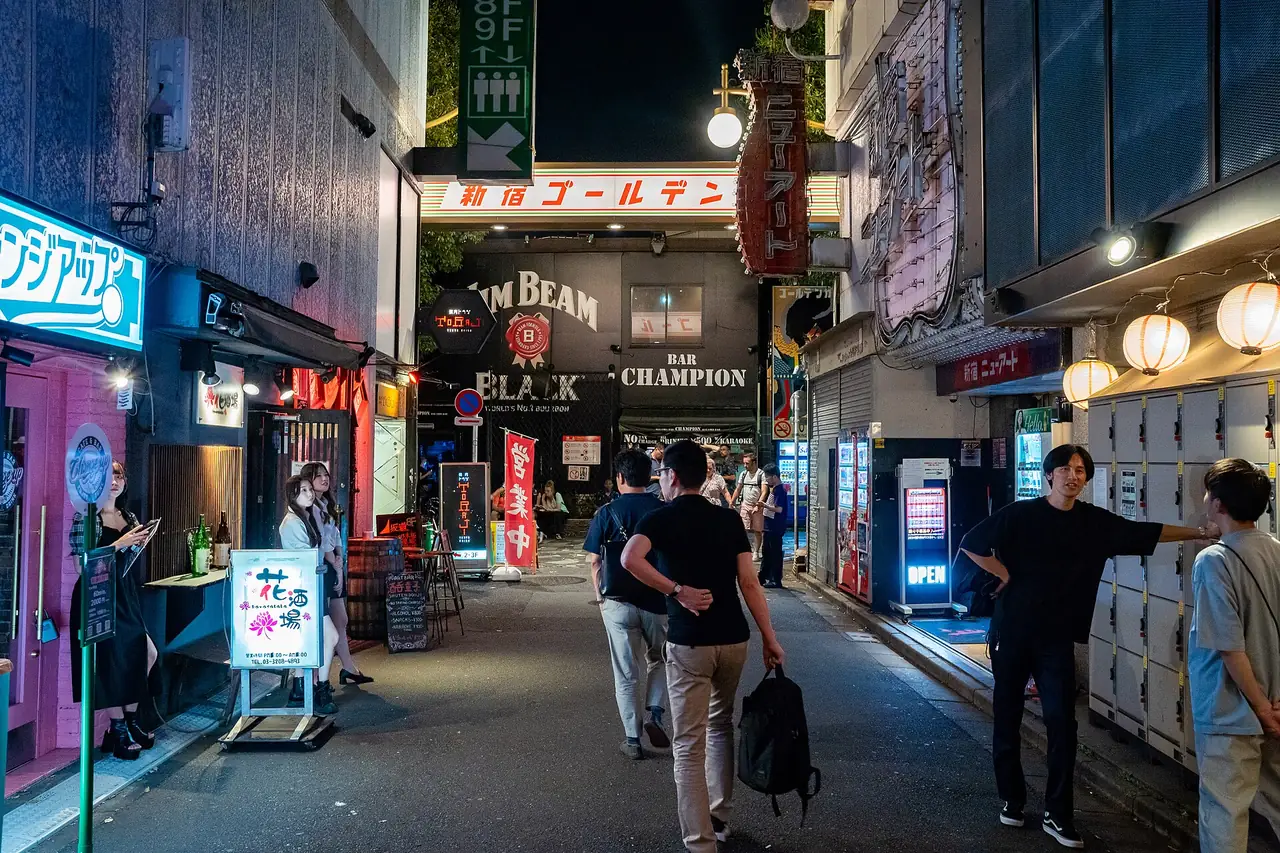
Golden Gai matters historically, but locals don't really drink there anymore. If you want the rougher version, cheaper, less photographed, and almost entirely local, go to Sangenjaya's Sankaku Chitai, a postwar network of alleys south of Shibuya where yakitori skewers start at ¥100 and nobody puts on a show for visitors.
The Chuo Line Gradient
The JR Chuo Line runs west from Shinjuku into residential Tokyo. With each stop there are fewer tourists and more neighborhoods that exist for the people who live in them.
| Station | From Shinjuku | Character |
|---|---|---|
| Nakano | 4-7 min, ¥170 | Anime crowd above, drinking alleys below |
| Koenji | ~10 min | Bohemian, Showa-era retro, under-tracks yakitori |
| Nishi-Ogikubo | ~13 min | No tourists, Yanagi Koji alleyway, local crowd |
| Kichijoji | 14-15 min | Tops livability surveys, Harmonica Yokocho |
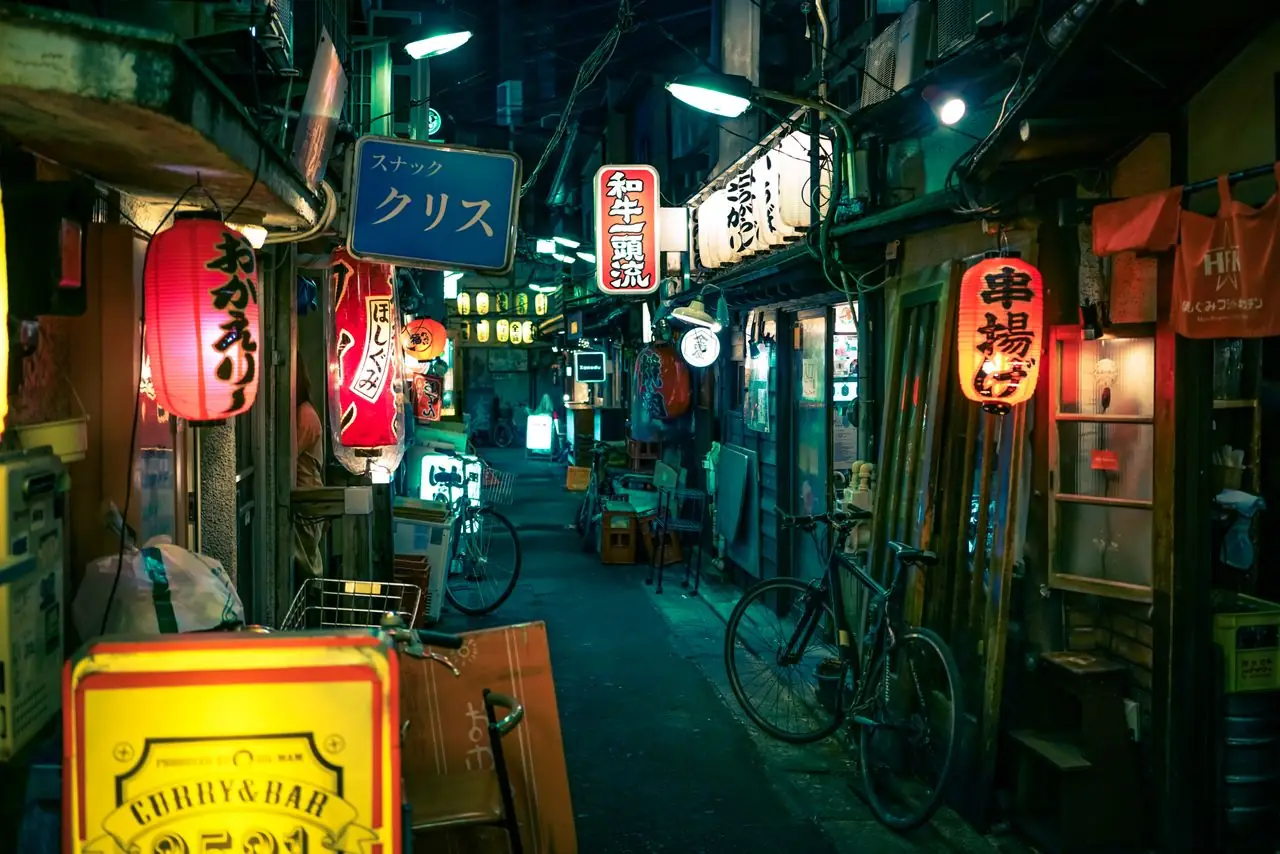
Koenji has kept its bohemian streak. Under the elevated tracks, yakitori joints and cheap izakayas are so small they overflow onto makeshift terraces in the street. Paper lanterns hang along the lanes, and the feel is Showa-era retro: beer crates for seats and smoke pouring off the grills. Tico Koenji serves infused spirits (kiwi gin, basil vodka, cardamom apple whisky) in a dim room that suits conversation. Tachinomi Chigiraya does Hiroshima-style okonomiyaki at a standing teppan counter.
Nishi-Ogikubo feels like another city compared with Shinjuku. Yanagi Koji, the yokocho alley off the station's south exit, fills with locals after work. The crowd is a mix of young and old, regulars and newcomers.
Kichijoji tops Tokyo's livability surveys. Harmonica Yokocho, the narrow covered lanes near the north exit, has about 100 shops. Ahiru Beer Hall started the area's revival in the late 1990s. At Kopanda, which serves panda-themed drinks, the owner changes daily and the regulars chat freely. Tecchan does yakitori. Manryou has been pouring for 56 years.
Drinks in Harmonica Yokocho cost ¥200-500. Many places are cash only and there's little English. People are friendly, though, and the welcome is real once you've managed to get in the door.
Under the Tracks at Yurakucho
Between Shimbashi and Yurakucho stations, 300+ meters of yakitori joints, motsu nikomi stew shops, standing bars, and Chinese restaurants fill the space under the railway. Locals call it "salaryman heaven."
This is where Tokyo's work-hard, drink-hard culture plays out every night. Tachinomi like Yomoda, Ban, and Kikunoko serve the after-work crowd. Shin-Hinomoto, which foreigners often call "Andy's," has been open for 70+ years and has English-speaking staff.
One caveat: overcharging scams aimed at tourists have increased in Shimbashi. Complaints went from 30 in 2021 to 170 in 2022. The district is the real thing, but navigation matters.
The Venue Landscape (Through the Right Lens)
| Venue Type | Duration | Cover/Otoshi | Typical Spend | Crowd |
|---|---|---|---|---|
| Standing bar (tachinomi) | ~1 hour | ~¥300 | ¥2,000 | Regulars, 6-10 people max |
| Seated izakaya | 2-3 hours | ¥300-700 | ¥3,000-5,000 | Groups, colleagues, friends |
| Chain yakitori (Torikizoku) | 1-2 hours | None | ~¥2,300 | Young salarymen, students |
The table leaves out cocktail bars, which run on their own rules: some take reservations weeks ahead, many have no sign on the door, and at an 8-seat room, turning up without a booking usually means being turned away.
Standing Bars: The 60-Minute Decompression
The standing bar (tachinomi) is how Tokyo decompresses: no seats, no table service, about 60 minutes of drinks and small plates, then you move on. Our standing bar guide covers the prices, neighborhoods, and etiquette. For this page, what counts is that the format shapes how people here structure an evening, and most post-work drinking starts at one.
Izakaya Economics
Seated izakayas work on different economics. The otoshi, the small dish that arrives automatically when you sit down, is effectively a table charge. Expect ¥300-700 per person at ordinary places and up to ¥1,000 at upscale ones.
It isn't a hidden fee or a tourist trap. It's how izakayas make up for the tipping culture that doesn't exist in Japan, and it helps them cover costs when people sit at a table for hours over a few drinks.
Izakayas are built for longer sessions, and two to three hours is normal. The menu goes deeper too: hot and cold dishes, grilled things, rice dishes to finish. This is where colleagues talk over the workday, friends catch up, and groups get to know each other.
Why Chain Yakitori Is Actually Local
Torikizoku has 600+ locations across Japan. Everything is ¥410 (raised from ¥390 in October 2026), and you order on a tablet in several languages.
That sounds like the tourist-friendly chain you'd skip if you wanted something authentic. In fact Torikizoku aims squarely at young employees and students. It's where Japanese people on a budget eat after work.
There's artisanal yakitori too, at specialist shops charging ¥800-2,000 a skewer, and it's worth doing. But if you want to see where salarymen and students actually gather on a Tuesday night, it's the chain with beer crate seats and smoky air. Local just means where locals go, and it doesn't have to be expensive or hard to find.
What "Regulars Only" Actually Means
The Economics of Tiny Bars
Some bars in Golden Gai and elsewhere in Tokyo post signs that amount to "regulars only." Travelers report being turned away from three bars before one let them in.
The reason is money. A bar with 4-10 seats lives on relationships, since it can't do volume. Regulars stay all evening, order steadily, and come back every week. A tourist takes a seat for one drink, snaps some photos, and leaves. At that size, every bar-hopper is one less seat for someone who keeps the place going year-round.
Cover charges (¥500-2,000) sometimes work as a filter. The people they keep out are casual tourists, whatever their nationality. Regulars don't think twice about the charge. First-timers who want a photo and an exit do.
What You're Actually Paying For
Guide fees for nightlife tours mostly pay for access.
A guide who has been going to the same bars for years has relationships there. The owner knows them, they're welcomed without a second thought, and that welcome extends to whoever they bring along.
You can't research your way into that. No search will get you a regular's standing at a 6-seat standing bar in Nishi-Ogikubo. The fee pays for years of relationship building, and for one evening that access is yours.
Access That Can't Be Researched
Harmonica Yokocho in Kichijoji shows how this works. Local residents call it "the most authentic local nightlife around," and people there are friendly and welcoming to travelers.
Also: "none of the bars offer English."
You could find the alley and walk into a bar. Without someone to bridge the language gap and show that you're more than a passing tourist, though, you're on your own in a place set up for regulars.
Depth Over Variety (The Trade-Off Nobody Explains)
What 30 Minutes Per Bar Actually Gets You
Standard bar-hopping tours hit 6-8 venues, fifteen to thirty minutes a stop, for as much variety as possible.
At that pace, you get:
-
Entry, drink order, drink arrival
-
A quick look around
-
Maybe one food item
-
Walk to the next venue
What you miss is the conversation with the person behind the bar, any sense of how this place differs from the last one, the second drink when the mood changes, and how locals actually use the room.
People who've done these tours put it plainly: "Tour moved too fast—didn't really understand what was happening."
How Tokyo Residents Actually Drink
The nomikai from earlier is the model: two to three hours in one place, real conversation, several rounds, food ordered bit by bit.
Then a second spot, and a third if the night runs late. You settle in at each stop.
The one-hour tachinomi visit is the quick version, a stop on the way home. Even so, quick by Tokyo standards is longer than most bar-crawl stops.
The Protocol You Miss at Speed
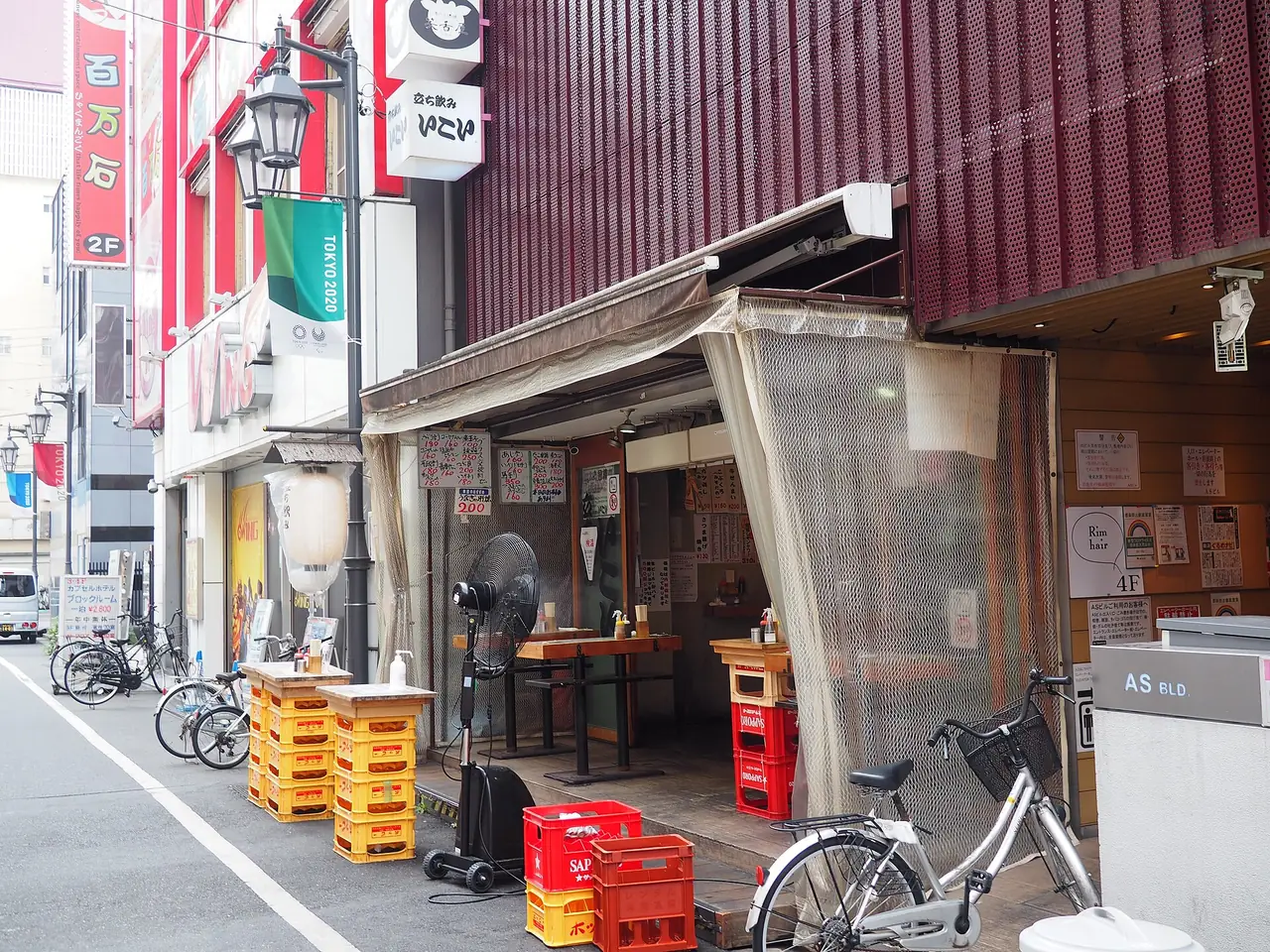
Tachinomi customs, like wiping the glass, returning the dish, and signaling for the check, take time to notice and make sense of. At 15 minutes a stop you never see them; you're gone before the place shows you how it works.
A slower format flips that. Two to three stops over several hours means sixty to ninety minutes in each. You watch the customs happen, the guide explains what you're looking at, and there's room for the kind of conversation that never starts at bar-crawl speed.
You see fewer venues and understand far more of each, which is how Tokyo drinks anyway.
Beyond Izakaya: Tokyo's Other Night Scenes
Izakaya and standing bars are the base. Tokyo's nights go further, though, and each of these other formats works differently from what visitors expect.
Listening Bars: Music You Sit Down For
Tokyo invented the listening bar, a venue built around an audiophile sound system where you come for the music itself. Think vinyl records, tube amplifiers, and speakers that cost more than a car. People talk in murmurs and phones stay in pockets.
Bar Martha in Shibuya asks guests to keep their voices down and skip the photos. Record Bar Analog has plush seats and more staff than customers. In the backstreets of Shimokitazawa there's a growing cluster of vinyl bars where album releases double as events.
The global trend goes straight back to Tokyo's kissaten tradition, the jazz cafes of the 1950s where customers paid to hear rare pressings. Listening bars are the evening version, with the same reverence plus cocktails.
Expect ¥1,500-3,000 per person for 1-2 drinks and an hour of deliberately sitting still.
Karaoke: Not What You Think It Is
Forget the stage and the audience. Japanese karaoke is a private room, a "karaoke box," rented by your group by the hour. The big chains (Big Echo, Karaoke Kan, Joysound) are on every commercial street.
You check in at reception, get a room, and order drinks from a tablet in the room. Songs are picked on a touchscreen, which you can switch to English with the 言語 (gengo) button. The catalog is 95% Japanese, but the other 5% still runs to thousands of English songs.
It costs ¥500-1,500 per person per hour, depending on the time. Weekday daytime is cheapest and Friday midnight is the most expensive. All-you-can-drink packages add ¥1,000-1,500 and usually pay off if you're staying more than an hour.
Late-Night Food: The Shime Tradition
"Shime" (締め) is the dish that closes a night of drinking. Locally it's expected, the ritual that says the evening is over.
Ramen is the default. Shinjuku and Shibuya have late-night shops open until 3-4am, and the logic is physical: hot broth after hours of cold beer. Chains like Ichiran stay open late, but the best shime spots are the ones with a queue of salarymen at 1am.
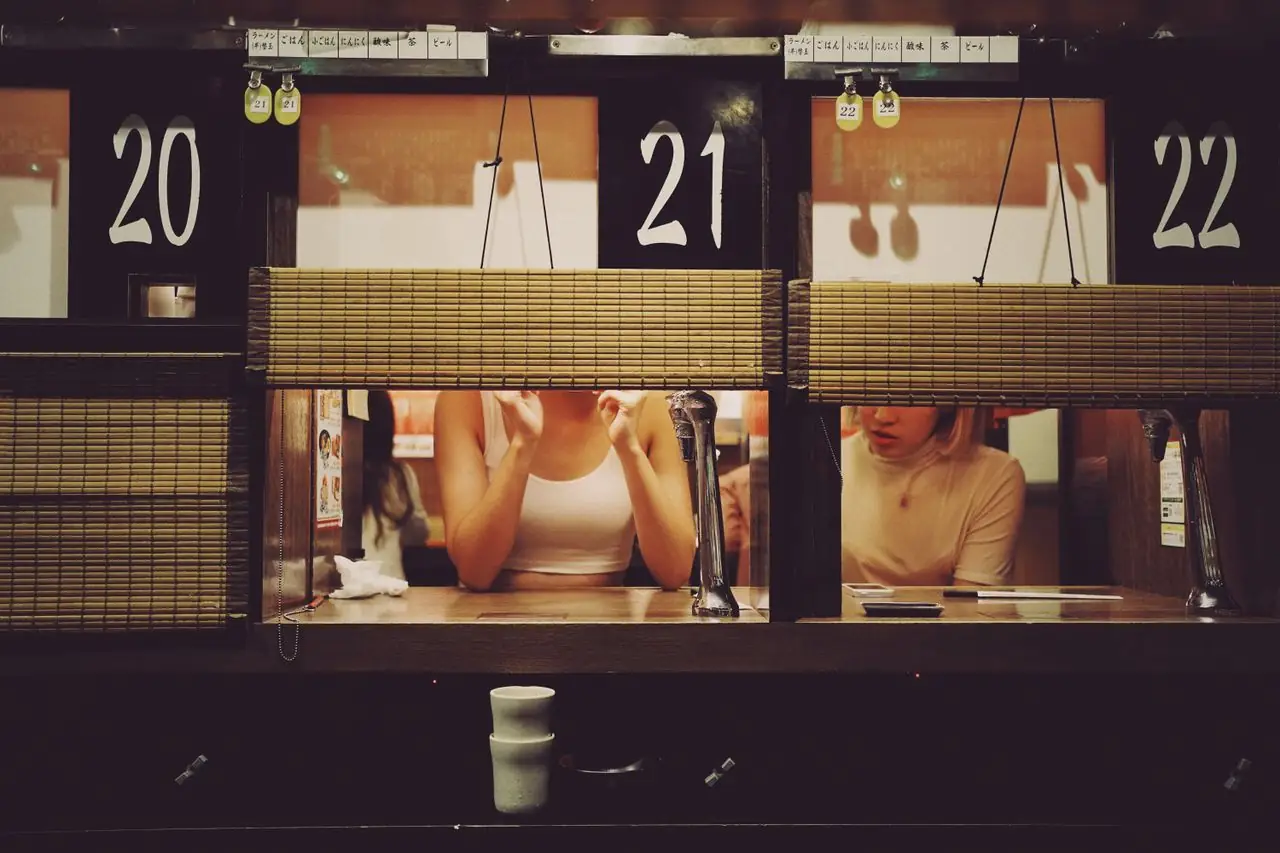
Beyond ramen, there's ochazuke (tea poured over rice, a comfort food older than the Edo period), onigiri from any convenience store, or gyudon from Yoshinoya or Matsuya (24 hours, at every station).
Weekend vs. Weekday: Two Different Cities
On weeknights, drinking starts at 6pm and winds down by 10:30pm. The last train runs the show. The crowd is salarymen unwinding, quietly and efficiently, two bars at most.
On weekends it starts later (8-9pm), runs past the last train, and draws a younger crowd happy to pay for taxis or wait out the dead hours until the first train at 5am. Shibuya on a Friday and Shinjuku on a Saturday look nothing like their Tuesday selves.
For the classic salaryman tachinomi scene, go Tuesday through Thursday. For energy and variety, go on a weekend, and expect cover charges, queues, and higher prices.
Safety: What "Avoid Touts" Actually Means
Kabukicho (Shinjuku) and Roppongi have a particular scam called "bottakuri": overcharging bars that use street touts to pull tourists in. The tout comes up speaking English, often calls you "friend," and promises cheap drinks or a "cool local bar." Inside, the bill for two drinks comes to ¥30,000-50,000.
There are no exceptions to this rule: never follow a tout into a bar. Pick your own places. If someone on the sidewalk is trying to bring you in, keep walking.
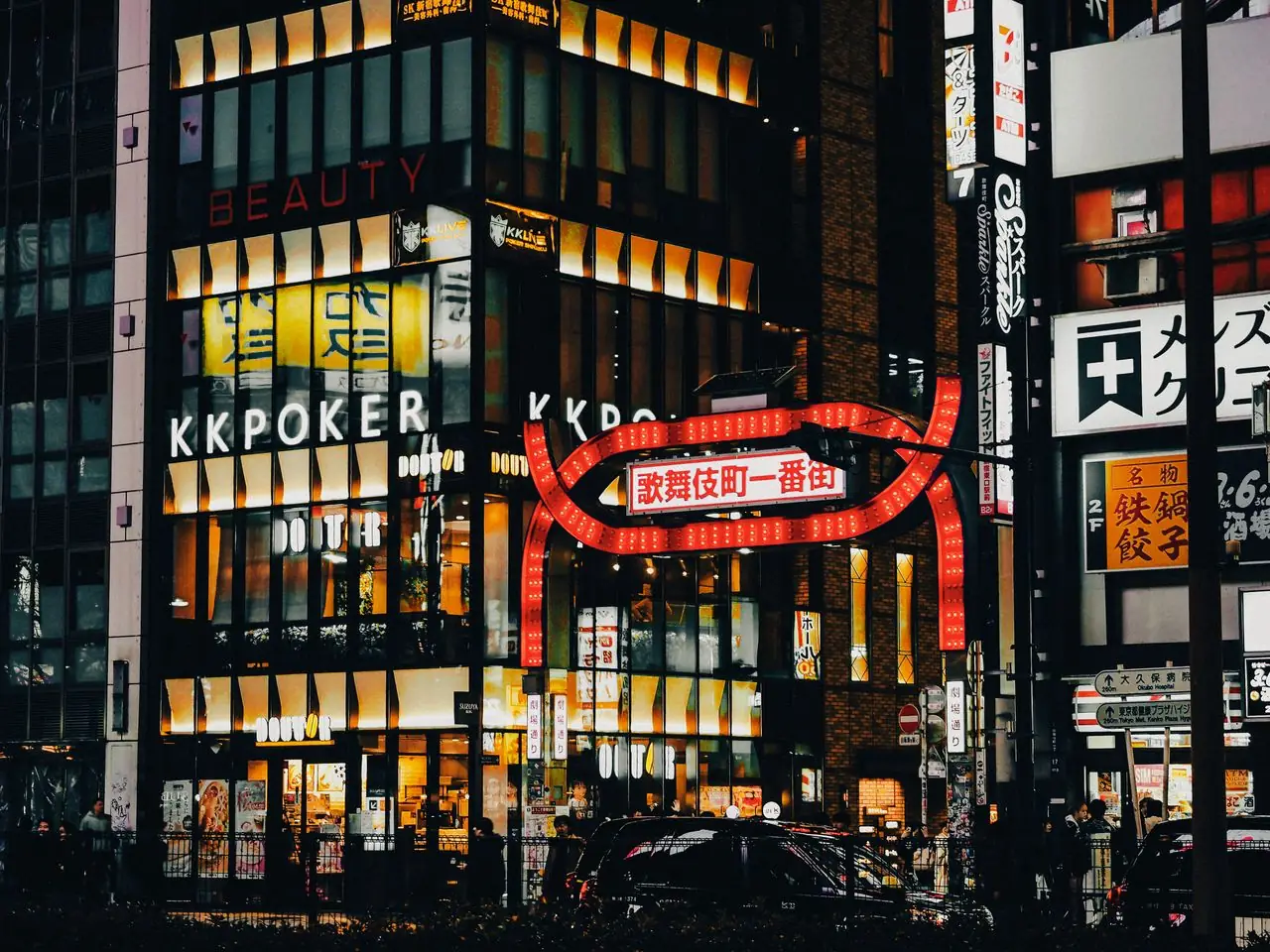
You won't run into this in the rest of Tokyo. The standing bars, izakayas, and listening bars on this page don't use touts, because they don't need to.
Who This Isn't For
If You Speak Japanese
If you speak fluent Japanese, you can handle these places on your own. You can read the handwritten menus, chat with the owners, and ask about cover charges before you sit down. The guide's main job, bridging the language and vouching for you, isn't needed.
You might book a tour for other reasons, but you won't need it for access. We've also written about when you don't need a private tour.
If You Want Nightclubs
Tokyo does have a club scene, with DJ bars, dance venues, and places that run until morning.
It's a separate world from izakaya and tachinomi culture. Our tours are about drinking as social infrastructure: the standing bars, yakitori joints, and neighborhood izakayas where people unwind after work. If clubs are the priority, this format won't suit you.
If You Want Shinjuku Ni-chome
Ni-chome runs on the same small-bar principles as the rest of Tokyo's drinking culture, with cover charges, regulars, and tiny rooms. What sets it apart is 300+ LGBTQ venues packed into a few blocks south of Shinjuku-sanchome Station. Our LGBTQ Tokyo guide covers the district in detail.
If You Want Maximum Bars
Some travelers really do want to hit as many places as they can, for the photos, the variety, and an Instagram grid of 8 different bars in one night.
That's a fair thing to want. A slower format just won't give it to you. If variety is what you're after, bar-crawl tours exist, and they deliver exactly what they promise.
What a Depth-Focused Night Looks Like
You take the train west from Shinjuku. In Nakano, at a retro izakaya, the owner nods at your guide. At a standing bar in Nishi-Ogikubo the customs make sense because you're following them yourself. Kichijoji's covered lanes close out the evening. That's four to five hours across three neighborhoods, with enough time in each to see how the place really works.
The Tours That Embody This
Three formats, depending on what you care about most:
Standing Room Only: Tachinomi-focused. Four hours through Nakano, Nishi-Ogikubo, and Kichijoji. $314 for 2 people.
Kushiyaki Confidential: Yakitori and izakaya. Six hours through Shibuya, Ebisu, and Nakameguro. $430 for 2 people.
Infinite Tokyo: Custom nightlife. Eight hours, any combination. $550 for 2 people.
Food and drinks are extra on every tour. Budget ¥4,000-8,000 per person, depending on the format and your appetite.
Where Hinomaru One Fits
Our nightlife tours, Standing Room Only and Kushiyaki Confidential, are built on this idea of drinking as infrastructure. Each evening covers three neighborhoods, with real time at every stop, in Japanese-only venues where our guides are known.
At Hinomaru One, we design private Tokyo tours for first-time and seasoned travelers, unrushed and always customized, with the cultural background explained along the way.
For car enthusiasts, we also run evening JDM tours covering Daikoku PA meets, tuning shops, and Wangan expressway culture, a completely different side of nighttime Tokyo that needs private vehicle access. See how to book a JDM tour.
Photo credits
- Visitors walking under the Shinjuku Golden Gai entrance sign at night: Dick Thomas Johnson from Tokyo, Japan / Wikimedia Commons, CC BY 2.0, resized
- Beer crate tables outside the Ikoi standing bar in Akabane, Tokyo: nakashi from Chofu, Tokyo, JAPAN / Wikimedia Commons, CC BY-SA 2.0, resized
.jpg)
